About this audiobook
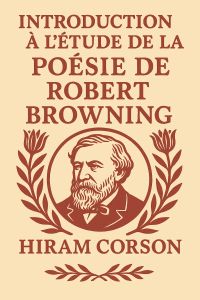
From its inception in 1886, An Introduction to the Study of Robert Browning’s Poetry represents an American scholarly attempt to codify Browning’s notoriously intricate poetics for a U.S. readership. Written by Hiram Corson while based in Ithaca, New York (Cascadilla Cottage) and published during the late Victorian period, the work situates Browning within a long English poetic lineage from Chaucer to the present, emphasizing the dramatic, psychologic monologue as a distinctive vehicle for interior revelation through the poem’s personae. The volume combines introductory theory with annotated texts, note sections, and critical apparatus designed to render Browning’s complexities intelligible, reflect contemporary editorial practices, and encourage a cultivated, spiritual approach to poetry at a moment when American higher education was expanding its engagement with English literature.
Corson presents Browning as the founder of a poetry in which intellect and spirituality are inseparably yoked; he argues that Browning’s thought, though highly discursive, serves an ultimate spiritual end—an attempt to articulate the correspondences between the natural and the divine, the actual and the ideal. The Introduction foregrounds a programmatic belief in personality as a dynamic force and in art as an intermediary agency of personality, a framework under which Browning’s poetry is read as a vehicle for universal truths rather than as mere verbal display. In stressing Browning’s spiritual dimensions and his formal daring, Corson helped anchor a tradition of Browning criticism in which obscurity is not an obstacle but a sign of artistic motive, and in which close reading, biographical context, and theological sensibility converge to shape subsequent Anglo-American reception and pedagogy of Browning’s verse.