About this audiobook
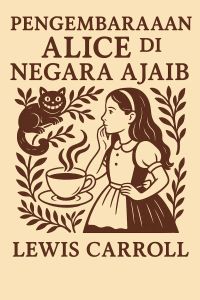
Lewis Carroll, the pen name of the Oxford mathematician and Anglican deacon Charles Lutwidge Dodgson, published Alice's Adventures in Wonderland in 1865 in Victorian Britain, initially illustrated by John Tenniel. The book grew out of stories Dodgson improvised in 1862 for Alice Liddell and her sisters during boating excursions, and it emerged within a mid-nineteenth-century English print culture that was rapidly expanding children’s publishing while also sustaining sophisticated traditions of satirical verse, parlor games, and mathematical recreations. Though marketed as a children’s tale, its diction, embedded poems, and parodic engagements with contemporary educational materials and moralizing literature reflect the period’s debates about pedagogy, propriety, and the uses of fantasy.
The narrative’s episodic descent through a destabilized wonderland stages a sustained exploration of identity, language, and social convention, repeatedly testing the authority of rules when scale, etiquette, and even grammar become unreliable. Carroll’s logic puzzles and semantic inversions turn nonsense into a rigorous literary method, exposing how meaning is negotiated through context, power, and habit rather than fixed reference. The work’s imaginative elasticity—its iconic motifs of the rabbit-hole, metamorphic bodies, and self-contradictory instruction—has made it foundational for later developments in fantasy, surrealism, and modernist experimentation, while its characters and phrases have entered global popular culture as enduring symbols of curiosity, disorientation, and imaginative freedom.