
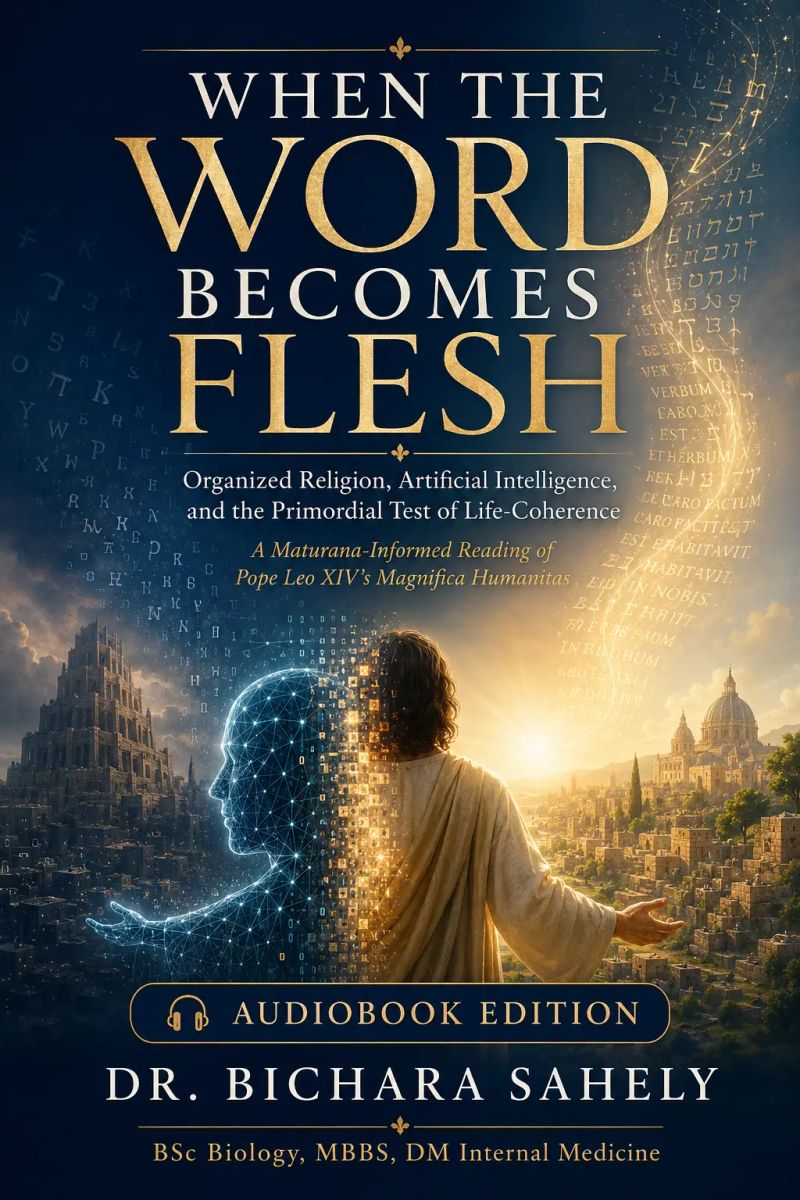
When the Word Becomes Flesh
Organized Religion, Artificial Intelligence, and the Primordial Test of Life-CoherenceBy Dr.Bichara Sahely


Length48m
About this audiobook
When the Word Becomes Flesh asks a simple but urgent question: what way of living do our institutions conserve? In response to Pope Leo XIV’s Magnifica Humanitas, Dr. Bichara Sahely offers a life-coherent reflection on organized religion, artificial intelligence, and the danger of systems that detach word, code, doctrine, or power from embodied life. Drawing on Humberto Maturana’s biology of love, the audiobook contrasts Babel—control without communion—with Nehemiah—shared repair in living relation. Religion becomes life-coherent when word becomes flesh as mercy, justice, repentance, and communion. Technology becomes life-coherent when code remains answerable to human dignity, truth, work, freedom, and the common good. A timely meditation on AI, institutional repentance, digital colonialism, and the civilization of love.
Audiobook details
GenreEducation and Learning, Philosophy
Length48 mins
Narrated byListen with 1,000+ voices
FormateBook with Audio
Publish dateMay 25, 2026
LanguageEnglish
Table of contents
1Chapter 1
2Audiobook Edition Note
3Opening Reflection
4Listener’s Guide
5Key Terms for the Listener
Show all chaptersShow less
6Epigraph
7Introduction: The Construction Site of Our Time
8Method: A Life-Coherent Hermeneutic of Institutions
9Babel and Nehemiah as Civilizational Diagnostics
10The Primordial Corrective: Living Before System
11When Word Detaches from Flesh: The Religious Inversion
12When Code Detaches from Life: The Technological Inversion
13Slavery, Digital Colonialism, and Institutional Repentance
14Social Doctrine as Discernment of Coexistence
15The Digital Civil Commons
16The Civilization of Love as a Conserved Way of Living
17The Life-Coherence Test for Institutions
18The Word Becomes Flesh or Babel Returns
19Conclusion: The Primordial Test of Life-Coherence
20Closing Reflection
21Final Seven Theses
22Practical Questions for the Listener
23About the Academic White Paper
24Acknowledgements
25Author Bio
26Closing Line
Preserving Life, Transforming Power in GazaDr Bichara Sahely1h 42mFree
Preserving Life, Transforming PowerDr. Bichara Sahely1h 4mFree
Putting the Missing Bridge to WorkDr. Bichara Sahely2h 12mFree
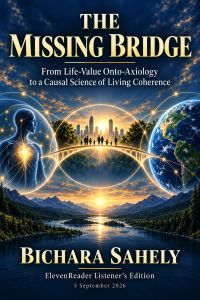
The Missing BridgeDr. Bichara Sahely1h 5mFree
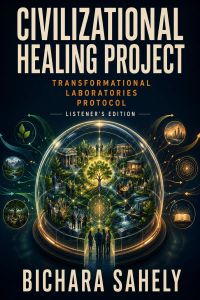
Transformational Laboratories ProtocolDr. Bichara Sahely2h 33mFree
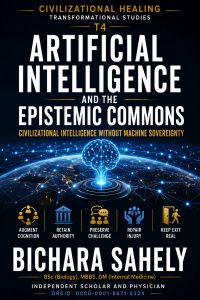
Artificial Intelligence and the Epistemic CommonsDr Bichara Sahely3h 12mFree
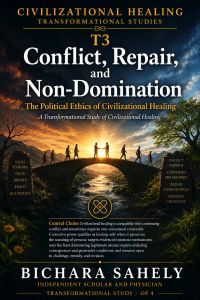
Conflict, Repair, and Non-DominationDr Bichara Sahely2h 21mFree
Institutions of Reflexive TransformationDr Bichara Sahely1h 51mFree
The Politics of Civilizational HealingDr. Bichara Sahely2h 13mFree
The Missing Grammar of Modern CivilizationDr. Bichara Sahely2h 8mFree
Civilizational Healing Research ArchitectureDr. Bichara Sahely1h 24mFree
How Does a Civilization Learn to Heal?Dr. Bichara Sahely1h 16mFree
From Competent Physicians to Healing SocietiesDr. Bichara Sahely2h 20mFree

Competence Is Necessary, but Not SufficientDr. Bichara Sahely1h 15mFree

Life-Grounding CanMEDSDr. Bichara Sahely1h 13mFree
The Dynamic Architecture of ViabilityDr Bichara Sahely2h 1mFree
Completing the Life-Value Onto-Axiology ProgramDr. Bichara Sahely1h 9m5.0 (1)Free
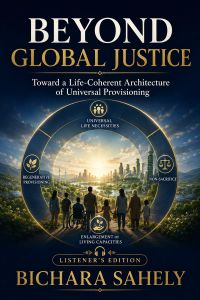
BEYOND GLOBAL JUSTICEDr. Bichara Sahely1h 25mFree

The Sweetness That Consumed the WorldBichara Sahely16h 14mFree
THE SOVEREIGNTY OF CREDITDr. Bichara Sahely3h 56mFree
A Brief History of IntelligenceMax S. Bennett12h 18m4.6 (6.6K)$29 · $0.00

HomeschooledStefan Merrill Block7h 10m3.6 (18.5K)$28 · $0.00

Parents and Children (Annotated)Charlotte Mason9h 23m4.6 (988)$2 · $0.00

Children Under FireJohn Woodrow Cox10h 17m4.5 (1.6K)$29 · $0.00

The State Must ProvideAdam Harris7h 15m4.5 (775)$24 · $0.00

The Call of the Wild and FreeAinsley Arment9h 7m4.4 (21.2K)$29 · $0.00
The Freelance WayRobert Vlach19h 48m4.5 (528)$40 · $0.00
Race to the BottomLuke Rosiak9h 20m4.5 (600)$29 · $0.00

They Came for the SchoolsMike Hixenbaugh9h 5m4.5 (2.6K)$8 · $0.00

Find Me UnafraidKennedy Odede, Jessica Posner11h 11m4.5 (2.7K)$29 · $0.00

Asking for ItKate Harding8h 55m4.4 (5.3K)$20 · $0.00
Defining Moments in Black HistoryDick Gregory7h 37m4.4 (6K)$26 · $0.00

The Emerald Tablets of Thoth the AtlanteanMaurice Doreal3h 4m4.4 (8.8K)$6 · $0.00

Learning AmericaLuma Mufleh6h 37m4.4 (564)$24 · $0.00
Math-ishJo Boaler7h 21m4.4 (588)$24 · $0.00
It Worked For MeColin Powell7h 42m4.3 (9.8K)$26 · $0.00

Little SoldiersLenora Chu11h 30m4.3 (3.1K)$29 · $0.00

Financial FeministTori Dunlap8h 3m4.2 (22.2K)$8 · $0.00

Grammar-land; Or, Grammar in Fun for the Children of Schoolroom-shireM. L. Nesbitt2h 36m4.4 (487)$1 · $0.00

DarkwaterWilliam Edward Burghardt Du Bois6h 40m4.3 (1.4K)$11 · $0.00
IlluminationsWalter Benjamin10h 12m4.4 (16.2K)$20 · $0.00
That Bird Has My WingsJarvis Jay Masters9h 49m4.4 (13.7K)$29 · $0.00

Tâo Teh KingLaozi2h 34m4.4 (230.9K)$2 · $0.00

SymposiumPlato3h 26m4.4 (97.9K)$1.20 · $0.00

Buddhist Boot CampTimber Hawkeye2h 39m4.4 (8.4K)$18 · $0.00
Enchiridion & The Discourses of Epictetus (Annotated)Arrian Epictetus18h 9m4.4 (3.5K)$2 · $0.00

The Meditations of the Emperor Marcus Aurelius AntoninusEmperor of Rome Marcus Aurelius5h 41m4.4 (1.8M)$1 · $0.00
Crime and PunishmentFyodor Dostoevsky23h 11m4.4 (1.3M)$12 · $0.00

MeditationsMarcus Aurelius5h 52m4.4 (433.7K)$1 · $0.00
Everyday DharmaSuneel Gupta5h 2m4.5 (761)$20 · $0.00
The Joyful Wisdom ("La Gaya Scienza")Friedrich Wilhelm Nietzsche11h 37m4.4 (26.6K)$1 · $0.00
The Art of LivingEpictetus, Sharon Lebell3h 16m4.4 (50.1K)$18 · $0.00
MeditationsEmperor Of Rome Marcus Aurelius7h 23m4.3 (477.5K)$1.20 · $0.00

The Imitation of ChristThomas à Kempis6h 27m4.3 (84.6K)$21 · $0.00

Sadhana: the realisation of lifeRabindranath Tagore3h 49m4.4 (8.6K)$6 · $0.00
SapiensYuval Noah Harari15h 18m4.3 (1.4M) · 1193$33 · $0.00
You BelongSebene Selassie8h 35m4.4 (2.7K)$26 · $0.00

The Song Celestial; Or, Bhagavad-Gîtâ (from the Mahâbhârata)Anonymous2h 18m4.4 (3.2K)$2 · $0.00
The KybalionThe Three Initiates3h 47m4.3 (58.7K)$20 · $0.00

Chuang Tzu: Mystic, Moralist, and Social ReformerZhuangzi14h 42m4.4 (1.2K)$1 · $0.00
You may also like
Door to DoorEdward Humes11h 20m3.9 (1.4K)$29 · $0.00
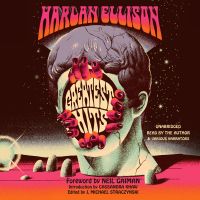
Greatest HitsHarlan Ellison17h 35m4.3 (3.2K)$30
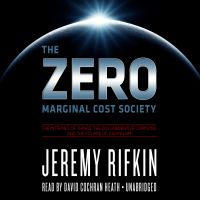
The Zero Marginal Cost SocietyJeremy Rifkin14h 14m3.9 (3.2K)$23 · $0.00
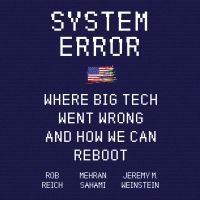
System ErrorRob Reich, Mehran Sahami, Jeremy M. Weinstein11h 29m4.0 (1.6K)$29 · $0.00
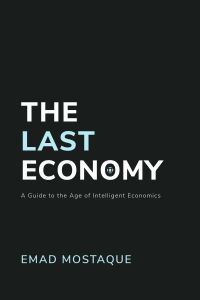
The Last Economy: A Guide to the Age of Intelligent EconomicsEmad Mostaque3h 54m4.3 (345)Free
Everything is F*ckedMark Manson7h 2m3.8 (131.8K) · 1197$24 · $0.00
The AI ConEmily M. Bender, Alex Hanna7h 51m3.7 (1.7K)$26 · $0.00

ReplacedDisrupt.co.nz4h 4m$1.20 · $0.00
The Skill CodeMatt Beane6h 49m3.8 (456)$24 · $0.00
Pay AttentionDavid Pakman9h 27m$29 · $0.00
Surviving SuperintelligenceSteve Pavlina39m$7 · $0.00
The True Creator of EverythingMiguel Nicolelis14h 41m3.9 (314)$23 · $0.00
Masters or Slaves?Jeremy Peckham6h 44m4.2 (23)$23
THE RISE OF PHYSICAL AI and HUMANOIDSGathu Kamau2h 59m4.7 (134)$4.99 · $0.00
IntelligenceSteve Pavlina2h 51m$8 · $0.00
No More WorkJames Livingston3h 16m3.7 (449)$15
The Masterclass of Machine LearningJohn9h 55m$6.80
The Last Skill You'll Ever NeedDr. Josh Harari2h 5m$5.70 · $0.00
The Second Life of SnapErin Entrada Kelly3h 19m$18 · $0.00
For the Good of the WorldA. C. Grayling6h 28m3.4 (125)$17 · $0.00