About this audiobook
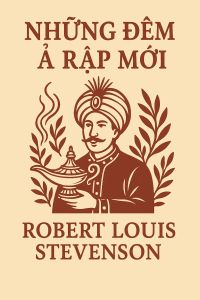
Robert Louis Stevenson, a Scottish writer born in 1850 in Edinburgh, produced The New Arabian Nights at the height of late Victorian publishing culture. Published in 1882 by Chatto & Windus, the collection extends Stevenson's fascination with adventure, disguise, and social satire into a linked sequence of stories that recast European romanticism within contemporary London. The opening pieces—anchored by the Prince Florizel of Bohemia and his Master of the Horse—combine a chivalric sensibility with urban caricature, blending Elizabethan theatricality with a modern, metropolitan sensibility. Composed in English and rich with arch narration, the tales reflect Stevenson's dual vocation as travel-writer and fiction writer, a period when serialized sensation and literary refinement coexisted in popular readership. The work cultivates a cosmopolitan irony: exotic frame, metropolitan setting, and a self-conscious narrator whose conversational diction, punctuated by wry asides, invites the reader to participate in the social game of wit and peril.
Where The New Arabian Nights excels is in its thematic interrogation of disguise, performance, and the fragility of social codes in an urban modernity that prizes novelty over constancy. Florizel's persona—polished, dashing, and repeatedly unmasked by circumstance—functions as both entertainment and critique: a noble rogue who negotiates respectable London by way of theatricality, hospitality, and calculated risk. The collection fuses a brisk, dialogic humor with moments of genuine suspense, a tonal elasticity that anticipates later short-story cycles and the cross-genre experiments of late nineteenth-century fiction. Its secret societies, the etiquette of generosity and mockery at taverns, and the interplay between appearance and motive invite meta-fictional readings of storytelling itself, prompting readers to scrutinize spectator sport, social performance, and the ethics of adventure. The New Arabian Nights thus helped broaden the boundaries of literary realism and urban fantasy in its wake, influencing the manner in which writers would blend detective inquiry, ironic satire, and chivalric romance within a modern, cosmopolitan frame.