
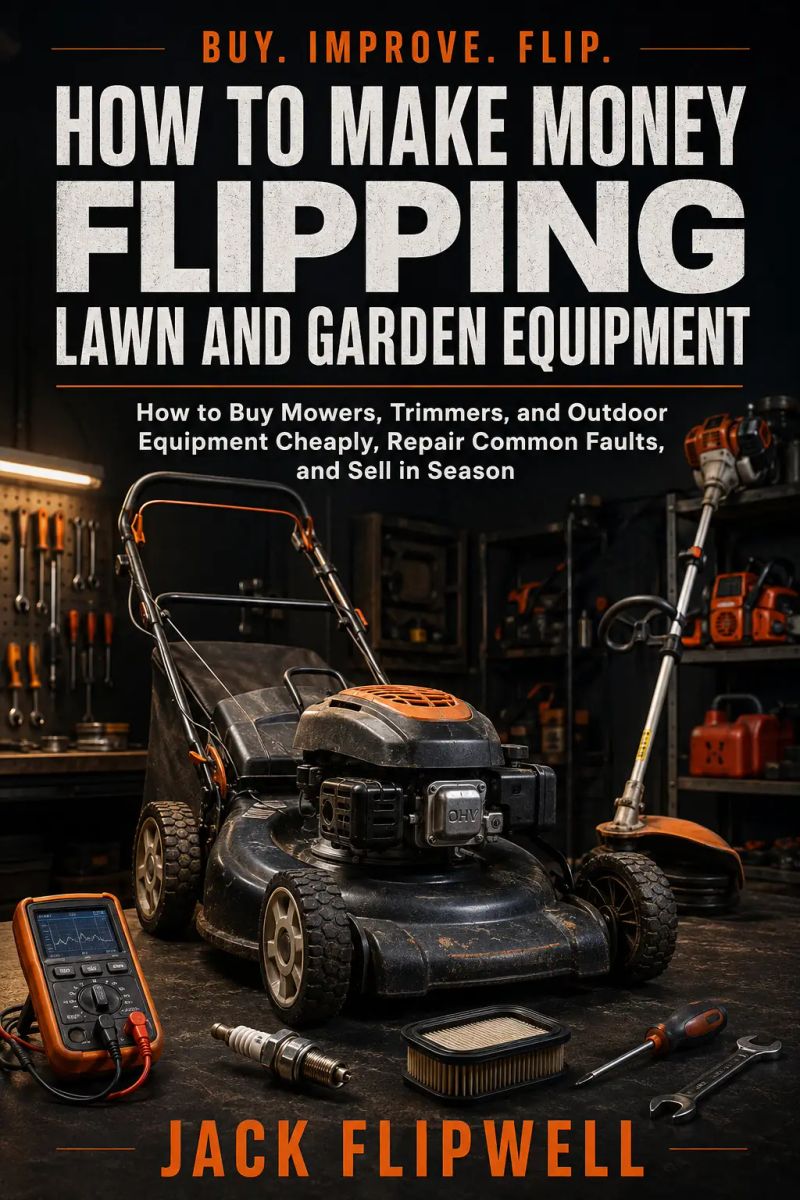
How to Make Money Flipping Lawn and Garden Equipment - How to Buy Mowers, Trimmers, and Outdoor Equipment Cheaply, Repair Common Faults, and Sell in Season
By JACK FLIPWELL


Length10h 15m
About this audiobook
Can you make money buying and reselling used lawn and garden equipment? Yes, but not because every non-running mower is a hidden bargain. Real margin appears when you can buy the right machine at the right price, evaluate its condition accurately, control preparation costs, and sell when buyers actually need the equipment.
How to Make Money Flipping Lawn and Garden Equipment is a practical guide to buying, improving, and reselling used mowers, trimmers, brush cutters, blowers, dethatchers, tillers, shredders, cordless tools, and other outdoor equipment.
The book walks through the entire process from the first listing to the final sale, with a strong focus on risk control, realistic numbers, and safe work.
You will learn how to identify machines with real resale potential and how to avoid projects that appear cheap only because they hide an expensive failure. The book shows you how to analyze listings, identify the exact model, check completeness, research parts availability, and calculate a maximum purchase price before emotion takes over.
Corded, cordless, and gas equipment are covered separately because each category carries different risks.
With corded equipment, you will learn what to inspect around cables, plugs, safety systems, working components, and basic mechanics. With battery-powered tools, you will learn how to separate the value of the bare tool from the value of the battery and charger, how to think about battery-platform compatibility, and why a used battery should never be valued optimistically without testing. With gas equipment, you will learn how to evaluate starting behavior, fuel-system symptoms, drive faults, leaks, engine operation, and service economics without automatically assuming the cheapest possible repair.
A major part of the book focuses on safety and the limits of DIY work. Flipping does not require you to become a professional mechanic, electrician, and battery technician at the same time. It does require knowing which jobs are appropriate for your own skill level, when professional service is the smarter option, and when a repair no longer makes financial sense.
You will get practical inspection frameworks for mowers, trimmers, brush cutters, blowers, hedge trimmers, dethatchers, tillers, shredders, pressure washers, and cordless equipment. You will learn to examine corrosion, wheels, self-propelled systems, cutting components, guards, cables, batteries, chargers, gearboxes, and missing accessories before paying.
The book also explains how to clean and prepare used outdoor equipment without hiding defects or damaging sensitive components. You will learn why cleaning is part of diagnosis, how to document before-and-after condition, which preparation tasks often create the best return, and when additional cosmetic work stops adding meaningful value.
One of the most important sections answers the question: repair or walk away?
You will learn how to compare the expected increase in resale value with the cost of parts, service, labor, waiting time, and remaining risk. You will also learn when selling the machine honestly as a repair project or donor can be a better decision than continuing to invest because previous money has already been spent.
Seasonality receives special attention because lawn and garden equipment does not move evenly throughout the year. Mowers, trimmers, dethatchers, tillers, and blowers can each have different demand patterns. The book shows how to buy outside peak demand, prepare inventory in advance, and avoid finishing a good machine after its strongest selling window has already closed.
You will also learn how to build listings that reduce buyer uncertainty. The book covers photography, exact model identification, honest descriptions, documenting tests, showing defects, pricing from current market evidence, and choosing between local collection and shipping.
The financial section goes beyond the simple difference between purchase and selling price. You will learn to track transport, parts, service, marketplace fees, cleaning materials, active time, storage, buyer negotiation, and days to sale. This helps separate projects that genuinely make money from machines that only look profitable because half the costs were ignored.
The final chapters cover complaints, failed flips, dead inventory, mistake tracking, transport systems, storage organization, model specialization, sourcing routines, simple dashboards, and scaling. You will learn how to move from random deals to a repeatable operating system without turning your garage into a warehouse full of unfinished machines.
This is not a book about buying every cheap mower you can find.
It is a book about making better decisions.
BUY. IMPROVE. FLIP.
This publication was prepared with the assistance of tools that support the creative process, including artificial intelligence-based solutions. The final concept, structure, and editing belong to the author.
Audiobook details
GenreBusiness and Economics
Length10 hrs 15 mins
Narrated byListen with 1,000+ voices
FormateBook with Audio
Publish dateSep 28, 2026
LanguageEnglish
Table of contents
1INTRO
2Chapter 1 - How the Used Lawn and Garden Equipment Market Works
3Chapter 2 - What to Buy and What to Avoid
4Chapter 3 - Seasonality and the Best Time to Buy and Sell
5Chapter 4 - Where to Find Deals
Show all chaptersShow less
6Chapter 5 - How to Analyze a Listing Before Contacting the Seller
7Chapter 6 - How to Inspect Equipment Before Buying
8Chapter 7 - Negotiating Price and Setting a Maximum Purchase Budget
9Chapter 8 - Corded Electric Mowers and Basic Mains-Powered Equipment
10Chapter 9 - Battery Equipment and Evaluating Used Batteries
11Chapter 10 - Gas Mowers and Gas-Powered Equipment
12Chapter 11 - Trimmers, Brush Cutters, Blowers, and Smaller Equipment
13Chapter 12 - Dethatchers, Tillers, Shredders, and Specialist Equipment
14Chapter 13 - Cleaning, Maintenance, and Safe Preparation for Sale
15Chapter 14 - Minor Repairs, Parts, and the Repair-or-Walk-Away Decision
16Chapter 15 - Calculating Full Cost and Real Margin
17Chapter 16 - Photos, Descriptions, and Building an Effective Listing
18Chapter 17 - Pricing and Local Selling Strategy
19Chapter 18 - Storage, Transport, and Inventory Management
20Chapter 19 - Mistakes, Complaints, Risk, and Failed Flips
21Chapter 20 - How to Build a Repeatable Lawn and Garden Equipment Flipping Business
More from JACK FLIPWELL

Jak zarabiać na kupnie, naprawie i sprzedaży sprzętu ogrodowego - Jak tanio kupować kosiarki, podkaszarki i inne urządzenia, usuwać typowe usterki i sprzedawać w sezonieJACK FLIPWELL10h 41m$7.90 · $0.00

Jak zarabiać na kupnie i sprzedaży biżuterii - Jak badać metale i kamienie, rozpoznawać podróbki, wyceniać przedmioty i bezpiecznie je sprzedawaćJACK FLIPWELL8h 26m$7.90 · $0.00
How to Make Money Flipping Home Appliances - How to Test, Repair, Transport, and Resell Washers, Refrigerators, and Small Appliances for ProfitJACK FLIPWELL6h 27m$7.90 · $0.00

Jak zarabiać na kupnie, naprawie i sprzedaży sprzętu AGD - Jak testować, naprawiać, transportować i z zyskiem sprzedawać pralki, lodówki oraz małe urządzeniaJACK FLIPWELL6h 30m$7.90 · $0.00
How to Make Money Flipping Jewelry - How to Test Metals and Stones, Spot Fakes, Value Pieces, and Sell SafelyJACK FLIPWELL8h 7m$7.90 · $0.00

Jak zarabiać na kupnie i sprzedaży luksusowych torebek - Przewodnik po autentykacji, ocenie stanu, bezpiecznym czyszczeniu, wycenie i odsprzedażyJACK FLIPWELL9h 42m$7.90 · $0.00
How to Make Money Flipping Golf Equipment - How to Identify In-Demand Clubs, Avoid Counterfeits, Improve Condition, and Resell for ProfitJACK FLIPWELL8h 39m$7.90 · $0.00
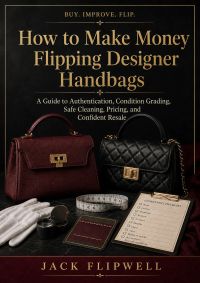
How to Make Money Flipping Designer Handbags - A Guide to Authentication, Condition Grading, Safe Cleaning, Pricing, and Confident ResaleJACK FLIPWELL9h 26m$7.90 · $0.00

Jak zarabiać na kupnie i sprzedaży sprzętu fitness - Jak kupować duży sprzęt poniżej wartości rynkowej, odnawiać go i zarabiać na lokalnym popycieJACK FLIPWELL8h 9m$7.90 · $0.00
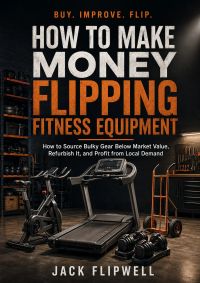
How to Make Money Flipping Fitness Equipment - How to Source Bulky Gear Below Market Value, Refurbish It, and Profit from Local DemandJACK FLIPWELL8h 23m$7.90 · $0.00

Jak zarabiać na kupnie i sprzedaży sprzętu golfowego - Jak rozpoznawać chodliwe kije, unikać podróbek, poprawiać stan i sprzedawać z zyskiemJACK FLIPWELL8h 59m$7.90 · $0.00
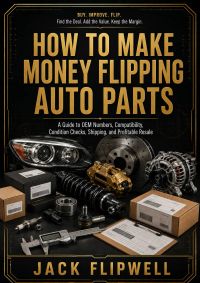
How to Make Money Flipping Auto Parts - A Guide to OEM Numbers, Compatibility, Condition Checks, Shipping, and Profitable ResaleJACK FLIPWELL7h 32m$7.80 · $0.00

How to Make Money Flipping Bicycles - How to Find Underpriced Bikes, Plan Profitable Repairs, and Take Advantage of Seasonal DemandJACK FLIPWELL7h 57m$7.80 · $0.00

Jak zarabiać na kupnie i sprzedaży części samochodowych - Przewodnik po numerach OEM, kompatybilności, ocenie stanu, wysyłce i opłacalnej odsprzedażyJACK FLIPWELL7h 32m$7.80 · $0.00
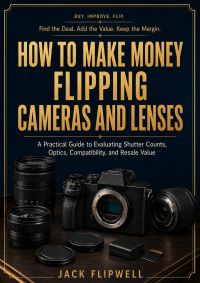
How to Make Money Flipping Cameras and Lenses - A Practical Guide to Evaluating Shutter Counts, Optics, Compatibility, and Resale ValueJACK FLIPWELL8h 38m$7.80 · $0.00

Jak zarabiać na kupnie, naprawie i sprzedaży rowerów - Jak znajdować niedoszacowane rowery, planować opłacalne naprawy i wykorzystywać sezonowy popytJACK FLIPWELL8h 9m$7.80 · $0.00

Jak zarabiać na kupnie i sprzedaży aparatów oraz obiektywów - Praktyczny przewodnik po ocenie przebiegu migawki, optyki, kompatybilności i wartości odsprzedażyJACK FLIPWELL8h 9m$7.80 · $0.00

How to Make Money Flipping Used Books - How to Identify Valuable Editions, Assess Condition, Build Profitable Lots, and Sell to the Right ReadersJACK FLIPWELL8h 19m$8.10 · $0.00
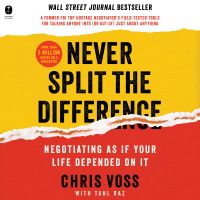
Never Split the DifferenceChris Voss, Tahl Raz8h 7m4.4 (277.7K)$26 · $0.00
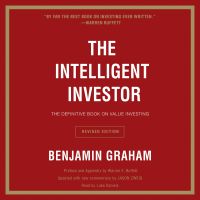
The Intelligent Investor Rev Ed.Benjamin Graham17h 48m4.3 (191.5K)$40 · $0.00
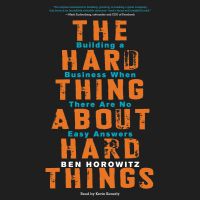
The Hard Thing About Hard ThingsBen Horowitz7h 57m4.2 (134.3K)$26 · $0.00

Boundaries for LeadersHenry Cloud7h 36m4.3 (3.6K)$26 · $0.00

Big TrustShadé Zahrai, Fayçal Sekkouah8h 36m4.6 (406)$26 · $0.00

The Intelligent Investor Third EditionBenjamin Graham, Jason Zweig20h4.4 (156.6K)$46 · $0.00

Bottle of LiesKatherine Eban14h 25m4.4 (12K)$33 · $0.00

The Antiracist Business BookTrudi Lebrón6h 10m4.6 (275)$17 · $0.00

The FormulaJoshua Robinson, Jonathan Clegg10h 41m4.4 (6.9K)$29 · $0.00

Let Them LeadJohn U. Bacon7h 10m4.5 (1.4K)$24 · $0.00

Secrets of the Millionaire MindT. Harv Eker5h 11m4.4 (301.4K)$24 · $0.00

The Person You Mean to BeDolly Chugh9h 6m4.4 (7.2K)$29 · $0.00

BoundlessNick Kostov, Sean McLain9h 17m4.5 (1.1K)$29 · $0.00

Everyday DharmaSuneel Gupta5h 2m4.5 (761)$20 · $0.00

Let's Talk Mutual FundsMonika Halan7h 5m4.4 (2.4K)$16 · $0.00

The Law of Success in Sixteen LessonsNapoleon Hill2h 39m4.4 (17.2K)$2 · $0.00

Barbarians at the GateBryan Burrough, John Helyar3h 3m4.4 (52.7K)$18 · $0.00
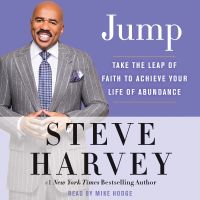
JumpSteve Harvey4h 24m4.4 (4.5K)$20 · $0.00

AngelJason Calacanis8h 20m4.4 (4.4K)$26 · $0.00
Creative CallingChase Jarvis8h 33m4.4 (2.8K)$26 · $0.00
You may also like

SupernaturalBill Brown Jr.58m4.8 (11)$5

Have Yourself a Merry Little ChristmasBill Brown Jr.38m4.8 (11)$4

The HomecomingBill Brown Jr.52m$5

Call Me IrresponsibleBill Brown Jr.47m$5

I am learning NorwegianJM Gardner3h 56m$18 · $0.00

Mrs. Robinson AccompanimentBill Brown Jr.22m$2

March in GBill Brown Jr.28m$2

Beyond The SunsetBill Brown Jr.19m$2

Ballad of Gilligan's IsleBill Brown Jr.22m$2

Piano by Ear: Pop and Standards Box Set 4Bill Brown Jr.16h 9m$25

Holy Holy HolyBill Brown Jr.25m$2

Scherzo in BbBill Brown Jr.1h 39m$10

1000 essential words in PortugueseJM Gardner2h 18m$10 · $0.00

Blue VelvetBill Brown Jr.39m$4

What a Wonderful WorldBill Brown Jr.59m$5

Jesus Loves MeBill Brown Jr.22m$2

Grace Greater Than Our SinBill Brown Jr.1h 38m$10

Somewhere My LoveBill Brown Jr.1h 1m$10

Hotel CaliforniaBill Brown Jr.2h 22m$10

Red Rubber Ball AccompanimentBill Brown Jr.18m$2