About this audiobook
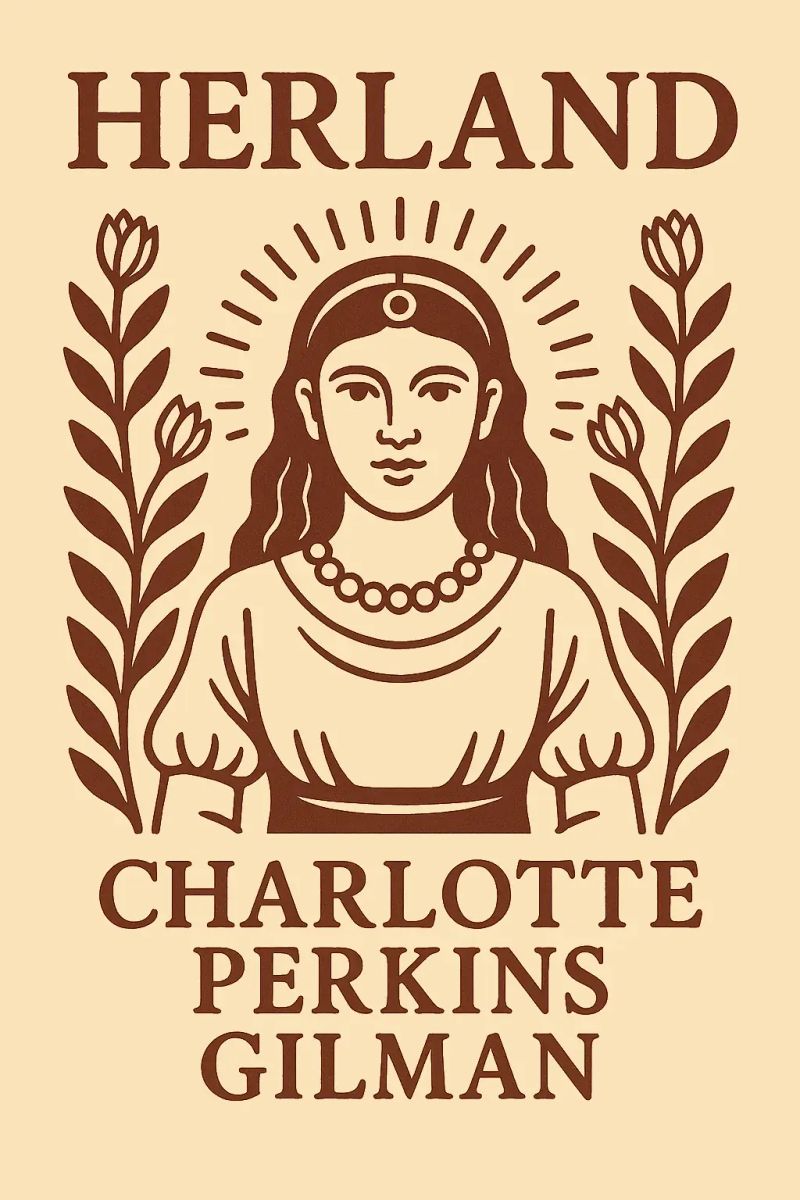
Charlotte Perkins Gilman’s Herland is an American feminist utopian romance first published serially in 1915 in Gilman’s self-edited magazine, The Forerunner, during the Progressive Era, when debates over women’s suffrage, social reform, eugenics, and the authority of the social sciences were prominent in the United States. Gilman, already well known for her social criticism and for the influential short story “The Yellow Wallpaper” (1892), wrote in English for an educated middle-class readership and used popular adventure and exploration motifs to frame a work of speculative social theory. Its initial periodical circulation and later republication history helped shape its reception: widely read within reformist and feminist circles but long underrepresented in mainstream literary canons until the resurgence of feminist scholarship in the late twentieth century.
The novel presents a satirical encounter between three male narrators and an isolated, all-female society, using their contrasting temperaments and assumptions as instruments for exposing the gendered premises of modernity—particularly the naturalization of patriarchy, romantic ideology, militarism, and competitive individualism. Through depictions of collective childrearing, education, labor, and ecological management, Gilman explores motherhood as a social institution rather than a private destiny, while also interrogating the limits of contemporary “scientific” discourse, including racialized and eugenic modes of reasoning that complicate the text’s emancipatory aims. Herland has exerted lasting influence as a foundational work of feminist utopian fiction, shaping later speculative and theoretical writing about gender, reproduction, and social organization, and remains central to discussions of how narrative form can function as sociological thought experiment and cultural critique.