

The Atheist's Mass
Exploring faith, doubt and the human experience in post-Revolutionary FranceBy Honoré de Balzac


Length43m
About this audiobook
Honor√© de Balzac's novella, "The Atheist's Mass," intricately weaves themes of morality, faith, and the complexities of human nature through a compelling narrative. Set against the backdrop of 19th-century France, this work epitomizes Balzac's keen observational style, characterized by vivid characters and rich, descriptive prose. The story centers on a disenchanted atheist who confronts the profound realities of life and death during a priest's funeral mass, raising questions about belief and the essence of existence itself. Through meticulous crafting, Balzac delves into the moral fabric of society, addressing the tension between skepticism and spirituality that permeated his era. Balzac, a seminal figure in the literary movement of realism, often drew upon his own encounters with the diverse tapestry of French society to inform his writings. His extensive works, part of the expansive "La Com√©die Humaine," reveal his deep-seated belief in the intertwining of social, political, and psychological elements. Having witnessed the struggles of the human condition, Balzac's exploration in "The Atheist's Mass" serves as both a personal and philosophical inquiry into the faith that binds individuals amid existential disillusionment. This novella is an essential read for those seeking to grapple with the profound questions of existence and faith. Balzac'Äôs incisive exploration of atheism through a riveting narrative will resonate with readers, inviting them to reflect on their own beliefs. "The Atheist's Mass" stands as a thought-provoking testament to the enduring power of literature in illuminating the intricacies of human thought and emotion.
Audiobook details
Rating★★★★ 3.9 (2.3K)
Includes Goodreads, StoryGraph, LibraryThing, Amazon
GenrePhilosophy
Length43 mins
Narrated byListen with 1,000+ voices
FormateBook with Audio
Publish dateNov 25, 2019
LanguageEnglish
Table of contents
1Introduction
2THE ATHEIST'S MASS
3ADDENDUM: The following personages appear in other stories of the Human Comedy.

Die Frau von dreißig JahrenHonoré de Balzac8h 12m3.5 (7.6K)$1 · $0.00

Eugénie GrandetHonoré de Balzac11h 17m4.0 (33.5K)$1 · $0.00

Eugenia GrandetHonoré de Balzac7h 40m$1.99 · $0.00

Junggesellenwirtschaft (Kommentiert)Honoré de Balzac13h 53m4.3 (13)$1 · $0.00

The Lily of the Valley (Annotated)Honoré de Balzac12h 22m$2 · $0.00

A Woman of Thirty (Annotated)Honoré de Balzac9h 14m3.6 (7.8K)$2 · $0.00

Rise and Fall of Cesar Birotteau (Annotated)Honoré de Balzac12h 11m$2 · $0.00

Der Dorfpfarrer (Roman) (Kommentiert)Honoré de Balzac13h 55m3.7 (231)$1 · $0.00

Gesammelte Werke: 15 Romane, 27 Erzählungen, 2 Novellen, 2 Abhandlungen & Essays (Kommentiert)Honoré de Balzac396h 51m$1.50 · $0.00

The Celibates Trilogy (Annotated)Honoré de Balzac21h 37m$2 · $0.00

The Magic Skin (Annotated)Honoré de Balzac12h 19m4.3 (11)$2 · $0.00

History of the Thirteen (Annotated)Honoré de Balzac15h 12m4.0 (3.9K)$2 · $0.00

Scenes from a Courtesan's Life (Annotated)Honoré de Balzac23h 15m4.4 (112)$2 · $0.00

Eugénie Grandet (Roman) (Kommentiert)Honoré de Balzac11h 29m4.1 (45.1K)$1 · $0.00

Oeuvres Complètes (Annoté)Honoré de Balzac479h 55m4.6 (166)$1.99 · $0.00

Das Chagrinleder: Valentins Pakt mit dem Teufel (Kommentiert)Honoré de Balzac13h 42m4.3 (14)$1 · $0.00

Gesammelte Romane: 15 Romane in einem Band (Kommentiert)Honoré de Balzac196h 24m$1 · $0.00

Die Lilie im Tal (Roman) (Kommentiert)Honoré de Balzac14h 16m3.7 (8.2K)$1 · $0.00

Die besten Kurzgeschichten aus Frankreich (Kommentiert)Honoré de Balzac, George Sand, Guy de Maupassant, Alphonse Daudet, Stendhal, Gustave Flaubert, Alexandre Dumas, Charles Baudelaire, Prosper Mérimée, André Gide, Anatole France183h 30m$1 · $0.00

Cousin Betty & Cousin Pons (Annotated)Honoré de Balzac30h 57m$2 · $0.00

IlluminationsWalter Benjamin10h 12m4.4 (16.2K)$20 · $0.00
That Bird Has My WingsJarvis Jay Masters9h 49m4.4 (13.7K)$29 · $0.00

Tâo Teh KingLaozi2h 34m4.4 (230.9K)$2 · $0.00
SymposiumPlato3h 26m4.4 (97.9K)$1.20 · $0.00

Buddhist Boot CampTimber Hawkeye2h 39m4.4 (8.4K)$18 · $0.00
Enchiridion & The Discourses of Epictetus (Annotated)Arrian Epictetus18h 9m4.4 (3.5K)$2 · $0.00

The Meditations of the Emperor Marcus Aurelius AntoninusEmperor of Rome Marcus Aurelius5h 41m4.4 (1.8M)$1 · $0.00
Crime and PunishmentFyodor Dostoevsky23h 11m4.4 (1.3M)$12 · $0.00

MeditationsMarcus Aurelius5h 52m4.4 (433.7K)$1 · $0.00

Everyday DharmaSuneel Gupta5h 2m4.5 (761)$20 · $0.00

The Joyful Wisdom ("La Gaya Scienza")Friedrich Wilhelm Nietzsche11h 37m4.4 (26.6K)$1 · $0.00
The Art of LivingEpictetus, Sharon Lebell3h 16m4.4 (50.1K)$18 · $0.00
MeditationsEmperor Of Rome Marcus Aurelius7h 23m4.3 (477.5K)$1.20 · $0.00

The Imitation of ChristThomas à Kempis6h 27m4.3 (84.6K)$21 · $0.00

Sadhana: the realisation of lifeRabindranath Tagore3h 49m4.4 (8.6K)$6 · $0.00
SapiensYuval Noah Harari15h 18m4.3 (1.4M) · 1193$33 · $0.00
You BelongSebene Selassie8h 35m4.4 (2.7K)$26 · $0.00

The Song Celestial; Or, Bhagavad-Gîtâ (from the Mahâbhârata)Anonymous2h 18m4.4 (3.2K)$2 · $0.00

The KybalionThe Three Initiates3h 47m4.3 (58.7K)$20 · $0.00

Chuang Tzu: Mystic, Moralist, and Social ReformerZhuangzi14h 42m4.4 (1.2K)$1 · $0.00
You may also like
The Six EnneadsPlotinus34h 13m4.3 (4.3K)$21 · $0.00

MERE CHRISTIANITY (Including The Case for Christianity, Christian Behaviour and Beyond Personality)C. S. Lewis6h 45m4.4 (527.6K)$1 · $0.00

The Religious Affections (Annotated)Jonathan Edwards19h 1m4.4 (7.9K)$1.99 · $0.00
The Critique of Practical ReasonImmanuel Kant6h 51m4.1 (14.3K)$2.30
Wilkie CollinsPeter Ackroyd6h 59m3.8 (1.3K)$17

God in the WhirlwindDavid F. Wells9h 31m4.4 (467)$20 · $0.00
Human Nature And ConductJohn Dewey9h 22m4.1 (1.8K)$1.20 · $0.00

On ColorDavid Scott Kastan5h 54m3.9 (1.1K)$20

Great Pianists on Piano Playing (Annotated)James Francis Cooke8h 13m4.2 (264)$2 · $0.00
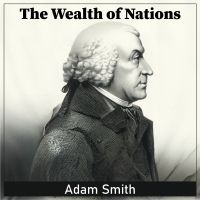
The Wealth of NationsAdam Smith30h 50m4.1 (130.7K)$20 · $0.00
Behavior in Public PlacesErving Goffman8h 26m4.1 (634)$20 · $0.00
How to Analyze People on Sight Through the Science of Human AnalysisElsie Lincoln Benedict6h 45m3.6 (2.7K)$16 · $0.00

PragmatismWilliam James5h 41m4.0 (6.6K)$1.20 · $0.00
The Myth of ImmortalityJoseph McCabe1h 15m$15

Alcibiades IIPlato0m3.6 (296)$1 · $0.00

Business-Englisch lernen Audio Sonderedition - Small TalkCarol Scheunemann1h 7m$20

The Complete Works of Thorstein VeblenThorstein Veblen117h 4m4.3 (24)$1 · $0.00
Fundamental Philosophy (Vol. 1&2) (Annotated)Jaime Luciano Balmes37h 38m4.6 (11)$1.99 · $0.00
Fundamental PhilosophyJaime Luciano Balmes36h 51m4.4 (18)$1.99 · $0.00

M. Cousin's Course of PhilosophyWilliam Hamilton2h 7m$2 · $0.00