About this audiobook
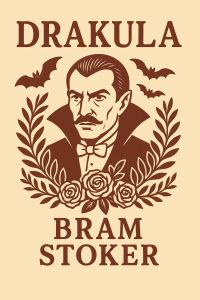
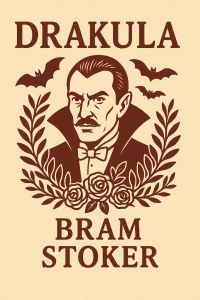
Bram Stoker’s Dracula (1897) emerged from the late Victorian cultural milieu of fin-de-siècle Britain, a period marked by imperial self-confidence shadowed by anxieties about degeneration, foreignness, and the instability of modern life. Stoker (1847–1912), an Irish-born writer and longtime business manager for actor Henry Irving at London’s Lyceum Theatre, drew on a wide reading in travel literature, folkloric compendia, and contemporary discussions of criminology and medicine. First published in English in London by Archibald Constable and Company, the novel is composed as an epistolary dossier—journals, letters, telegrams, and other documents—whose documentary pose aligns it with Victorian habits of record-keeping while lending plausibility to its supernatural claims.
The novel stages a confrontation between a seemingly archaic Eastern European aristocrat and a technologically enabled Anglo-modernity, making its horror inseparable from questions of knowledge, sexuality, and power. Dracula’s vampirism figures contagion and predation, while the narrative’s emphasis on blood, transfusion, and bodily violation resonates with contemporary fears of disease and the permeability of borders—biological, national, and moral. The text also probes gender and desire through the threat posed to women’s autonomy and the fragility of masculine authority, even as it reasserts social order through collective action and disciplined documentation. Widely influential, Dracula helped codify modern vampire mythology—its iconography, narrative patterns, and ethical oppositions—becoming a foundational work for twentieth- and twenty-first-century Gothic fiction, cinema, and popular culture worldwide.