
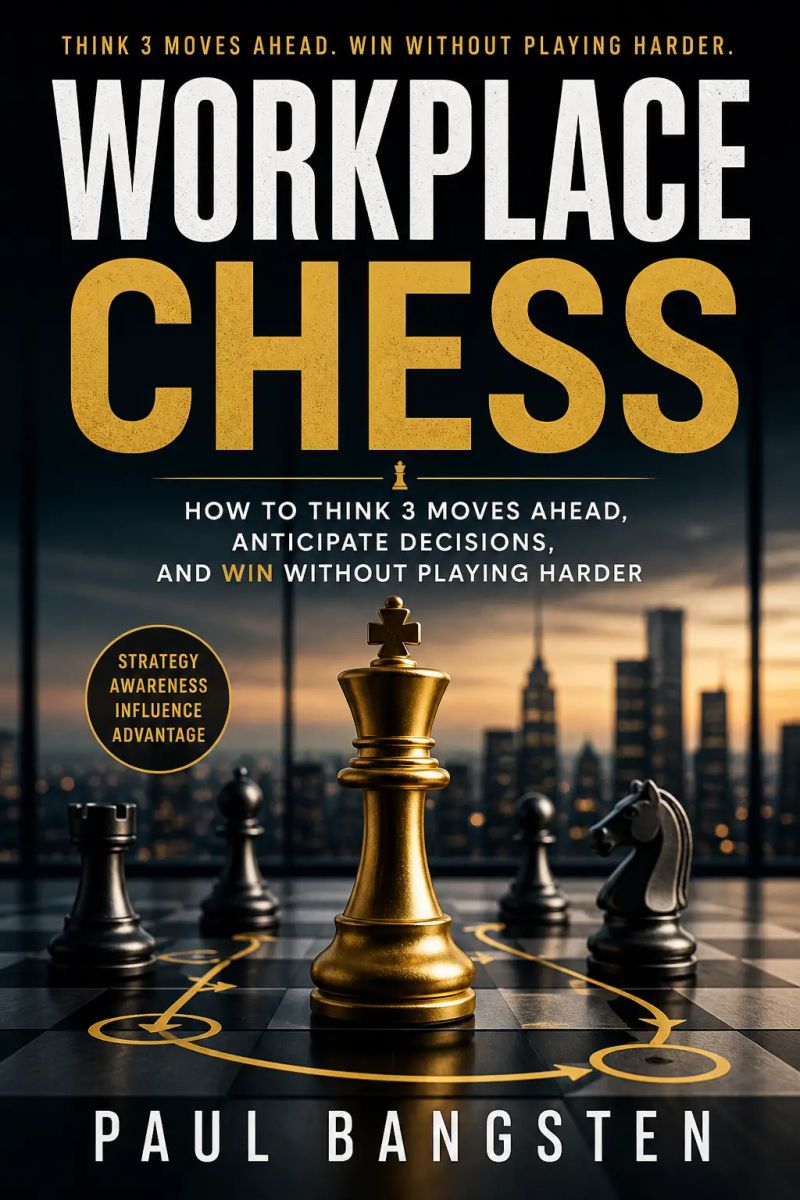
Workplace Chess
How to Think 3 Moves Ahead Anticipate Decisions and Win Without Playing HarderBy Paul Bangsten


Length2h 49m
About this audiobook
What if your career isn’t stuck because of your skills—but because of how you think?
Most professionals work hard, speak up, and stay busy… yet remain overlooked. Why? Because they react instead of anticipate.
Workplace Chess reveals a simple truth: the workplace is a strategic game—and those who win think three moves ahead.
In this practical guide, Paul Bangsten shows you how to read situations like a chessboard, anticipate decisions, and position yourself before opportunities even appear.
You’ll learn how to:
Identify key players and hidden dynamics
Avoid mistakes that quietly damage your career
Influence outcomes without being the loudest
Turn every move into a strategic advantage
This isn’t about working harder.
It’s about thinking smarter—and acting earlier.
👉 Stop reacting. Start anticipating.
Audiobook details
GenreEducation and Learning
Length2 hrs 49 mins
Narrated byListen with 1,000+ voices
FormateBook with Audio
Publish dateMay 5, 2026
LanguageEnglish
Table of contents
1Understanding the Strategic Mindset in the Workplace
2Fundamentals of Strategic Thinking versus Reactive Behavior
3The Psychology of Anticipation and Foresight at Work
4Building Awareness of Organizational Dynamics and Power Structures
5The Game of Work: Recognizing the Unwritten Rules
Show all chaptersShow less
6Identifying Hidden Rules and Cultural Norms in Organizations
7Mapping Stakeholders, Interests, and Influence Networks
8Decoding Professional Behavior as a Strategic Player
9Developing Situational Awareness
10Techniques to Read Professional Environments Accurately
11Using Observation and Data to Understand Contexts
12Avoiding Common Pitfalls in Perception and Assumptions
13Anticipating Moves: Forecasting Outcomes and Reactions
14Applying Scenario Planning for Workplace Decisions
15Identifying Key Indicators and Early Signs of Change
16Building a Mental Model to Predict Stakeholder Responses
17Positioning Strategically Before Action
18Choosing the Optimal Moment to Act or Intervene
19Aligning Resources and Alliances for Maximum Impact
20Preemptively Managing Risks and Opponent Moves
21Executing with Precision: Acting Before Others Do
22Developing a Step-by-Step Action Plan Based on Anticipation
23Maintaining Flexibility While Staying Ahead of the Curve
24Using Influence Techniques to Guide Outcomes Indirectly
25Guiding and Leading Dynamic Situations
26Influencing Decisions Without Confrontation or Direct Power
27Framing Ideas to Appear as Collective or External Initiatives
28Shaping Organizational Narratives to Favor Your Position
29Managing Conflicts and Tensions Strategically
30Recognizing Early Signs of Organizational Friction
31Applying Conflict Resolution as a Strategic Tool
32Turning Disagreements into Opportunities for Advancement
33Transforming Adverse Situations into Opportunities
34Reframing Challenges to Create Strategic Advantages
35Leveraging Crises to Accelerate Goals
36Case Studies of Turning Setbacks into Wins
37Building a Long-term Strategic Mentality
38Cultivating Patience and Consistency in Strategy
39Developing Resilience Against Short-term Distractions
40Embedding Strategic Thinking into Organizational Culture
41The Three Moves Method (3M): Framework for Strategic Action
42Deep Dive into the ‘Read’ Phase: Understanding the True Situation
43Mastering the ‘Predict’ Phase: Anticipating Future Moves
44Excelling in the ‘Position’ Phase: Acting Proactively
45Applying the 3M Method Step-by-Step in Workplace Scenarios
46Case Study: Negotiation and Influence Using 3M
47Practical Exercises to Develop Your Predictive Skills
48Integrating 3M into Daily Decision-Making Processes
49Tools and Techniques for Effective Scenario Simulation
50Using Mental Models and Decision Trees
More from Paul Bangsten
The Performance ParadoxPaul Bangsten1h 51m$2.99 · $0.00
The Boundary BlueprintPaul Bangsten2h 13m$2.99 · $0.00
The Senior Advantage SeriesPaul Bangsten1h 47m$2.99 · $0.00
The Invisible CareerPaul Bangsten1h 54m$2.99 · $0.00
Calm Is the StrategyPaul Bangsten2h 7m$2.99 · $0.00
Unlearning to LeadPaul Bangsten2h 9m$2.99 · $0.00
The Confidence ShiftPaul Bangsten1h 44m$2.99 · $0.00
The Weight of ExpertisePaul Bangsten2h 12mFree
The Distilled MindPaul Bangsten2h 13mFree
The Inner CompassPaul Bangsten2h 4mFree
The Quiet EdgePaul Bangsten1h 16mFree
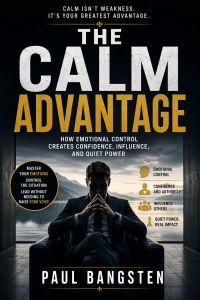
THE CALM ADVANTAGEPaul Bangsten1h 32m$2.99
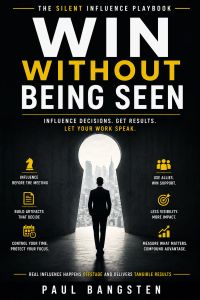
Win Without Being Seen: The Silent Influence Playbook Paul Bangsten1h 21mFree
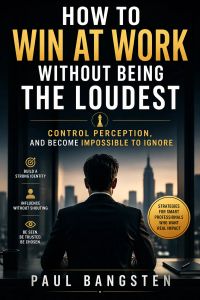
How to Win at Work Without Being the Loudest, Control Perception, and Become Impossible to Ignore Paul Bangsten1h 54mFree
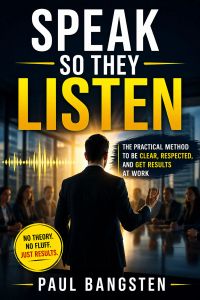
Speak So They Listen Paul Bangsten47mFree
The Four Weeks That Change How You WorkPaul Bangsten44mFree
A Brief History of IntelligenceMax S. Bennett12h 18m4.6 (6.6K)$29 · $0.00

HomeschooledStefan Merrill Block7h 10m3.6 (18.5K)$28 · $0.00
The Call of the Wild and FreeAinsley Arment9h 7m4.4 (21.2K)$29 · $0.00
The Freelance WayRobert Vlach19h 48m4.5 (528)$40 · $0.00
Race to the BottomLuke Rosiak9h 20m4.5 (600)$29 · $0.00

They Came for the SchoolsMike Hixenbaugh9h 5m4.5 (2.6K)$8 · $0.00

Find Me UnafraidKennedy Odede, Jessica Posner11h 11m4.5 (2.7K)$29 · $0.00

Asking for ItKate Harding8h 55m4.4 (5.3K)$20 · $0.00
Defining Moments in Black HistoryDick Gregory7h 37m4.4 (6K)$26 · $0.00
The Emerald Tablets of Thoth the AtlanteanMaurice Doreal3h 4m4.4 (8.8K)$6 · $0.00

Learning AmericaLuma Mufleh6h 37m4.4 (564)$24 · $0.00
Math-ishJo Boaler7h 21m4.4 (588)$24 · $0.00

Daddy-Long-LegsJean Webster12h 18m4.2 (91K)$1.99 · $0.00
It Worked For MeColin Powell7h 42m4.3 (9.8K)$26 · $0.00
Little SoldiersLenora Chu11h 30m4.3 (3.1K)$29 · $0.00
Financial FeministTori Dunlap8h 3m4.2 (22.2K)$8 · $0.00

Grammar-land; Or, Grammar in Fun for the Children of Schoolroom-shireM. L. Nesbitt2h 36m4.4 (487)$1 · $0.00

DarkwaterWilliam Edward Burghardt Du Bois6h 40m4.3 (1.4K)$11 · $0.00
The Highway Code UKDepartment for Transport3h 33m4.2 (36.6K)$11 · $0.00

He'll Be OKCelia Lashlie6h 32m4.3 (1.1K)$24 · $0.00
You may also like
Democracy, an American novelHenry Adams7h 40m3.6 (1.5K)$2 · $0.00
Risky BusinessLiran Einav, Amy Finkelstein, Ray Fisman7h 28m4.0 (426)$17 · $0.00
The Nicomachean EthicsAristotle8h 45m4.3 (126.1K)$17
Nicomachean Ethics (Annotated)Aristotle11h 24m4.2 (118.9K)$1.99 · $0.00
PersuadableAl Pittampalli7h 3m4.2 (296)$24 · $0.00
What's Wrong with the WorldG. K. Chesterton6h 17m4.2 (6.6K)$2.30 · $0.00
The RepublicPlato12h 22m3.9 (255.5K)$15 · $0.00

Anti-AmericanismJean-François Revel7h 20m4.0 (567)$17 · $0.00
Nicomachean EthicsAristotle10h 50m4.2 (76K)$1 · $0.00
Nicomachean EthicsAristotle11h 37m4.2 (71.7K)$4 · $0.00
Talk to MeDean Nelson10h 9m4.3 (646)$29 · $0.00
How Markets FailJohn Cassidy13h 16m4.1 (3.9K)$23 · $0.00
The Law of Success in Sixteen LessonsNapoleon Hill1h 14m4.4 (13.3K)$2 · $0.00
CharmidesPlato1h 13m3.8 (2K)$1.80 · $0.00
Against EmpathyPaul Bloom7h 30m3.8 (9K)$26 · $0.00
The Ethics of AristotleAristotle9h 36m4.2 (62K)Free
The Negotiator in You: SalesJoshua N. Weiss PhD54m3.4 (46)$10

Intellectual Frontiers in the Humanities and Applied Social SciencesRafael Alem12h 15m$36 · $0.00
The Secret Witness (Vol. 1-3)Charles Brockden Brown11h 37m3.4 (1.4K)$1.99 · $0.00
Fast Carbs, Slow CarbsDavid A. Kessler4h 12m4.0 (928)$20 · $0.00