
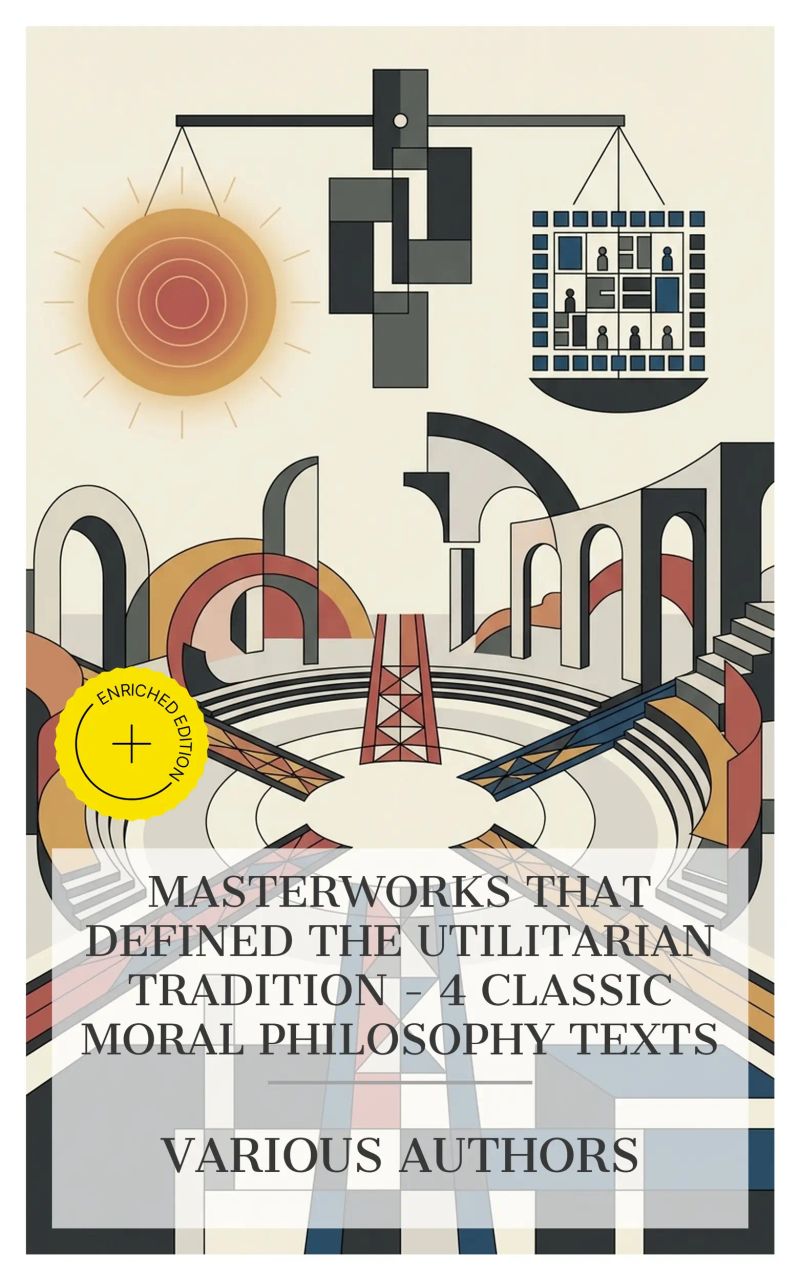
Masterworks That Defined the Utilitarian Tradition – 4 Classic Moral Philosophy Texts
Enriched edition. The Theory of Moral Sentiments, An Enquiry Concerning the Principles of Morals, The Methods of EthicsBy Adam Smith, David Hume, Jeremy Bentham, Henry Sidgwick


Length54h 30m
About this audiobook
Masterworks That Defined the Utilitarian Tradition – 4 Classic Moral Philosophy Texts offers a comprehensive exploration of one of the most influential moral theories in Western philosophy. This anthology showcases a remarkable range of intellectual styles, from analytic discourses to practical ethical applications, deftly capturing the evolution of utilitarian thought. Encompassing groundbreaking insights, the collection includes seminal works that navigate the philosophical landscapes of utility, happiness, and moral calculations. These pieces collectively underscore the profound impact of utilitarianism on both moral philosophy and broader societal principles, making this anthology a significant scholarly resource. The esteemed contributions of Adam Smith, David Hume, Jeremy Bentham, and Henry Sidgwick collectively anchor this volume, offering readers diverse intellectual journeys through the utilitarian tradition. Each philosopher brings a unique voice and perspective shaped by historical and cultural contexts, from the Enlightenment to the late 19th century. This collection not only delineates the fundamental principles of utilitarianism but also reveals the rich dialogue between these thinkers that has enriched moral philosophy. Their works, reflective of varying philosophical movements, converge to form an enduring framework still resonant in contemporary moral inquiry. This anthology is an invaluable resource for those seeking to unravel the complexities of utilitarian thought through seminal texts. It offers readers the opportunity to engage with different interpretations and applications of utilitarianism, presenting a comprehensive view of its development and influence. Whether for academic study or personal interest, this collection invites a deeper understanding of philosophical ethics, shedding light on the timeless debate over what constitutes the greatest good. With its breadth of perspectives and detailed insights, this anthology fosters an enriching dialogue across time and thought.
In this enriched edition, we have carefully created added value for your reading experience:
- An Introduction draws the threads together, discussing why these diverse authors and texts belong in one collection.
- Historical Context explores the cultural and intellectual currents that shaped these works, offering insight into the shared (or contrasting) eras that influenced each writer.
- A collective Analysis highlights common themes, stylistic variations, and significant crossovers in tone and technique, tying together writers from different backgrounds.
- Reflection questions encourage readers to compare the different voices and perspectives within the collection, fostering a richer understanding of the overarching conversation.
Audiobook details
GenrePhilosophy, Literary Classics
Length54 hrs 30 mins
Narrated byListen with 1,000+ voices
FormateBook with Audio
Publish dateMar 18, 2026
LanguageEnglish
Table of contents
1Introduction
2Introduction
3Historical Context
4Masterworks That Defined the Utilitarian Tradition – 4 Classic Moral Philosophy Texts (pt. 1)
5Masterworks That Defined the Utilitarian Tradition – 4 Classic Moral Philosophy Texts (pt. 2)
Show all chaptersShow less
6Masterworks That Defined the Utilitarian Tradition – 4 Classic Moral Philosophy Texts (pt. 3)
7Masterworks That Defined the Utilitarian Tradition – 4 Classic Moral Philosophy Texts (pt. 4)
8Masterworks That Defined the Utilitarian Tradition – 4 Classic Moral Philosophy Texts (pt. 5)
9Masterworks That Defined the Utilitarian Tradition – 4 Classic Moral Philosophy Texts (pt. 6)
10Masterworks That Defined the Utilitarian Tradition – 4 Classic Moral Philosophy Texts (pt. 7)
11Masterworks That Defined the Utilitarian Tradition – 4 Classic Moral Philosophy Texts (pt. 8)
12Masterworks That Defined the Utilitarian Tradition – 4 Classic Moral Philosophy Texts (pt. 9)
13Masterworks That Defined the Utilitarian Tradition – 4 Classic Moral Philosophy Texts (pt. 10)
14Masterworks That Defined the Utilitarian Tradition – 4 Classic Moral Philosophy Texts (pt. 11)
15Masterworks That Defined the Utilitarian Tradition – 4 Classic Moral Philosophy Texts (pt. 12)
16Masterworks That Defined the Utilitarian Tradition – 4 Classic Moral Philosophy Texts (pt. 13)
17Masterworks That Defined the Utilitarian Tradition – 4 Classic Moral Philosophy Texts (pt. 14)
18Masterworks That Defined the Utilitarian Tradition – 4 Classic Moral Philosophy Texts (pt. 15)
19Masterworks That Defined the Utilitarian Tradition – 4 Classic Moral Philosophy Texts (pt. 16)
20Masterworks That Defined the Utilitarian Tradition – 4 Classic Moral Philosophy Texts (pt. 17)
21Masterworks That Defined the Utilitarian Tradition – 4 Classic Moral Philosophy Texts (pt. 18)
22Masterworks That Defined the Utilitarian Tradition – 4 Classic Moral Philosophy Texts (pt. 19)
23Masterworks That Defined the Utilitarian Tradition – 4 Classic Moral Philosophy Texts (pt. 20)
24Masterworks That Defined the Utilitarian Tradition – 4 Classic Moral Philosophy Texts (pt. 21)
25Masterworks That Defined the Utilitarian Tradition – 4 Classic Moral Philosophy Texts (pt. 22)
26Analysis
27Reflection
The Wealth of Nations & The Theory of Moral SentimentsAdam Smith59h 19m4.2 (4K)$1.99 · $0.00
The Wealth of NationsAdam Smith30h 50m4.1 (130.7K)$20 · $0.00

The Wealth of Nations (Annotated)Adam Smith42h 48m4.2 (35.4K)$2 · $0.00

Analytic Summary of The Wealth of NationsAdam Smith31m$7 · $0.00
Analytic Summary of The Wealth of NationsAdam Smith22m$7 · $0.00

The Essays of Adam SmithAdam Smith20h 38m4.2 (24)$1 · $0.00
An Inquiry Into the Nature and Causes of the Wealth of NationsAdam Smith, M. Garnier35h 14m4.3 (124.3K)$2 · $0.00

An Inquiry into the Nature and Causes of the Wealth of NationsAdam Smith43h 7m4.1 (120.2K)$2 · $0.00
The Invisible Hand of the Market: The Theory of Moral Sentiments + The Wealth of NationsAdam Smith59h 8m4.2 (1.6K)$2 · $0.00

Der Wohlstand der Nationen (Zusammengefasste Ausgabe)Adam Smith9h 3m$2
The Invisible Hand of the Market: The Theory of Moral Sentiments + The Wealth of Nations (2 Pioneering Studies of Capitalism) (Annotated)Adam Smith59h 21m4.0 (81)$1.99 · $0.00

Der Wohlstand der NationenAdam Smith43h 37m4.1 (38.1K)$2 · $0.00

500 citações de grandes filósofos do século 18Adam Smith, Denis Diderot, Georg Christoph Lichtenberg, Nicolas de Chamfort, Pierre Augustin Caron de Beaumarchais2h 2m$8 · $0.00

600 citaten van de grote schrijvers uit de 18e eeuwAdam Smith, Charles de Montesquieu, Denis Diderot, Georg Christoph Lichtenberg, Jean-Jacques Rousseau, Pierre-Augustin Caron de Beaumarchais, Charles Montesquieu2h 55m$8 · $0.00

600 citat från 1700-talets stora författareAdam Smith, Charles de Montesquieu, Denis Diderot, Georg Christoph Lichtenberg, Jean-Jacques Rousseau, Pierre-Augustin Caron de Beaumarchais2h 35m$8 · $0.00

500 citazioni dei grandi filosofi del XVIII secoloAdam Smith, Denis Diderot, Georg Christoph Lichtenberg, Nicolas de Chamfort, Pierre Augustin Caron de Beaumarchais2h 17m$8 · $0.00

500 citat från 1700-talets stora filosoferAdam Smith, Denis Diderot, Georg Christoph Lichtenberg, Nicolas de Chamfort, Pierre Augustin Caron de Beaumarchais2h 12m$8 · $0.00

The Money GameAdam Smith7h 42m4.1 (2.1K)$15 · $0.00

600 Zitate von den großen Schriftstellern des 18. JahrhundertsAdam Smith, Charles de Montesquieu, Denis Diderot, Georg Christoph Lichtenberg, Jean-Jacques Rousseau, Pierre-Augustin Caron de Beaumarchais3h 25m$8 · $0.00

That Bird Has My WingsJarvis Jay Masters9h 49m4.4 (13.7K)$29 · $0.00

Tâo Teh KingLaozi2h 34m4.4 (230.9K)$2 · $0.00
SymposiumPlato3h 26m4.4 (97.9K)$1.20 · $0.00

Buddhist Boot CampTimber Hawkeye2h 39m4.4 (8.4K)$18 · $0.00
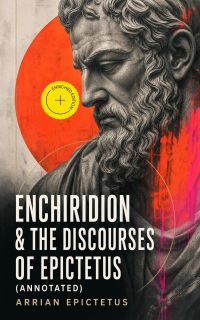
Enchiridion & The Discourses of Epictetus (Annotated)Arrian Epictetus18h 9m4.4 (3.5K)$2 · $0.00

The Meditations of the Emperor Marcus Aurelius AntoninusEmperor of Rome Marcus Aurelius5h 41m4.4 (1.8M)$1 · $0.00

Crime and PunishmentFyodor Dostoevsky23h 11m4.4 (1.3M)$12 · $0.00

MeditationsMarcus Aurelius5h 52m4.4 (433.7K)$1 · $0.00

Everyday DharmaSuneel Gupta5h 2m4.5 (761)$20 · $0.00

The Joyful Wisdom ("La Gaya Scienza")Friedrich Wilhelm Nietzsche11h 37m4.4 (26.6K)$1 · $0.00
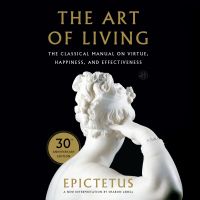
The Art of LivingEpictetus, Sharon Lebell3h 16m4.4 (50.1K)$18 · $0.00
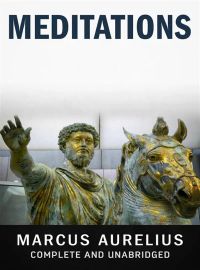
MeditationsEmperor Of Rome Marcus Aurelius7h 23m4.3 (477.5K)$1.20 · $0.00

The Imitation of ChristThomas à Kempis6h 27m4.3 (84.6K)$21 · $0.00

Sadhana: the realisation of lifeRabindranath Tagore3h 49m4.4 (8.6K)$6 · $0.00
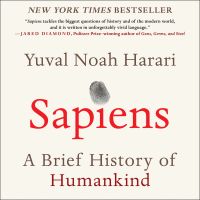
SapiensYuval Noah Harari15h 18m4.3 (1.4M) · 1215$33 · $0.00

You BelongSebene Selassie8h 35m4.4 (2.7K)$26 · $0.00

The Song Celestial; Or, Bhagavad-Gîtâ (from the Mahâbhârata)Anonymous2h 18m4.4 (3.2K)$2 · $0.00

The KybalionThe Three Initiates3h 47m4.3 (58.7K)$20 · $0.00

Chuang Tzu: Mystic, Moralist, and Social ReformerZhuangzi14h 42m4.4 (1.2K)$1 · $0.00

High-RisersBen Austen13h 33m4.4 (2.8K)$33 · $0.00

To Kill a MockingbirdHarper Lee12h 18m4.5 (7.4M)$29 · $0.00

These Precious DaysAnn Patchett11h 14m4.5 (45.2K)$29 · $0.00

This Side of Paradise - The Original 1920 Edition (Annotated)F. Scott Fitzgerald11h 30m4.6 (1.6K)$2 · $0.00
The Great Gatsby: Original 1925 Edition (An F. Scott Fitzgerald Classic NovelFrancis Scott Fitzgerald4h 45m4.6 (9.3K)$18 · $0.00

TWELFTH NIGHTWilliam Shakespeare, Sidney Lee16h 38m4.6 (2.8K)$1.99 · $0.00

The Complete Histories / History Plays of William Shakespeare (Annotated)William Shakespeare29h 42m4.6 (2.3K)$1.99 · $0.00

Braving the TruthRachel Held Evans11h 31m4.7 (359)$29 · $0.00

The Old Man and the Sea (Annotated)Ernest Hemingway4h 27m4.6 (1.4K)$2 · $0.00

Henry V (The Play, Historical Background and Analysis of the Character in the Play)William Shakespeare, William Hazlitt8h 50m4.6 (1.3K)$1.99 · $0.00

H. P. LOVECRAFT Ultimate Collection: Novellas, Short Stories, Poetry & Essays (Annotated)H. P. Lovecraft12h 28m4.6 (2.3K)$2 · $0.00

Time RegainedMarcel Proust16h 8m4.5 (10.6K)$1.99 · $0.00
The Mis-Education of the NegroCarter Goodwin Woodson4h 32m4.5 (28.4K)$10 · $0.00
Lessons in TruthH. Emilie3h 50m4.6 (1.4K)$4.70 · $0.00

TORAH - Bilingual Edition: English/Hebrew (Annotated)Max Margolis, JPS28h 26m4.6 (1K)$2 · $0.00

Betty Crocker picture cooky bookBetty Crocker, Inc. General Mills2h 13m4.5 (6.5K)$1 · $0.00

The Complete Tales of Beatrix PotterBeatrix Potter3h 36m4.5 (75K)$3 · $0.00

Anne of Green GablesL. M. Montgomery11h 1m4.5 (1.2M)$2.30 · $0.00

Crime and Punishment (The Unabridged Garnett Translation) (Annotated)Fyodor Dostoevsky24h 25m4.5 (15.4K)$1.99 · $0.00

The North American IndianEdward S. Curtis, Frederick Webb Hodge6h4.5 (1.2K)$2 · $0.00

The Picture of Dorian Gray: The Uncensored 13 Chapter Version + The Revised 20 Chapter Version (Annotated)Oscar Wilde16h 12m4.5 (2.8K)$1.99 · $0.00
You may also like
The Ethics of AristotleAristotle9h 36m4.2 (62K)Free

Talk to MeDean Nelson10h 9m4.3 (646)$29 · $0.00

Against EmpathyPaul Bloom7h 30m3.8 (9K)$26 · $0.00
THE COMPLETE WORKS OF PLATOPlato141h 50m4.5 (15.6K)$1.99 · $0.00

THE COMPLETE ESSAYS OF MONTAIGNE (Annotated Edition)Michel de Montaigne46h 38m4.5 (24K)$1.99 · $0.00
The Essays of Arthur Schopenhauer; the Art of Controversy (Annotated)Arthur Schopenhauer4h 28m3.8 (19.7K)$2 · $0.00

THE COMPLETE ESSAYS OF MONTAIGNE (Annotated Edition)Michel de Montaigne46h 38m4.3 (22.6K)$1 · $0.00
PersuadableAl Pittampalli7h 3m4.2 (296)$24 · $0.00
Plato's Republic (Annotated)Plato18h 13m4.1 (1.3K)$1.99 · $0.00
From Script to Stage: 3 Classic Books on Writing and Producing PlaysBarrett H. Clark, William Archer14h 38m$1.99 · $0.00
A Brief History of Modern Philosophy (Annotated)Harald Høffding11h 23m$2 · $0.00
The Negotiator in You: SalesJoshua N. Weiss PhD54m3.4 (46)$10

Modern Foundations of Ethics and Reason – 6 Classic Moral Philosophy EssaysBenedictus de Spinoza, Adam Smith, David Hume, Immanuel Kant, Arthur Schopenhauer, Friedrich Wilhelm Nietzsche66h 55m$1
The Philosophy of Hegel: Collected WorksGeorg Wilhelm Friedrich Hegel244h 38m3.8 (52)$2 · $0.00
The Essence of Hegel's PhilosophyGeorg Wilhelm Friedrich Hegel240h 53m$2 · $0.00

Anti-Semitism in the United StatesLee J. Levinger4h 31m$1 · $0.00

My American DiaryClare Sheridan7h 19m$2 · $0.00

Japanese Plays and PlayfellowsOsman Edwards8h 54m$2 · $0.00

Harnessing Power and InfluenceWillow R. Stone6h 17m$6.40 · $0.00

The New SpiritHavelock Ellis6h 55m$2 · $0.00