
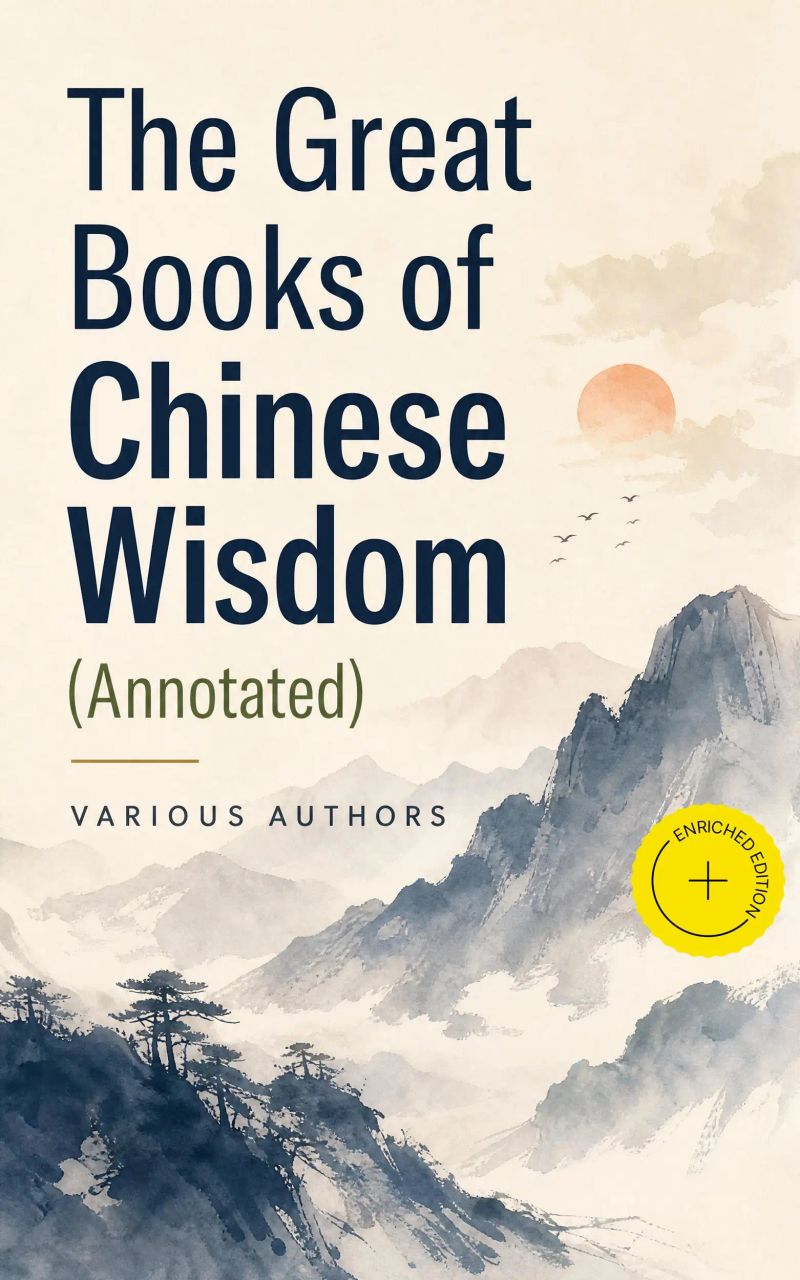
The Great Books of Chinese Wisdom (Annotated)
Enriched Edition. Feng Shui, The Art of War, I Ching, AnalectsBy Confucius, Mencius, Sun Tzu, Ernest J. Eitel, Anonymous


Length39h 9m
About this audiobook
The Great Books of Chinese Wisdom gathers foundational texts that shaped Chinese ethical, political, and strategic thought, presenting a rich spectrum of aphorism, dialogue, philosophical argument, military analysis, and reflective prose. Moving from Confucian ideals of self-cultivation and social harmony to the pragmatics of statecraft and conflict, the volume situates classical wisdom within a broad literary and intellectual continuum. Its standout teachings on virtue, governance, ritual, human nature, and strategy reveal why these works have remained central to East Asian civilization and global intellectual history. The collection brings together voices associated with major currents of ancient Chinese thought, including Confucian moral philosophy, Mencian humanism, and the strategic tradition epitomized by Sun Tzu, alongside interpretive and transmitted materials shaped by later scholarship and anonymous preservation. Together, these contributors illuminate the cultural world of the Warring States and imperial China, where questions of order, duty, education, and power acquired enduring urgency. Their varied approaches create a layered portrait of wisdom as both inward discipline and practical guidance. This anthology is recommended to readers seeking a compact yet expansive encounter with Chinese classical thought. It offers students, general readers, and scholars an opportunity to compare distinct modes of reasoning and expression within a single volume. By placing moral philosophy beside political counsel and strategic insight, the book fosters a productive dialogue across traditions and invites renewed reflection on leadership, conduct, and the art of living.
This enriched edition has been carefully crafted to add value to your reading experience.
- An Introduction draws the threads together, discussing why these diverse authors and texts belong in one collection.
- Historical Context explores the cultural and intellectual currents that shaped these works, offering insight into the shared (or contrasting) eras that influenced each writer.
- A combined Synopsis (Selection) briefly outlines the key plots or arguments of the included pieces, helping readers grasp the anthology's overall scope without giving away essential twists.
- A collective Analysis highlights common themes, stylistic variations, and significant crossovers in tone and technique, tying together writers from different backgrounds.
- Reflection questions encourage readers to compare the different voices and perspectives within the collection, fostering a richer understanding of the overarching conversation.
Audiobook details
Rating★★★★ 4.4 (65)
Includes Amazon, Goodreads
GenrePhilosophy, Literary Classics
Length39 hrs 9 mins
Narrated byListen with 1,000+ voices
FormateBook with Audio
Publish dateSep 10, 2021
LanguageEnglish
Table of contents
1The Drawings and Engravings of William Blake (Fully Illustrated) (Annotated)
26Hexagram XVII. Sui
2Introduction
27Hexagram XVIII. Kû
3Historical Context
28Hexagram XIX. Lin
4Synopsis (Selection)
29Hexagram XX. Kwân
5Preface
30Hexagram XXI. Shih Ho
Show all chaptersShow less
6Introduction
31Hexagram XXII. Pî
7Chapter II. The Subject-Matter of the Text. The Lineal Figures and the Explanation of Them
32Hexagram XXIII. Po
8Chapter III. The Appendixes
33Hexagram XXIV. Fû
9Plates I, II, III, Exhibiting the Hexagrams and Trigrams
34Hexagram XXV. Wû Wang
10The Text
35Hexagram XXVI. Tâ Khû
11Hexagram II. Khwăn
36Hexagram XXVII. Î
12Hexagram III. Kun
37Hexagram XXVIII. Tâ Kwo
13Hexagram IV. Măng
38Hexagram XXIX. Khan
14Hexagram V. Hsü
39Hexagram XXX. Lî
15Hexagram VI. Sung
40Section II
16Hexagram VII. Sze
41Hexagram XXXII. Hăng
17Hexagram VIII. Pî
42Hexagram XXXIII. Thun
18Hexagram IX. Hsiâo Khû
43Hexagram XXXIV. Tâ Kwang
19Hexagram X. Lî
44Hexagram XXXV. Ȝin
20Hexagram XI. Thâi
45Hexagram XXXVI. Ming Î
21Hexagram XII. Phî
46Hexagram XXXVII. Kiâ Zăn
22Hexagram XIII. Thung Zăn
47Hexagram XXXVIII. Khwei
23Hexagram XIV. Tâ Yû
48Hexagram XXXIX. Kien
24Hexagram XV. Khien
49Hexagram XL. Kieh
25Hexagram XVI. Yü
50Hexagram XLI. Sun
Shih KingConfucius7h 5m4.1 (1.9K)$1.99 · $0.00
The Books of Chinese WisdomConfucius, Mencius, Sun Tzu, Ernest J. Eitel, Anonymous39h 4m4.4 (120)$1.99 · $0.00
The Books of Traditional Confucian CanonConfucius44h 53m$1.99 · $0.00
The Wisdom of Confucius - 6 books in One EditionConfucius8h 51m$1.99 · $0.00
Confucius' The Great Learning & The Commentary by TsangConfucius1h 22m3.9 (486)$1.99 · $0.00
The Shih King: Book of Poetry (Annotated)Confucius7h 28m$2 · $0.00
Classic of History (Part 1 & 2: The Book of Thang & The Books of Yü) (Annotated)Confucius2h 36m$2 · $0.00
Spring and Autumn Annals (Annotated)Confucius10h 58m4.3 (10)$2 · $0.00
The Wisdom of Confucius with Critical and Biographical SketchesConfucius5h 9m3.7 (291)$2 · $0.00
The Life, Labours and Doctrines of Confucius (Unabridged) (Annotated)Confucius3h 19m$2 · $0.00
Shu KingConfucius10h 4m4.0 (1.3K)$2 · $0.00
The AnalectsConfucius4h 56m4.0 (35K)$2 · $0.00
The Great Learning (Unabridged) (Annotated)Confucius2h 6m$2 · $0.00
The Five Classics (Annotated)Confucius45h 4m4.2 (485)$0.99 · $0.00

The Great Learning (A short Confucian text + Commentary by Tsang) (Annotated)Confucius1h 57m4.5 (12)$0.99 · $0.00
Spring and Autumn AnnalsConfucius10h 49m4.1 (36)$1.99 · $0.00
DOCTRINE OF THE MEAN (The Confucian Way to Achieve Equilibrium)Confucius55m3.9 (630)$1.99 · $0.00
THE LIFE, LABOURS AND DOCTRINES OF CONFUCIUSConfucius1h 49m3.8 (23)$1.99 · $0.00
Collected Writings of Confucius + The Life, Labours and Doctrines of Confucius (Annotated)Confucius8h 53m$0.99 · $0.00
Metaphysics (Annotated)Aristotle13h 30m4.6 (1.2K)$2 · $0.00
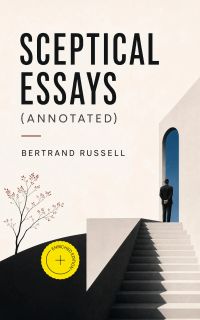
Sceptical Essays (Annotated)Bertrand Russell9h 16m4.6 (1K)$2 · $0.00

WitnessAriel Burger8h 1m4.6 (1.3K)$20 · $0.00
The Magic PresenceGodfré Ray King10h 21m4.6 (307)$1.20 · $0.00
The Art of LivingThich Nhat Hanh5h 1m4.5 (14.2K)$24 · $0.00
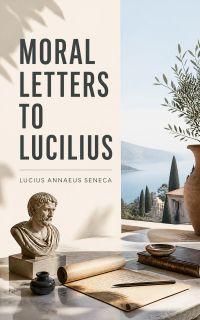
Moral Letters to LuciliusLucius Annaeus Seneca24h 26m4.5 (71.7K)$0.99 · $0.00
Lessons in TruthH. Emilie Cady3h 50m4.5 (2.4K)$20 · $0.00
The Discourses of EpictetusP. E. MATHESOM12h 47m4.4 (17.7K)$1.20 · $0.00
IlluminationsWalter Benjamin10h 12m4.4 (16.2K)$20 · $0.00
That Bird Has My WingsJarvis Jay Masters9h 49m4.4 (13.7K)$29 · $0.00

Tâo Teh KingLaozi2h 34m4.4 (230.9K)$2 · $0.00
SymposiumPlato3h 26m4.4 (97.9K)$1.20 · $0.00

Buddhist Boot CampTimber Hawkeye2h 39m4.4 (8.4K)$18 · $0.00
Enchiridion & The Discourses of Epictetus (Annotated)Arrian Epictetus18h 9m4.4 (3.5K)$2 · $0.00
The Meditations of the Emperor Marcus Aurelius AntoninusEmperor of Rome Marcus Aurelius5h 41m4.4 (1.8M)$1 · $0.00
Crime and PunishmentFyodor Dostoevsky23h 11m4.4 (1.3M)$12 · $0.00
MeditationsMarcus Aurelius5h 52m4.4 (433.7K)$1 · $0.00
Everyday DharmaSuneel Gupta5h 2m4.5 (761)$20 · $0.00
The Joyful Wisdom ("La Gaya Scienza")Friedrich Wilhelm Nietzsche11h 37m4.4 (26.6K)$1 · $0.00
The Art of LivingEpictetus, Sharon Lebell3h 16m4.4 (50.1K)$18 · $0.00

To Kill a MockingbirdHarper Lee12h 18m4.5 (7.4M)$29 · $0.00

These Precious DaysAnn Patchett11h 14m4.5 (45.2K)$29 · $0.00

The Jeeves and Wooster Stories: The Complete Collection (33 Books)P. G. Wodehouse21h 57m4.7 (2.8K)$15 · $0.00
The Gulag Archipelago Volume 3Aleksandr I. Solzhenitsyn21h 56m4.7 (8.9K)$46 · $0.00

This Side of Paradise - The Original 1920 Edition (Annotated)F. Scott Fitzgerald11h 30m4.6 (1.6K)$2 · $0.00
The Great Gatsby: Original 1925 Edition (An F. Scott Fitzgerald Classic NovelFrancis Scott Fitzgerald4h 45m4.6 (9.3K)$18 · $0.00
TWELFTH NIGHTWilliam Shakespeare, Sidney Lee16h 38m4.6 (2.8K)$1.99 · $0.00

The Complete Histories / History Plays of William Shakespeare (Annotated)William Shakespeare29h 42m4.6 (2.3K)$0.99 · $0.00
Braving the TruthRachel Held Evans11h 31m4.7 (359)$29 · $0.00

The Old Man and the Sea (Annotated)Ernest Hemingway4h 27m4.6 (1.4K)$2 · $0.00

Henry V (The Play, Historical Background and Analysis of the Character in the Play)William Shakespeare, William Hazlitt8h 50m4.6 (1.3K)$1.99 · $0.00
H. P. LOVECRAFT Ultimate Collection: Novellas, Short Stories, Poetry & Essays (Annotated)H. P. Lovecraft12h 28m4.6 (2.3K)$2 · $0.00
Time RegainedMarcel Proust16h 8m4.5 (10.6K)$1.99 · $0.00
The Mis-Education of the NegroCarter Goodwin Woodson4h 32m4.5 (28.4K)$10 · $0.00
Lessons in TruthH. Emilie3h 50m4.6 (1.4K)$4.70 · $0.00

TORAH - Bilingual Edition: English/Hebrew (Annotated)Max Margolis, JPS28h 26m4.6 (1K)$2 · $0.00
Betty Crocker picture cooky bookBetty Crocker, Inc. General Mills2h 13m4.5 (6.5K)$1 · $0.00
The Complete Tales of Beatrix PotterBeatrix Potter3h 36m4.5 (75K)$3 · $0.00

Anne of Green GablesL. M. Montgomery11h 1m4.5 (1.2M)$2.30 · $0.00

Crime and Punishment (The Unabridged Garnett Translation) (Annotated)Fyodor Dostoevsky24h 25m4.5 (15.4K)$0.99 · $0.00
You may also like
How to SeeThich Nhat Hanh1h 27m4.4 (2.5K)$10 · $0.00
Change Your Schedule, Change Your LifeSuhas Kshirsagar, Michelle D. Seaton7h 49m4.2 (5.5K)$26 · $0.00

Ayurveda Beginner’s GuideSusan Weis-Bohlen5h 1m4.2 (3.9K)$20
The Tao of Joy Every DayDerek Lin10h 24m4.6 (762)$20 · $0.00
The Essential Writings of Ralph Waldo EmersonRalph Waldo Emerson10h 1m4.4 (6.5K)$12 · $0.00

Sadhana: the realisation of lifeRabindranath Tagore3h 49m4.4 (8.6K)$6 · $0.00
The Art of IsStephen Nachmanovitch7h 3m4.2 (454)$20 · $0.00
Change Your MindRJ Spina7h 5m4.6 (288)$17
Hatha Yoga (translated)William Walker Atkinson6h 56m4.2 (1.7K)$4.70 · $0.00
The Essential EnneagramDavid Daniels, Virginia Price4h 30m4.0 (4.4K)$20 · $0.00
Personal GrowthSteve Pavlina1h 30m4.1 (5.1K)$12 · $0.00

Mind and Behavior: 5 Classic Psychological BooksBolton Hall, Alfred Binet, Théodore Simon, Lillian Moller Gilbreth, Frank B. Gilbreth, Wilhelm Max Wundt, Harry L. Hollingworth, Albert T. Poffenberger25h 39m$0.99 · $0.00

California and the CaliforniansDavid Starr Jordan38m3.9 (11)$1 · $0.00

As a Matter of CourseAnnie Payson Call2h 33m3.5 (11)$2 · $0.00
20 Japanese Lessons for a Noisy WorldSarah Malone1h 59m$5.70 · $0.00

Astrology and YouAurora T. Huntington5h 22m$4.10 · $0.00
Gentle gymnasticsRoberta Cavicchioli2h 53m$13 · $0.00

1. A desert nightSarah Schofield, Andrew Coombs11m$6 · $0.00

Hygge: How You Can Incorporate Coziness Into Your Living Space (The Ultimate Guide to Scandinavian Ways of Living a Balanced Life Filled With Coziness and Happiness)Martin g, Miguel Kratochvil2h 22m$13 · $0.00

SolitudeJohann Georg Zimmermann10h 22m$1 · $0.00