
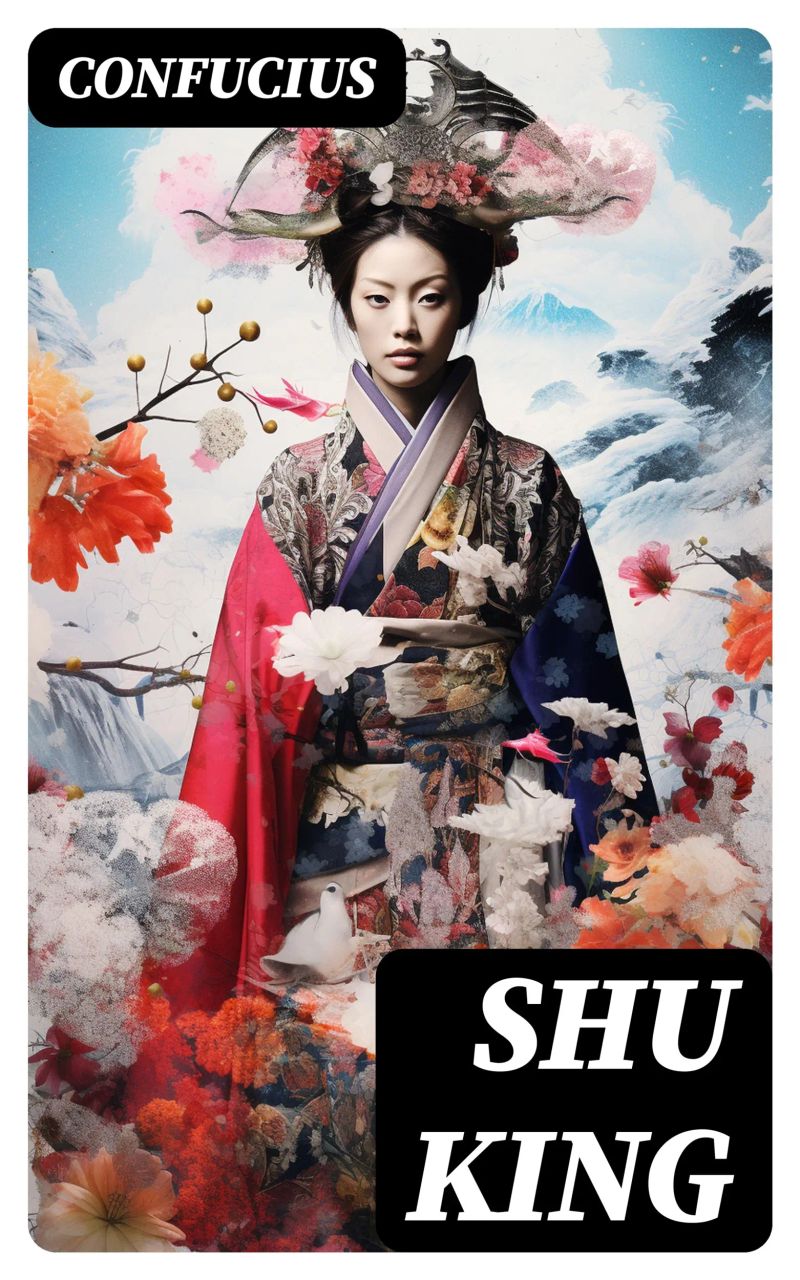


Length10h 4m
About this audiobook
The 'Shu King,' or 'Book of Documents,' is a seminal work in the canon of Chinese literature that encapsulates the political philosophy and moral teachings of ancient China. Written during the Zhou Dynasty, this collection of historical documents, speeches, and proclamations offers profound insights into governance, ethics, and the principles of virtue. Confucius's literary style is characterized by clarity and conciseness, often using aphorisms and dialogues to convey complex ideas. The text serves not only as a historical record but also as a reflection on the moral responsibilities of leaders and the need for harmony within society, embodying the Confucian values of righteousness and benevolence amidst the turbulence of its time. Confucius, known as Kong Fuzi, was a philosopher and educator whose teachings influenced generations in East Asia. His intellectual journey was heavily shaped by the societal upheavals he witnessed, leading him to advocate for a return to traditional virtues and ethical governance. His efforts in compiling and interpreting various texts, including the 'Shu King', reveal his belief in the transformative power of education and self-cultivation. Through his philosophical inquiries, Confucius sought to provide a foundation for social order that continues to resonate in contemporary discourse. For readers seeking a deeper understanding of the ethical and political frameworks that have shaped Chinese civilization, the 'Shu King' is an indispensable text. It challenges contemporary audiences to reflect on the principles of leadership, responsibility, and morality, making it relevant even in the modern era. Embrace this classic to gain insight into the philosophical underpinnings of governance that have endured across millennia.
Audiobook details
Rating★★★★ 4.0 (1.3K)
Includes Goodreads, LibraryThing, Amazon, StoryGraph
GenrePhilosophy
Length10 hrs 4 mins
Narrated byListen with 1,000+ voices
FormateBook with Audio
Publish dateNov 21, 2023
LanguageEnglish
Table of contents
1Shu King: The Book of Documents
2PREFACE.
3CHAPTER I. THE NATURE AND HISTORY OF THE SHÛ.
4CHAPTER II THE CREDIBILITY OF THE RECORDS IN THE SHÛ
5CHAPTER III. ON THE CHRONOLOGY OF CHINA, AND THE PRINCIPAL ERAS IN THE SHÛ.
Show all chaptersShow less
6A CHART BY REV. PROFESSOR PRITCHARD
7THE CANON OF YÂO.
8BOOK I. THE CANON OF SHUN.
9BOOK II. THE COUNSELS OF THE GREAT YÜ.
10BOOK III. THE COUNSELS OF KÂO-YÂO.
11BOOK IV. THE YÎ AND KÎ.
12BOOK I. THE TRIBUTE OF YÜ.
13BOOK II. THE SPEECH AT KAN.
14BOOK III. THE SONGS OF THE FIVE SONS.
15BOOK IV. THE PUNITIVE EXPEDITION OF YIN.
16BOOK I. THE SPEECH OF THANG.
17BOOK II. THE ANNOUNCEMENT OF KUNG-HUI
18BOOK III. THE ANNOUNCEMENT OF THANG.
19BOOK IV. THE INSTRUCTIONS OF Î
20BOOK V. THE THÂI KIÂ.
21BOOK VI. THE COMMON POSSESSION OF PURE VIRTUE.
22BOOK VII. THE PAN-KĂNG.
23BOOK VIII. THE CHARGE TO YÜEH.
24BOOK IX. THE DAY OF THE SUPPLEMENTARY SACRIFICE TO KÂO ȜUNG.
25BOOK X. THE CHIEF OF THE WEST'S CONQUEST OF LÎ.
26BOOK XI. THE COUNT OF WEI.
27BOOK I. THE GREAT DECLARATION.
28BOOK II. THE SPEECH AT MÛ.
29BOOK III. THE SUCCESSFUL COMPLETION OF THE WAR.
30BOOK IV. THE GREAT PLAN.
31BOOK V. THE HOUNDS OF LÜ.
32BOOK VI. THE METAL-BOUND COFFER.
33BOOK VII. THE GREAT ANNOUNCEMENT.
34BOOK VIII. THE CHARGE TO THE COUNT OF WEI.
35BOOK IX. THE ANNOUNCEMENT TO THE PRINCE OF KHANG.
36BOOK X. THE ANNOUNCEMENT ABOUT DRUNKENNESS.
37BOOK XI. THE TIMBER OF THE ROTTLERA.
38BOOK XII. THE ANNOUNCEMENT OF THE DUKE OF SHÂO.
39BOOK XIII. THE ANNOUNCEMENT CONCERNING LO.
40BOOK XIV. THE NUMEROUS OFFICERS.
41BOOK XV. AGAINST LUXURIOUS EASE.
42BOOK XVI. THE PRINCE SHIH.
43BOOK XVII. THE CHARGE TO KUNG OF ȜHÂI
44BOOK XVIII. THE NUMEROUS REGIONS.
45BOOK XIX. THE ESTABLISHMENT OF GOVERNMENT.
46BOOK XX. THE OFFICERS OF KÂU.
47BOOK XXI. THE KÜN-KHĂN.
48BOOK XXII. THE TESTAMENTARY CHARGE.
49BOOK XXIII. THE ANNOUNCEMENT OF KING KHANG.
50BOOK XXIV. THE CHARGE TO THE DUKE OF PÎ.
Shih KingConfucius7h 5m4.1 (1.9K)$1.99 · $0.00
The Books of Traditional Confucian CanonConfucius44h 53m$1.99 · $0.00
The Wisdom of Confucius - 6 books in One EditionConfucius8h 51m$1.99 · $0.00
Confucius' The Great Learning & The Commentary by TsangConfucius1h 22m3.9 (486)$1.99 · $0.00
The Shih King: Book of Poetry (Annotated)Confucius7h 28m$2 · $0.00
The Great Books of Chinese Wisdom (Annotated)Confucius, Mencius, Sun Tzu, Ernest J. Eitel, Anonymous39h 10m4.4 (65)$2 · $0.00
Classic of History (Part 1 & 2: The Book of Thang & The Books of Yü) (Annotated)Confucius2h 36m$2 · $0.00
Spring and Autumn Annals (Annotated)Confucius10h 58m4.3 (10)$2 · $0.00
The Wisdom of Confucius with Critical and Biographical SketchesConfucius5h 9m3.7 (291)$2 · $0.00
The Life, Labours and Doctrines of Confucius (Unabridged) (Annotated)Confucius3h 19m$2 · $0.00
The AnalectsConfucius4h 56m4.0 (35K)$2 · $0.00

The Great Learning (Unabridged) (Annotated)Confucius2h 6m$2 · $0.00
The Five Classics (Annotated)Confucius45h 4m4.2 (485)$1.99 · $0.00

The Great Learning (A short Confucian text + Commentary by Tsang) (Annotated)Confucius1h 57m4.5 (12)$1.99 · $0.00
Spring and Autumn AnnalsConfucius10h 49m4.1 (36)$1.99 · $0.00
DOCTRINE OF THE MEAN (The Confucian Way to Achieve Equilibrium)Confucius55m3.9 (630)$1.99 · $0.00
THE LIFE, LABOURS AND DOCTRINES OF CONFUCIUSConfucius1h 49m3.8 (23)$1.99 · $0.00
Collected Writings of Confucius + The Life, Labours and Doctrines of Confucius (Annotated)Confucius8h 53m$1.99 · $0.00

Los Tres Reyes Magos chinos, Confucio, Lao Tzu, Buda...Confucius, Laozi, Bouddha1h 9m$8 · $0.00

WitnessAriel Burger8h 1m4.6 (1.3K)$20 · $0.00
The Magic PresenceGodfré Ray King10h 21m4.6 (307)$1.20 · $0.00
The Art of LivingThich Nhat Hanh5h 1m4.5 (14.2K)$24 · $0.00
Moral Letters to LuciliusLucius Annaeus Seneca24h 26m4.5 (71.7K)$1.99 · $0.00
Lessons in TruthH. Emilie Cady3h 50m4.5 (2.4K)$20 · $0.00
The Discourses of EpictetusP. E. MATHESOM12h 47m4.4 (17.7K)$1.20 · $0.00
IlluminationsWalter Benjamin10h 12m4.4 (16.2K)$20 · $0.00
That Bird Has My WingsJarvis Jay Masters9h 49m4.4 (13.7K)$29 · $0.00

Tâo Teh KingLaozi2h 34m4.4 (230.9K)$2 · $0.00
SymposiumPlato3h 26m4.4 (97.9K)$1.20 · $0.00

Buddhist Boot CampTimber Hawkeye2h 39m4.4 (8.4K)$18 · $0.00
Enchiridion & The Discourses of Epictetus (Annotated)Arrian Epictetus18h 9m4.4 (3.5K)$2 · $0.00
The Meditations of the Emperor Marcus Aurelius AntoninusEmperor of Rome Marcus Aurelius5h 41m4.4 (1.8M)$1 · $0.00
Crime and PunishmentFyodor Dostoevsky23h 11m4.4 (1.3M)$12 · $0.00
MeditationsMarcus Aurelius5h 52m4.4 (433.7K)$1 · $0.00

Everyday DharmaSuneel Gupta5h 2m4.5 (761)$20 · $0.00

The Joyful Wisdom ("La Gaya Scienza")Friedrich Wilhelm Nietzsche11h 37m4.4 (26.6K)$1 · $0.00
The Art of LivingEpictetus, Sharon Lebell3h 16m4.4 (50.1K)$18 · $0.00
MeditationsEmperor Of Rome Marcus Aurelius7h 23m4.3 (477.5K)$1.20 · $0.00

The Imitation of ChristThomas à Kempis6h 27m4.3 (84.6K)$21 · $0.00
You may also like

The Story of EgyptJoann Fletcher17h 26m4.0 (2K)$25
Myths and Legends of Ancient EgyptLewis Spence10h 45m4.0 (1.8K)$2.30

The Legends and Myths of Hawaii: The fables and folk-lore of a strange people (Annotated)King of Hawaii David Kalakaua20h 45m4.1 (380)$2 · $0.00
Septuagint - HabakkukScriptural Research Institute51m$4.10 · $0.00
The Art in Ancient EgyptGeorges Perrot, Charles Chipiez27h4.2 (53)$1.99 · $0.00
The Old Testament Interpreted: 20 Analytical BooksHarold B. Hunting, Amy Steedman, James Hartwell Willard, Theophilus G. Pinches, T. K. Cheyne, Marian MacLean Finney, Robertson L. Whiteside, A. L. O. E., Noel Hope, Mildred Duff, G. F. Maclear, Emma Howard Wight, Diodorus of Sicily, Flavius Josephus, Tacitus, Celsus, Emperor Julian, Porphyry, Thomas Taylor103h 40m$1.99 · $0.00
A Journey through Art of IndiaRobert Weinstein1h 26m$13 · $0.00
Virgin PortraitsKlaus Carl1h 37m$13.50 · $0.00
A Few of the World’s Great ReligionsJoseph McCabe26m$3
The Ancient Mythology: Egyptian, Assyrian, Babylonian, Greek and Roman MythsE. M. Berens, Lewis Spence35h 33m4.2 (19)$1.99 · $0.00
Turquois mosaic art in ancient MexicoMarshall H. Saville4h 9m$1 · $0.00
The Eternal Legacy of Ancient EgyptSantiago Machain7h 34m$24 · $0.00

Historical Description of Westminster Abbey, Its Monuments and CuriositiesAnonymous5h 48m$1 · $0.00
Art and Civilization of PersiaVladimir Lukonin, Anatoli Ivanov8h 41m4.1 (27)$19 · $0.00

The Myths of Mexico & Peru (Annotated)Lewis Spence11h 47m3.3 (153)$2 · $0.00

A Popular History of IrelandThomas D'Arcy McGee33h 39m4.0 (154)$1 · $0.00

Hawaiian Historical LegendsW. D. Westervelt4h 54m3.4 (26)$1 · $0.00
ANCIENT EGYPT: History, Archaeology, Literature, Mythology & Ancient Egyptian TextsGeorge Rawlinson, Arthur Gilman, Gaston Maspero, Agnes Sophia Griffith Johns, E. A. Wallis Budge47h 14m4.2 (25)$1.99 · $0.00
The Virgin in ArtKyra Belán4h 3m4.3 (24)$18 · $0.00
The Mythology of Babylonia and Assyria (Annotated)Donald A. Mackenzie18h 44m4.4 (12)$2.99 · $0.00