
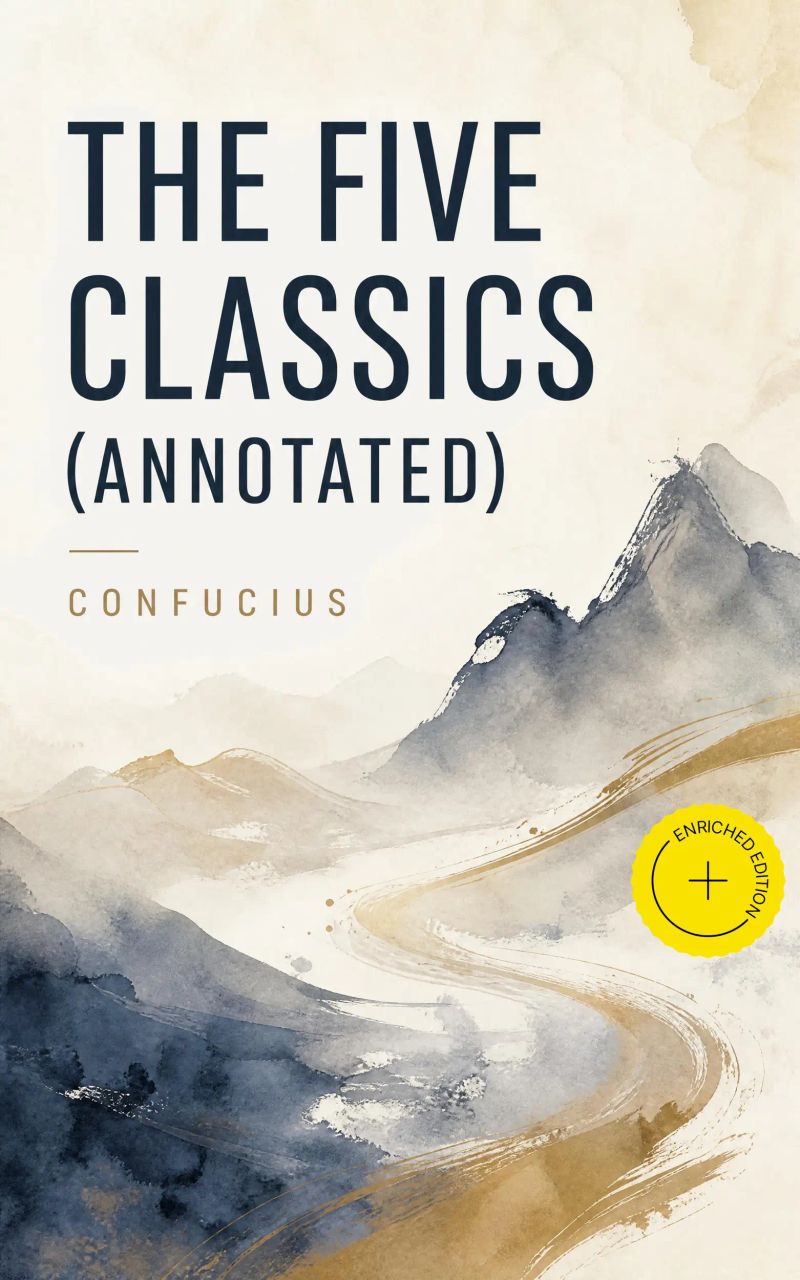
The Five Classics (Annotated)
Enriched Edition. Premium Collection – The Books of the Traditional Confucian CanonBy Confucius

Length45h 4m
About this audiobook
The Five Classics gathers the foundational texts of early Chinese civilization: the Book of Changes, Book of Documents, Book of Odes, Book of Rites, and Spring and Autumn Annals. Varied in form—divination manual, political archive, lyric anthology, ritual treatise, and terse chronicle—they establish the moral, cosmological, and historical vocabulary of the Confucian tradition. Their style ranges from archaic compression to ceremonial precision, placing them at the center of classical Chinese literary and philosophical culture. Confucius (551–479 BCE), more accurately regarded as a transmitter, editor, and interpreter than a conventional author, lived during the political fragmentation of the late Zhou world. His reverence for antiquity, ritual order, humane governance, and disciplined learning shaped the way these works were preserved and read. The Classics reflect the concerns that animated his teaching: how rulers should govern, how persons cultivate virtue, and how inherited forms sustain social harmony. This collection is indispensable for readers seeking the roots of East Asian ethics, statecraft, education, and literary expression. Demanding but richly rewarding, The Five Classics invites slow reading and historical attention, offering not merely ancient documents but a durable vision of culture as moral practice.
This enriched edition has been carefully crafted to add value to your reading experience.
- A comprehensive Introduction outlines these selected works' unifying features, themes, or stylistic evolutions.
- The Author Biography highlights personal milestones and literary influences that shape the entire body of writing.
- A Historical Context section situates the works in their broader era—social currents, cultural trends, and key events that underpin their creation.
- A concise Synopsis (Selection) offers an accessible overview of the included texts, helping readers navigate plotlines and main ideas without revealing critical twists.
- A unified Analysis examines recurring motifs and stylistic hallmarks across the collection, tying the stories together while spotlighting the different work's strengths.
- Reflection questions inspire deeper contemplation of the author's overarching message, inviting readers to draw connections among different texts and relate them to modern contexts.
- Lastly, our hand‐picked Memorable Quotes distill pivotal lines and turning points, serving as touchstones for the collection's central themes.
Audiobook details
Rating★★★★ 4.2 (485)
Includes Goodreads, Amazon, LibraryThing, StoryGraph
GenrePhilosophy
Length45 hrs 4 mins
Narrated byListen with 1,000+ voices
FormateBook with Audio
Publish dateSep 10, 2021
LanguageEnglish
Table of contents
1The Five Classics (Annotated)
26Hexagram XVI. Yü
2Introduction
27Hexagram XVII. Sui
3Author Biography
28Hexagram XVIII. Kû
4Historical Context
29Hexagram XIX. Lin
5Synopsis (Selection)
30Hexagram XX. Kwân
Show all chaptersShow less
6Preface
31Hexagram XXI. Shih Ho
7Introduction
32Hexagram XXII. Pî
8Chapter II. The Subject-Matter of the Text. The Lineal Figures and the Explanation of Them
33Hexagram XXIII. Po
9Chapter III. The Appendixes
34Hexagram XXIV. Fû
10Plates I, II, III, Exhibiting the Hexagrams and Trigrams
35Hexagram XXV. Wû Wang
11The Text
36Hexagram XXVI. Tâ Khû
12Hexagram II. Khwăn
37Hexagram XXVII. Î
13Hexagram III. Kun
38Hexagram XXVIII. Tâ Kwo
14Hexagram IV. Măng
39Hexagram XXIX. Khan
15Hexagram V. Hsü
40Hexagram XXX. Lî
16Hexagram VI. Sung
41Section II
17Hexagram VII. Sze
42Hexagram XXXII. Hăng
18Hexagram VIII. Pî
43Hexagram XXXIII. Thun
19Hexagram IX. Hsiâo Khû
44Hexagram XXXIV. Tâ Kwang
20Hexagram X. Lî
45Hexagram XXXV. Ȝin
21Hexagram XI. Thâi
46Hexagram XXXVI. Ming Î
22Hexagram XII. Phî
47Hexagram XXXVII. Kiâ Zăn
23Hexagram XIII. Thung Zăn
48Hexagram XXXVIII. Khwei
24Hexagram XIV. Tâ Yû
49Hexagram XXXIX. Kien
25Hexagram XV. Khien
50Hexagram XL. Kieh
50 citations de ConfuciusConfucius10m$3 · $0.00
Shih KingConfucius7h 5m4.1 (1.9K)$1.99 · $0.00
The Books of Chinese WisdomConfucius, Mencius, Sun Tzu, Ernest J. Eitel, Anonymous39h 4m4.4 (120)$1.99 · $0.00
The Books of Traditional Confucian CanonConfucius44h 53m$1.99 · $0.00
THE GREAT LEARNINGConfucius32m3.9 (877)$1.99 · $0.00
The Wisdom of Confucius - 6 books in One EditionConfucius8h 51m$1.99 · $0.00
Confucius' The Great Learning & The Commentary by TsangConfucius1h 22m3.9 (486)$1.99 · $0.00
The Shih King: Book of Poetry (Annotated)Confucius7h 28m$2 · $0.00
The Great Books of Chinese Wisdom (Annotated)Confucius, Mencius, Sun Tzu, Ernest J. Eitel, Anonymous39h 10m4.4 (65)$2 · $0.00
Classic of History (Part 1 & 2: The Book of Thang & The Books of Yü) (Annotated)Confucius2h 36m$2 · $0.00
Spring and Autumn Annals (Annotated)Confucius10h 58m4.3 (10)$2 · $0.00
The Wisdom of Confucius with Critical and Biographical SketchesConfucius5h 9m3.7 (291)$2 · $0.00
The Life, Labours and Doctrines of Confucius (Unabridged) (Annotated)Confucius3h 19m$2 · $0.00
Shu KingConfucius10h 4m4.0 (1.3K)$2 · $0.00
The AnalectsConfucius4h 56m4.0 (35K)$2 · $0.00
The Great Learning (Unabridged) (Annotated)Confucius2h 6m$2 · $0.00
The Great Learning (A short Confucian text + Commentary by Tsang) (Annotated)Confucius1h 57m4.5 (12)$0.99 · $0.00
Spring and Autumn AnnalsConfucius10h 49m4.1 (36)$1.99 · $0.00
DOCTRINE OF THE MEAN (The Confucian Way to Achieve Equilibrium)Confucius55m3.9 (630)$1.99 · $0.00
The Art of LivingThich Nhat Hanh5h 1m4.5 (14.2K)$24 · $0.00
Moral Letters to LuciliusLucius Annaeus Seneca24h 26m4.5 (71.7K)$0.99 · $0.00
Lessons in TruthH. Emilie Cady3h 50m4.5 (2.4K)$20 · $0.00
Letters from a StoicSeneca6h 5m4.4 (80.4K)$6 · $0.00
The Discourses of EpictetusP. E. MATHESOM12h 47m4.4 (17.7K)$1.20 · $0.00
IlluminationsWalter Benjamin10h 12m4.4 (16.2K)$20 · $0.00
That Bird Has My WingsJarvis Jay Masters9h 49m4.4 (13.7K)$29 · $0.00
Tâo Teh KingLaozi2h 34m4.4 (230.9K)$2 · $0.00
SymposiumPlato3h 26m4.4 (97.9K)$1.20 · $0.00

Buddhist Boot CampTimber Hawkeye2h 39m4.4 (8.4K)$18 · $0.00
Enchiridion & The Discourses of Epictetus (Annotated)Arrian Epictetus18h 9m4.4 (3.5K)$2 · $0.00
The Meditations of the Emperor Marcus Aurelius AntoninusEmperor of Rome Marcus Aurelius5h 41m4.4 (1.8M)$1 · $0.00
Crime and PunishmentFyodor Dostoevsky23h 11m4.4 (1.3M)$12 · $0.00
MeditationsMarcus Aurelius5h 52m4.4 (433.7K)$1 · $0.00

Everyday DharmaSuneel Gupta5h 2m4.5 (761)$20 · $0.00
The Joyful Wisdom ("La Gaya Scienza")Friedrich Wilhelm Nietzsche11h 37m4.4 (26.6K)$1 · $0.00
The Art of LivingEpictetus, Sharon Lebell3h 16m4.4 (50.1K)$18 · $0.00
MeditationsEmperor Of Rome Marcus Aurelius7h 23m4.3 (477.5K)$1.20 · $0.00

The Imitation of ChristThomas à Kempis6h 27m4.3 (84.6K)$21 · $0.00

Sadhana: the realisation of lifeRabindranath Tagore3h 49m4.4 (8.6K)$6 · $0.00
You may also like

Diary of Samuel PepysSamuel Pepys121h 36m4.2 (20K)$1.99 · $0.00

Hawaii's StoryLiliʻuokalani11h 46m3.9 (2.2K)$1.99 · $0.00
Mencius (Bilingual Edition: English/Chinese)Mencius9h 3m4.3 (11.2K)$1.99 · $0.00

Diary of Samuel PepysSamuel Pepys121h 34m4.1 (8.7K)$2 · $0.00
Icons 11th - 18th centuriesPhilip Zweig1h 4m$8 · $0.00
The Wisdom of Confucius with Critical and Biographical SketchesConfucius5h 9m3.7 (291)$2 · $0.00

The French RevolutionHilaire Belloc6h 44m3.6 (173)$2.30
History of the United States of America, Volume IIGeorge Bancroft23h 55m$30

Home Life in TokyoJukichi Inouye10h 11m4.0 (81)$2.30

The Story of Westminster AbbeyViolet Brooke-Hunt9h 25m$1 · $0.00

Royals at WarDylan Howard12h 16m3.7 (792)$23 · $0.00

Germany's Historical Journey: Seven Must-ReadsMoritz Busch, Ferdinand Schmidt, A. Walter, James Wycliffe Headlam, S. Miles Bouton, John Hubert Greusel, William Fiddian Reddaway69h 47m$0.99 · $0.00

India, Old and NewValentine Sir Chirol11h 1m3.5 (19)$2 · $0.00
Victorian Society and the Class SystemSantiago Machain9h 24m$29 · $0.00
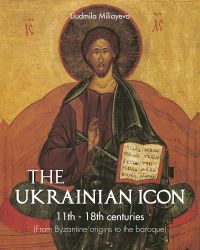
The Ukrainian Icon 11th - 18th centuries (From Byzantine origins to the baroque)Liudmila Miliayeva2h 53m$16 · $0.00

The Hyksos and the War for EgyptSantiago Machain6h 48m$25 · $0.00
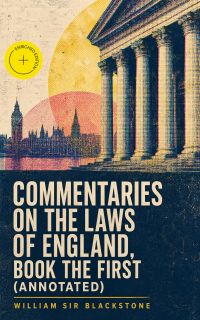
Commentaries on the Laws of England, Book the First (Annotated)William Sir Blackstone14h 13m4.2 (212)$0.99 · $0.00
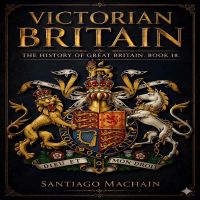
Victorian BritainSantiago Machain5h 32m$21 · $0.00
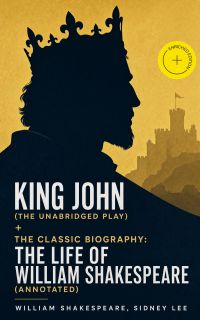
King John (The Unabridged Play) + The Classic Biography: The Life of William Shakespeare (Annotated)William Shakespeare, Sidney Lee16h 37m$2 · $0.00

The House of Lords and the nationPhilip Vernon Smith1h 43m$1 · $0.00