
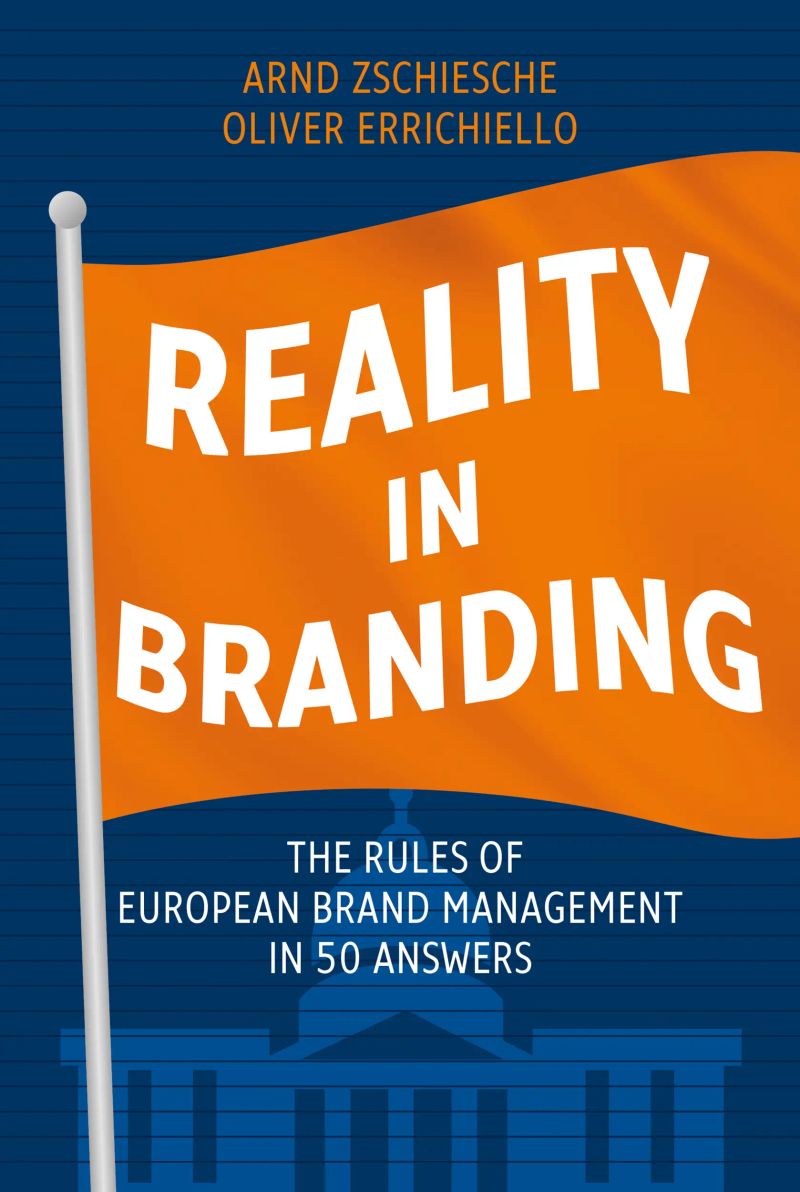
Reality in Branding
The Rules of European Brand Management in 50 AnswersBy Arnd Zschiesche, Oliver Errichiello


Length6h 41m
About this audiobook
Believing is not the same as knowing:
The fundamental facts about the laws of european brand management in 50 answers
From breakfast cereals to smartphones, nothing is left unbranded: brands are with us every step of the way. We define ourselves through the brands we surround ourselves with. Even if we reject brands, that's a brand statement. Brands are everywhere in the 21st century – that's exactly why we all have an opinion on them. When it comes to private life, there is little objection to this concept. However, when it comes to brand management and brand positioning with – in a company, personal sensitivities and feelings are out of place.
Too many opinions, too little wisdom: In 50 timeless answers, brand sociologists Dr. Arnd Zschiesche and Prof. Dr. Oliver Errichiello put a stop to the brand debates that are shaped by the zeitgeist. They speak in plain language where vague chatter typically prevails. And they show why every brand is a social phenomenon that has an impact: It's about the management of social "hard facts." Not just in Europe. Classic European Brand Management leads the way for every company seriously focusing on economic success for the long term – internally, as well. It's time for timeless, value-oriented Branding from the old continent.
Audiobook details
GenreBusiness and Economics
Length6 hrs 41 mins
Narrated byListen with 1,000+ voices
FormateBook with Audio
Publish dateMar 22, 2021
LanguageEnglish
Table of contents
1Titel
2Widmung
3Foreword
4What Is the Problem of Branding Today?
5Basic Principles.
Show all chaptersShow less
61 What is a brand?
72 How is a brand created?
83 Since when have brands existed?
94 What is meant by the term “brand”?
105 Can certain brands be seen as a substitute for a religion? Or even an alternative religion?
116 Where does a brand get its “life” from?
127 How does a brand manage to become a habit?
138 Why are brands so important?
14Brands and Sociology.
159 Why does sociology explain, clarify and strengthen a brand?
1610 What does the scientific model of brand sociology look like?
1711 Isn’t psychology the actual topic when we talk about buying certain brands? Why isn’t it brand psychology?
1812 Brands are a mass phenomenon, but they must appeal to each customer individually. What does this insight mean for an individual brand system?
1913 Why should a brand be a cultural or social entity?
2014 Which basic principle does “healthy” brand development follow?
2115 The foundation of every successful brand is its performance. Is that still the case? Isn’t it more about emotions and the hip image a brand has?
2216 If each brand’s performance is highly individual, how can it be analyzed according to a single principle?
2317 A specific performance by a company is the source of an abstract external effect. What are the typical causes of a brand’s effect on the people outside the company?
2418 How is the part of the performance that is causal for the positive brand prejudice filtered out and isolated?
2519 What determines the building blocks of an individual brand’s success?
2620 Why is it so important that the performance is always reliably the same or at least recognizable as similar?
2721 A brand image is the result of good performance over time. This implies that a brand needs time to establish an image. But is that still true in our fast-paced world?
2822 Does the origin of a brand still play any role in these globalized and digitized times?
2923 How do you properly put the origin of a brand into scene?
3024 Some origins have a negative connotation – or maybe none at all. What can you do about that?
3125 Can the origin itself – for example, a city, a region, a country – be a “real” brand?
3226 How important is a brand’s history? Isn’t the past totally irrelevant in our fast-moving times of digitization and disruption?
3327 Where should the areas of brand management and strategy be positioned within the organization of a company?
3428 Many brands are driven by the fear of not appearing young enough. Which strategy will keep a brand young forever?
3529 Good brand management means drawing clear boundaries. What about brands that are defined as mass brands?
3630 Modern brand management often means basing strategic decisions on figures and data. But can statistics and market research nevertheless accurately reflect a brand?
3731 When companies are slaves to numbers, what does this lead to?
3832 Is good brand management more difficult to enforce in a publicly listed company than in an owner-managed business?
3933 How can a company be – or remain – a strong brand, even as a public corporation?
4034 If no strategy works (anymore), can brands die?
4135 Is there a possibility of a “too much” in brand management? Companies that are “too perfect” in branding?
4236 How important is a logo for a brand?
4337 How important is the name of a brand?
4438 How can the often observed fixation on a logo change be explained if the main topic is a general change in the company?
4539 How important is the slogan or – as it is nowadays often referred to – the “claim” for the brand?
46Brands, Marketing, and Communication.
4740 What is the difference between brand management and marketing? Aren’t both meant to promote sales?
4841 What are the characteristics of good marketing?
4942 What are typical marketing mistakes in relation to the brand?
5043 How do good advertising and communication manifest themselves?
Series
More from Arnd Zschiesche, Oliver Errichiello

30 Minuten MarkenführungArnd Zschiesche, Oliver Errichiello2h 20m$10 · $0.00

Marke ohne MythosArnd Zschiesche, Oliver Errichiello7h 21m4.4 (13)$31 · $0.00

Marke statt MeinungArnd Zschiesche, Oliver Errichiello6h 45m$25 · $0.00

Symbole – die konkreten VertrauensträgerArnd Zschiesche1h 25m$4 · $0.00

Vertrauen – die härteste Währung der WeltArnd Zschiesche9h 3m$31 · $0.00

Never Split the DifferenceChris Voss, Tahl Raz8h 7m4.4 (277.7K)$26 · $0.00
The Intelligent Investor Rev Ed.Benjamin Graham17h 48m4.3 (191.5K)$40 · $0.00

The Hard Thing About Hard ThingsBen Horowitz7h 57m4.2 (134.3K)$26 · $0.00

Boundaries for LeadersHenry Cloud7h 36m4.3 (3.6K)$26 · $0.00

The Secret Door to SuccessFlorence Scovel Shinn2h 25m4.5 (2.1K)$1.20 · $0.00

This Is Going to HurtAdam Kay5h 47m4.4 (444.7K)$24 · $0.00

Big TrustShadé Zahrai, Fayçal Sekkouah8h 36m4.6 (406)$26 · $0.00
The Intelligent Investor Third EditionBenjamin Graham, Jason Zweig20h4.4 (156.6K)$46 · $0.00

Bottle of LiesKatherine Eban14h 25m4.4 (12K)$33 · $0.00

The Antiracist Business BookTrudi Lebrón6h 10m4.6 (275)$17 · $0.00

The FormulaJoshua Robinson, Jonathan Clegg10h 41m4.4 (6.9K)$29 · $0.00

Let Them LeadJohn U. Bacon7h 10m4.5 (1.4K)$24 · $0.00

Secrets of the Millionaire MindT. Harv Eker5h 11m4.4 (301.4K)$24 · $0.00

The Person You Mean to BeDolly Chugh9h 6m4.4 (7.2K)$29 · $0.00
BoundlessNick Kostov, Sean McLain9h 17m4.5 (1.1K)$29 · $0.00

Everyday DharmaSuneel Gupta5h 2m4.5 (761)$20 · $0.00

Let's Talk Mutual FundsMonika Halan7h 5m4.4 (2.4K)$16 · $0.00

Secret PowerDwight Lyman Moody3h 7m4.4 (1.4K)$1.20 · $0.00
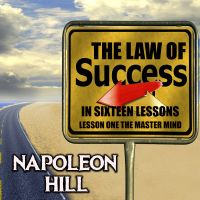
The Law of Success in Sixteen LessonsNapoleon Hill2h 39m4.4 (17.2K)$2 · $0.00
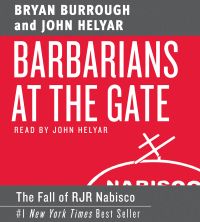
Barbarians at the GateBryan Burrough, John Helyar3h 3m4.4 (52.7K)$18 · $0.00
You may also like

EthicsBenedictus de Spinoza9h 38m4.3 (25.5K)$2.30

How Fiction WorksJames Wood5h 48m4.0 (11.1K)$14 · $0.00

An Enquiry Concerning the Principles of MoralsDavid Hume5h 28m4.2 (7K)$2.30

On Sense and ReferenceGottlob Frege2h 14m4.1 (484)$1 · $0.00

The Meaning of TruthWilliam James6h 24m4.1 (442)$2 · $0.00

Tertium OrganumP. D. Ouspensky14h 45m4.4 (633)$1.99 · $0.00
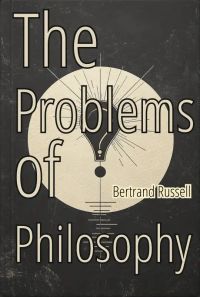
The Problems of PhilosophyBertrand Russell4h 32m4.0 (25.8K)Free

Fallen LeavesWill Durant5h 18m4.2 (2K)$17
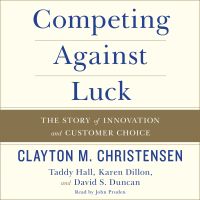
Competing Against LuckClayton M. Christensen, Taddy Hall, Karen Dillon, David S. Duncan7h 25m4.3 (7.6K)$24 · $0.00

The MonadologyGottfried Wilhelm43m4.1 (2.7K)$3.50 · $0.00

Fundamental Principles of the Metaphysic of Morals Immanuel Kant3h 16m4.0 (48.8K)Free

Critique of Practical Reason (Kritik der praktischen Vernunft)Immanuel Kant6h 50m4.1 (14K)$2 · $0.00

The Sounds of Spoken EnglishWalter Ripman3h 23m$2 · $0.00

Æsthetic as science of expression and general linguisticBenedetto Croce13h 48m4.0 (342)$2 · $0.00

AP Spanish Literature and Culture Exam Study GuideMarie Peterson8h 6m$10

Expositor's Bible: The Epistles of St. JohnWilliam Alexander11h 2m$1 · $0.00
Advertising by Motion PicturesErnest A. Dench3h 38m$2.30

The Toxicity of Caffein: An experimental study on different species of animalsWilliam Salant, J. B. Rieger5h 5m$2 · $0.00

The Philosophy of Art (Annotated)Hippolyte Taine4h 13m4.0 (93)$2 · $0.00

Literary BlundersHenry B. Wheatley2h 44m$2 · $0.00