

An Inquiry into the Nature and Causes of the Wealth of Nations
Enriched edition. Unveiling the Secrets of Economic Prosperity and Market DynamicsBy Adam Smith


Length43h 7m
About this audiobook
In 'An Inquiry into the Nature and Causes of the Wealth of Nations,' Adam Smith presents a groundbreaking analysis of economic principles that laid the foundation for modern economics. Written in a clear and engaging prose style characteristic of the 18th century, Smith employs a blend of philosophical reasoning and empirical observation to dissect the processes of production, trade, and the division of labor. He introduces seminal concepts such as the 'invisible hand' and the importance of free markets, revolutionizing the way we understand wealth and economic structures within a burgeoning capitalist society, amidst the backdrop of the Industrial Revolution. Adam Smith, often referred to as the father of economics, was profoundly influenced by the socio-political climate of his time, including the Enlightenment's emphasis on reason and individualism. His academic journey through moral philosophy, coupled with personal experiences in trade practices, informed his views on the dynamics of exchange and the nature of self-interest as a driving force in society. Smith's insights reflect the complexities of early capitalism and its implications for the social order. Recommended for both scholars and general readers, this seminal work not only illuminates the contours of economic theory but also resonates with contemporary discussions on market dynamics, capitalism, and societal welfare. Smith's exploration offers timeless wisdom crucial for understanding today's global economy.
In this enriched edition, we have carefully created added value for your reading experience:
- A succinct Introduction situates the work's timeless appeal and themes.
- The Synopsis outlines the central plot, highlighting key developments without spoiling critical twists.
- A detailed Historical Context immerses you in the era's events and influences that shaped the writing.
- An Author Biography reveals milestones in the author's life, illuminating the personal insights behind the text.
- A thorough Analysis dissects symbols, motifs, and character arcs to unearth underlying meanings.
- Reflection questions prompt you to engage personally with the work's messages, connecting them to modern life.
- Hand‐picked Memorable Quotes shine a spotlight on moments of literary brilliance.
- Interactive footnotes clarify unusual references, historical allusions, and archaic phrases for an effortless, more informed read.
Audiobook details
Rating★★★★ 4.1 (120.2K)
Includes Goodreads, LibraryThing, Amazon, StoryGraph
GenreBusiness and Economics
Length43 hrs 7 mins
Narrated byListen with 1,000+ voices
FormateBook with Audio
Publish dateNov 19, 2019
LanguageEnglish
Table of contents
1Introduction
2Introduction
3Synopsis
4Historical Context
5Author Biography
Show all chaptersShow less
6INTRODUCTION AND PLAN OF THE WORK.
7BOOK I. OF THE CAUSES OF IMPROVEMENT IN THE PRODUCTIVE POWERS OF LABOUR, AND OF THE ORDER ACCORDING TO WHICH ITS PRODUCE IS NATURALLY DISTRIBUTED AMONG THE DIFFERENT RANKS OF THE PEOPLE.
8CHAPTER I. OF THE DIVISION OF LABOUR.
9CHAPTER II. OF THE PRINCIPLE WHICH GIVES OCCASION TO THE DIVISION OF LABOUR.
10CHAPTER III. THAT THE DIVISION OF LABOUR IS LIMITED BY THE EXTENT OF THE MARKET.
11CHAPTER IV. OF THE ORIGIN AND USE OF MONEY.
12CHAPTER V. OF THE REAL AND NOMINAL PRICE OF COMMODITIES, OR OF THEIR PRICE IN LABOUR, AND THEIR PRICE IN MONEY.
13CHAPTER VI. OF THE COMPONENT PART OF THE PRICE OF COMMODITIES.
14CHAPTER VII. OF THE NATURAL AND MARKET PRICE OF COMMODITIES.
15CHAPTER VIII. OF THE WAGES OF LABOUR.
16CHAPTER IX. OF THE PROFITS OF STOCK.
17CHAPTER X. OF WAGES AND PROFIT IN THE DIFFERENT EMPLOYMENTS OF LABOUR AND STOCK.
18CHAPTER XI. OF THE RENT OF LAND. (pt. 1)
19CHAPTER XI. OF THE RENT OF LAND. (pt. 2)
20CHAPTER XI. OF THE RENT OF LAND. (pt. 3)
21BOOK II. OF THE NATURE, ACCUMULATION, AND EMPLOYMENT OF STOCK.
22CHAPTER I. OF THE DIVISION OF STOCK.
23CHAPTER II. OF MONEY, CONSIDERED AS A PARTICULAR BRANCH OF THE GENERAL STOCK OF THE SOCIETY, OR OF THE EXPENSE OF MAINTAINING THE NATIONAL CAPITAL.
24CHAPTER III. OF THE ACCUMULATION OF CAPITAL, OR OF PRODUCTIVE AND UNPRODUCTIVE LABOUR.
25CHAPTER IV. OF STOCK LENT AT INTEREST.
26CHAPTER V. OF THE DIFFERENT EMPLOYMENTS OF CAPITALS.
27BOOK III. OF THE DIFFERENT PROGRESS OF OPULENCE IN DIFFERENT NATIONS
28CHAPTER I. OF THE NATURAL PROGRESS OF OPULENCE.
29CHAPTER II. OF THE DISCOURAGEMENT OF AGRICULTURE IN THE ANCIENT STATE OF EUROPE, AFTER THE FALL OF THE ROMAN EMPIRE.
30CHAPTER III. OF THE RISE AND PROGRESS OF CITIES AND TOWNS, AFTER THE FALL OF THE ROMAN EMPIRE.
31CHAPTER IV. HOW THE COMMERCE OF TOWNS CONTRIBUTED TO THE IMPROVEMENT OF THE COUNTRY.
32BOOK IV. OF SYSTEMS OF POLITICAL ECONOMY.
33CHAPTER I. OF THE PRINCIPLE OF THE COMMERCIAL OR MERCANTILE SYSTEM.
34CHAPTER II. OF RESTRAINTS UPON IMPORTATION FROM FOREIGN COUNTRIES OF SUCH GOODS AS CAN BE PRODUCED AT HOME.
35CHAPTER III. OF THE EXTRAORDINARY RESTRAINTS UPON THE IMPORTATION OF GOODS OF ALMOST ALL KINDS, FROM THOSE COUNTRIES WITH WHICH THE BALANCE IS SUPPOSED TO BE DISADVANTAGEOUS.
36CHAPTER IV. OF DRAWBACKS.
37CHAPTER V. OF BOUNTIES.
38CHAPTER VI. OF TREATIES OF COMMERCE.
39CHAPTER VII. OF COLONIES. (pt. 1)
40CHAPTER VII. OF COLONIES. (pt. 2)
41CHAPTER VIII. CONCLUSION OF THE MERCANTILE SYSTEM.
42CHAPTER IX. OF THE AGRICULTURAL SYSTEMS, OR OF THOSE SYSTEMS OF POLITICAL ECONOMY WHICH REPRESENT THE PRODUCE OF LAND, AS EITHER THE SOLE OR THE PRINCIPAL SOURCE OF THE REVENUE AND WEALTH OF EVERY COUNTRY.
43BOOK V. OF THE REVENUE OF THE SOVEREIGN OR COMMONWEALTH
44CHAPTER I. OF THE EXPENSES OF THE SOVEREIGN OR COMMONWEALTH. (pt. 1)
45CHAPTER I. OF THE EXPENSES OF THE SOVEREIGN OR COMMONWEALTH. (pt. 2)
46CHAPTER I. OF THE EXPENSES OF THE SOVEREIGN OR COMMONWEALTH. (pt. 3)
47CHAPTER II. OF THE SOURCES OF THE GENERAL OR PUBLIC REVENUE OF THE SOCIETY. (pt. 1)
48CHAPTER II. OF THE SOURCES OF THE GENERAL OR PUBLIC REVENUE OF THE SOCIETY. (pt. 2)
49CHAPTER III. OF PUBLIC DEBTS.
50Analysis

The Wealth of Nations & The Theory of Moral SentimentsAdam Smith59h 19m4.2 (4K)$1.99 · $0.00
The Wealth of NationsAdam Smith42h 50m4.1 (127.1K)$1.99 · $0.00
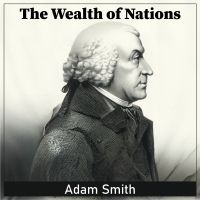
The Wealth of NationsAdam Smith30h 50m4.1 (130.7K)$20 · $0.00

The Wealth of Nations (Annotated)Adam Smith42h 48m4.2 (35.4K)$2 · $0.00

Analytic Summary of The Wealth of NationsAdam Smith31m$7 · $0.00
Analytic Summary of The Wealth of NationsAdam Smith22m$7 · $0.00

The Essays of Adam SmithAdam Smith20h 38m4.2 (24)$1 · $0.00
An Inquiry Into the Nature and Causes of the Wealth of NationsAdam Smith, M. Garnier35h 14m4.3 (124.3K)$2 · $0.00

The Invisible Hand of the Market: The Theory of Moral Sentiments + The Wealth of NationsAdam Smith59h 8m4.2 (1.6K)$2 · $0.00

Der Wohlstand der Nationen (Zusammengefasste Ausgabe)Adam Smith9h 3m$2

The Invisible Hand of the Market: The Theory of Moral Sentiments + The Wealth of Nations (2 Pioneering Studies of Capitalism) (Annotated)Adam Smith59h 21m4.0 (81)$0.99 · $0.00

Masterworks That Defined the Utilitarian Tradition – 4 Classic Moral Philosophy TextsAdam Smith, David Hume, Jeremy Bentham, Henry Sidgwick54h 31m$2

Der Wohlstand der NationenAdam Smith43h 37m4.1 (38.1K)$2 · $0.00

500 citações de grandes filósofos do século 18Adam Smith, Denis Diderot, Georg Christoph Lichtenberg, Nicolas de Chamfort, Pierre Augustin Caron de Beaumarchais2h 2m$8 · $0.00

600 citaten van de grote schrijvers uit de 18e eeuwAdam Smith, Charles de Montesquieu, Denis Diderot, Georg Christoph Lichtenberg, Jean-Jacques Rousseau, Pierre-Augustin Caron de Beaumarchais, Charles Montesquieu2h 55m$8 · $0.00

600 citat från 1700-talets stora författareAdam Smith, Charles de Montesquieu, Denis Diderot, Georg Christoph Lichtenberg, Jean-Jacques Rousseau, Pierre-Augustin Caron de Beaumarchais2h 35m$8 · $0.00

500 citazioni dei grandi filosofi del XVIII secoloAdam Smith, Denis Diderot, Georg Christoph Lichtenberg, Nicolas de Chamfort, Pierre Augustin Caron de Beaumarchais2h 17m$8 · $0.00

500 citat från 1700-talets stora filosoferAdam Smith, Denis Diderot, Georg Christoph Lichtenberg, Nicolas de Chamfort, Pierre Augustin Caron de Beaumarchais2h 12m$8 · $0.00

The Money GameAdam Smith7h 42m4.1 (2.1K)$15 · $0.00

Never Split the DifferenceChris Voss, Tahl Raz8h 7m4.4 (277.7K)$26 · $0.00
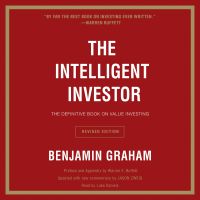
The Intelligent Investor Rev Ed.Benjamin Graham17h 48m4.3 (191.5K)$40 · $0.00

The Hard Thing About Hard ThingsBen Horowitz7h 57m4.2 (134.3K)$26 · $0.00

Boundaries for LeadersHenry Cloud7h 36m4.3 (3.6K)$26 · $0.00
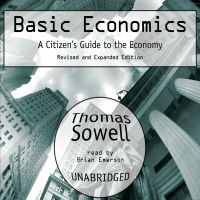
Basic EconomicsThomas Sowell18h 32m4.5 (29.3K)$28 · $0.00

Poor Charlie’s AlmanackGrover Gardener, Charles T. Munger13h 9m4.5 (24.7K)$18 · $0.00

The Ambuja StoryNarotam Sekhsaria13h 59m4.5 (830)$33 · $0.00

The Secret Door to SuccessFlorence Scovel Shinn2h 25m4.5 (2.1K)$1.20 · $0.00

This Is Going to HurtAdam Kay5h 47m4.4 (444.7K)$24 · $0.00

Big TrustShadé Zahrai, Fayçal Sekkouah8h 36m4.6 (406)$26 · $0.00
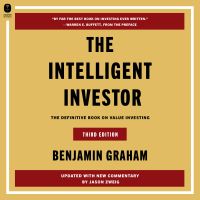
The Intelligent Investor Third EditionBenjamin Graham, Jason Zweig20h4.4 (156.6K)$46 · $0.00

Bottle of LiesKatherine Eban14h 25m4.4 (12K)$33 · $0.00

The Antiracist Business BookTrudi Lebrón6h 10m4.6 (275)$17 · $0.00

The FormulaJoshua Robinson, Jonathan Clegg10h 41m4.4 (6.9K)$29 · $0.00

Let Them LeadJohn U. Bacon7h 10m4.5 (1.4K)$24 · $0.00

Secrets of the Millionaire MindT. Harv Eker5h 11m4.4 (301.4K)$24 · $0.00

The Person You Mean to BeDolly Chugh9h 6m4.4 (7.2K)$29 · $0.00
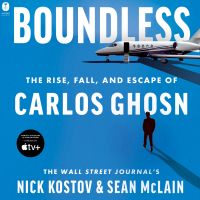
BoundlessNick Kostov, Sean McLain9h 17m4.5 (1.1K)$29 · $0.00

Everyday DharmaSuneel Gupta5h 2m4.5 (761)$20 · $0.00

Let's Talk Mutual FundsMonika Halan7h 5m4.4 (2.4K)$16 · $0.00
You may also like

Great StateTimothy Brook18h 17m4.1 (612)$40 · $0.00

The Republic (Annotated)Plato25h 27m4.1 (261K)$2 · $0.00

Old Times in the Colonies (Illustrated Edition)Charles Carleton Coffin12h 35m4.1 (295)$2 · $0.00
The Problem Of The RupeeBhimrao Ramji Ambedkar12h 8m4.3 (462)$2.30

The Story of MankindHendrik Willem van Loon14h 3m3.6 (6K)$25

Letters from Egypt (Annotated)Lucie Lady Duff Gordon13h 27m4.1 (444)$2 · $0.00

The New World (Complete Edition)Winston Churchill14h 25m4.4 (2.5K)$1 · $0.00

The Story of MusicHoward Goodall12h 9m4.3 (1.1K)$20

Rio de Janeiro at the Turn of the MillenniumIngo Latotzki, Klaus. H Carl1h 25m$8 · $0.00

Historic ParisJetta Sophia Wolff9h 28m$2 · $0.00
Herzegovina; Or, Omer Pacha and the Christian RebelsGeorge Arbuthnot6h 53m$2 · $0.00

The Cathedral Church of Canterbury [2nd ed.]Hartley Withers4h 12m$1 · $0.00

My Diary – North and South (Vol. 1&2)William Howard Russell27h 30m4.3 (24)$2 · $0.00

The Development of Religious Liberty in ConnecticutM. Louise Greene10h 56m$2 · $0.00

Rare Days In JapanGeorge Trumbull Ladd8h 8m$2.40

Amazon - Historical OriginsCarlos Araujo Carujo3h 45m$7 · $0.00

Milton's EnglandLucia True Ames Mead6h 54m$2 · $0.00

Mentone, Cairo, and CorfuConstance Fenimore Woolson6h 36m$2 · $0.00

Memoirs of Journeys to Venice and the Low CountriesAlbrecht Dürer2h 32m3.7 (127)$1.20 · $0.00

A Diplomat in JapanErnest Mason Satow14h 8m4.2 (174)$2 · $0.00