
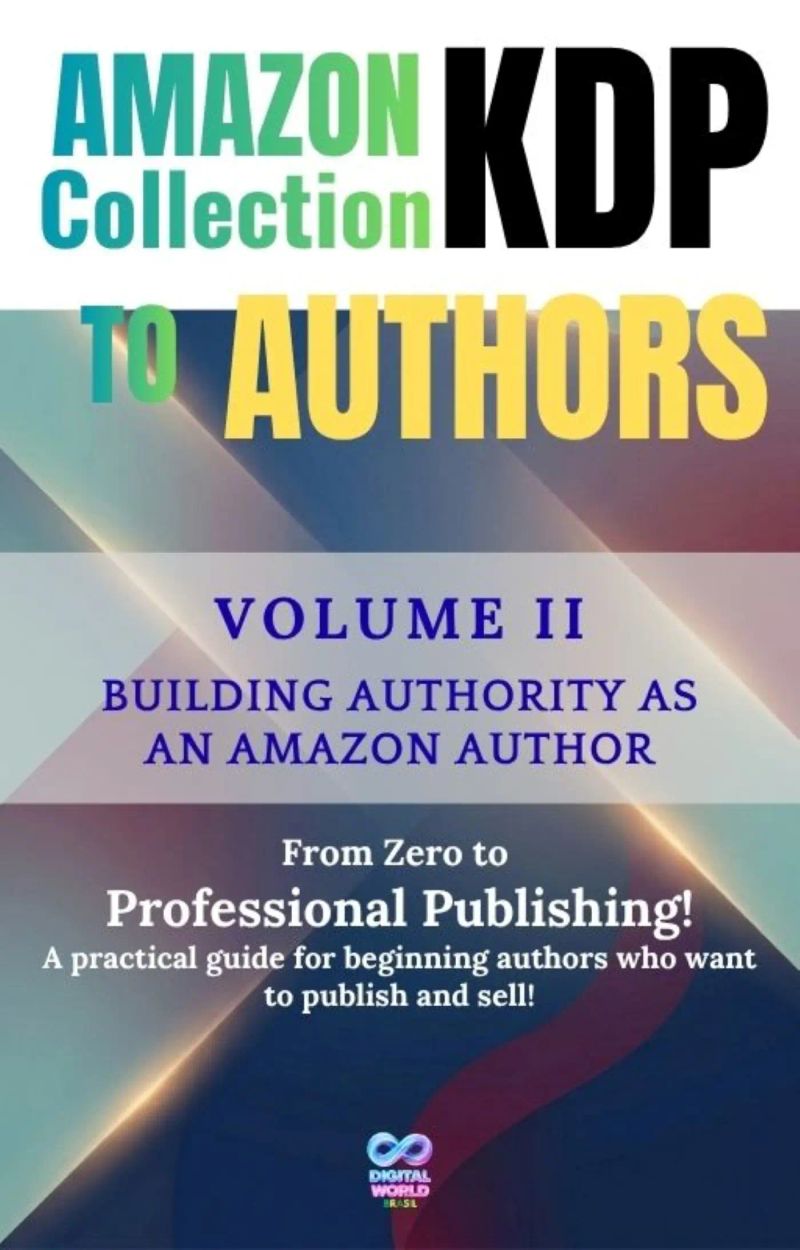
Amazon KDP Collection for Authors - Volume II - Building authority as an Amazon author
By Digital World


Length4h 8m
About this audiobook
Amazon KDP for Authors: The Definitive Collection for Your Publishing Career
Writing a book is a talent; building a career as an author is a strategy. Welcome to the Amazon KDP for Authors collection, the practical and definitive guide for those who want to master Kindle Direct Publishing not just as a writer, but as a digital market strategist.
Throughout 8 volumes designed for fluid and applicable reading, you will go on a complete journey: from the initial draft to building a high-value global catalog. Forget abstract theories or complex manuals. This collection was designed to transform the independent author into a high-performance professional, capable of taking their project out of anonymity and positioning it as a reference in their chosen niche.
What you will build in each stage:
Volume I | Fundamentals and Ecosystem: The foundation of your business. Entrepreneurial mindset, research into profitable niches, and the strategic decisions that separate amateurs from best-sellers.
Volume II | Authority and Brand: How to create a magnetic presence. Impactful biographies, ethical strategies for reviews, and the use of anthologies to accelerate your reputation.
Volume III | Visibility and Algorithm: The engineering behind sales. Master Amazon SEO, long-tail keywords, and sustainable organic ranking.
Volume IV | Launch and Momentum: Create sales waves. Pre-sale strategies, intelligent use of KDP Select promotional tools, and how to maintain commercial momentum after launch.
Volume V | Monetization and Royalties: Maximize your return on investment (ROI). Dynamic pricing, mastering Kindle Unlimited, and optimizing content for earnings per page read (KENP).
Volume VI | Traffic and Growth: The engine of scale. Profit-focused Amazon Ads, affiliate programs, and how to attract qualified readers from external channels.
Volume VII | Catalog Engineering: Long-term vision. Series structuring, cross-selling techniques, and essential metrics to multiply the value of your work.
Volume VIII | Global Expansion: The world as your market. Strategic translation, audiobook creation, and the formula to transform your writing into high-value intellectual property.
The key features of this collection:
To ensure you move from theory to practice without hesitation, each chapter includes:
Official Guidelines: Strategies 100% aligned with Amazon's rules, guaranteeing the security of your business.
Editor's Insight: Precise warnings based on decades of experience, revealing the pitfalls that cost authors time and money.
Action Frameworks: Checklists, templates, and ready-to-use scripts for immediate application.
This collection is for you if:
You want your books to be found and read by a real audience.
You see writing as a sustainable business, not just a hobby.
You seek deep and structured knowledge, far from promises of "magic formulas".
You dream of building a legacy and generating passive income with your authorial catalog.
The journey of a successful independent author requires method and consistency. Your destiny—a solid career and the fulfillment of making a living from your writing—is within your reach.
Publish strategically. Build with clarity. Master it with Amazon KDP for Authors.
Audiobook details
GenreBusiness and Economics, Other
Length4 hrs 8 mins
Narrated byListen with 1,000+ voices
FormateBook with Audio
Publish dateApr 3, 2026
LanguageEnglish
Table of contents
1PRESENTATION OF THE KDP AMAZON COLLECTION FOR AUTHORS
1257.4 The Importance of a Unique and Recognizable Voice: How to develop your authorial voice:
2The Method: The Complete Training to Build a Publishing Business on Amazon
1267.5 Common Mistakes: Appearing Robotic, Impersonal, or like a "Shampoo Salesman"
3The KDP Method
127Error 1: Corporate Language
4The Genesis of KDP AMAZON COLLECTION
128Error 2: Lack of Personality
5What is KDP Amazon?
129Error 3: Excessively Self-Promotional Tone
Show all chaptersShow less
6The Methodology: How This Collection Works
130Error 4: Lack of Responses and Interactions
7For Whom Was This Collection Written?
131Error 5: Profile Too Personal, Not Original Enriched
8The Student Journey: What to Expect
1327.6 How to Balance Personal and Professional Life on Social Media: Some guidelines:
9What is this collection not?
1337.7 Case Study: The Author Who Became a Friend of the Readers
10A Note About the Authors and the Curatorship
134PART 3: Audience Building
11Part 1: The Foundation of the Publishing Business
135CHAPTER 8: CONTENT STRATEGIES — THE MAGNET THAT ATTRACTS QUALIFIED READERS
12The Journey Continues: Where You Are and Where You're Going
1368.1 What is Organic Traffic and Why is it the Most Valuable Asset?: Why is organic traffic so valuable?
13What You Will Learn in This Volume
1378.2 The 4 Types of Content That Attract Qualified Readers
14What Makes This Volume Different
1381. Educational Content
15What to Expect (And What Not to Expect)
1392. Inspiring Content
16The Reader's Journey in Volume II
1403. Entertainment Content
17One Last Word Before We Begin
1414. Behind-the-scenes Content
18CHAPTER 1: AUTHORITY AS A STRATEGIC ASSET — THE NEW LEVEL OF THE AUTHOR-ENTREPRENEUR
1428.3 The Art of Visual Storytelling — Creating Content that Captivates
191.1 The Difference Between Anonymous Author and Niche Authority
143Visual formats that work for authors:
201.2 The Three Pillars of Digital Authority
144Tips for a consistent visual identity:
211. Presence (Where are you?)
1458.4 Choosing the Right Platforms — Where to Be Present
222. Social Proof (What people say about you)
146Analysis of the main platforms for authors:
233. Positioning (How you are perceived)
147strategy :
241.3 How Authority Influences the Amazon Algorithm
1488.5 The Ideal Frequency — Consistency Without Burnout: General attendance guidelines:
251. History of Consistent Sales
1498.6 The Content Journey: From First Contact to Purchase
262. Reader Engagement
150Stage 1: Attraction (Top of the Funnel)
273. Conversion Rate per Author
151Stage 2: Nutrition (Middle of the Funnel)
284. Relationship with the Niche
152Stage 3: Conversion (Bottom of the Funnel)
291.4 The Virtuous Cycle of Authority
1538.7 Practical Example: One Month of Content for a Novel Author
301.5 Case Study: Authors Who Built Empires Based on Authority
154Week 1 (Attraction):
31Case 1: C.S. Lewis (The Classic Example)
155Week 2 (Nutrition):
32Case 2: Brené Brown (The Academic Authority Who Became a Phenomenon)
156Week 3 (Nutrition + Smooth Conversion):
33Case 3: Successful Independent Author (The Modern Example)
157Week 4 (Conversion + Launch):
341.6 What to Expect From This Volume
158CHAPTER 9: THE EDITORIAL CALENDAR — STRATEGIC PLANNING FOR CONSISTENCY AND IMPACT
35CHAPTER 2: AUTHOR CENTRAL — YOUR OFFICIAL HEADQUARTERS ON AMAZON
1599.1 What is an Editorial Calendar and Why Is It Your Best Friend?: What an editorial calendar does for you:
362.1 What is Amazon Author Central and Why Is It Non-Negotiable?
1609.2 How to Plan Content in Advance Without Losing Spontaneity: The balanced approach:
372.2 Step-by-Step Guide to Creating and Claiming Your Author Page
1619.3 Calendar Management Tools ( Trello , Notion , Google Calendar , Airtable )
38Step 1: Access the Author Central website.
1621. Google Calendar (or a physical planner)
39Step 2: Select the marketplace
1632. Spreadsheets (Google Sheets / Excel)
40Step 3: Find your books
1643. Trello
41Step 4: Claim your page
1654. Notion
42Step 5: Complete your profile.
1665. Airtable
432.3 The Biography That Converts — High-Impact Structure
1679.4 Types of Content for Different Stages of the Reader's Journey
44The Structure of a High-Impact Biography:
168Stages of the Reader's Journey and Corresponding Content :
45Examples of High-Impact Biographies:
169Highlights of my career as an author and adjustments to my calendar:
462.4 The Author's Photo — Much More Than a Detail: Guidelines for a Professional Author Photo:
1709.5 Ideal Frequency per Platform (Based on Data): Frequency guidelines (minimum recommended to see consistent results):
472.5 Videos and Visual Resources — Going Beyond Text
1719.6 Example of a Monthly Editorial Calendar for Authors
48Types of Videos That Work:
172Week 1 (Focus on Attraction)
49Guidelines for Videos on Author Central:
173Week 2 (Focus on Nutrition)
502.6 Organizing Your Books — The Importance of Curation: Organizational Strategies:
174Week 3 (Nutrition + Smooth Conversion)
512.7 The "Follow" Button — Your Most Valuable Relationship Asset
175Week 4 (Launch / Conversion)
52Why is this so important?
176CHAPTER 10: ENGAGEMENT THAT CONVERTS — TRANSFORMING FOLLOWERS INTO FANS AND CUSTOMERS
53How to encourage readers to follow you:
17710.1 The Difference Between Audience and Community
542.8 Linking Different Markets
17810.2 How to Respond to Comments and Messages Authentically: Principles for authentic responses:
55Why is this necessary?
17910.3 Creating Interaction Rituals — Live Streams, Question Boxes, Polls: Rituals that work for authors:
56Priority Markets for Portuguese-Language Authors:
18010.4 Interactive Content — Quizzes , Challenges, Collaborative Storylines
572.9 Ongoing Maintenance — Your Page as a Living Asset: Recommended Maintenance Schedule :
181Quizzes
58CHAPTER 3: KNOWING YOUR AUDIENCE — THE SECRET TO AUTHENTIC CONNECTION
182Challenges
593.1 Why "Speaking to Everyone" Is a Recipe for Failure
183Collaborative storylines
603.2 What is a Persona and Why Do You Need One?
184Co-creation surveys
613.3 How to Research and Understand Your Audience
18510.5 The Power of Expressing Gratitude Publicly (and individually)
621. Review Analysis (The Gold Mine)
186Public acknowledgments:
632. Surveys and Direct Questions
187Individual acknowledgments:
643. Interviews with Readers (1:1)
18810.6 Turning Readers into Fans and Fans into Brand Advocates: How to encourage organic promotion:
654. Competitor Analysis
18910.7 Case Study: The Community That Became a Sales Machine
665. Data from Author Central and KDP
190PART 4: COLLABORATIONS AND EXPANSION
673.4 Using Audience Insights to Create More Relevant Content
191CHAPTER 11: STRATEGIC ANTHOLOGIES — MULTIPLYING AUTHORITY AND INCOME WITH COLLECTIVE PROJECTS
683.5 Active Listening on Social Networks: Where to practice active listening:
19211.1 What is an Anthology and Why is it a Tool of Authority?
693.6 Adapting Your Communication as Your Audience Evolves
193Why is an anthology strategic for the organizer (you)?
70Signs that your communication needs to evolve:
194Why is an anthology strategic for the participating authors?
71How to evolve without losing your essence:
19511.2 Benefits for the Curator: Cross-Exposure, Networking, Scalable Income
723.7 Case Study: How Public Awareness Transformed an Author's Career
196Cross-exposure:
73PART 2: Social Proof and Credibility
197Networking:
74CHAPTER 4: THE REVIEW ECOSYSTEM — WHY REVIEWS ARE THE NEW SEAL OF QUALITY
198Scalable income:
754.1 The Weight of Reviews in the Amazon Algorithm (Review of Volume I)
19911.3 Defining the Theme, Scope, and Format of the Anthology
764.2 The Psychology of the Purchase Decision
2001. Theme
774.3 The Relationship Between Volume of Reviews, Average Score, and Conversion Rate
2012. Scope
784.4 Ethical Strategies for Obtaining the First 50 Reviews
2023. Format
791. The Support Circle (Family, Friends, Colleagues)
20311.4 Recruiting Authors: How to Approach Them and What to Offer
802. Beta Readers vs. ARC Readers
204Where to find authors:
813. Recruiting and Managing an ARC Team
205The professional approach:
824. Tools for Managing ARCs ( BookFunnel , StoryOrigin )
206Approach template (email/message):
834.5 The Role of Price in Generating Reviews
20711.5 Contract Structure and Royalty Distribution (Transparency is Everything): What an anthology contract should contain:
844.6 Practical Example: The 30-Day Strategy
20811.6 The Role of the Curator as Editor and Project Manager
85CHAPTER 5: THE STRATEGIC REQUEST — HOW TO REQUEST REVIEWS WITHOUT VIOLATING THE RULES
20911.7 The Collective Launch — Mobilizing Multiple Audiences: Strategies for a successful crowdfunding launch:
865.1 The Art of the Request Within the Book — Where to Position It and How to Write It
21011.8 Participation in Anthologies by Other Authors (As a Guest Author)
87Where to place the order:
211Why participate as a guest author?
88The structure of the request (what to write):
212How to get invited:
895.2 The Post-Purchase Follow-up Email — Timing, Tone, and Content
21311.9 Case Study: The Anthology That Launched Several Careers: Organizer's actions:
90The perfect timing:
214CHAPTER 12: STRATEGIC PARTNERSHIPS AND LONG-TERM POSITIONING
91The structure of the email:
21512.1 Identifying Potential Partners (Non-Competitors, But Complementary)
925.3 Email Templates for Different Situations
216What are complementary partners?
93Model 1: Post-Purchase Email (3-7 days)
217Where to find potential partners:
94Model 2: Reminder (10-14 days)
21812.2 Types of Partnership: Co-promotion, Guest Posts, Joint Live Streams, Interview Series
95Model 3: Last Reminder (21-30 days)
2191. Co-promotion (Cross-promotion)
965.4 How to Use Your Book's "Back Matter" to Request Reviews
2202. Guest Posts
97What to include in the back matter:
2213. Joint Live Streams
98Suggested order for the back matter:
2224. Interview Series
995.5 The Social Media Request — Tone and Strategy: Strategies for social media:
2235. Collective Projects (Beyond Anthologies)
1005.6 Practical Example: The Reader's Journey to Evaluation
2246. Collaborative Book Clubs
101CHAPTER 6: MANAGING REPUTATION — HOW TO DEAL WITH CRITICISM AND BUILD TRUST
22512.3 The Professional Approach: Partnership Pitch Focused on Mutual Value
1026.1 The Inevitability of Negative Criticism (And Why It Matters): Why are negative reviews important (yes, important)?
226Elements of an effective partnership pitch:
1036.2 How to Respond to Negative Reviews Professionally
227Pitch template (message):
104principles for responding to criticism:
22812.4 Building Long-Term Relationships (Not Just One-Off Partnerships): How to build lasting relationships:
105Examples of Professional Responses:
22912.5 Niche Positioning: How to Be Recognized as an Authority in Your Segment
1066.3 Transforming Constructive Criticism into Editorial Improvement: How to turn criticism into action:
230The elements of positioning:
1076.4 Dealing with Abusive or Fraudulent Reviews: How to report an abusive review:
231The positioning formula:
1086.5 Testimonials and Endorsements — How to Obtain and Use Recommendations from Authorities
23212.6 The Continuous Evolution of the Brand: Adapting Without Losing its Essence
109How to get endorsements:
233Signs that it's time to evolve:
110Where to use endorsements:
234How to evolve without losing your essence:
1116.6 Case Study: The Criticism that Strengthened the Brand
23512.7 Case Study: The Author Who Expanded Without Losing Her Essence: Strategy:
1126.7 The Importance of Thanking Positive Reviews
23612.8 From Anonymous Author to Market Leader: Consolidating His Legacy
113Why thank people for positive reviews?
237Recapping your journey in Volume II:
114How to say thank you:
238What you built:
115CHAPTER 7: HUMANIZING YOUR BRAND — CREATING AN AUTHENTIC CONNECTION WITH YOUR AUDIENCE
239What comes next:
1167.1 Authenticity as a Competitive Advantage
240Conclusion of Volume II
117What is authenticity in the context of authorship?
241EXCLUSIVE BONUSES FROM VOLUME II
118Why is authenticity so powerful?
242Practical Materials for Building Your Authority
1197.2 Sharing Behind-the-Scenes Insights — The Writing Process as Content
243BONUS 1: Contract Template for Anthologies
120What to share:
244BONUS 2: Email Templates for Requesting Reviews
121How to share:
245BONUS 3: Annual Editorial Calendar in Spreadsheet Format (Template)
1227.3 Showing Vulnerability (Without Losing Authority)
246BONUS 4: Optimized Author Central Checklist
123Types of vulnerabilities that strengthen your brand:
247BONUS 5: Ideal Reader Persona Template
124The difference between vulnerability and fragility:
248BONUS 7: Anthology Launch Checklist
Series


Amazon KDP Collection for AuthorsDigital World3h 30m$16

Amazon KDP Collection for AuthorsDigital World2h 58m$14

Amazon KDP Collection for AuthorsDigital World2h 54m$13

Amazon KDP Collection for Authors - Volume VII - Catalog management in Amazon KDPDigital World2h 57m$15

Amazon KDP Collection for Authors - Volume VI - Marketing for authors and trafficDigital World, Digital World3h 14m$15

Amazon KDP Collection for AuthorsDigital World3h 42m$16

Amazon KDP Collection for AuthorsDigital World2h 26m$15

Hybrid CarsDigital World1h 6m$9

The Power of SuperfoodsDigital World2h 14m$20
Creating a Successful Publishing Calendar to Optimize Results on Amazon KDPDigital World2h 26m$13

Secrets of E-commerce with ShopifyDigital World1h 4m$15

The Secret Revealed to Becoming an E-coachDigital World1h 29m$15
How to start an online coaching businessDigital World1h 3m$13

The car care manualDigital World1h 2m$9

Care you should take with your pet fishDigital World1h 20m$13

Pet BirdsDigital World2h 33m$11

Dog ObedienceDigital World38m$9

Fullness and Human DevelopmentDigital World2h 8m$15

Dislexia AdultaDigital World53m$10
Sales Success for the RookieSteve Lentini3h 49m$15
The Business of StoriesSusan Payton3h 58m$20 · $0.00

A Bridge Not Too FarDeepak Ohri4h 55m$15
AretéBrian Johnson19h 57m$35
Level UpRob Dial7h 42m$26 · $0.00

Hal Moore on LeadershipHarold G. Moore, Mike Guardia5h 6m$17
Basic Economics, Fifth EditionThomas Sowell28h 6m$40

The Goals ProgramZig Ziglar4h 34m$20

The Stocks & ETF Compass: A Guide to Wealth, High Standard of Living, and Secure Retirement through Intelligent Investment in the Stock Market and Passive Income – Including Starter GuideJens Hattermann4h 9m$20 · $0.00

Eat It!Jordan Syatt, Michael Vacanti4h 40m$20 · $0.00

Progress and Poverty, Volumes I and II (Annotated)Henry George20h 24m$2 · $0.00

Not Everything Counts but Everything Matters: The powerful and inspirational new book about leadership and achieving success from the visionary multi-premiership winning Panthers coachIvan Cleary6h 1m$24 · $0.00
Leads MachineFrancis Rodino6h 30m$27 · $0.00

CAPITAL (Complete 3 Volume Edition)Karl Marx111h 13m$2 · $0.00
BuildTony Fadell11h 5m$8 · $0.00
The Joys Of CompoundingGautam Baid17h 34m$18 · $0.00
The Entrepreneur Roller CoasterDarren Hardy7h 8m$17

The Law of Success in Sixteen LessonsNapoleon Hill1h 31m$2 · $0.00

Poor Charlie’s AlmanackGrover Gardener, Charles T. Munger13h 9m$18 · $0.00
The Ambuja StoryNarotam Sekhsaria13h 59m$33 · $0.00
The Holy Bible - 1 SamuelKing James2h 13m3 (1)$3 · $0.00

KJV Holy BibleBroadStreet Publishing Group LLC96h 16m$10 · $0.00
Book of ColossiansUnknown Author16m$8

The American Standard Bible — The Gospel of MatthewMatthew3h 56m$2 · $0.00

Everyday Chanakya | Time Management S01E08Radhakrishnan Pillai42m$4

Bad Fat Black GirlSesali Bowen6h 32m$24 · $0.00

The King James Audio Bible New Testament CompleteChristopher Glyn20h 2m5 (1)$12 · $0.00

Faiths CheckbookCharles Spurgeon12h 44m$11 · $0.00

Be Wild Be FreeAmber Fossey26m$7 · $0.00

Ten Things I Wish You Knew About Your Child's Mental HealthDr. Billy Garvey4h 53m$20 · $0.00

Designing Terry Pratchett’s DiscworldPaul Kidby3h 52m$20 · $0.00

The Chosen Book OneAmanda Jenkins, Kristen Hendricks, Dallas Jenkins3h 8m$10 · $0.00
The Lives of BrianBrian Johnson9h 45m$29 · $0.00

The Boy, the Mole, the Fox and the HorseCharlie Mackesy58m$11 · $0.00
Expository Thoughts on the Gospel of LukeJ.C. Ryle27h 13m$18 · $0.00

My First Beethoven AlbumNaxos1h 23m$6 · $0.00

CrossroadsKaleb Dahlgren7h 56m$26 · $0.00

Across the RiverKent Babb11h 40m$29 · $0.00

Brain Training for RidersAndrea Monsarrat Waldo5h 56m$19 · $0.00

My Effin' LifeGeddy Lee17h 11m5 (1)$40 · $0.00