
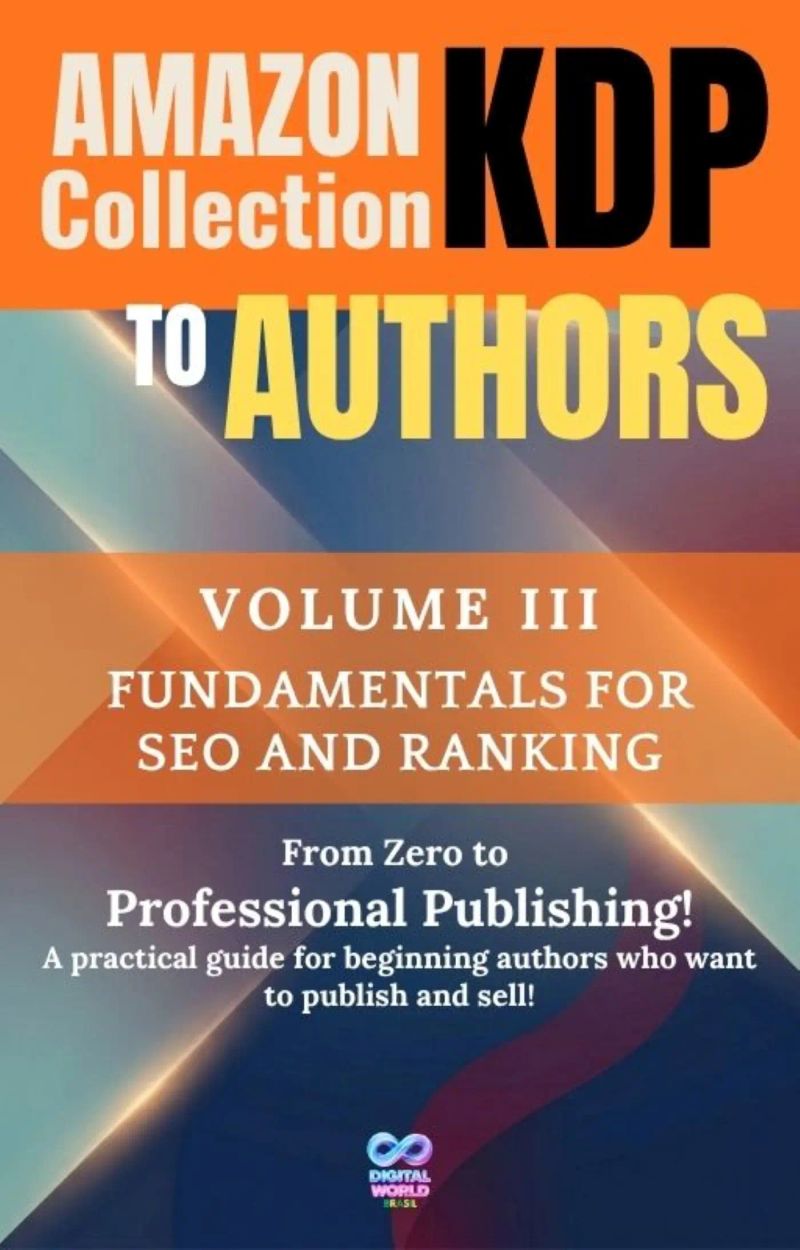
Amazon KDP Collection for Authors
Volume III - Fundamentals for SEO and RankingBy Digital World

Length2h 57m
About this audiobook
Amazon KDP for Authors: The Definitive Collection for Your Publishing Career
Writing a book is a talent; building a career as an author is a strategy. Welcome to the Amazon KDP for Authors collection, the practical and definitive guide for those who want to master Kindle Direct Publishing not just as a writer, but as a digital market strategist.
Throughout 8 volumes designed for fluid and applicable reading, you will go on a complete journey: from the initial draft to building a high-value global catalog. Forget abstract theories or complex manuals. This collection was designed to transform the independent author into a high-performance professional, capable of taking their project out of anonymity and positioning it as a reference in their chosen niche.
What you will build in each stage:
Volume I | Fundamentals and Ecosystem: The foundation of your business. Entrepreneurial mindset, research into profitable niches, and the strategic decisions that separate amateurs from best-sellers.
Volume II | Authority and Brand: How to create a magnetic presence. Impactful biographies, ethical strategies for reviews, and the use of anthologies to accelerate your reputation.
Volume III | Visibility and Algorithm: The engineering behind sales. Master Amazon SEO, long-tail keywords, and sustainable organic ranking.
Volume IV | Launch and Momentum: Create sales waves. Pre-sale strategies, intelligent use of KDP Select promotional tools, and how to maintain commercial momentum after launch.
Volume V | Monetization and Royalties: Maximize your return on investment (ROI). Dynamic pricing, mastering Kindle Unlimited, and optimizing content for earnings per page read (KENP).
Volume VI | Traffic and Growth: The engine of scale. Profit-focused Amazon Ads, affiliate programs, and how to attract qualified readers from external channels.
Volume VII | Catalog Engineering: Long-term vision. Series structuring, cross-selling techniques, and essential metrics to multiply the value of your work.
Volume VIII | Global Expansion: The world as your market. Strategic translation, audiobook creation, and the formula to transform your writing into high-value intellectual property.
The key features of this collection:
To ensure you move from theory to practice without hesitation, each chapter includes:
Official Guidelines: Strategies 100% aligned with Amazon's rules, guaranteeing the security of your business.
Editor's Insight: Precise warnings based on decades of experience, revealing the pitfalls that cost authors time and money.
Action Frameworks: Checklists, templates, and ready-to-use scripts for immediate application.
This collection is for you if:
You want your books to be found and read by a real audience.
You see writing as a sustainable business, not just a hobby.
You seek deep and structured knowledge, far from promises of "magic formulas".
You dream of building a legacy and generating passive income with your authorial catalog.
The journey of a successful independent author requires method and consistency. Your destiny—a solid career and the fulfillment of making a living from your writing—is within your reach.
Publish strategically. Build with clarity. Master it with Amazon KDP for Authors.
Audiobook details
GenreBusiness and Economics, Other
Length2 hrs 57 mins
Narrated byListen with 1,000+ voices
FormateBook with Audio
Publish dateApr 3, 2026
LanguageEnglish
Table of contents
1PRESENTATION OF THE KDP AMAZON COLLECTION FOR AUTHORS
123Keyword strategy in the title: what to include and what to avoid.
2The Method: The Complete Training to Build a Publishing Business on Amazon
124Chapter 13 — The Description That Converts: Structure, Copywriting, and SEO in Harmony
3The KDP Method
125The description is your sales page on Amazon.
4The Genesis of KDP AMAZON COLLECTION
126The four-part structure that converts
5What is KDP Amazon?
127Part 1 — The hook (first 1-2 sentences)
Show all chaptersShow less
6The Methodology: How This Collection Works
128Part 2 — The problem and the promise (2-4 paragraphs)
7For Whom Was This Collection Written?
129Part 3 — Social proof and credentials (1-2 paragraphs)
8The Student Journey: What to Expect
130Part 4 — The call to action (final sentence)
9What is this collection not?
131Formatting: the invisible element that makes all the difference.
10A Note About the Authors and the Curatorship
132What does KDP say about the description?
11Part 1: The Algorithm: Understanding the Mind of Amazon
133Chapter 14 — Categories and Subcategories: How to Choose the Right Ones and Unlock Where Others Can't Reach
12INTRODUCTION — The Visibility Code: What you will learn in this volume
134Categories are more than just organization — they are strategic positioning.
13Chapter 1 — From A9 to A10: How the Algorithm Evolved and What That Means for You
135How the category system works in KDP
14Amazon is not a bookstore — it's a search engine.
136The strategy for categories with less competition.
15What changed from the A9 to the A10?
137Finding accessible subcategories
161. Buyer behavior has gained crucial importance.
138The power of subcategories unlocked by keywords.
172. The origin of the traffic began to be considered.
139How to request category changes after publication
183. The conversion rate has taken center stage.
140Categories and the search algorithm
194. Semantic relevance has been expanded.
141Readability at thumbnail size
20What remains the same — and why it still matters so much.
142Alignment with genre conventions
21How to use this knowledge to your advantage.
143The power of contrast and visual hierarchy.
22Chapter 2 — The Real Ranking Factors According to Amazon Itself
144Chapter 16 — Evaluations and the Algorithm: How to Obtain Them Ethically and Effectively
23Demystifying what drives the ranking.
145Why reviews fuel rankings.
24Factor 1 — Sales history
146The mathematics of evaluations and the credibility threshold.
25Factor 2 — Availability
147How to get reviews ethically — and within Amazon's rules.
26Factor 3 — Period in which the book is listed
148What Amazon allows
27Factor 4 — Popularity
149What Amazon explicitly prohibits
28The invisible factor: keyword relevance
150High-impact ethical strategies for assessments
29Chapter 3 — BSR: The Public Thermometer for Your Book on Amazon
1511. The request within the book
30What is the Best-Seller Rank?
1522. List of advanced readers (ARC)
31How BSR works in practice
1533. Follow-up via email with verified readers.
32General vs. General BSR Subcategory BSR
154Responding to negative reviews — with strategic intelligence.
33What BSR is not — and why it matters.
155Chapter 17 — Conversion Rate: The Silent Factor That Makes or Breaks Your Ranking
34Practical reading of the BSR: a quick reference
156The indicator that the author rarely monitors — but the algorithm always sees.
35Chapter 4 — The Logic of Relevance: How Amazon Decides What to Show to Whom
157Cause 1: Misaligned traffic
36Relevance is not a coincidence — it's engineering.
158Cause 2: Insufficient page to convert the right traffic.
37Match signals: where the algorithm reads your book
159The page elements that control conversion.
38Title and subtitle
160The title on the page — confirmation of relevance.
397 keyword fields
161Evaluations — the mental shortcut of the social brain
40Selected categories
162The description — the actual sale
41Book description
163The sample — the deciding factor for many readers
42Signs of performance: history speaks louder than words.
164Monitoring and improving the conversion rate
43The trap of overly broad relevance.
165Conversion as a result of coherence
44Relevance as a promise fulfilled
166Part 4: Data, Monitoring, and Continuous Optimization
45Part 2: Keyword Research : The Art of Being Found
167Chapter 18 — The KDP Dashboard as an SEO Tool: What to Look at and What to Do with the Data
46Chapter 5 — What are Keywords in KDP and Why Are They Your Most Valuable Asset?
168Data are not reports — they are decisions waiting to happen.
47The difference between publishing and being found.
169What the KDP dashboard offers — and how each section serves SEO.
48How Amazon uses keywords in practice.
170Main panel: the health catalog overview
49The three types of keywords every author needs to know.
171Request report: granularity that guides action
50Head keywords
172KENP reads: the exclusive Kindle Unlimited indicator
51Mid -tail keywords
173Royalty report: connecting SEO to financial results.
52Long-tail keywords
174Using the dashboard to diagnose SEO problems
53Keywords as an asset — not as a task
175Signal 1 — Sudden drop in sales without external change.
54Chapter 6 — Amazon's Official Rules: What Can and Should Never Be in Your Keywords
176Signal 2 — Stable sales but increasing KENP
55Why learn the rules before playing?
177Signal 3 — High volume of KU downloads but extremely low KENP.
56Best practices recommended by KDP itself.
178Chapter 19 — Essential Ranking KPIs and How to Interpret Them
571. Combine the words in the most logical order for the reader.
179(Sem título)
582. Use up to seven keywords or short phrases.
180Measure what matters — and ignore what distracts.
593. Research before publishing.
181KPI 1 — Average BSR over the last 30 days
604. Put yourself in the reader's shoes.
182KPI 2 — Position in the chosen subcategories
61What KDP explicitly prohibits in keywords
183KPI 3 — Number and quality of evaluations
62The mindset behind the rules
184KPI 4 — Organic sales vs. paid traffic sales
63Chapter 7 — Short Tail vs. Long Tail: When and How to Use Each One
185KPI 5 — KENP Trend by Title (for KU users)
64The geometry of searches
186Building your simple tracking dashboard
65Why the long tail is ideal territory for independent authors
187Chapter 20 — Review and Update Cycle: The SEO That Never Sleeps
66Less competition, greater precision.
188Why is a book’s SEO never finished?
67Higher purchase intent
189The quarterly SEO review cycle
68Higher conversion rates
190Step 1 — Period Performance Analysis
69How to build a good long-tail strategy
191Step 2 — Updated Keyword Research
70Approach 1 — Progressive expansion from the central theme
192Step 3 — Selective metadata update
71Approach 2 — Mapping the reader's pains and desires
193Step 4 — Review of badge categories and opportunities
72Approach 3 — Analysis of competitor's readers
194Step 5 — Evaluation strategy for the next quarter
73Approach 4 — The Amazon suggestion box
195When to schedule checkups outside of the regular cycle
74When to use a short tail — and how
196SEO as a habit — not as a chore.
75The most powerful tool is in the search bar.
197CONCLUSION
76Method 1 — Mining automated suggestions (Amazon Suggest )
198From Invisible to Dominant: Building a Lasting Presence on Amazon
77Method 2 — Analysis of direct competitors
199The three levels of impact — and where to begin.
78Method 3 — Strategic reading of evaluations
200Level 1: The immediate essentials (this week)
79Method 4 — Exploration of categories and subcategories
201Level 2: The complete foundation (next 4 weeks)
80How to organize what you found
202Level 3: The long-term system (starting today)
81Chapter 9 — Professional Keyword Research Tools for Authors
203One final thought.
82When manual research is not enough.
204BONUS 1 — Complete SEO Checklist for New Releases on KDP
83Publisher Rocket — The native tool for KDP authors
205BONUS 2 — Literary SEO
84What Publisher Rocket offers
2062.1 Amazon as a High-Converting Search Engine
85For those for whom it makes sense.
2072.2 Difference between Google SEO and Amazon SEO
86Helium 10 — The complete arsenal from the Amazon seller.
2082.3 The Impact of Optimization on the Reader Journey
87Relevant features for authors
2092.4 The Concept of "Niche Relevance"
88To whom does this make sense?
210BONUS 3 — A9/A10 Algorithm and Ranking Dominance
89Google Keyword Planner — Free additional data
2113.1 The Heart of the System: A9 vs. A10
90Ubersuggest and Answer The Public — Free sources of inspiration
2123.2 The Three Pillars of Visibility
91SEMrush and Ahrefs — For authors with a broad digital marketing strategy.
2133.3 "Sales Velocity" and the Snowball Effect
92The rule of thumb: tools as accelerators, not as replacements.
2143.4 The Weight of External Traffic in Organic Ranking
93Chapter 10 — Analyzing the Competition to Find Gaps and Unexplored Niches
215BONUS 4 — Strategic Keyword Research : The Art of Mapping the Reader's Mind
94Why competitor analysis is more than just espionage.
2164.1 Keywords as Bridges to Value
95Step 1 — Identify your real competitors.
217The Concept of Search Intent
96Step 2 — Assess the strength of each competitor.
2184.3 Reliable Tools and Data Sources
97Step 3 — Map the content gaps
2194.4 The Fatal Error: Forbidden Keywords
98Read the negative reviews from competitors.
220BONUS 5 — Long Tail and Low Competition: The Lateral Path to the Top
99Note the search terms that are not yielding superior results.
2215.1 What is Long Tail in KDP?
100Identify underrepresented angles.
2225.2 How to Find Low-Competition Niches
101Step 4 — Build your positioning based on the gaps.
2235.3 The Search Framework: The "Needs Intersection" Method
102Chapter 11 — The 7 Keyword Fields of KDP: How to Fill Each One Strategically
2245.4 Cost-Free Optimization: The Power of Organic Positioning
103The decisive moment: transforming research into metadata.
225BONUS 6 — High Performance Titles and Subtitles
104How each field works — and what KDP says about them.
2266.1 The Anatomy of the Winning Title
105The distribution strategy of the 7 fields
2276.2 The Subtitle: Where the Sale Happens
106Field 1 — The main mid-tail keyword
2286.3 Alignment with KDP Guidelines
107Field 2 — Long tail with high purchase intent
2296.4 The Hook Effect
108Field 3 — Alternative angle on the same theme
230BONUS 7 — The 7 Keyword Plans of KDP and Strategic Categories
109Field 4 — Reader profile or context of use
2317.1 The 7 Keyword Fields: Maximizing Space
110Field 5 — Problem that the book solves
2327.2 Category Selection: The Path to the Best-Seller Seal
111Field 6 — Vocabulary variation or relevant synonym
2337.3 Blurb (Description) as an SEO and Conversion Tool
112Field 7 — Adjacent or complementary territory
2347.4 Avoid Negative Indexing
113Final validation — the 7-field test
235BONUS 8 — The Editor's Dashboard: KPIs and Metrics
114Keyword maintenance and updates
2368.1 The Vital KPIs of Organic SEO
115Part 3: High-Performance SEO: Complete Book Page Optimization
2378.2 The Best-Seller Ranking (ABSR) as a Compass
116Chapter 12 — Title and Subtitle: The Combination That Sells Before the Reader Even Opens the Book
2388.3 Understanding the Pages Read (KENP)
117The most powerful element of your metadata.
2398.4 Analysis Tools: The KDP Report
118The anatomy of the ideal title for KDP.
240BONUS 9 — Metadata Auditing and Recycling: The Continuous Improvement Cycle
119Main title: Clarity above all
2419.1 When is the Right Time to Change?
120The subtitle: the most underrated strategic weapon
2429.2 The Editorial A/B Testing Method
121Practical guidelines for titles and subtitles in KDP
2439.3 Category Audit: Repositioning
122Character limit and readability
2449.4 Blurb Recycling (Description)
Series


Amazon KDP Collection for AuthorsDigital World3h 30m$16

Amazon KDP Collection for AuthorsDigital World2h 54m$13

Amazon KDP Collection for Authors - Volume II - Building authority as an Amazon authorDigital World4h 8m$16

Amazon KDP Collection for Authors - Volume VII - Catalog management in Amazon KDPDigital World2h 57m$15

Amazon KDP Collection for Authors - Volume VI - Marketing for authors and trafficDigital World, Digital World3h 14m$15

Amazon KDP Collection for AuthorsDigital World3h 42m$16

Amazon KDP Collection for AuthorsDigital World2h 26m$15

Hybrid CarsDigital World1h 6m$9

The Power of SuperfoodsDigital World2h 14m$20

Creating a Successful Publishing Calendar to Optimize Results on Amazon KDPDigital World2h 26m$13

Secrets of E-commerce with ShopifyDigital World1h 4m$15

The Secret Revealed to Becoming an E-coachDigital World1h 29m$15

How to start an online coaching businessDigital World1h 3m$13

The car care manualDigital World1h 2m$9

Care you should take with your pet fishDigital World1h 20m$13

Pet BirdsDigital World2h 33m$11

Dog ObedienceDigital World38m$9

Fullness and Human DevelopmentDigital World2h 8m$15

Dislexia AdultaDigital World53m$10
Sales Success for the RookieSteve Lentini3h 49m$15
The Business of StoriesSusan Payton3h 58m$20 · $0.00

A Bridge Not Too FarDeepak Ohri4h 55m$15

AretéBrian Johnson19h 57m$35
Level UpRob Dial7h 42m$26 · $0.00

Hal Moore on LeadershipHarold G. Moore, Mike Guardia5h 6m$17

Basic Economics, Fifth EditionThomas Sowell28h 6m$40

The Goals ProgramZig Ziglar4h 34m$20

The Stocks & ETF Compass: A Guide to Wealth, High Standard of Living, and Secure Retirement through Intelligent Investment in the Stock Market and Passive Income – Including Starter GuideJens Hattermann4h 9m$20 · $0.00

Eat It!Jordan Syatt, Michael Vacanti4h 40m$20 · $0.00

Progress and Poverty, Volumes I and II (Annotated)Henry George20h 24m$2 · $0.00

Not Everything Counts but Everything Matters: The powerful and inspirational new book about leadership and achieving success from the visionary multi-premiership winning Panthers coachIvan Cleary6h 1m$24 · $0.00
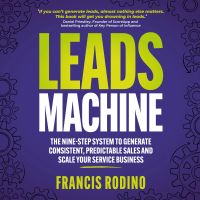
Leads MachineFrancis Rodino6h 30m$27 · $0.00

CAPITAL (Complete 3 Volume Edition)Karl Marx111h 13m$2 · $0.00

BuildTony Fadell11h 5m$8 · $0.00
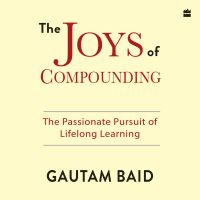
The Joys Of CompoundingGautam Baid17h 34m$18 · $0.00

The Entrepreneur Roller CoasterDarren Hardy7h 8m$17

The Law of Success in Sixteen LessonsNapoleon Hill1h 31m$2 · $0.00

Poor Charlie’s AlmanackGrover Gardener, Charles T. Munger13h 9m$18 · $0.00

The Ambuja StoryNarotam Sekhsaria13h 59m$33 · $0.00

The Holy Bible - 1 SamuelKing James2h 13m3 (1)$3 · $0.00

KJV Holy BibleBroadStreet Publishing Group LLC96h 16m$10 · $0.00

Book of ColossiansUnknown Author16m$8

The American Standard Bible — The Gospel of MatthewMatthew3h 56m$2 · $0.00

Everyday Chanakya | Time Management S01E08Radhakrishnan Pillai42m$4

Bad Fat Black GirlSesali Bowen6h 32m$24 · $0.00

The King James Audio Bible New Testament CompleteChristopher Glyn20h 2m5 (1)$12 · $0.00

Faiths CheckbookCharles Spurgeon12h 44m$11 · $0.00

Be Wild Be FreeAmber Fossey26m$7 · $0.00

Ten Things I Wish You Knew About Your Child's Mental HealthDr. Billy Garvey4h 53m$20 · $0.00

Designing Terry Pratchett’s DiscworldPaul Kidby3h 52m$20 · $0.00

The Chosen Book OneAmanda Jenkins, Kristen Hendricks, Dallas Jenkins3h 8m$10 · $0.00

The Lives of BrianBrian Johnson9h 45m$29 · $0.00

The Boy, the Mole, the Fox and the HorseCharlie Mackesy58m$11 · $0.00

Expository Thoughts on the Gospel of LukeJ.C. Ryle27h 13m$18 · $0.00

My First Beethoven AlbumNaxos1h 23m$6 · $0.00

CrossroadsKaleb Dahlgren7h 56m$26 · $0.00

Across the RiverKent Babb11h 40m$29 · $0.00

Brain Training for RidersAndrea Monsarrat Waldo5h 56m$19 · $0.00

My Effin' LifeGeddy Lee17h 11m5 (1)$40 · $0.00