

World History: Cultures, States, and Societies to 1500
Exploring Ancient Cultures and Societal EvolutionBy Eugene Berger, George Israel, Charlotte Miller, Brian Parkinson, Andrew Reeves, Nadejda Williams


Length21h 21m
About this audiobook
World History: Cultures, States, and Societies to 1500 is an insightful collection that traverses the rich tapestry of human history up to the medieval period. Through an array of literary styles, the anthology captures the complexity and diversity of ancient and early medieval civilizations. The works in this volume offer a profound exploration of global interconnectedness long before the advent of modern globalization. Standout pieces provide introspective views into the cultural mores, societies, and governmental structures of influential civilizations such as the Mesopotamians, Egyptians, and Mayans, while elucidating overarching themes of societal evolution and cross-cultural exchanges. The anthology's contributors, including Eugene Berger, George Israel, Charlotte Miller, Brian Parkinson, Andrew Reeves, and Nadejda Williams, are distinguished historians and scholars whose diverse backgrounds and expertise are woven into the narrative. Each author draws upon historical, cultural, and literary movements that shaped the ages they dissect, bringing a multidimensional perspective to this comprehensive compilation. The collective contributions underscore the complexities of each culture and state, resulting in a harmonized yet multifaceted record of world history that aligns with contemporary scholarly efforts to present a more interconnected view of early human societies. This anthology is an indispensable resource for readers eager to dive into the vast expanse of world history and experience the undulating dialogue of civilizations through a single volume. It offers a rare opportunity to explore a confluence of perspectives and styles, illuminating a unified narrative while celebrating the diversity intrinsic to historical study. By engaging with these works, readers will enrich their understanding of how disparate societies have shaped, and have been shaped by, the world we inhabit today.
Audiobook details
Rating★★★ 3.4 (42)
Includes Goodreads
GenreHistory, Literary Classics
Length21 hrs 21 mins
Narrated byListen with 1,000+ voices
FormateBook with Audio
Publish dateNov 27, 2023
LanguageEnglish
Table of contents
1Chronology
2Introduction
3Questions to Guide your Reading
4Key Terms
5Human Beginnings in Africa
Show all chaptersShow less
6Agriculture and the "Neolithic Revolution"
7Summary
8Works Consulted and Further Reading
9Links to Primary Sources
10Chronology
11Introduction
12Questions to Guide your Reading
13Key Terms
14Ancient Mesopotamia
15Sumerian City-States
16Mesopotamian Empires
17The Significance of Mesopotamia for World History
18The Israelites and Ancient Israel
19Early Israelites
20The United Kingdom of Israel
21The Importance of the Israelites and Ancient Israel
22Ancient Egypt
23Dynastic Egypt
24Nubia: the Kingdoms of Kerma and Kush
25Summary
26Works Consulted and Further Reading
27Links to Primary Sources
28Chronology
29Introduction
30Questions to Guide your Reading
31Key Terms
32What is India? The Geography of South Asia
33India's First Major Civilization: The Indus Valley Civilization
34The Long Vedic Age
35Transition to Empire: States, Cities, and New Religions
36The Mauryan Empire
37Regional States, Trade, and Devotional Religion
38The Gupta Empire and India's Classical Age
39India's Early Medieval Age and the Development of Islamic States in India
40Conclusion
41Works Consulted and Further Reading
42Links to Primary Sources
43Chronology
44Introduction
45Questions to Guide your Reading
46Key Terms
47Geography of East Asia
48China from Neolithic Village Settlements to the Shang Kingdom
49The Long Zhou Dynasty
50The Qin Dynasty and the Transition from Ancient to Imperial China
More from Eugene Berger, George Israel, Charlotte Miller, Brian Parkinson, Andrew Reeves, Nadejda Williams

World History: Cultures, States, and Societies to 1500Eugene Berger, George Israel, Charlotte Miller, Brian Parkinson, Andrew Reeves, Nadejda Williams21h 19m3.8 (53)$2.99 · $0.00

World History: Cultures, States, and Societies to 1500Eugene Berger, George Israel, Charlotte Miller, Brian Parkinson, Andrew Reeves, Nadejda Williams21h 24m3.8 (146)$1.50 · $0.00

A Brief History of IntelligenceMax S. Bennett12h 18m4.6 (6.6K)$29 · $0.00

We Crossed a Bridge and It TrembledWendy Pearlman6h4.6 (5.2K)$24 · $0.00

Unbroken Bonds of BattleJohnny Joey Jones8h 31m4.6 (2.6K)$8 · $0.00

The Daughter of AuschwitzTova Friedman, Malcolm Brabant7h 54m4.6 (16.7K)$26 · $0.00

Lily's PromiseLily Ebert, Dov Forman8h 54m4.6 (16.1K)$29 · $0.00

On Democracies and Death CultsDouglas Murray10h 38m4.6 (6.5K)$29 · $0.00

Across the RiverKent Babb11h 40m4.6 (927)$29 · $0.00

Balcony Over Jerusalem: A Middle East Memoir - Israel, Palestine and BeyondJohn Lyons12h 37m4.6 (1.4K)$33 · $0.00

BeyondStephen Walker15h 39m4.6 (3.2K)$33 · $0.00

Kings and PawnsHoward Bryant10h 9m4.6 (678)$29 · $0.00

No EscapeNury Turkel9h 30m4.6 (809)$28 · $0.00

Jubal Stone: U.S. Marshal: Blood Trail To Hell: A Western Adventure NovelCasey Nash3h 42m4.6 (3.2K)$18 · $0.00

Fall and RiseMitchell Zuckoff17h 23m4.6 (9.8K)$40 · $0.00

The SurvivorJosef Lewkowicz, Michael Calvin9h 22m4.6 (2.5K)$29 · $0.00

Always FaithfulThomas Schueman, Zainullah Zaki12h 12m4.6 (977)$29 · $0.00

The State of Society in France Before the Revolution of 1789 (Annotated)Alexis de Tocqueville17h 25m4.6 (1.2K)$2 · $0.00

All the Gallant MenDonald Stratton, Ken Gire5h 55m4.6 (11.8K)$24 · $0.00

Saint Joan (Annotated)George Bernard Shaw6h 20m4.6 (1.2K)$1.20 · $0.00

Medgar and MyrlieJoy-Ann Reid10h 52m4.5 (27.8K)$29 · $0.00

The History of the Peloponnesian War (Annotated)Thucydides24h 3m4.6 (1.1K)$2 · $0.00

To Kill a MockingbirdHarper Lee12h 18m4.5 (7.4M)$29 · $0.00

These Precious DaysAnn Patchett11h 14m4.5 (45.2K)$29 · $0.00

Braving the TruthRachel Held Evans11h 31m4.7 (359)$29 · $0.00

The Old Man and the Sea (Annotated)Ernest Hemingway4h 27m4.6 (1.4K)$2 · $0.00

Henry V (The Play, Historical Background and Analysis of the Character in the Play)William Shakespeare, William Hazlitt8h 50m4.6 (1.3K)$1.99 · $0.00

H. P. LOVECRAFT Ultimate Collection: Novellas, Short Stories, Poetry & Essays (Annotated)H. P. Lovecraft12h 28m4.6 (2.3K)$2 · $0.00

Time RegainedMarcel Proust16h 8m4.5 (10.6K)$1.99 · $0.00
The Mis-Education of the NegroCarter Goodwin Woodson4h 32m4.5 (28.4K)$10 · $0.00
Lessons in TruthH. Emilie3h 50m4.6 (1.4K)$4.70 · $0.00

TORAH - Bilingual Edition: English/Hebrew (Annotated)Max Margolis, JPS28h 26m4.6 (1K)$2 · $0.00

Betty Crocker picture cooky bookBetty Crocker, Inc. General Mills2h 13m4.5 (6.5K)$1 · $0.00

The Complete Tales of Beatrix PotterBeatrix Potter3h 36m4.5 (75K)$3 · $0.00

Anne of Green GablesL. M. Montgomery11h 1m4.5 (1.2M)$2.30 · $0.00

Crime and Punishment (The Unabridged Garnett Translation) (Annotated)Fyodor Dostoevsky24h 25m4.5 (15.4K)$1.99 · $0.00

The North American IndianEdward S. Curtis, Frederick Webb Hodge6h4.5 (1.2K)$2 · $0.00

The Picture of Dorian Gray: The Uncensored 13 Chapter Version + The Revised 20 Chapter Version (Annotated)Oscar Wilde16h 12m4.5 (2.8K)$1.99 · $0.00

Grimoire Of The Everyday WitchIsadora Lys / Virginia Santos5h 35m4.5 (3.9K)$9 · $0.00

Winnie-the-PoohAlan Alexander Milne2h 52m4.5 (401.1K)$3 · $0.00

Sitting PrettyRebekah Taussig7h 33m4.5 (18.9K)$26 · $0.00

The Poetic Edda & The Prose EddaSnorri Sturluson, Saemund Sigfusson9h 34m4.5 (4K)$1 · $0.00
You may also like

History of the World (Updated)J. M. Roberts54h 42m4.2 (4.8K)$30

The Outline of History: Being a Plain History of Life and MankindH. G. Wells48h 36m4.0 (6.6K)$2.30

The Influence of Sea Power upon HistoryAlfred Thayer Mahan23h 51m4.1 (2.8K)$1 · $0.00
The Histories (Annotated)Herodotus33h 18m4.2 (68.1K)$2 · $0.00

A Short History of the World H. G. Wells12h 5m4.0 (4.3K)Free
Empires of the SteppesKenneth W. Harl17h 13m4.0 (1.5K)$40 · $0.00
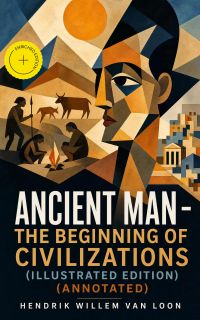
Ancient Man – The Beginning of Civilizations (Illustrated Edition) (Annotated)Hendrik Willem van Loon3h 54m3.3 (36)$2 · $0.00
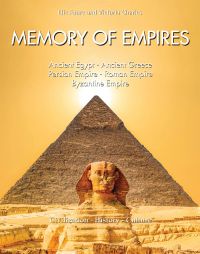
Memory of Empires: Ancient Egypt - Ancient Greece - Persian Empire - Roman Empire - Byzantine EmpireElie Faure, Victoria Charles7h 12m$19 · $0.00

The Invasion of India by Alexander the GreatJohn Watson McCrindle18h 44m$1 · $0.00

The History of Medieval EuropeLynn Thorndike24h 28m4.0 (115)$1 · $0.00
World History: Cultures, States, and Societies to 1500Eugene Berger, George Israel, Charlotte Miller, Brian Parkinson, Andrew Reeves, Nadejda Williams21h 24m3.8 (146)$1.50 · $0.00
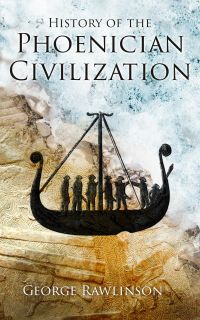
History of the Phoenician CivilizationGeorge Rawlinson16h 20m3.9 (114)$2 · $0.00

The Essential Works of George Rawlinson (Annotated)George Rawlinson145h 34m$2 · $0.00

Romanesque ArtVictoria Charles, Klaus H. Carl3h 58m4.0 (19)$15 · $0.00

The Greatest Empires & Civilizations of the Ancient EastGeorge Rawlinson145h 7m$2 · $0.00

Amazon - Historical OriginsCarlos Araujo Carujo3h 45m$7 · $0.00
25 Pivotal Moments in Ancient Civilizations Explained in 7 Minutes EachNietsnie Trebla3h 45m4.2 (5) Only with Ultra

The Crusading WorldSantiago Machain6h 25m$21 · $0.00
The History of the Ancient CivilizationsMax Duncker82h 26m$1.99 · $0.00
The Great Civilizations of the Ancient East (Annotated)George Rawlinson145h 31m$2 · $0.00