
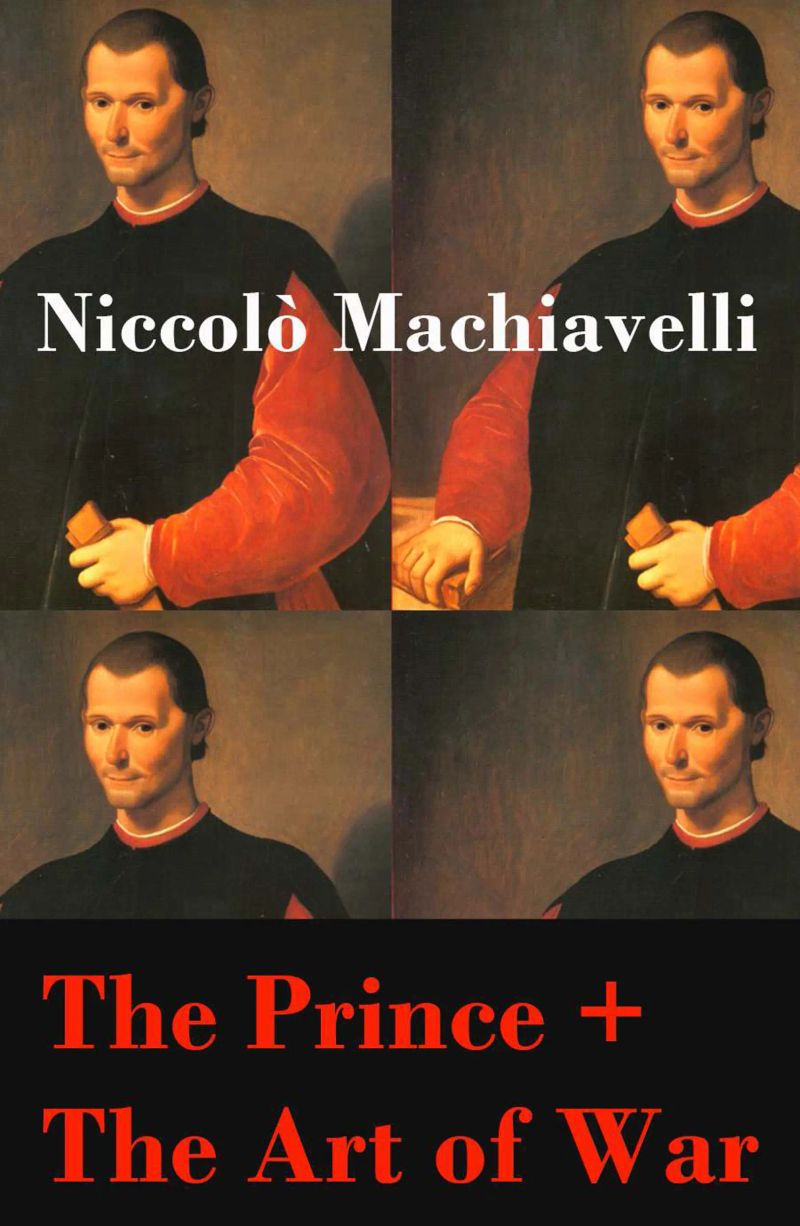
The Prince + The Art of War (2 Unabridged Machiavellian Masterpieces)
By Niccolò Machiavelli


Length6h 55m
About this audiobook
This carefully crafted ebook: "The Prince + The Art of War (2 Unabridged Machiavellian Masterpieces)" is formatted for your eReader with a functional and detailed table of contents. This eBook presents 2 Political Masterpieces by Niccolò Machiavelli: The Prince & The Art of War. The Prince: Il Principe (The Prince) is a political treatise by the Florentine philosopher Niccolò Machiavelli, written c. 1513, published posthumously 1532. The Prince is sometimes claimed to be one of the first works of modern political philosophy, in which the effective truth is taken to be more important than any abstract ideal. It was also in direct conflict with the dominant Catholic and scholastic doctrines of the time concerning how to consider politics and ethics. Machiavelli dedicated The Prince to the ruling Medici of the time, leading some today to still speculate whether the book was a satire. Niccolò Machiavelli asserted that The Prince (president, dictator, prime minister, etc.) does not have to be concerned with ethics, as long as their motivation is to protect the state. It is this questionable belief that in many ways had lead to the modern world as we know it. His assertion was that the head of state must protect the state no matter the cost and no matter what rules he or she breaks in the process. The Art of War: written between 1519 and 1520 and published in 1521. It was the only historical or political work printed during Machiavelli's lifetime. Voltaire said, "Machiavelli taught Europe the art of war; it had long been practiced, without being known." Machiavelli considered The Art of War his greatest achievement. This book teaches how to recruit, train, motivate, and discipline an army, shows the difference between strategy and tactics. Machiavelli does a masterful job of breaking down and analyzing historic battles.
Audiobook details
Rating★★★★ 4.2 (5K)
Includes Amazon, Goodreads, StoryGraph, LibraryThing
GenrePhilosophy
Length6 hrs 55 mins
Narrated byListen with 1,000+ voices
FormateBook with Audio
Publish dateJul 10, 2013
LanguageEnglish
Table of contents
1Dedication: To the Magnificent Lorenzo Di Piero De’ Medici
2Chapter 1 - Of the Various Kinds of Princedom, and of the Ways in Which They Are Acquired
3Chapter 2 - Of Hereditary Princedoms
4Chapter 3 - Of Mixed Princedoms
5Chapter 4 - Why the Kingdom of Darius, Conquered by Alexander, Did Not, on Alexander’s Death, Rebel Against His Successors
Show all chaptersShow less
6Chapter 5 - How Cities or Provinces Which Before Their Acquisition Have Lived Under Their Own Laws Are To Be Governed
7Chapter 6 - Of New Princedoms Which a Prince Acquires With His Own Arms and by Merit
8Chapter 7 - Of New Princedoms Acquired By the Aid of Others and By Good Fortune
9Chapter 8 - Of Those Who By Their Crimes Come to Be Princes
10Chapter - 9 Of the Civil Princedom
11Chapter - 10 How the Strength of All Princedoms Should Be Measured
12Chapter 11 - Of Ecclesiastical Princedoms
13Chapter 12 - How Many Different Kinds of Soldiers There Are, and of Mercenaries
14Chapter 13 - Of Auxiliary, Mixed, and National Arms
15Chapter 14 - Of the Duty of a Prince In Respect of Military Affairs
16Chapter 15 - Of the Qualities In Respect of Which Men, and Most of all Princes, Are Praised or Blamed
17Chapter 16 - Of Liberality and Miserliness
18Chapter 17 - Of Cruelty and Clemency, and Whether It Is Better To Be Loved or Feared
19Chapter 18 - How Princes Should Keep Faith
20Chapter 19 - That a Prince Should Seek to Escape Contempt and Hatred
21Chapter 20 - Whether Fortresses, and Certain Other Expedients to Which Princes Often Have Recourse, are Profitable or Hurtful
22Chapter 21 - How a Prince Should Bear Himself So As to Acquire Reputation
23Chapter 22 - Of the Secretaries of Princes
24Chapter 23 - That Flatterers Should Be Shunned
25Chapter 24 - Why the Princes of Italy Have Lost Their States
26Chapter 25 - What Fortune Can Effect in Human Affairs, and How She May Be Withstood
27Chapter 26 - An Exhortation to Liberate Italy from the Barbarians
28PREFACE
29Book 1
30Book 2
31Book 3
32Book 4
33Book 5
34Book 6
35Book 7

Das Buch der hundert altitalienischen NovellenNiccolò Machiavelli, Pietro Fortini, Carlo Graf Gozzi, Eustachio Manfredi, Baldassare Castiglione, Francesco Molza, Liberale Motense, Ser Giovanni Fiorentino, Luigi da Porto49h 26m$1 · $0.00

Mensch und StaatNiccolò Machiavelli3h 10m4.3 (29)$1 · $0.00

DER FÜRSTNiccolò Machiavelli3h 43m4.0 (455.4K)$1 · $0.00

Gesammelte Werke von Niccolò MachiavelliNiccolò Machiavelli39h 38m4.4 (124)$2 · $0.00

THE ART OF WAR & THE PRINCENiccolò Machiavelli7h 9m4.0 (1.8K)$1.99 · $0.00

Machiavelli: The PrinceNiccolò Machiavelli5h 13m4.1 (730.3K)$1.99 · $0.00
THE STRATEGY: The Art of War & The Prince (2 Classics in One Edition)Niccolò Machiavelli7h 7m4.3 (123)$1.99 · $0.00
Der FürstNiccolò Machiavelli3h 57m4.0 (429K)$9 · $0.00

Die Kunst der Staatsführung: Regieren mit WeisheitNiccolò Machiavelli, Platon, Marcus Aurelius, Marcus Tullius Cicero, Carl von Clausewitz, Friedrich der Große, Benjamin Franklin, Otto von Bismarck, Friedrich Christoph Dahlmann, Karel Čapek, Hans Delbrück238h 47m$1 · $0.00
RuhtinasNiccolò Machiavelli4h 4m4.0 (17.2K)$1.99 · $0.00
Philosophie der RenaissanceNiccolò Machiavelli, Michel de Montaigne, Erasmus von Rotterdam, Thomas Morus, Francis Bacon, Tommaso Campanella, Martin Luther, Ludwig Kuhlenbeck66h 17m$1.50 · $0.00

Das Buch der hundert altitalienischen NovellenNiccolò Machiavelli, Pietro Fortini, Carlo Graf Gozzi, Eustachio Manfredi, Baldassare Castiglione, Francesco Molza, Liberale Motense, Ser Giovanni Fiorentino, Luigi da Porto49h 28m$1 · $0.00

Essenzielle Klassiker der politischen PhilosophieNiccolò Machiavelli, Montesquieu, Friedrich der Große, Platon, Aristoteles, Marcus Tullius Cicero, Tommaso Campanella, Thomas Morus, Samuel von Pufendorf, Abbé Castel de Saint-Pierre, Jean Jacques Rousseau, Immanuel Kant, Johann Gottlieb Fichte, Karl Marx, Friedrich Engels, Wilhelm von Humboldt, Friedrich Christoph Dahlmann, Franz Mehring, Johann Most, John Henry Mackay, Rosa Luxemburg, Erich Mühsam393h 52m$1 · $0.00
Die Discorsi (Deutsche Ausgabe) (Kommentiert)Niccolò Machiavelli17h 53m$1 · $0.00
Der Fürst (Il Principe) (Kommentiert)Niccolò Machiavelli7h 3m4.0 (76.6K)$1 · $0.00

Mensch und Staat (Kommentiert)Niccolò Machiavelli3h 18m4.3 (121)$1 · $0.00

Gesammelte Werke: Der Fürst + Die Discorsi + Mensch und Staat + Geschichte von Florenz (Kommentiert)Niccolò Machiavelli39h 44m4.4 (11)$2 · $0.00

Geschichte von Florenz (Kommentiert)Niccolò Machiavelli19h 51m3.8 (508)$1 · $0.00
Discourses on Livy (Annotated)Niccolò Machiavelli16h 35m4.1 (10.2K)$2 · $0.00

The Prince + The Art of War (2 Unabridged Machiavellian Masterpieces)Niccolò Machiavelli7h 51m$1 · $0.00
Metaphysics (Annotated)Aristotle13h 30m4.6 (1.2K)$2 · $0.00

Sceptical Essays (Annotated)Bertrand Russell9h 16m4.6 (1K)$2 · $0.00

WitnessAriel Burger8h 1m4.6 (1.3K)$20 · $0.00

The Magic PresenceGodfré Ray King10h 21m4.6 (307)$1.20 · $0.00

The Art of LivingThich Nhat Hanh5h 1m4.5 (14.2K)$24 · $0.00
Moral Letters to LuciliusLucius Annaeus Seneca24h 26m4.5 (71.7K)$1.99 · $0.00

Lessons in TruthH. Emilie Cady3h 50m4.5 (2.4K)$20 · $0.00
The Discourses of EpictetusP. E. MATHESOM12h 47m4.4 (17.7K)$1.20 · $0.00

IlluminationsWalter Benjamin10h 12m4.4 (16.2K)$20 · $0.00

That Bird Has My WingsJarvis Jay Masters9h 49m4.4 (13.7K)$29 · $0.00

Tâo Teh KingLaozi2h 34m4.4 (230.9K)$2 · $0.00
SymposiumPlato3h 26m4.4 (97.9K)$1.20 · $0.00

Buddhist Boot CampTimber Hawkeye2h 39m4.4 (8.4K)$18 · $0.00
Enchiridion & The Discourses of Epictetus (Annotated)Arrian Epictetus18h 9m4.4 (3.5K)$2 · $0.00

The Meditations of the Emperor Marcus Aurelius AntoninusEmperor of Rome Marcus Aurelius5h 41m4.4 (1.8M)$1 · $0.00
Crime and PunishmentFyodor Dostoevsky23h 11m4.4 (1.3M)$12 · $0.00

MeditationsMarcus Aurelius5h 52m4.4 (433.7K)$1 · $0.00

Everyday DharmaSuneel Gupta5h 2m4.5 (761)$20 · $0.00

The Joyful Wisdom ("La Gaya Scienza")Friedrich Wilhelm Nietzsche11h 37m4.4 (26.6K)$1 · $0.00
The Art of LivingEpictetus, Sharon Lebell3h 16m4.4 (50.1K)$18 · $0.00
You may also like

The PrinceNiccolò Machiavelli4h 32m4.1 (423.6K)$12
The PrinceNicolo Machiavelli5h 19m4.0 (461.4K)$7 · $0.00

The PrinceNiccolo Machiavelli4h 6m4.0 (471.3K)$12 · $0.00

The PrinceNiccolò Machiavelli5h 10m4.0 (440.8K)$2.30

History of the WarsProcopius9h 13m4.3 (599)$1.99 · $0.00

On War (Vom Kriege)Carl von Clausewitz32h 20m4.2 (27.2K)$1.99 · $0.00

The History of England (Vol. 1-6)David Hume130h 50m4.3 (1.1K)$1 · $0.00

The Influence of Sea Power Upon History, 1660-1783A. T. Mahan20h 47m4.1 (1.4K)$2 · $0.00
The Prince + The Art of War (2 Unabridged Machiavellian Masterpieces)Niccolò Machiavelli7h 51m$1 · $0.00

Twenty Centuries of ParisMabell S. C. Smith9h 24m$2.30

Reforma y RupturaSantiago Machain6h 28m$21 · $0.00

The History of LondonReginald R. Sharpe59h 29m$1.99 · $0.00
The Rise and Decline of the Roman Empire (Summarized Edition)John Bagnell Bury14h 22m$2
De re militari (Annotated)Vegetius4h 39m4.0 (32)$0.99 · $0.00

The Story of ParisThomas Okey12h 21m3.8 (42)$1 · $0.00
The Prince (Summarized Edition)Niccolò Machiavelli1h 58m$2

The Art of War in the Middle AgesCharles Oman6h 9m4.0 (755)$1.99 · $0.00

The Egyptian campaigns, 1882 to 1885Charles Royle22h 58m$1 · $0.00

History of the French RevolutionHilaire Belloc7h 37m3.8 (403)$1.99 · $0.00
A History of the Roman EmpireJohn Bagnell Bury27h 30m4.2 (222)$1 · $0.00