
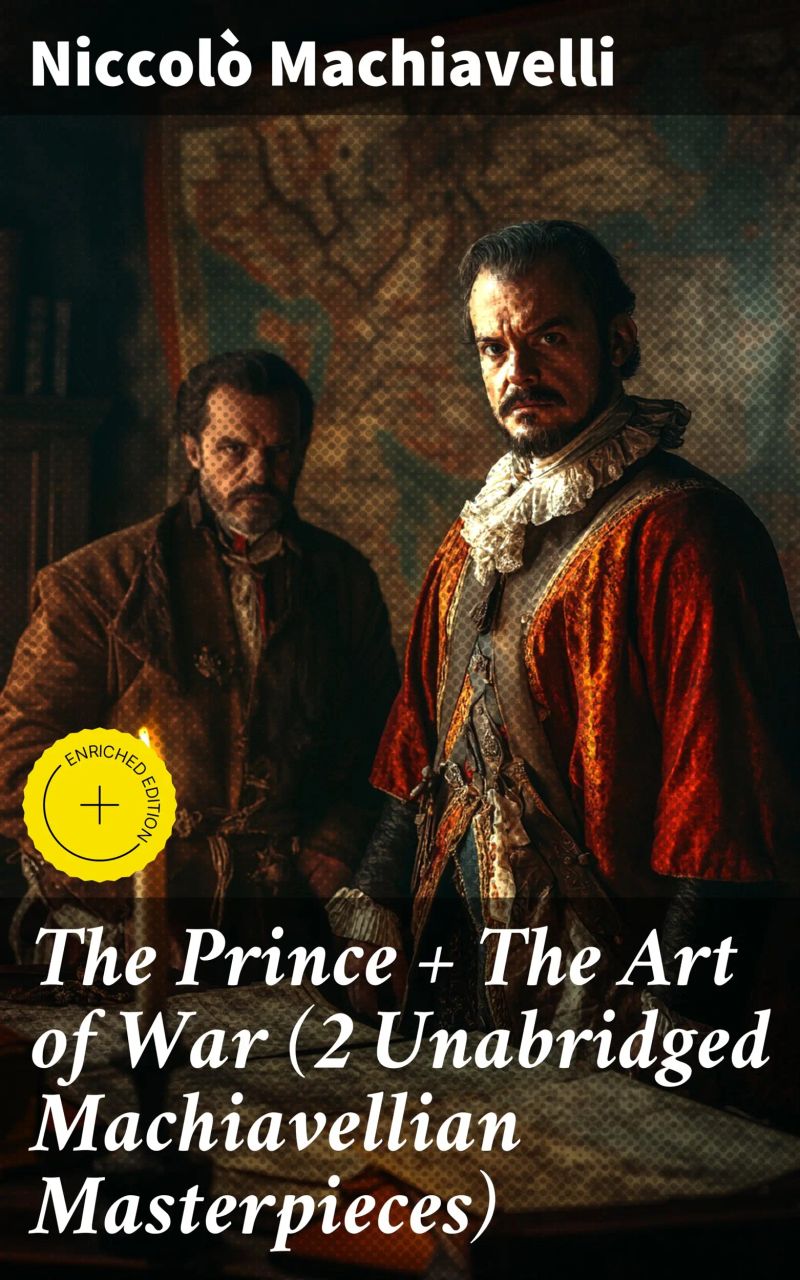
The Prince + The Art of War (2 Unabridged Machiavellian Masterpieces)
Enriched edition. An Exploration of Power, Politics, and Warfare in Renaissance ItalyBy Niccolò Machiavelli


Length7h 50m
About this audiobook
In "The Prince" and "The Art of War," Niccolò Machiavelli presents a masterful exploration of political philosophy and military strategy that has shaped modern thought. Written in the Renaissance era, these texts employ a pragmatic and often starkly realist literary style that lays bare the mechanics of power, statecraft, and governance. "The Prince" delves into the complexities of political leadership, emphasizing the need for rulers to be both feared and respected, while "The Art of War" offers a systematic approach to military organization and strategy, reflecting Machiavelli's deep understanding of human nature and societal dynamics. Together, these works stand as seminal texts that challenge idealism with a candid appraisal of the world. Machiavelli, a Florentine diplomat and philosopher, lived during a tumultuous period marked by political instability. His experiences navigating the treacherous waters of Italian city-states undoubtedly informed his writings, as he sought to provide rulers with grounded, pragmatic guidance. The exigencies of his time gave rise to his belief in virtù ' the ability of one to shape circumstances to one's advantage, a central theme in both works. This collection is highly recommended for readers seeking an intellectual foundation in political theory and military science. It not only equips them with historical insights but also vital lessons on power dynamics that resonate across centuries. Machiavelli's work remains indispensable for anyone interested in the dark art of ruling and the eternal struggle for control.
In this enriched edition, we have carefully created added value for your reading experience:
- A comprehensive Introduction outlines these selected works' unifying features, themes, or stylistic evolutions.
- The Author Biography highlights personal milestones and literary influences that shape the entire body of writing.
- A Historical Context section situates the works in their broader erasocial currents, cultural trends, and key events that underpin their creation.
- A concise Synopsis (Selection) offers an accessible overview of the included texts, helping readers navigate plotlines and main ideas without revealing critical twists.
- A unified Analysis examines recurring motifs and stylistic hallmarks across the collection, tying the stories together while spotlighting the different works strengths.
- Reflection questions inspire deeper contemplation of the authors overarching message, inviting readers to draw connections among different texts and relate them to modern contexts.
- Lastly, our handpicked Memorable Quotes distill pivotal lines and turning points, serving as touchstones for the collections central themes.
Audiobook details
GenrePolitics and Government
Length7 hrs 50 mins
Narrated byListen with 1,000+ voices
FormateBook with Audio
Publish dateDec 4, 2023
LanguageEnglish
Table of contents
1Introduction
2Introduction
3Author Biography
4Historical Context
5Synopsis (Selection)
Show all chaptersShow less
6The Prince
7Dedication: To the Magnificent Lorenzo Di Piero De’ Medici
8Chapter 1 - Of the Various Kinds of Princedom, and of the Ways in Which They Are Acquired
9Chapter 2 - Of Hereditary Princedoms
10Chapter 3 - Of Mixed Princedoms
11Chapter 4 - Why the Kingdom of Darius, Conquered by Alexander, Did Not, on Alexander’s Death, Rebel Against His Successors
12Chapter 5 - How Cities or Provinces Which Before Their Acquisition Have Lived Under Their Own Laws Are To Be Governed
13Chapter 6 - Of New Princedoms Which a Prince Acquires With His Own Arms and by Merit
14Chapter 7 - Of New Princedoms Acquired By the Aid of Others and By Good Fortune
15Chapter 8 - Of Those Who By Their Crimes Come to Be Princes
16Chapter - 9 Of the Civil Princedom
17Chapter - 10 How the Strength of All Princedoms Should Be Measured
18Chapter 11 - Of Ecclesiastical Princedoms
19Chapter 12 - How Many Different Kinds of Soldiers There Are, and of Mercenaries
20Chapter 13 - Of Auxiliary, Mixed, and National Arms
21Chapter 14 - Of the Duty of a Prince In Respect of Military Affairs
22Chapter 15 - Of the Qualities In Respect of Which Men, and Most of all Princes, Are Praised or Blamed
23Chapter 16 - Of Liberality and Miserliness
24Chapter 17 - Of Cruelty and Clemency, and Whether It Is Better To Be Loved or Feared
25Chapter 18 - How Princes Should Keep Faith
26Chapter 19 - That a Prince Should Seek to Escape Contempt and Hatred
27Chapter 20 - Whether Fortresses, and Certain Other Expedients to Which Princes Often Have Recourse, are Profitable or Hurtful
28Chapter 21 - How a Prince Should Bear Himself So As to Acquire Reputation
29Chapter 22 - Of the Secretaries of Princes
30Chapter 23 - That Flatterers Should Be Shunned
31Chapter 24 - Why the Princes of Italy Have Lost Their States
32Chapter 25 - What Fortune Can Effect in Human Affairs, and How She May Be Withstood
33Chapter 26 - An Exhortation to Liberate Italy from the Barbarians
34PREFACE
35Book 1
36Book 2
37Book 3
38Book 4
39Book 5
40Book 6
41Book 7
42Analysis
43Reflection
44Memorable Quotes

Das Buch der hundert altitalienischen NovellenNiccolò Machiavelli, Pietro Fortini, Carlo Graf Gozzi, Eustachio Manfredi, Baldassare Castiglione, Francesco Molza, Liberale Motense, Ser Giovanni Fiorentino, Luigi da Porto49h 26m$1 · $0.00
Gesammelte Werke von Niccolò MachiavelliNiccolò Machiavelli39h 38m4.4 (124)$2 · $0.00
THE STRATEGY: The Art of War & The Prince (2 Classics in One Edition)Niccolò Machiavelli7h 7m4.3 (123)$1.99 · $0.00
Der FürstNiccolò Machiavelli3h 57m4.0 (429K)$9 · $0.00
Philosophie der RenaissanceNiccolò Machiavelli, Michel de Montaigne, Erasmus von Rotterdam, Thomas Morus, Francis Bacon, Tommaso Campanella, Martin Luther, Ludwig Kuhlenbeck66h 17m$1.50 · $0.00

Das Buch der hundert altitalienischen NovellenNiccolò Machiavelli, Pietro Fortini, Carlo Graf Gozzi, Eustachio Manfredi, Baldassare Castiglione, Francesco Molza, Liberale Motense, Ser Giovanni Fiorentino, Luigi da Porto49h 28m$1 · $0.00

Essenzielle Klassiker der politischen PhilosophieNiccolò Machiavelli, Montesquieu, Friedrich der Große, Platon, Aristoteles, Marcus Tullius Cicero, Tommaso Campanella, Thomas Morus, Samuel von Pufendorf, Abbé Castel de Saint-Pierre, Jean Jacques Rousseau, Immanuel Kant, Johann Gottlieb Fichte, Karl Marx, Friedrich Engels, Wilhelm von Humboldt, Friedrich Christoph Dahlmann, Franz Mehring, Johann Most, John Henry Mackay, Rosa Luxemburg, Erich Mühsam393h 52m$1 · $0.00
Die Discorsi (Deutsche Ausgabe) (Kommentiert)Niccolò Machiavelli17h 53m$1 · $0.00
Der Fürst (Il Principe) (Kommentiert)Niccolò Machiavelli7h 3m4.0 (76.6K)$1 · $0.00
Mensch und Staat (Kommentiert)Niccolò Machiavelli3h 18m4.3 (121)$1 · $0.00

Gesammelte Werke: Der Fürst + Die Discorsi + Mensch und Staat + Geschichte von Florenz (Kommentiert)Niccolò Machiavelli39h 44m4.4 (11)$2 · $0.00

Geschichte von Florenz (Kommentiert)Niccolò Machiavelli19h 51m3.8 (508)$1 · $0.00
Discourses on Livy (Annotated)Niccolò Machiavelli16h 35m4.1 (10.2K)$2 · $0.00
Discourses on the First Decade of Titus LiviusNiccolò Machiavelli15h 3m4.2 (11.3K)$2 · $0.00
Discourses on LivyNiccolò Machiavelli16h 2m4.2 (12.5K)$2 · $0.00

SELF-MASTERY: 30 Best Books to Guide You To Your GoalsNiccolò Machiavelli, James Allen, William Walker Atkinson, Orison Swett Marden, Benjamin Franklin, Thorstein Veblen, Kahlil Gibran, P. T. Barnum, Marcus Aurelius, Wallace D. Wattles, Lao Tzu, Russell Conwell, Henry Harrison Brown, Émile Coué104h 27m$1 · $0.00

La mandragola - La Clizia - BelfagorNiccolò Machiavelli2h 24m4.1 (1.3K)$2 · $0.00

History of Florence and of the Affairs of ItalyNiccolò Machiavelli18h 49m4.0 (738)$2 · $0.00

Geschichte von FlorenzNiccolò Machiavelli17h 38m4.0 (869)$2 · $0.00

Unbroken Bonds of BattleJohnny Joey Jones8h 31m4.6 (2.6K)$8 · $0.00

On Democracies and Death CultsDouglas Murray10h 38m4.6 (6.5K)$29 · $0.00
Balcony Over Jerusalem: A Middle East Memoir - Israel, Palestine and BeyondJohn Lyons12h 37m4.6 (1.4K)$33 · $0.00

RiggedMollie Hemingway12h 48m4.6 (4.2K)$23 · $0.00

SledgehammerDavid Friedman8h 21m4.7 (589)$26 · $0.00
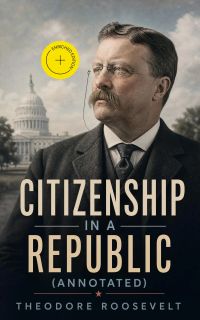
Citizenship in a Republic (Annotated)Theodore Roosevelt2h 44m4.6 (1.4K)$2 · $0.00

No EscapeNury Turkel9h 30m4.6 (809)$28 · $0.00

Always FaithfulThomas Schueman, Zainullah Zaki12h 12m4.6 (977)$29 · $0.00

UnthinkableJamie Raskin15h 8m4.5 (9.3K)$8 · $0.00

My Fourth Time, We DrownedSally Hayden13h 59m4.6 (2.9K)$23 · $0.00

A Revolution of Common SenseScott Jennings9h 29m4.6 (528)$29 · $0.00
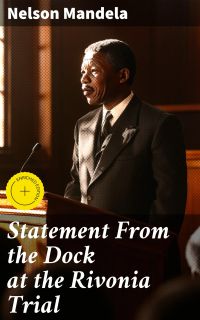
Statement From the Dock at the Rivonia TrialNelson Mandela2h 18m4.6 (1.3K)$1 · $0.00

Lessons from the EdgeMarie Yovanovitch17h 11m4.5 (5.9K)$40 · $0.00

To Rescue the American SpiritBret Baier10h 12m4.5 (2.7K)$8 · $0.00

StonewalledSharyl Attkisson15h 19m4.5 (4.3K)$33 · $0.00
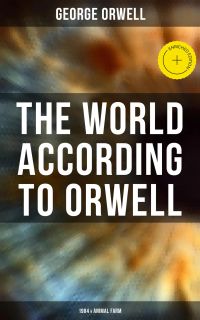
The World According to Orwell: 1984 & Animal FarmGeorge Orwell15h 42m4.6 (1.1K)$1 · $0.00
Basic EconomicsThomas Sowell18h 32m4.5 (29.3K)$28 · $0.00
To Rescue the RepublicBret Baier, Catherine Whitney11h 42m4.5 (8.6K)$29 · $0.00

Modern WarriorsPete Hegseth7h 10m4.5 (4.7K)$24 · $0.00
Philosophy and Opinions of Marcus Garvey (Annotated)Marcus Mosiah Garvey4h 42m4.5 (1.7K)$1.99 · $0.00
You may also like
The PrinceNicolo Machiavelli5h 19m4.0 (461.4K)$7 · $0.00

The PrinceNiccolo Machiavelli4h 6m4.0 (471.3K)$12 · $0.00
The PrinceNiccolò Machiavelli4h 32m4.1 (423.6K)$12
The Prince + The Art of War (2 Unabridged Machiavellian Masterpieces)Niccolò Machiavelli6h 55m4.2 (5K)$2 · $0.00

The PrinceNiccolo Machiavelli5h 3m3.9 (446.2K)$7 · $0.00

The PrinceNiccolò Machiavelli5h 10m4.0 (440.8K)$2.30

HistoriesTacitus12h 23m4.1 (5.8K)$1.99 · $0.00
The PrinceNiccolò Machiavelli3h 24m4.0 (451.2K)$3 · $0.00
On War (Vom Kriege)Carl von Clausewitz32h 20m4.2 (27.2K)$1.99 · $0.00
The Histories (Annotated)Tacitus12h 25m4.2 (5.6K)$2 · $0.00

England in the Age of Chivalry … and Awful DiseasesEd West6h 18m4.2 (325)$17
Discourses on the First Decade of Titus LiviusNiccolò Machiavelli15h 3m4.2 (11.3K)$2 · $0.00
The Art of WarSun Tzu2h 7m4.1 (683.4K)$15
A History of the Later Roman Empire (Vol. 1&2)J. B. Bury46h 19m4.4 (1.2K)$2 · $0.00

History of the French RevolutionHilaire Belloc7h 37m3.8 (403)$1.99 · $0.00

Memoirs of the Reign of King George the Third (Vol. 1-4) (Annotated)Horace Walpole40h 29m$1.99 · $0.00
The Prince (Summarized Edition)Niccolò Machiavelli1h 58m$2

The History of Ireland: 17th CenturyRichard Bagwell40h 44m$1.99 · $0.00

Reforma y RupturaSantiago Machain6h 28m$21 · $0.00

History of Byzantine Empire: 5 Essential History BooksJ. B. Bury, William Gordon Holmes, Charles Oman, Joseph François Michaud, Edwin Pears133h 56m4.4 (12)$1.99