
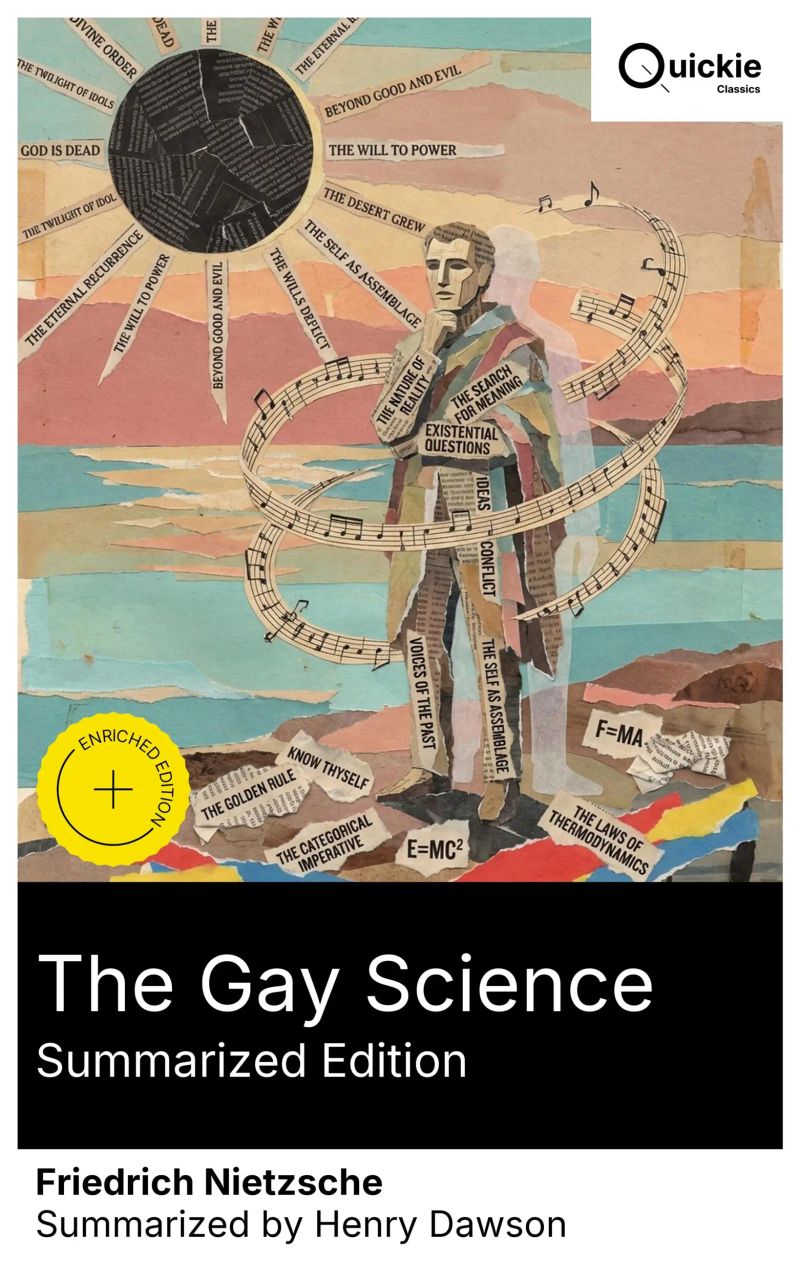
The Gay Science (Summarized Edition)
Enriched edition. Aphorisms of free spirit inquiry—death of God, eternal recurrence, and amor fati—knowledge as dance for a secular, life‑affirming modernity.By Friedrich Nietzsche


Length3h 31m
About this audiobook
The Gay Science fuses incisive inquiry with glittering aphorism, a laboratory of thought experiments. Across its books—including the 1887 "We Fearless Ones"—Nietzsche proclaims the death of God, broaches eternal recurrence, and recasts knowledge as a dancing art learned from the Provençal "gay science." Songs and masks punctuate the prose, giving it a mercurial timbre that resists system. Set against complacent positivism and weary pessimism, the work anticipates Thus Spoke Zarathustra and consolidates Nietzsche's critique of morality, truth, and the modern self. A trained classical philologist at Basel, Nietzsche brought to the book a craftsman's ear and a genealogist's eye. Years of illness and Southern exile—Nice, Genoa, Sils‑Maria—favored short forms and lucid intensity. Disillusion with Wagner, engagement with contemporary science, and the charged triangle with Lou Andreas‑Salomé and Paul Rée in 1882 inflect its paradoxical cheerfulness: a resolve to transmute suffering into playful, rigorous experiment. Readers seeking a bracing guide to art, science, and secular modernity will find The Gay Science inexhaustible. It rewards slow, nonlinear reading and return. As both portal and keystone, it suits philosophers, critics, and generalists willing to test ideas as styles of living.
Quickie Classics summarizes timeless works with precision, preserving the author's voice and keeping the prose clear, fast, and readable—distilled, never diluted. Enriched Edition extras: Introduction · Synopsis · Historical Context · Author Biography · Brief Analysis · 4 Reflection Q&As · Editorial Footnotes.
Audiobook details
Rating★ 1.0 (1)
GenrePhilosophy
Length3 hrs 31 mins
Narrated byListen with 1,000+ voices
FormateBook with Audio
Publish dateJan 10, 2026
LanguageEnglish
Table of contents
1Introduction
6The Gay Science (pt. 1)
2Introduction
7The Gay Science (pt. 2)
3Synopsis
8Analysis
4Historical Context
9Reflection
5Author Biography
Jenseits von Gut und BöseFriedrich Nietzsche7h 35m4.2 (184.4K)$10 · $0.00
Also sprach ZarathustraFriedrich Nietzsche10h 20m4.2 (214.8K)$24 · $0.00

Zur Genealogie der MoralFriedrich Nietzsche6h 10m4.3 (84.8K)$10 · $0.00
The Gay ScienceFriedrich Nietzsche11h 16m4.3 (25.7K)$1.99 · $0.00

EL ANTICRISTOFriedrich Nietzsche3h 17m4.1 (40.2K)$1.99 · $0.00
The Essential Works of Friedrich NietzscheFriedrich Nietzsche93h 31m4.4 (2K)$1.99 · $0.00
MorgenrötheFriedrich Nietzsche12h 8m4.3 (8.4K)$1 · $0.00
THUS SPOKE ZARATHUSTRA (Unabridged)Friedrich Nietzsche11h 38m4.1 (204.6K)$1.99 · $0.00
NIETZSCHE: Beyond Good and Evil, Thus Spoke Zarathustra and Hellenism & PessimismFriedrich Nietzsche27h 37m4.5 (18)$1.99 · $0.00
BEYOND GOOD AND EVIL (Unabridged)Friedrich Nietzsche8h 43m4.2 (139.5K)$1.99 · $0.00
El AnticristoFriedrich Nietzsche3h 15m4.1 (41.1K)$2.99 · $0.00

Le Gai SavoirFriedrich Nietzsche11h 4m4.3 (26.5K)$1.99 · $0.00

Sehnsucht nach Italien: Die 60 schönsten Italien-GedichteFriedrich Nietzsche, Georg Trakl, J.W. Goethe, Rainer Maria Rilke, Stefan Zweig, Adolf Friedrich von Schack, Alfred de Musset, Alfred Henschke, Anastasius Grün, Franz Grillparzer, Francesco Petrarca2h 2m$1 · $0.00

Ejercicios Resueltos De Sistemas DigitalesFriedrich Nietzsche5h 10m$15 · $0.00

Die Geburt der Tragödie (Kommentiert)Friedrich Nietzsche7h 20m4.4 (133)$1 · $0.00
Le Gai Savoir (Annoté)Friedrich Nietzsche12h 20m$1.99 · $0.00
Thus Spoke Zarathustra, Beyond Good and Evil, Hellenism & Pessimism (Annotated)Friedrich Nietzsche27h 36m$2 · $0.00
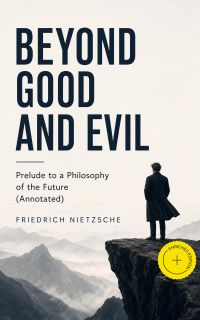
BEYOND GOOD AND EVIL - Prelude to a Philosophy of the Future (Annotated)Friedrich Nietzsche8h 46m4.2 (197.2K)$2 · $0.00
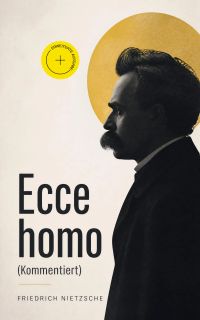
Ecce homo (Kommentiert)Friedrich Nietzsche5h 34m4.3 (44.5K)$1 · $0.00

Jenseits von Gut und Böse (Kommentiert)Friedrich Nietzsche9h 28m4.2 (134.6K)$1 · $0.00
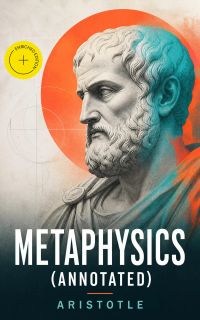
Metaphysics (Annotated)Aristotle13h 30m4.6 (1.2K)$2 · $0.00
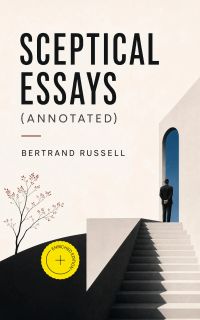
Sceptical Essays (Annotated)Bertrand Russell9h 16m4.6 (1K)$2 · $0.00

WitnessAriel Burger8h 1m4.6 (1.3K)$20 · $0.00
The Magic PresenceGodfré Ray King10h 21m4.6 (307)$1.20 · $0.00
The Art of LivingThich Nhat Hanh5h 1m4.5 (14.2K)$24 · $0.00
Moral Letters to LuciliusLucius Annaeus Seneca24h 26m4.5 (71.7K)$1.99 · $0.00
Lessons in TruthH. Emilie Cady3h 50m4.5 (2.4K)$20 · $0.00
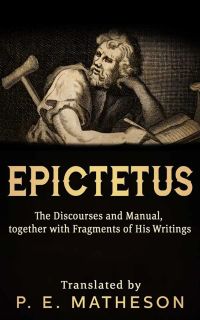
The Discourses of EpictetusP. E. MATHESOM12h 47m4.4 (17.7K)$1.20 · $0.00
IlluminationsWalter Benjamin10h 12m4.4 (16.2K)$20 · $0.00
That Bird Has My WingsJarvis Jay Masters9h 49m4.4 (13.7K)$29 · $0.00

Tâo Teh KingLaozi2h 34m4.4 (230.9K)$2 · $0.00
SymposiumPlato3h 26m4.4 (97.9K)$1.20 · $0.00

Buddhist Boot CampTimber Hawkeye2h 39m4.4 (8.4K)$18 · $0.00
Enchiridion & The Discourses of Epictetus (Annotated)Arrian Epictetus18h 9m4.4 (3.5K)$2 · $0.00
The Meditations of the Emperor Marcus Aurelius AntoninusEmperor of Rome Marcus Aurelius5h 41m4.4 (1.8M)$1 · $0.00
Crime and PunishmentFyodor Dostoevsky23h 11m4.4 (1.3M)$12 · $0.00
MeditationsMarcus Aurelius5h 52m4.4 (433.7K)$1 · $0.00
Everyday DharmaSuneel Gupta5h 2m4.5 (761)$20 · $0.00
The Joyful Wisdom ("La Gaya Scienza")Friedrich Wilhelm Nietzsche11h 37m4.4 (26.6K)$1 · $0.00
The Art of LivingEpictetus, Sharon Lebell3h 16m4.4 (50.1K)$18 · $0.00
You may also like

Be Wild Be FreeAmber Fossey26m4.7 (1.3K)$7 · $0.00
The New RulebookDr Chris Cheers3h 44m4.1 (1.2K)$18 · $0.00
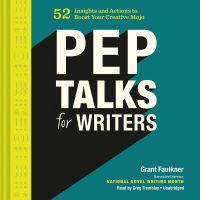
Pep Talks for WritersGrant Faulkner5h 38m4.3 (978)$20

Hot and UnbotheredYana Tallon-Hicks10h 44m4.5 (600)$29 · $0.00

First, We Make the Beast BeautifulSarah Wilson9h 6m4.0 (19K)$29 · $0.00
The Joyful Wisdom ("La Gaya Scienza")Friedrich Wilhelm Nietzsche11h 37m4.4 (26.6K)$1 · $0.00
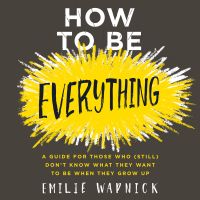
How to Be EverythingEmilie Wapnick5h4.0 (6.2K)$20 · $0.00
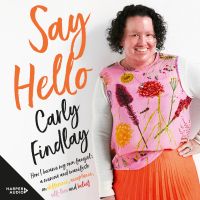
Say HelloCarly Findlay7h 58m4.1 (1.1K)$26 · $0.00
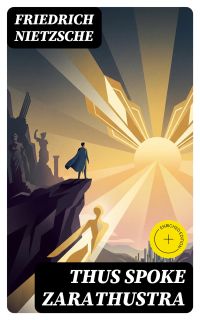
Thus Spoke ZarathustraFriedrich Nietzsche12h 47m4.2 (210.2K)$2 · $0.00
The Pathless PathPaul Millerd6h 14m4.2 (8K)$9.99 · $0.00

Women Don't Owe You PrettyFlorence Given3h 30m3.8 (94.7K)$15
The Collected Works of John Dewey (Annotated)John Dewey168h 46m4.5 (36)$2 · $0.00
The Journal of Arthur Stirling : ("The Valley of the Shadow")Upton Sinclair5h 45m3.6 (128)$2 · $0.00
May Tomorrow Be AwakeChris Martin7h 53m4.5 (250)$26 · $0.00

Whitman: A StudyJohn Burroughs7h 56m4.0 (11)$2 · $0.00

All Women WantAlyx Gorman11h4.1 (62)$25 · $0.00
Dismistifying the Subtle Art of Liging the F*-SeUnknown Author47m$17 · $0.00
I’d Rather Be in ChargeCharlotte Beers7h 56m3.9 (294)$17 · $0.00
The Triumph of the Man Who Acts (Annotated)Edward Earle Purinton8h 3m$1.20 · $0.00
No One Remembers the OvertimeLuna Z. Rainstorm2h 56m$4.10 · $0.00