
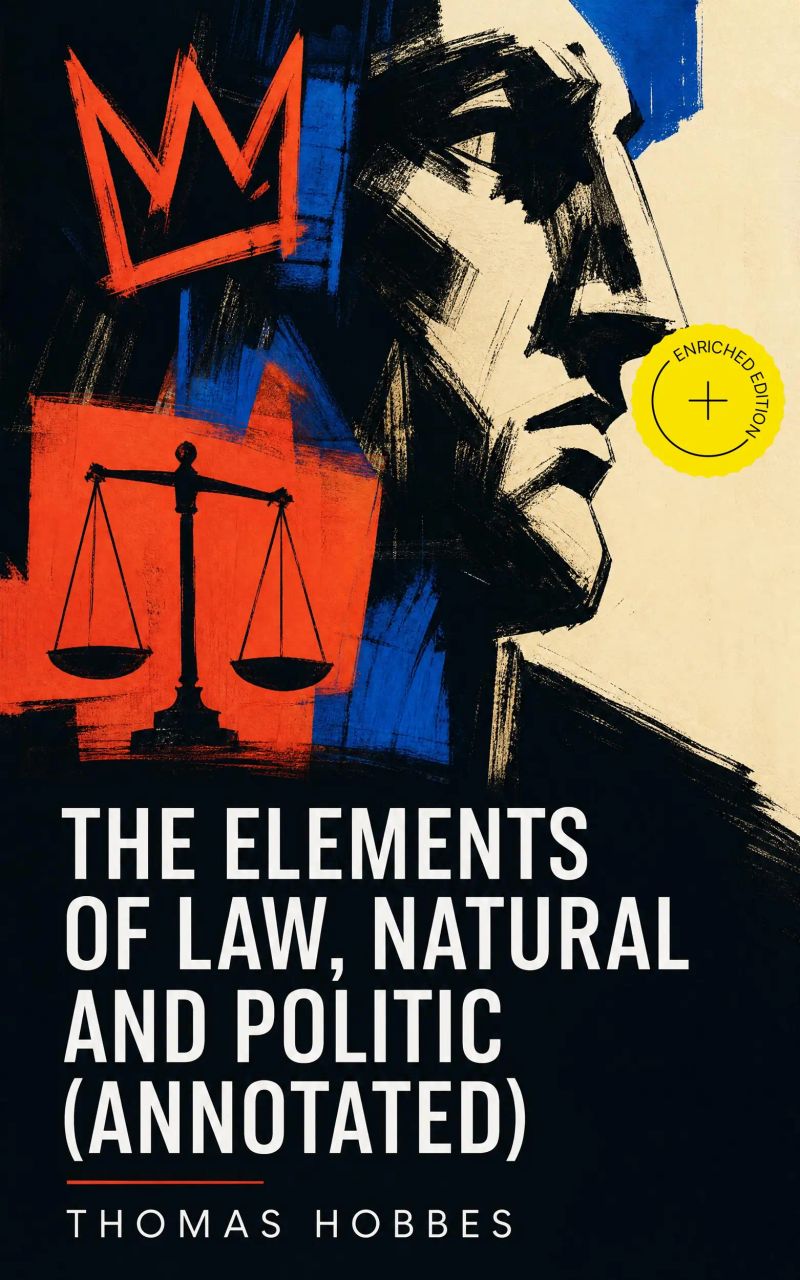
The Elements of Law, Natural and Politic (Annotated)
Enriched Edition. Natural Law, Sovereignty, and the Origins of Modern Political ObligationBy Thomas Hobbes


Length8h 5m
About this audiobook
The Elements of Law, Natural and Politic is Thomas Hobbes's first systematic statement of the philosophical anthropology and political theory later expanded in Leviathan. Composed in a lucid, compressed, and argumentative prose, the work moves from sense, imagination, appetite, fear, and reason to natural law, covenant, sovereignty, and the necessity of civil authority. Written on the eve of the English Civil War and circulated in manuscript in 1640, it belongs to the urgent literature of political crisis, yet its method is strikingly modern: politics is grounded not in inherited scholastic abstractions but in an analysis of human motion, desire, and insecurity. Hobbes, born in 1588 and educated at Oxford, served the Cavendish family, travelled on the Continent, and absorbed both classical historiography and the new mathematical-scientific spirit of the seventeenth century. His experience of parliamentary conflict, religious division, and aristocratic politics sharpened his conviction that peace requires an undivided sovereign power capable of restraining destructive competition. This book is indispensable for readers seeking the origins of modern political philosophy. It rewards students of Hobbes, early modern thought, legal theory, and political realism with a concise but profound account of why order, authority, and obligation matter.
This enriched edition has been carefully crafted to add value to your reading experience.
- A succinct Introduction situates the work's timeless appeal and themes.
- The Synopsis outlines the central plot, highlighting key developments without spoiling critical twists.
- A detailed Historical Context immerses you in the era's events and influences that shaped the writing.
- An Author Biography reveals milestones in the author's life, illuminating the personal insights behind the text.
- A thorough Analysis dissects symbols, motifs, and character arcs to unearth underlying meanings.
- Reflection questions prompt you to engage personally with the work's messages, connecting them to modern life.
- Hand‐picked Memorable Quotes shine a spotlight on moments of literary brilliance.
- Interactive footnotes clarify unusual references, historical allusions, and archaic phrases for an effortless, more informed read.
Audiobook details
Rating★★★★ 4.0 (553)
Includes Goodreads, LibraryThing, Amazon, StoryGraph
GenrePhilosophy
Length8 hrs 5 mins
Narrated byListen with 1,000+ voices
FormateBook with Audio
Publish dateDec 7, 2023
LanguageEnglish
Table of contents
1The Elements of Law, Natural and Politic (Annotated)
2Introduction
3Synopsis
4Historical Context
5Author Biography
Show all chaptersShow less
6PART I
7Chapter 1: The General Division of Man's Natural Faculties
8Chapter 2: The Cause of Sense
9Chapter 3: Of Imagination and the Kinds Thereof
10Chapter 4: Of the Several Kinds of Discursion of the Mind
11Chapter 5: Of Names, Reasoning, and Discourse of the Tongue
12Chapter 6: Of a Knowledge, Opinion and Belief
13Chapter 7: Of Delight and Pain; Good and Evil
14Chapter 8: Of the Pleasures of the Senses; Of Honour
15Chapter 9: Of the Passions of the Mind
16Chapter 10: Of the Difference Between Men In These Discerning Faculty and the Cause
17Chapter 11: What Imaginations and Passions Men Have, at the Names of Things Supernatural
18Chapter 12: How by Deliberation From Passions Proceed Men's Actions
19Chapter 13: How by Language Men Work Upon Each Other's Minds
20Chapter 14: Of the Estate and Right of Nature
21Chapter 15: Of the Divesting Natural Right by Gift and Covenant
22Chapter 16: Some of the Laws of Nature
23Chapter 17: Other Laws of Nature
24Chapter 18: A Confirmation of the Same Out of The Word of God
25Chapter 19: Of the Necessity and Definition of a Body Politic
26PART II
27Chapter 20: Of the Requisites to the Constitution of a Commonwealth
28Chapter 21: Of the Three Sorts of Commonwealth
29Chapter 22: Of the Power of Masters
30Chapter 23: Of the Power of Fathers, and of Patrimonial Kingdom
31Chapter 24: The Incommodities of Several Sorts of Government Compared
32Chapter 25: That Subjects are not Bound to Follow Their Private Judgments in Controversies of Religion
33Chapter 26: That Subjects are not bound to follow the Judgment of any Authorities in Controversies of Religion which is not Dependent on the Sovereign Power
34Chapter 27: Of the Causes of Rebellion
35Chapter 28: Of the Duty of Them That Have Sovereign Power
36Chapter 29: Of the Nature and Kinds of Laws
37Analysis
38Reflection
39Memorable Quotes
More from Thomas Hobbes

50 citations de Thomas HobbesThomas Hobbes9m$3 · $0.00
The Collected Political Works: Leviathan + De Cive (On the Citizen) + The Elements of Law + Behemoth, or The Long Parliament (Annotated)Thomas Hobbes47h 20m$2 · $0.00
The Political Works of Thomas Hobbes (4 Books in One Edition) (Annotated)Thomas Hobbes47h 18m4.6 (12)$2 · $0.00

Leviathan (Annotated)Thomas Hobbes23h 35m$2 · $0.00

LeviathanThomas Hobbes22h3.9 (111.3K)$1 · $0.00
The Political Works of Thomas Hobbes (4 Books in One Edition)Thomas Hobbes48h 15m4.1 (12)$2 · $0.00
Leviathan (Summarized Edition)Thomas Hobbes5h 18m$2

Grundzüge der PhilosophieThomas Hobbes6h 47m4.4 (15)$1 · $0.00
Grundzüge der PhilosophieThomas Hobbes8h 23m4.0 (40)$2 · $0.00

LeviathanThomas Hobbes22h3.9 (65.7K)$2 · $0.00
Leviathan (Zusammengefasste Ausgabe)Thomas Hobbes5h 41m3.6 (22)$2
The Political Works of Thomas Hobbes (4 Books in One Edition)Thomas Hobbes48h 20m4.1 (12)$1.99 · $0.00
Grundzüge der Philosophie (Kommentiert)Thomas Hobbes8h 38m4.4 (12)$1 · $0.00
LEVIATHAN (Complete Edition)Thomas Hobbes23h 49m3.9 (69.8K)$1.99 · $0.00
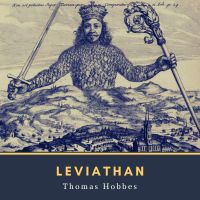
LeviathanThomas Hobbes22h4.0 (64.5K)$12 · $0.00

LeviatánThomas Hobbes14h 52m3.9 (60.6K)$11 · $0.00

WitnessAriel Burger8h 1m4.6 (1.3K)$20 · $0.00

The Magic PresenceGodfré Ray King10h 21m4.6 (307)$1.20 · $0.00

The Art of LivingThich Nhat Hanh5h 1m4.5 (14.2K)$24 · $0.00
Moral Letters to LuciliusLucius Annaeus Seneca24h 26m4.5 (71.7K)$0.99 · $0.00

Lessons in TruthH. Emilie Cady3h 50m4.5 (2.4K)$20 · $0.00
The Discourses of EpictetusP. E. MATHESOM12h 47m4.4 (17.7K)$1.20 · $0.00

IlluminationsWalter Benjamin10h 12m4.4 (16.2K)$20 · $0.00

That Bird Has My WingsJarvis Jay Masters9h 49m4.4 (13.7K)$29 · $0.00

Tâo Teh KingLaozi2h 34m4.4 (230.9K)$2 · $0.00

SymposiumPlato3h 26m4.4 (97.9K)$1.20 · $0.00

Buddhist Boot CampTimber Hawkeye2h 39m4.4 (8.4K)$18 · $0.00
Enchiridion & The Discourses of Epictetus (Annotated)Arrian Epictetus18h 9m4.4 (3.5K)$2 · $0.00

The Meditations of the Emperor Marcus Aurelius AntoninusEmperor of Rome Marcus Aurelius5h 41m4.4 (1.8M)$1 · $0.00
Crime and PunishmentFyodor Dostoevsky23h 11m4.4 (1.3M)$12 · $0.00

MeditationsMarcus Aurelius5h 52m4.4 (433.7K)$1 · $0.00

Everyday DharmaSuneel Gupta5h 2m4.5 (761)$20 · $0.00

The Joyful Wisdom ("La Gaya Scienza")Friedrich Wilhelm Nietzsche11h 37m4.4 (26.6K)$1 · $0.00
The Art of LivingEpictetus, Sharon Lebell3h 16m4.4 (50.1K)$18 · $0.00
MeditationsEmperor Of Rome Marcus Aurelius7h 23m4.3 (477.5K)$1.20 · $0.00

The Imitation of ChristThomas à Kempis6h 27m4.3 (84.6K)$21 · $0.00
You may also like
CapitalismAyn Rand14h 16m4.0 (5.2K)$25 · $0.00
A Discourse Upon the Origin and the Foundation of the Inequality Among Mankind Jean-Jacques Rousseau2h 51m4.0 (21.8K)Free
Knowledge and DecisionsThomas Sowell20h 53m4.5 (2.8K)$30
The Social ContractJean-Jacques Rousseau10h 49m3.9 (68.7K)$9 · $0.00
The Lucifer PrincipleHoward Bloom12h 3m4.2 (3.6K)$23
The Federalist Papers & Anti-Federalist Papers: Complete Edition of the Pivotal Constitution DebateAlexander Hamilton, James Madison, John Jay, Patrick Henry, Samuel Bryan22h 14m4.4 (7.7K)$2 · $0.00

Why Men Fight: A method of abolishing the international duelBertrand Russell6h 2m4.1 (503)$2 · $0.00
Psychology of CrowdsGustave le Bon6h 21m3.9 (26.8K)$3.50 · $0.00

Ayn Rand AnswersAyn Rand10h 1m4.3 (799)$20 · $0.00
The Psychic Soviet, and Other WorksIan F. Svenonius6h 8m4.3 (536)$17 · $0.00

The Gulag Archipelago 1918-1956Aleksandr I. Solzhenitsyn21h 54m4.5 (44.1K)$46 · $0.00
LeviathanThomas Hobbes23h 2m3.7 (59.8K)$4 · $0.00
CAPITAL (All 3 Books)Karl Marx92h 37m4.5 (16.5K)$2.99 · $0.00

A Rebel War Clerk's Diary at the Confederate States CapitalJ. B. Jones38h 11m4.3 (517)$2 · $0.00

Virtue BombsChristian Toto6h 12m4.3 (150)$17 · $0.00
RevoltNadav Eyal14h 28m4.0 (697)$33 · $0.00
Thomas Hobbes: The Philosopher of OrderSaraban K. K. 1h 5m5.0 (9) Only with Ultra

CAPITAL (Annotated)Karl Marx105h 33m$2 · $0.00
The Logic of Human Mind & Other WorksJohn Dewey40h 53m$1.99 · $0.00
Leviathan (Annotated)Thomas Hobbes23h 35m$2 · $0.00