
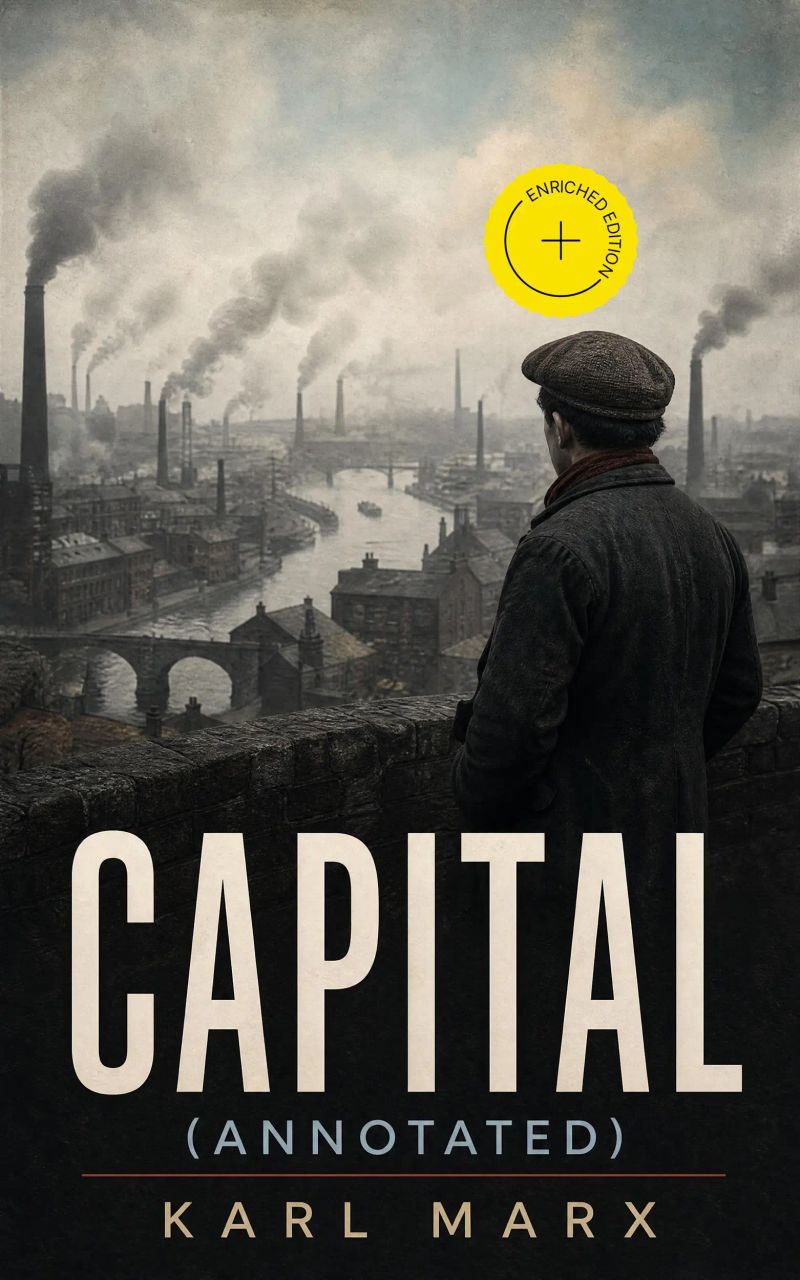
CAPITAL (Annotated)
Enriched Edition. Vol. 1-3: Complete Edition - Including The Communist Manifesto, Wage-Labour and Capital, & Wages, Price and ProfitBy Karl Marx


Length105h 33m
About this audiobook
Capital is Karl Marx's monumental critique of political economy, a rigorous investigation into the capitalist mode of production, commodity exchange, surplus value, accumulation, and crisis. Written in a dense yet often dramatic prose, it combines philosophy, history, economics, and literary irony. Situated within nineteenth-century industrial capitalism and classical political economy, the work transforms the tools of Smith and Ricardo into a radical analysis of exploitation and social power. Marx, a German philosopher, journalist, and revolutionary thinker, wrote Capital after decades of political struggle, exile, and archival research, particularly in the British Museum. His experiences with censorship, working-class movements, and the upheavals of European industrial society shaped his conviction that capitalism was not a natural order but a historical system governed by contradictions. This book is essential for readers interested in economics, political theory, history, sociology, or modern social criticism. Though demanding, it rewards careful reading with a profound framework for understanding labor, inequality, markets, and power. Capital remains indispensable for anyone seeking to grasp the intellectual foundations of critiques of capitalism.
This enriched edition has been carefully crafted to add value to your reading experience.
- A succinct Introduction situates the work's timeless appeal and themes.
- The Synopsis outlines the central plot, highlighting key developments without spoiling critical twists.
- A detailed Historical Context immerses you in the era's events and influences that shaped the writing.
- An Author Biography reveals milestones in the author's life, illuminating the personal insights behind the text.
- A thorough Analysis dissects symbols, motifs, and character arcs to unearth underlying meanings.
- Reflection questions prompt you to engage personally with the work's messages, connecting them to modern life.
- Hand‐picked Memorable Quotes shine a spotlight on moments of literary brilliance.
Audiobook details
GenreBusiness and Economics
Length105 hrs 33 mins
Narrated byListen with 1,000+ voices
FormateBook with Audio
Publish dateMay 1, 2018
LanguageEnglish
Table of contents
1Distributive Justice: The Right and Wrong of Our Present Distribution of Wealth (Annotated)
2CAPITAL
3Author’s Preface: First German Edition
4Editor’s Preface: First English Translation
5Part 1 - Commodities and Money
Show all chaptersShow less
61. Commodities
7I. The Two Factors of a Commodity: Use-Value and Value
8II. The Two-fold Character of the Labour Embodied in Commodities
9III. The Form of Value or Exchange-Value
10IV. The Fetishism of Commodities and the Secret Thereof
112. Exchange
123. Money, or the Circulation of Commodities
13I. The Measure of Values
14II. The Medium of Circulation
15III. Money
16Part 2 - Transformation of Money into Capital
174. The General Formula for Capital
185. Contradictions in the General Formula of Capital
196. The Buying and Selling of Labour-Power
20Part 3 - The Production of Absolute Surplus-Value
217. The Labour-Process and the Process of Producing Surplus-Value
22I. The Labour-Process or the Production of Use-Values
23II. The Production of Surplus-Value
248. Constant Capital and Variable Capital
259. The Rate of Surplus-Value
26I. The Degree of Exploitation of Labour-Power
27II. The Representation of the Components of the Value of the Product
28III. Senior’s “Last Hour”
29IV. Surplus-Produce
3010. The Working day
31I. The Limits of the Working day
32II. The Greed for Surplus-Labor, Manufacturer and Boyard
33III. Branches of English Industry without Legal Limits to Exploitation
34IV. Day and Night Work. The Relay System
35V. Compulsory Laws for the Extension of the Working Day (Mid 14th- End 17th Century)
36VI. Compulsory Limitation by Law of the Working-Time
37VII. Reaction of the English Factory Acts on Other Countries
3811. Rate and Mass of Surplus-Value
39Part 4 - Production of Relative Surplus-Value
4012. The Concept of Relative Surplus-Value
4113. Co-operation
4214. Division of Labour and Manufacture
43I. Two-Fold Origin of Manufacture
44II. The Detail Labourer and his Implements
45III. The Two Fundamental Forms of Manufacture
46IV. Division of Labour in Manufacture, and Division of Labour in Society
47V. The Capitalistic Character of Manufacture
4815. Machinery and Modern Industry
49I. The Development of Machinery
50II. The Value Transferred by Machinery to the Product
The Communist ManifestoKarl Marx3h 25m3.9 (262.2K)$1.99 · $0.00

Die heilige FamilieKarl Marx10h 50m3.8 (1.9K)$2 · $0.00
The XVIII Brumaire of Louis BonaparteKarl Marx6h 21m4.4 (12.9K)$1.99 · $0.00

Karl Marx: Der achtzehnte Brumaire des Louis NapoleonKarl Marx6h 36m4.3 (16.1K)$1 · $0.00

Differenz der demokritischen und epikureischen NaturphilosophieKarl Marx2h 38m4.0 (1.2K)$2 · $0.00

Zur JudenfrageKarl Marx1h 48m3.5 (1.5K)$1 · $0.00

Lohn, Preis und ProfitKarl Marx4h 10m4.4 (4.4K)$1 · $0.00
THE COMMUNIST MANIFESTO & CAPITALKarl Marx98h 8m4.3 (29)$1.99 · $0.00
Das Kapital: Band 1-3Karl Marx91h 36m4.5 (3K)$2 · $0.00

Zweites KaiserreichKarl Marx15h 27m$1 · $0.00
Das Kapital (Alle 3 Bände)Karl Marx91h 37m4.2 (15.4K)$2 · $0.00
The Process of Capitalist ProductionKarl Marx30h 4m4.4 (44.3K)$1.99 · $0.00
Lohnarbeit und KapitalKarl Marx1h 49m4.3 (5.6K)$1 · $0.00
CAPITAL (All 3 Books)Karl Marx92h 37m4.5 (16.5K)$2.99 · $0.00

Karl Marx: Zur Kritik der Hegelschen RechtsphilosophieKarl Marx9h 22m4.2 (1.2K)$1 · $0.00
The Process of Capitalist Production as a Whole (Capital Vol. III)Karl Marx41h 1m4.4 (2.2K)$1.99 · $0.00
Manifiesto ComunistaKarl Marx, Friederich Engels1h 57m3.9 (266.6K)$15 · $0.00
The Communist ManifestoKarl Marx1h 13m3.9 (240.6K)$3 · $0.00
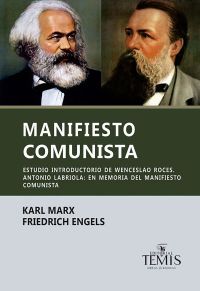
Manifiesto comunistaKarl Marx, Friedrich Engels6h 9m3.9 (276.8K)$6
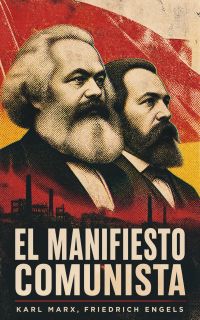
El Manifiesto ComunistaKarl Marx, Friedrich Engels2h 8m3.9 (273.3K)$0.99 · $0.00
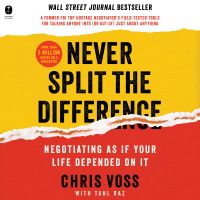
Never Split the DifferenceChris Voss, Tahl Raz8h 7m4.4 (277.7K)$26 · $0.00
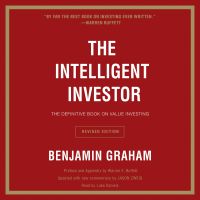
The Intelligent Investor Rev Ed.Benjamin Graham17h 48m4.3 (191.5K)$40 · $0.00
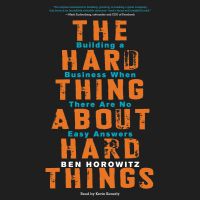
The Hard Thing About Hard ThingsBen Horowitz7h 57m4.2 (134.3K)$26 · $0.00
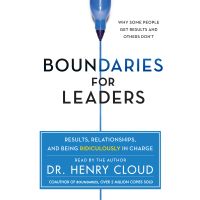
Boundaries for LeadersHenry Cloud7h 36m4.3 (3.6K)$26 · $0.00

Eat It!Jordan Syatt, Michael Vacanti4h 40m4.6 (1.5K)$20 · $0.00

Progress and Poverty, Volumes I and II (Annotated)Henry George19h 21m4.6 (574)$0.99 · $0.00

Not Everything Counts but Everything Matters: The powerful and inspirational new book about leadership and achieving success from the visionary multi-premiership winning Panthers coachIvan Cleary6h 1m4.6 (680)$24 · $0.00
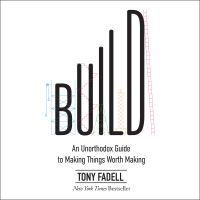
BuildTony Fadell11h 5m4.5 (14.3K)$8 · $0.00
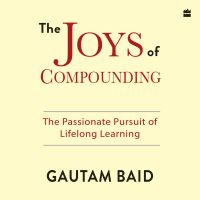
The Joys Of CompoundingGautam Baid17h 34m4.5 (2.5K)$18 · $0.00
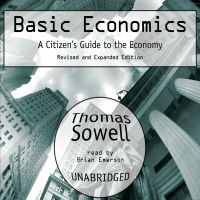
Basic EconomicsThomas Sowell18h 32m4.5 (29.3K)$28 · $0.00

Poor Charlie’s AlmanackGrover Gardener, Charles T. Munger13h 9m4.5 (24.7K)$18 · $0.00

The Ambuja StoryNarotam Sekhsaria13h 59m4.5 (830)$33 · $0.00

The Secret Door to SuccessFlorence Scovel Shinn2h 25m4.5 (2.1K)$1.20 · $0.00

This Is Going to HurtAdam Kay5h 47m4.4 (444.7K)$24 · $0.00

Big TrustShadé Zahrai, Fayçal Sekkouah8h 36m4.6 (406)$26 · $0.00
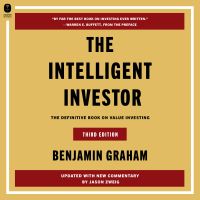
The Intelligent Investor Third EditionBenjamin Graham, Jason Zweig20h4.4 (156.6K)$46 · $0.00

Bottle of LiesKatherine Eban14h 25m4.4 (12K)$33 · $0.00

The Antiracist Business BookTrudi Lebrón6h 10m4.6 (275)$17 · $0.00
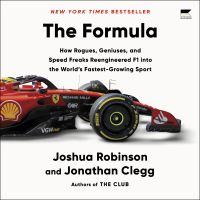
The FormulaJoshua Robinson, Jonathan Clegg10h 41m4.4 (6.9K)$29 · $0.00

Let Them LeadJohn U. Bacon7h 10m4.5 (1.4K)$24 · $0.00
You may also like
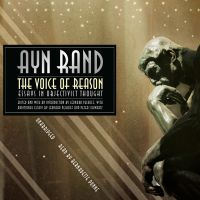
The Voice of ReasonAyn Rand15h 57m4.2 (1.4K)$25
Capital (Das Kapital)Karl Marx98h 11m4.4 (40.9K)$1.99 · $0.00
A Contribution to The Critique Of The Political Economy (Annotated)Karl Marx11h 7m4.0 (480)$0.99 · $0.00
CapitalismAyn Rand14h 16m4.0 (5.2K)$25 · $0.00

Kingdom of Olives and AshMichael Chabon, Ayelet Waldman16h 5m4.3 (760)$33 · $0.00

The Elements of Law, Natural and Politic (Annotated)Thomas Hobbes8h 6m4.0 (553)$2 · $0.00

The Prague OrgyPhilip Roth2h 17m3.8 (5K)$14
Knowledge and DecisionsThomas Sowell20h 53m4.5 (2.8K)$30

On LibertyJohn Stuart Mill5h 9m4.2 (112.9K)$20 · $0.00

All It Takes Is GutsWalter E. Williams5h 53m4.3 (282)$14 · $0.00

The Psychic Soviet, and Other WorksIan F. Svenonius6h 8m4.3 (536)$17 · $0.00
CAPITAL (All 3 Books)Karl Marx92h 37m4.5 (16.5K)$2.99 · $0.00
The Conservative MindRussell Kirk19h 50m4.3 (277.2K)$32
CAPITAL (All 3 Books)Karl Marx98h 2m4.5 (3.3K)$1 · $0.00
Affirmative Action Around the WorldThomas Sowell7h 24m4.4 (1.1K)$23

Psychology of CrowdsGustave le Bon6h 21m3.9 (26.8K)$3.50 · $0.00

The Republic (Annotated)Plato18h 7m4.1 (232.5K)$0.99 · $0.00

San FransickoMichael Shellenberger11h 12m4.1 (6.6K)$29 · $0.00
The Art of Not Being GovernedJames C. Scott17h 34m4.3 (2.9K)$30

The Collected Works of Du BoisW.E.B. Du Bois35h 55m4.7 (160)$1.99 · $0.00