
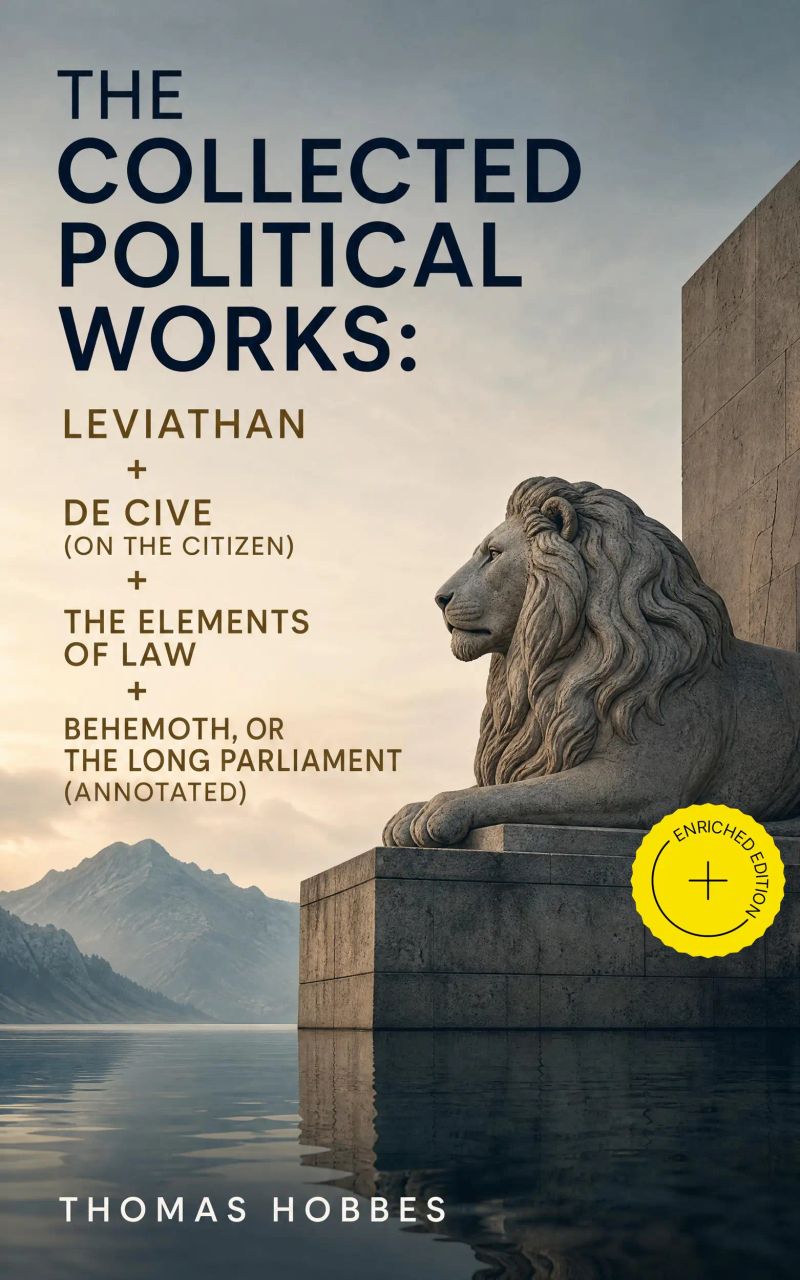
The Collected Political Works: Leviathan + De Cive (On the Citizen) + The Elements of Law + Behemoth, or The Long Parliament (Annotated)
Enriched Edition. Sovereignty, Civil War, and LawBy Thomas Hobbes


Length47h 19m
About this audiobook
This collected volume brings together Hobbes's major political writings, tracing the full architecture of his civil philosophy from the analytic foundations of The Elements of Law and De Cive to the monumental synthesis of Leviathan and the historical diagnosis of Behemoth. Written in a prose at once geometrical, polemical, and often startlingly vivid, these works situate sovereignty, fear, covenant, religion, and obedience within the fractured intellectual world of seventeenth-century Europe, where civil war and theological controversy made political order an urgent philosophical problem. Thomas Hobbes (1588–1679), educated at Oxford and long connected to aristocratic and scientific circles, wrote under the pressure of England's constitutional crisis, the Civil War, and the collapse of traditional authority. His encounters with classical history, emerging mechanistic science, and continental thinkers helped shape his ambition to make politics a rigorous science grounded in human nature, appetite, motion, and self-preservation. This collection is indispensable for readers seeking to understand the origins of modern political theory. It is especially recommended to students of philosophy, history, law, and theology, as well as anyone interested in the enduring question of how liberty, authority, and peace can coexist.
This enriched edition has been carefully crafted to add value to your reading experience.
- A comprehensive Introduction outlines these selected works' unifying features, themes, or stylistic evolutions.
- The Author Biography highlights personal milestones and literary influences that shape the entire body of writing.
- A Historical Context section situates the works in their broader era—social currents, cultural trends, and key events that underpin their creation.
- A concise Synopsis (Selection) offers an accessible overview of the included texts, helping readers navigate plotlines and main ideas without revealing critical twists.
- A unified Analysis examines recurring motifs and stylistic hallmarks across the collection, tying the stories together while spotlighting the different work's strengths.
- Reflection questions inspire deeper contemplation of the author's overarching message, inviting readers to draw connections among different texts and relate them to modern contexts.
- Lastly, our hand‐picked Memorable Quotes distill pivotal lines and turning points, serving as touchstones for the collection's central themes.
Audiobook details
GenrePolitics and Government
Length47 hrs 19 mins
Narrated byListen with 1,000+ voices
FormateBook with Audio
Publish dateNov 10, 2013
LanguageEnglish
Table of contents
1Robert's Rules of Order (Annotated)
2The Collected Political Works: Leviathan + De Cive (On the Citizen) + The Elements of Law + Behemoth, or The Long Parliament
3The Elements of Law
4PART I
5Chapter 1: The General Division of Man's Natural Faculties
Show all chaptersShow less
6Chapter 2: The Cause of Sense
7Chapter 3: Of Imagination and the Kinds Thereof
8Chapter 4: Of the Several Kinds of Discursion of the Mind
9Chapter 5: Of Names, Reasoning, and Discourse of the Tongue
10Chapter 6: Of a Knowledge, Opinion and Relief
11Chapter 7: Of Delight and Pain; Good and Evil
12Chapter 8: Of the Pleasures of the Senses; Of Honour
13Chapter 9: Of the Passions of the Mind
14Chapter 10: Of the Difference Between Men In These Discerning Faculty and the Cause
15Chapter 11: What Imaginations and Passions Men Have, at the Names of Things Supernatural
16Chapter 12: How by Deliberation From Passions Proceed Men's Actions
17Chapter 13: How by Language Men Work Upon Each Other's Minds
18Chapter 14: Of the Estate and Right of Nature
19Chapter 15: Of the Divesting Natural Right by Gift and Covenant
20Chapter 16: Some of the Laws of Nature
21Chapter 17: Other Laws of Nature
22Chapter 18: A Confirmation of the Same Out of The Word of God
23Chapter 19: Of the Necessity and Definition of a Body Politic
24PART II
25Chapter 20: Of the Requisites to the Constitution of a Commonwealth
26Chapter 21: Of the Three Sorts of Commonwealth
27Chapter 22: Of the Power of Masters
28Chapter 23: Of the Power of Fathers, and of Patrimonial Kingdom
29Chapter 24: The Incommodities of Several Sorts of Government Compared
30Chapter 25: That Subjects are not Bound to Follow Their Private Judgments in Controversies of Religion
31Chapter 26: That Subjects are not bound to follow the Judgment of any Authorities in Controversies of Religion which is not Dependent on the Sovereign Power
32Chapter 27: Of the Causes of Rebellion
33Chapter 28: Of the Duty of Them That Have Sovereign Power
34Chapter 29: Of the Nature and Kinds of Laws
35De Cive (On the Citizen)
36Author's Preface
37Chapter I: Of the state of men without Civill Society
38Chapter II: Of the Law of Nature concerning Contracts
39Chapter III: Of the other Lawes of Nature
40Chapter IV: That the Law of Nature is a Divine Law
41Chapter V: Of the causes, and first begining of civill Government
42Chapter VI: Of the right of him, whether Counsell, or one Man onely, who hath the supreme power in the City
43Chapter VII: Of the three kindes of Government, Democracy, Aristocracy, Monarchie
44Chapter VIII: Of the Rights of Lords over their Servant
45Chapter IX: Of the right of Parents over their children and of hereditary Government
46Chapter X: A comparison between 3. kinds of government, according to their severall inconveniences
47Chapter XI: Places and Examples of Scripture of the Rights of Government agreeable to what hath been said before
48Chapter XII: Of the internal causes, tending to the dissolution of any Government
49Chapter XIII: Concerning the duties of them who bear Rule
50Chapter XIV: Of Lawes and Trespasses
More from Thomas Hobbes

50 citations de Thomas HobbesThomas Hobbes9m$3 · $0.00

The Elements of Law, Natural and Politic (Annotated)Thomas Hobbes8h 6m4.0 (553)$2 · $0.00
The Political Works of Thomas Hobbes (4 Books in One Edition) (Annotated)Thomas Hobbes47h 18m4.6 (12)$2 · $0.00

Leviathan (Annotated)Thomas Hobbes23h 35m$2 · $0.00

LeviathanThomas Hobbes22h3.9 (111.3K)$1 · $0.00

The Political Works of Thomas Hobbes (4 Books in One Edition)Thomas Hobbes48h 15m4.1 (12)$2 · $0.00

Leviathan (Summarized Edition)Thomas Hobbes5h 18m$2

Grundzüge der PhilosophieThomas Hobbes6h 47m4.4 (15)$1 · $0.00

Grundzüge der PhilosophieThomas Hobbes8h 23m4.0 (40)$2 · $0.00

LeviathanThomas Hobbes22h3.9 (65.7K)$2 · $0.00

Leviathan (Zusammengefasste Ausgabe)Thomas Hobbes5h 41m3.6 (22)$2
The Political Works of Thomas Hobbes (4 Books in One Edition)Thomas Hobbes48h 20m4.1 (12)$1.99 · $0.00
Grundzüge der Philosophie (Kommentiert)Thomas Hobbes8h 38m4.4 (12)$1 · $0.00

LEVIATHAN (Complete Edition)Thomas Hobbes23h 49m3.9 (69.8K)$1.99 · $0.00

LeviathanThomas Hobbes22h4.0 (64.5K)$12 · $0.00

LeviatánThomas Hobbes14h 52m3.9 (60.6K)$11 · $0.00

The Gulag Archipelago Volume 3Aleksandr I. Solzhenitsyn21h 56m4.7 (8.9K)$46 · $0.00

MotherlandJulia Ioffe17h 52m4.7 (2.5K)$40 · $0.00

HostageEli Sharabi5h 25m4.6 (10.8K)$24 · $0.00

KrantikariSanjeev Sanyal11h 44m4.6 (1.3K)$16 · $0.00

Unbroken Bonds of BattleJohnny Joey Jones8h 31m4.6 (2.6K)$8 · $0.00

On Democracies and Death CultsDouglas Murray10h 38m4.6 (6.5K)$29 · $0.00

Balcony Over Jerusalem: A Middle East Memoir - Israel, Palestine and BeyondJohn Lyons12h 37m4.6 (1.4K)$33 · $0.00

RiggedMollie Hemingway12h 48m4.6 (4.2K)$23 · $0.00

SledgehammerDavid Friedman8h 21m4.7 (589)$26 · $0.00

Citizenship in a Republic (Annotated)Theodore Roosevelt2h 44m4.6 (1.4K)$2 · $0.00

No EscapeNury Turkel9h 30m4.6 (809)$28 · $0.00

Always FaithfulThomas Schueman, Zainullah Zaki12h 12m4.6 (977)$29 · $0.00

UnthinkableJamie Raskin15h 8m4.5 (9.3K)$8 · $0.00

My Fourth Time, We DrownedSally Hayden13h 59m4.6 (2.9K)$23 · $0.00

A Revolution of Common SenseScott Jennings9h 29m4.6 (528)$29 · $0.00

Statement From the Dock at the Rivonia TrialNelson Mandela2h 18m4.6 (1.3K)$1 · $0.00

Lessons from the EdgeMarie Yovanovitch17h 11m4.5 (5.9K)$40 · $0.00

To Rescue the American SpiritBret Baier10h 12m4.5 (2.7K)$8 · $0.00

StonewalledSharyl Attkisson15h 19m4.5 (4.3K)$33 · $0.00
The World According to Orwell: 1984 & Animal FarmGeorge Orwell15h 42m4.6 (1.1K)$1 · $0.00
You may also like
A Conflict of VisionsThomas Sowell7h 8m4.4 (16K)$17

LandSimon Winchester13h 47m3.9 (5.8K)$5 · $0.00
Wealth, Poverty, and PoliticsThomas Sowell8h 27m4.5 (7.8K)$20
Discourse on the Origin of Inequality (Annotated)Jean-Jacques Rousseau4h 36m4.2 (40.4K)$2 · $0.00

Fresh Air FiendPaul Theroux19h 37m3.9 (1.8K)$40 · $0.00

Smoke and AshesAmitav Ghosh12h 36m4.2 (2.5K)$33 · $0.00
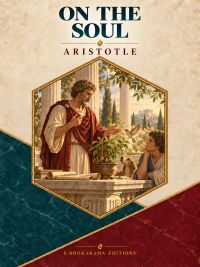
On the SoulAristotle3h 25m4.1 (8K)$1.20 · $0.00

The Civilisation of the Renaissance in ItalyJacob Burckhardt21h 25m4.1 (5.6K)$1 · $0.00
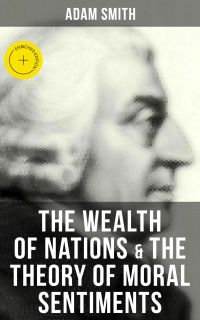
The Wealth of Nations & The Theory of Moral SentimentsAdam Smith59h 19m4.2 (4K)$1.99 · $0.00
It All Adds UpSaul Bellow13h 19m4.0 (733)$23

The Expression of the Emotions in Man and Animals (Annotated)Charles Darwin9h 27m4.1 (13.5K)$1.99 · $0.00
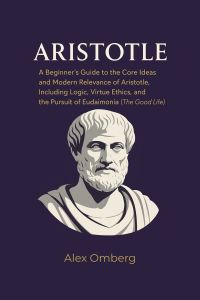
AristotleAlex Omberg2h 33m5.0 (2)$9.99
The Political Works of Thomas Hobbes (4 Books in One Edition) (Annotated)Thomas Hobbes47h 18m4.6 (12)$2 · $0.00
The Greatest Works of G.W.F. Hegel (Annotated)Georg Wilhelm Friedrich Hegel244h 13m$2 · $0.00

Ethics Explored: 52 Influential BooksBooker T. Washington, Richard Baxter, James Harold Romain, Cora May Williams, John Hamilton Moore, Aristotle, John H. Stapleton, Franz Brentano, Margaret Slattery, G. E. Moore, T. De Witt Talmage, Bernard Mandeville, William De Witt Hyde, Lucy Helen Muriel Soulsby, J. M. Judy, Thomas Fowler, M. Valentine, John Dewey, W. R. Sorley, Kenneth Ingram, S. A. D. Tissot, Robert Chenault Givler, James Hayden Tufts, Goldwin Smith, Mabel Anne McKee, Malcolm Guthrie, Maurice Francis Egan, Alfred Russel Wallace, S. M. I. Henry, Rudolf Eucken, Horatio Robinson Storer, Edward Abbott Sir Parry, Epictetus, Emil Edward Kusel, Stephen S. Wise, H. G. Wells, John Bunyan, George Horace Lorimer, Oliver Optic, Horatio Jr. Alger, Mohandas K. Gandhi, Plutarch, Arthur Christopher Benson, Benedictus de Spinoza, Felix Adler, Iamblichus, W. R. Washington Sullivan, Laurence Housman, Upton Sinclair382h 23m$0.99 · $0.00
The Essence of Hume's PhilosophyDavid Hume36h 17m4.2 (19)$2 · $0.00

Englisch lernen Audio - CornwallSpotlight Verlag1h4.6 (18)$15

The Best American Food Writing 2023Mark Bittman, Silvia Killingsworth8h 5m3.9 (348)$26 · $0.00

A Journey to Katmandu (the Capital of Napaul), with the Camp of Jung BahadoorLaurence Oliphant6h 27m3.5 (17)$1 · $0.00

California and the CaliforniansDavid Starr Jordan38m3.9 (11)$1 · $0.00