
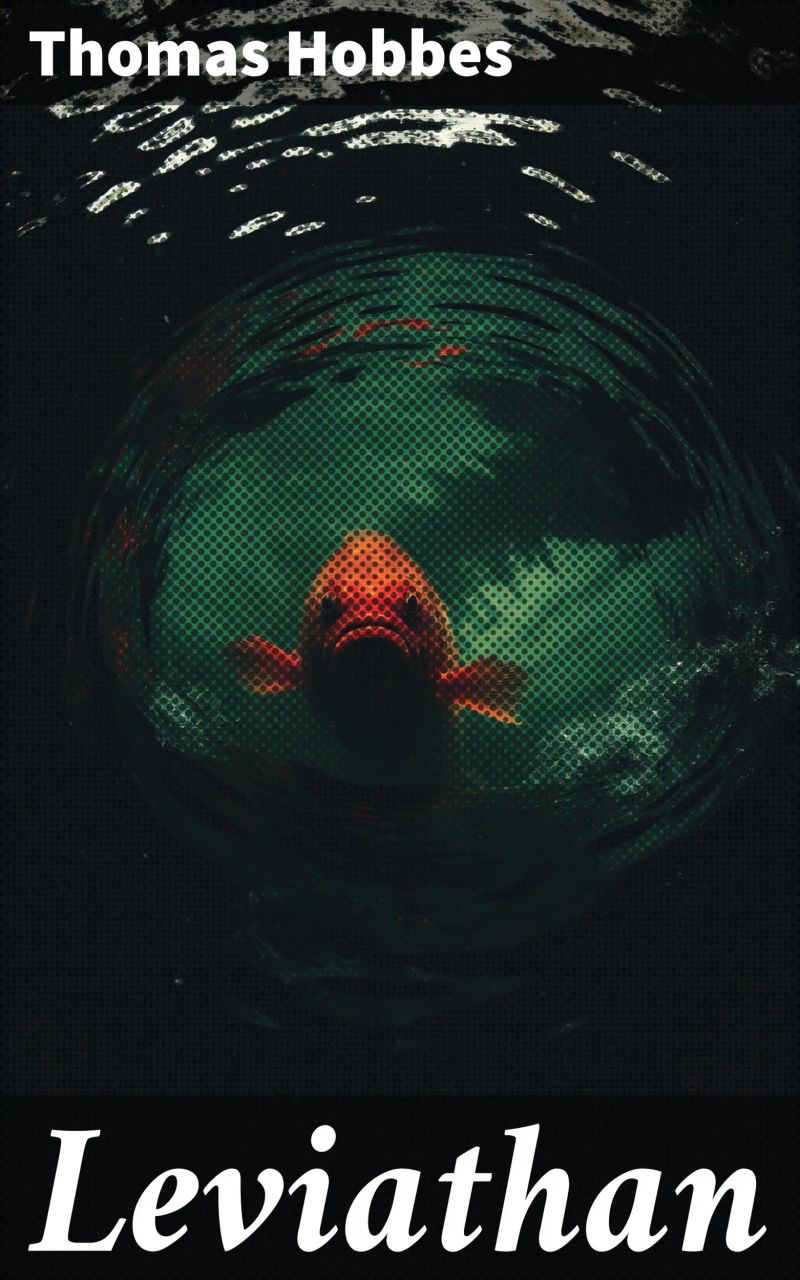
Leviathan
Philosophical Insights on Government, Society, and the Social ContractBy Thomas Hobbes


Length21h 59m
About this audiobook
Thomas Hobbes's seminal work, *Leviathan*, published in 1651, is a cornerstone of political philosophy that explores the foundations of civilization and the structure of society. Written during the tumultuous period of the English Civil War, Hobbes employs a distinctively clear and methodical literary style, combining rigorous logical argumentation with vivid metaphor. The titular Leviathan emerges as a powerful symbol of the state, representing the necessity of a strong, centralized authority to prevent the chaos of humanity's natural state, characterized by 'war of all against all.' This text offers profound insights into human nature, governance, and social contracts, setting the stage for modern political thought. Thomas Hobbes, a philosopher, and mathematician, was deeply influenced by his experiences in a politically unstable England. His prior studies of science, particularly geometry and optics, inform his analytical approach to human behavior and political structures. These influences culminated in his desire to find a stable framework for societal order, prompting the creation of *Leviathan*, which challenges readers to grapple with the implications of political authority and individual freedom. *Leviathan* is essential reading for anyone interested in the origins of political theory, ethics, or modern governance. Hobbes's arguments are not only historically significant but also resonate with contemporary debates on authority and individual rights. This thought-provoking work invites readers to reflect on the delicate balance between security and freedom, urging them to consider the implications of political power in their own lives.
Audiobook details
Rating★★★★ 3.9 (111.3K)
Includes Goodreads, StoryGraph, Amazon, LibraryThing
GenrePolitics and Government
Length21 hrs 59 mins
Narrated byListen with 1,000+ voices
FormateBook with Audio
Publish dateNov 27, 2023
LanguageEnglish
Table of contents
1Introduction
2Introduction
3Chapter I: Of Sense
4Chapter II: Of Imagination
5Chapter III: Of the Consequence or Train of Imaginations
Show all chaptersShow less
6Chapter IV: Of Speech
7Chapter V: Of Reason and Science
8Chapter VI: Of the Interior Beginnings of Voluntary Motions, Commonly Called the Passions; and the Speeches by which They are Expressed
9Chapter VII: Of the Ends or Resolutions of Discourse
10Chapter VIII: Of the Virtues Commonly Called Intellectual; and Their Contrary Defects
11Chapter IX: Of the Several Subject of Knowledge
12Chapter X: Of Power, Worth, Dignity, Honour and Worthiness
13Chapter XI: Of the Difference of Manners
14Chapter XII: Of Religion
15Chapter XIII: Of the Natural Condition of Mankind as Concerning Their Felicity and Misery
16Chapter XIV: Of the First and Second Natural Laws, and of Contracts
17Chapter XV: Of Other Laws of Nature
18Chapter XVI: Of Persons, Authors, and Things Personated
19Chapter XVII: Of the Causes, Generation, and Definition of a Commonwealth
20Chapter XVIII: Of the Rights of Sovereigns by Institution
21Chapter XIX: Of the Several Kinds of Commonwealth by Institution, and of Succession to the Sovereign Power
22Chapter XX: Of Dominion Paternal and Despotical
23Chapter XXI: Of the Liberty of Subjects
24Chapter XXII: Of Systems Subject Political and Private
25Chapter XXIII: Of the Public Ministers of Sovereign Power
26Chapter XXIV: Of the Nutrition and Procreation of a Commonwealth
27Chapter XXV: Of Counsel
28Chapter XXVI: Of Civil Laws
29Chapter XXVII: Of Crimes, Excuses, and Extenuations
30Chapter XXVIII: Of Punishments and Rewards
31Chapter XXIX: Of Those Things that Weaken or Tend to the Dissolution of a Commonwealth
32Chapter XXX: Of the Office of the Sovereign Representative
33Chapter XXXI: Of the Kingdom of God by Nature
34Chapter XXXII: Of the Principles of Christian Politics
35Chapter XXXIII: Of the Number, Antiquity, Scope, Authority, and Interpreters of The Books of Holy Scripture
36Chapter XXXIV: Of the Signification of Spirit, Angel, and Inspiration in the Books of Holy Scripture
37Chapter XXXV: Of the Signification in Scripture of Kingdom of God, of Holy, Sacred, and Sacrament
38Chapter XXXVI: Of the Word of God, and of Prophets
39Chapter XXXVII: Of Miracles and Their Use
40Chapter XXXVIII: Of the Signification in Scripture of Eternal Life, Hell, Salvation, the World to Come, and Redemption
41Chapter XXXIX: Of the Signification in Scripture of the Word Church
42Chapter XL: Of the Rights of the Kingdom of God, in Abraham, Moses, the High Priests, and the Kings of Judah
43Chapter XLI: Of the Office of Our Blessed Saviour
44Chapter XLII: Of Power Ecclesiastical (pt. 1)
45Chapter XLII: Of Power Ecclesiastical (pt. 2)
46Chapter XLIII: Of what is Necessary for a Man's Reception into the Kingdom of Heaven
47Chapter XLIV: Of Spiritual Darkness from Misinterpretation of Scripture
48Chapter XLV: Of Demonology and Other Relics of the Religion of the Gentiles
49Chapter XLVI: Of Darkness from Vain Philosophy and Fabulous Traditions
50Chapter XLVII: Of the Benefit that Proceedeth from Such Darkness, and to Whom It Accrueth
More from Thomas Hobbes

The Elements of Law, Natural and Politic (Annotated)Thomas Hobbes8h 6m4.0 (553)$2 · $0.00

The Collected Political Works: Leviathan + De Cive (On the Citizen) + The Elements of Law + Behemoth, or The Long Parliament (Annotated)Thomas Hobbes47h 20m$2 · $0.00

The Political Works of Thomas Hobbes (4 Books in One Edition) (Annotated)Thomas Hobbes47h 18m4.6 (12)$2 · $0.00

Leviathan (Annotated)Thomas Hobbes23h 35m$2 · $0.00

The Political Works of Thomas Hobbes (4 Books in One Edition)Thomas Hobbes48h 15m4.1 (12)$2 · $0.00

Leviathan (Summarized Edition)Thomas Hobbes5h 18m$2

Grundzüge der PhilosophieThomas Hobbes6h 47m4.4 (15)$1 · $0.00

Grundzüge der PhilosophieThomas Hobbes8h 23m4.0 (40)$2 · $0.00

LeviathanThomas Hobbes22h3.9 (65.7K)$2 · $0.00

Leviathan (Zusammengefasste Ausgabe)Thomas Hobbes5h 41m3.6 (22)$2

The Political Works of Thomas Hobbes (4 Books in One Edition)Thomas Hobbes48h 20m4.1 (12)$1.99 · $0.00

Grundzüge der Philosophie (Kommentiert)Thomas Hobbes8h 38m4.4 (12)$1 · $0.00

LEVIATHAN (Complete Edition)Thomas Hobbes23h 49m3.9 (69.8K)$1.99 · $0.00

LeviathanThomas Hobbes22h4.0 (64.5K)$12 · $0.00

LeviatánThomas Hobbes14h 52m3.9 (60.6K)$11 · $0.00

The Gulag Archipelago Volume 3Aleksandr I. Solzhenitsyn21h 56m4.7 (8.9K)$46 · $0.00

MotherlandJulia Ioffe17h 52m4.7 (2.5K)$40 · $0.00

HostageEli Sharabi5h 25m4.6 (10.8K)$24 · $0.00

KrantikariSanjeev Sanyal11h 44m4.6 (1.3K)$16 · $0.00

Unbroken Bonds of BattleJohnny Joey Jones8h 31m4.6 (2.6K)$8 · $0.00

On Democracies and Death CultsDouglas Murray10h 38m4.6 (6.5K)$29 · $0.00

Balcony Over Jerusalem: A Middle East Memoir - Israel, Palestine and BeyondJohn Lyons12h 37m4.6 (1.4K)$33 · $0.00

RiggedMollie Hemingway12h 48m4.6 (4.2K)$23 · $0.00

SledgehammerDavid Friedman8h 21m4.7 (589)$26 · $0.00

Citizenship in a Republic (Annotated)Theodore Roosevelt2h 44m4.6 (1.4K)$2 · $0.00

No EscapeNury Turkel9h 30m4.6 (809)$28 · $0.00

Always FaithfulThomas Schueman, Zainullah Zaki12h 12m4.6 (977)$29 · $0.00

UnthinkableJamie Raskin15h 8m4.5 (9.3K)$8 · $0.00

My Fourth Time, We DrownedSally Hayden13h 59m4.6 (2.9K)$23 · $0.00

A Revolution of Common SenseScott Jennings9h 29m4.6 (528)$29 · $0.00

Statement From the Dock at the Rivonia TrialNelson Mandela2h 18m4.6 (1.3K)$1 · $0.00

Lessons from the EdgeMarie Yovanovitch17h 11m4.5 (5.9K)$40 · $0.00

To Rescue the American SpiritBret Baier10h 12m4.5 (2.7K)$8 · $0.00

StonewalledSharyl Attkisson15h 19m4.5 (4.3K)$33 · $0.00
The World According to Orwell: 1984 & Animal FarmGeorge Orwell15h 42m4.6 (1.1K)$1 · $0.00
You may also like

Lyrical Ballads and other Poems by Samuel Taylor Coleridge and William Wordsworth (Also contains Their Thoughts On Poetry Principles and Secrets) (Annotated)Samuel Taylor Coleridge, William Wordsworth22h 29m4.0 (13.4K)$1.99 · $0.00

The Secret DoorFlorence Scovel Shinn44m4.5 (2.7K)$2 · $0.00

Heart of Darkness (Unabridged Deluxe Edition)Joseph Conrad28h 2m4.5 (276)$2 · $0.00

The Hour between Dog and WolfJohn Coates10h 30m4.0 (3.2K)$20

The Secret Life of PlantsPeter Tompkins, Christopher Bird16h 27m4.0 (5.5K)$40 · $0.00

Mrs. Dalloway in Bond Street & Other StoriesVirginia Woolf2h 6m3.8 (1.3K)$15

Kotto: Being Japanese Curios, with Sundry CobwebsLafcadio Hearn4h 1m4.0 (704)$2.30

A Treatise Concerning the Principles of Human KnowledgeGeorge Berkeley3h 59m3.9 (5.1K)$1 · $0.00

Before AdamJack London3h 55m3.8 (6K)Free

Collected Short StoriesVirginia Woolf5h 47m4.1 (7.3K)$2.30

Coleridge and Wordsworth: Lyrical Ballads & Other PoemsSamuel Taylor Coleridge, William Wordsworth22h 26m4.1 (16.7K)$1.99 · $0.00

A Conflict of VisionsThomas Sowell7h 8m4.4 (16K)$17

Kwaidan: Stories and Studies of Strange ThingsLafcadio Hearn3h 56m4.0 (9K)$1 · $0.00

Sylvie and BrunoLewis Carroll7h 23m3.6 (2.9K)$2.30
The Political Works of Thomas Hobbes (4 Books in One Edition) (Annotated)Thomas Hobbes47h 18m4.6 (12)$2 · $0.00

The Complete Works of Samuel Taylor Coleridge: Poetry, Plays, Literary Essays, Lectures, Autobiography and Letters (Classic Illustrated Edition) (Annotated)Samuel Taylor Coleridge173h 14m4.4 (36)$2 · $0.00

The Collected Works of Henri BergsonHenri Bergson35h 18m4.4 (45)$1 · $0.00

Insomnia; and Other Disorders of SleepHenry M. Lyman6h 23m$2 · $0.00

Human Personality and Its Survival of Bodily Death (Annotated)F. W. H. Myers17h 58m4.1 (245)$1.99 · $0.00

Old Fires and Profitable Ghosts: A Book of StoriesArthur Quiller-Couch7h 1m3.5 (31)$2 · $0.00