
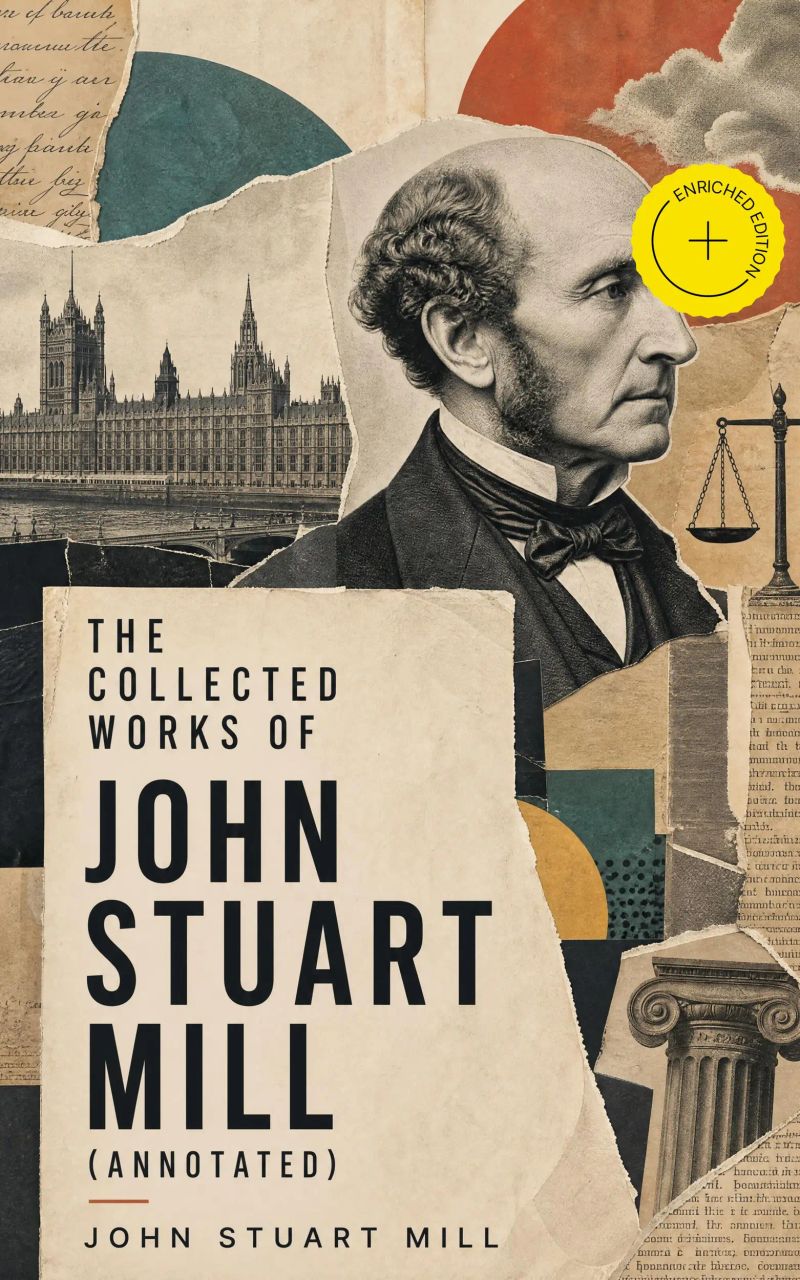
The Collected Works of John Stuart Mill (Annotated)
Enriched Edition. Utilitarianism, The Subjection of Women, On Liberty, Principles of Political Economy, A System of Logic, Ratiocinative and Inductive, Memoirs…By John Stuart Mill


Length139h 17m
About this audiobook
The Collected Works of John Stuart Mill gathers the writings of one of the nineteenth century's most influential liberal thinkers, ranging across logic, political economy, ethics, social theory, religion, and representative government. Its prose is characteristically lucid, argumentative, and reformist: Mill combines the precision of analytic philosophy with the moral urgency of Victorian public debate. Read together, these volumes illuminate the intellectual architecture behind utilitarianism, liberty of thought, women's emancipation, and democratic institutions in an age of industrial and imperial transformation. John Stuart Mill was shaped by an extraordinary education devised by his father, James Mill, and by the utilitarian circle of Jeremy Bentham. Yet his later intellectual crisis, his encounter with Romantic poetry, and his partnership with Harriet Taylor Mill deepened his philosophy beyond strict Benthamism. These experiences help explain the humane breadth of his work: a persistent effort to reconcile individual freedom with social progress, rational inquiry with emotional cultivation, and reform with moral responsibility. This collection is indispensable for readers seeking the foundations of modern liberalism and the debates that still animate public life. Scholars, students, and thoughtful general readers will find in Mill not merely a historical figure, but a rigorous interlocutor on freedom, equality, education, and the ethical limits of power.
This enriched edition has been carefully crafted to add value to your reading experience.
- A comprehensive Introduction outlines these selected works' unifying features, themes, or stylistic evolutions.
- The Author Biography highlights personal milestones and literary influences that shape the entire body of writing.
- A Historical Context section situates the works in their broader era—social currents, cultural trends, and key events that underpin their creation.
- A concise Synopsis (Selection) offers an accessible overview of the included texts, helping readers navigate plotlines and main ideas without revealing critical twists.
- A unified Analysis examines recurring motifs and stylistic hallmarks across the collection, tying the stories together while spotlighting the different work's strengths.
- Reflection questions inspire deeper contemplation of the author's overarching message, inviting readers to draw connections among different texts and relate them to modern contexts.
- Lastly, our hand‐picked Memorable Quotes distill pivotal lines and turning points, serving as touchstones for the collection's central themes.
Audiobook details
Rating★★★★ 4.4 (12)
Includes Amazon
GenrePhilosophy
Length139 hrs 17 mins
Narrated byListen with 1,000+ voices
FormateBook with Audio
Publish dateAug 26, 2017
LanguageEnglish
Table of contents
1The Collected Works of John Stuart Mill (Annotated)
2Introduction
3Author Biography
4Historical Context
5Synopsis (Selection)
Show all chaptersShow less
6Utilitarianism
7CHAPTER I GENERAL REMARKS
8CHAPTER II WHAT UTILITARIANISM IS
9CHAPTER III OF THE ULTIMATE SANCTION OF THE PRINCIPLE OF UTILITY
10CHAPTER IV OF WHAT SORT OF PROOF THE PRINCIPLE OF UTILITY IS SUSCEPTIBLE
11CHAPTER V ON THE CONNEXION BETWEEN JUSTICE AND UTILITY
12The Subjection of Women
13Chapter I
14Chapter II
15Chapter III
16Chapter IV
17On Liberty
18Preface
19I
20II
21III
22Chapter I Introductory
23Chapter II of the Liberty of Thought and Discussion
24Chapter III of Individuality, as One of the Elements of Well-being
25Chapter IV of the Limits to the Authority of Society Over the Individual
26Chapter V Applications
27Preface
28Introductory
29A Sketch Of The History Of Political Economy
30Books For Consultation
31Preliminary Remarks
32Book I Production
33Chapter I Of The Requisites Of Production
341. The Requisites of Production are Two: Labor, and Appropriate Natural Objects
352. The Second Requisite of Production, Labor
363. Of Capital as a Requisite of Production
37Chapter II Of Unproductive Labor
381. Definition of Productive and Unproductive Labor
392. Productive and Unproductive Consumption
403. Distinction Between Labor for the Supply of Productive Consumption and Labor for the Supply of Unproductive Consumption
41Chapter III Of Capital
421. Capital is Wealth Appropriated to Reproductive Employment
432. More Capital Devoted to Production than Actually Employed in it
443. Examination of Cases Illustrative of the Idea of Capital
45Chapter IV Fundamental Propositions Respecting Capital
461. Industry is Limited by Capital
472. Increase of Capital gives Increased Employment to Labor, Without Assignable Bounds
483. Capital is the result of Saving, and all Capital is Consumed
494. Capital is kept up by Perpetual Reproduction, as shown by the Recovery of Countries from Devastation
505. Effects of Defraying Government Expenditure by Loans
Ausgewählte philosophische SchriftenJohn Stuart Mill54h 51m$1 · $0.00

The Subjection of Women (Annotated)John Stuart Mill6h 2m4.1 (6.1K)$1.99 · $0.00

Sobre la libertadJohn Stuart Mill5h 23m4.2 (49.2K)$15 · $0.00

ON LIBERTY - The Philosophy of Individual Freedom (Annotated)John Stuart Mill, W. L. Courtney5h 58m$2 · $0.00

Die Hörigkeit der Frau (Kommentiert)John Stuart Mill7h 42m4.2 (11K)$1 · $0.00
A System of Logic, Ratiocinative and InductiveJohn Stuart Mill43h 17m3.8 (41)$1 · $0.00

La libertàJohn Stuart Mill5h 28m4.0 (45K)$2 · $0.00
JOHN STUART MILL - Ultimate Collection: Works on Philosophy, Politics & Economy (Including Memoirs & Essays)John Stuart Mill139h 21m$1 · $0.00
Inaugural address delivered to the University of St. Andrews, Feb. 1st 1867John Stuart Mill2h 25m4.2 (46)$1 · $0.00
John Stuart Mill: System der deduktiven und induktiven LogikJohn Stuart Mill52h 3m4.6 (11)$1 · $0.00
Auguste Comte and PositivismJohn Stuart Mill5h 18m3.8 (145)$2 · $0.00

Gesammelte philosophische WerkeJohn Stuart Mill55h 49m$1 · $0.00

Considerations on Representative GovernmentJohn Stuart Mill10h 13m4.1 (2.6K)$2 · $0.00

The Collected Works of John Stuart MillJohn Stuart Mill140h 11m$2 · $0.00

Die Hörigkeit der FrauJohn Stuart Mill6h 2m4.1 (341)$1 · $0.00

Über die FreiheitJohn Stuart Mill5h 52m4.1 (55.7K)$2 · $0.00
The Essence of Mill's Economics: Principles of Political Economy, Essays on Some Unsettled Questions of Political Economy, Socialism & The Slave PowerJohn Stuart Mill36h 52m$2 · $0.00
System der deduktiven und induktiven Logik (Kommentiert)John Stuart Mill51h 51m$1 · $0.00
JOHN STUART MILL - Ultimate Collection: Works on Philosophy, Politics & Economy (Including Memoirs & Essays) (Annotated)John Stuart Mill139h 17m4.5 (22)$0.99 · $0.00

The Art of LivingThich Nhat Hanh5h 1m4.5 (14.2K)$24 · $0.00
Moral Letters to LuciliusLucius Annaeus Seneca24h 26m4.5 (71.7K)$0.99 · $0.00

Lessons in TruthH. Emilie Cady3h 50m4.5 (2.4K)$20 · $0.00
Letters from a StoicSeneca6h 5m4.4 (80.4K)$6 · $0.00
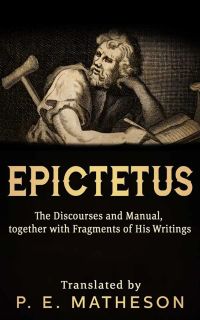
The Discourses of EpictetusP. E. MATHESOM12h 47m4.4 (17.7K)$1.20 · $0.00
IlluminationsWalter Benjamin10h 12m4.4 (16.2K)$20 · $0.00
That Bird Has My WingsJarvis Jay Masters9h 49m4.4 (13.7K)$29 · $0.00

Tâo Teh KingLaozi2h 34m4.4 (230.9K)$2 · $0.00
SymposiumPlato3h 26m4.4 (97.9K)$1.20 · $0.00

Buddhist Boot CampTimber Hawkeye2h 39m4.4 (8.4K)$18 · $0.00
Enchiridion & The Discourses of Epictetus (Annotated)Arrian Epictetus18h 9m4.4 (3.5K)$2 · $0.00

The Meditations of the Emperor Marcus Aurelius AntoninusEmperor of Rome Marcus Aurelius5h 41m4.4 (1.8M)$1 · $0.00

Crime and PunishmentFyodor Dostoevsky23h 11m4.4 (1.3M)$12 · $0.00

MeditationsMarcus Aurelius5h 52m4.4 (433.7K)$1 · $0.00

Everyday DharmaSuneel Gupta5h 2m4.5 (761)$20 · $0.00

The Joyful Wisdom ("La Gaya Scienza")Friedrich Wilhelm Nietzsche11h 37m4.4 (26.6K)$1 · $0.00
The Art of LivingEpictetus, Sharon Lebell3h 16m4.4 (50.1K)$18 · $0.00
MeditationsEmperor Of Rome Marcus Aurelius7h 23m4.3 (477.5K)$1.20 · $0.00

The Imitation of ChristThomas à Kempis6h 27m4.3 (84.6K)$21 · $0.00

Sadhana: the realisation of lifeRabindranath Tagore3h 49m4.4 (8.6K)$6 · $0.00
You may also like
Race and CultureThomas Sowell10h 56m4.5 (1.5K)$21

A Room of One's OwnVirginia Woolf5h 5m4.3 (326.8K)$20

India: A Million Mutinies NowV. S. Naipaul24h 46m4.0 (2.6K)$30

THE EDUCATION OF HENRY ADAMSHenry Adams20h 50m3.8 (8.2K)$1.99 · $0.00

Why They MarchedSusan Ware9h 12m4.1 (1.4K)$20

The New SpiritHavelock Ellis6h 55m$2 · $0.00
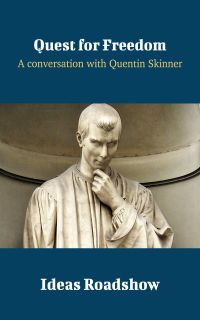
Quest for Freedom - A Conversation with Quentin SkinnerHoward Burton1h 57m$3 · $0.00
Modern Foundations of Ethics and Reason – 6 Classic Moral Philosophy EssaysBenedictus de Spinoza, Adam Smith, David Hume, Immanuel Kant, Arthur Schopenhauer, Friedrich Wilhelm Nietzsche66h 55m$1

Japanese Plays and PlayfellowsOsman Edwards8h 54m$2 · $0.00

My American DiaryClare Sheridan7h 19m$2 · $0.00

The Much Too Promised LandAaron David Miller13h 20m3.9 (273)$23 · $0.00
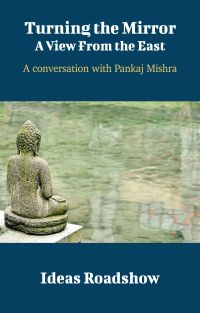
Turning the Mirror: A View From the East - A Conversation with Pankaj MishraHoward Burton1h 26m$3 · $0.00

Gay ArtJames Smalls7h 17m3.7 (46)$18 · $0.00

Memoirs of Dr. Joseph PriestleyJoseph Priestley7h 54m$1 · $0.00

LutherHartmann Grisar124h 10m4.3 (50)$1.99 · $0.00
An Introduction to Hegel's LogicAndy Blunden4h 53m3.5 (19)$20

The Universal Rights of Man and of CitizensGeorg Jellinek2h 27m4.0 (55)$1.99 · $0.00

G.W.F. HEGEL - Ultimate Collection (Annotated)Georg Wilhelm Friedrich Hegel244h 13m4.4 (33)$0.99 · $0.00

Gustave CourbetGeorges Riat5h 45m4.7 (12)$18 · $0.00
Lord Denning at 100 Years of AgeJohn Warwick Montgomery, John Warwick Montgomery38m$3 · $0.00