
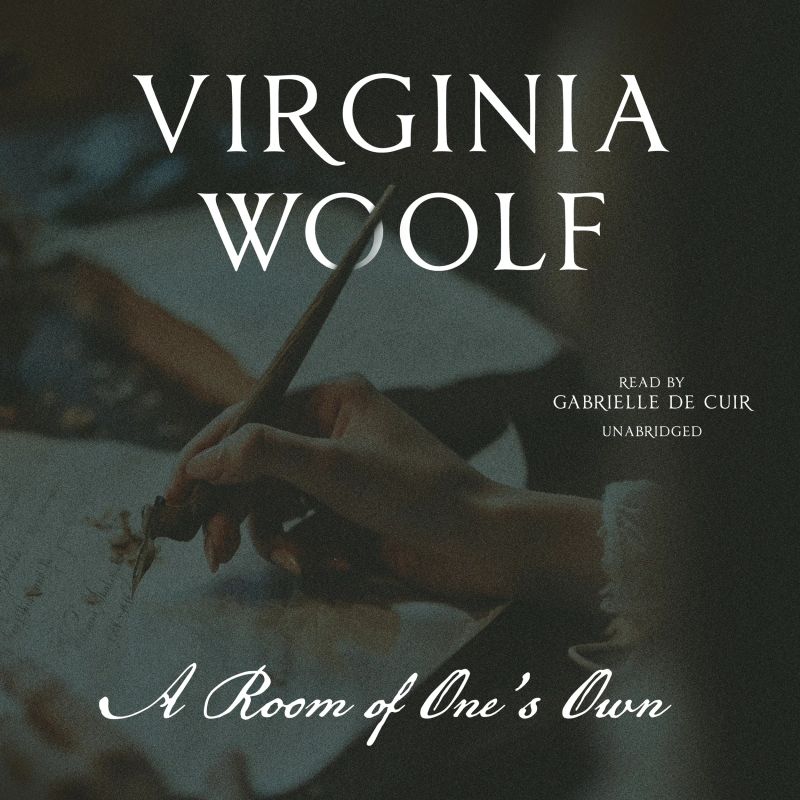
Length5h 4m
About this audiobook
“I would venture to guess that Anon, who wrote so many poems without signing them, was often a woman.”
In A Room of One’s Own, Virginia Woolf’s classic six-part essay, the iconic Modernist writer takes on the misogyny of writing, publishing, and creativity in her time. Through the imagined sister of William Shakespeare, who in her argument possesses the same talent and intellect as the famous playwright, Woolf lays out the fundamental truth that one requires room to express creativity and time to explore and see it through. Genius unexpressed is genius nonetheless, and had Shakespeare’s sister the means to make her own art, she would have had the same lasting legacy as her brother.
By breaking down the parts of society that prevent women from having this room and time, Woolf demonstrates that the lack of women in canonical literature and art is not a lack of their talent or industry, but a tragedy that they were prevented from ever putting pen to paper in the first place.
Audiobook details
Rating★★★★ 4.3 (326.8K)
Includes Goodreads, StoryGraph, LibraryThing, Amazon
GenrePsychology, History
Length5 hrs 4 mins
Narrated byGabrielle de Cuir
FormatAudiobook
Publish dateAug 23, 2025
LanguageEnglish
More from Virginia Woolf

Jacob's RoomVirginia Woolf6h 56m3.7 (22.3K)$17
Mrs. Dalloway in Bond Street & Other StoriesVirginia Woolf2h 6m3.8 (1.3K)$15
Jacob’s RoomVirginia Woolf6h 2m3.6 (18.5K)$14

The Voyage OutVirginia Woolf13h 24m3.8 (15.5K)$25
Mrs. DallowayVirginia Woolf7h 25m4.1 (346.3K)$20
Mrs DallowayVirginia Woolf7h 2m3.9 (426K)$17
Mrs. DallowayVirginia Woolf7h 22m3.9 (422K)$17
To the LighthouseVirginia Woolf9h 37m4.0 (262.7K)$20
OrlandoVirginia Woolf10h 9m4.1 (328.3K)$25

The YearsVirginia Woolf13h 31m3.9 (7K)$23

To the LighthouseVirginia Woolf7h 36m4.0 (243.5K)$17
What to Make of a LifeJim Collins13h 31m4.4 (794)$33 · $0.00

I Am The StormJanice Dean9h4.6 (1.5K)$8 · $0.00
On Democracies and Death CultsDouglas Murray10h 38m4.6 (6.5K)$29 · $0.00

TerraformPropaganda5h 39m4.7 (594)$24 · $0.00

Southern Horrors: Lynch Law in All Its Phases (Annotated)Ida B. Wells-Barnett2h 44m4.6 (1.3K)$2 · $0.00
Hour of the HeartIrvin D. Yalom, Benjamin Yalom8h 19m4.6 (2.3K)$26 · $0.00
Braving the TruthRachel Held Evans11h 31m4.7 (359)$29 · $0.00
Level UpRob Dial7h 42m4.6 (3.3K)$26 · $0.00

As a JewSarah Hurwitz8h 36m4.6 (1.2K)$26 · $0.00
Saint Joan (Annotated)George Bernard Shaw6h 20m4.6 (1.2K)$1.20 · $0.00

Burn the HaystackJennie Young, PhD9h 30m4.6 (543)$29 · $0.00

Woman and the New Race (Annotated)Margaret Sanger6h 30m4.6 (1K)$0.99 · $0.00
Good InsideBecky Kennedy9h 55m4.5 (59.3K)$29 · $0.00
The Mis-Education of the NegroCarter Godwin Woodson5h 4m4.5 (29.4K)$1.20 · $0.00
Du Bois: EssaysW.E.B. Du Bois6h 22m4.6 (1.5K)$1 · $0.00

The North American Indian (Illustrated Edition)Edward S. Curtis, Frederick Webb Hodge5h 59m4.6 (1.4K)$2 · $0.00

Valley of the BirdtailAndrew Stobo Sniderman, Douglas Sanderson10h 1m4.6 (2.4K)$29 · $0.00
Lies My Therapist Told MeGreg E. Gifford9h 3m4.6 (503)$29 · $0.00
Disturbed in Their NestsAlephonsion Deng, Judy A. Bernstein11h 22m4.6 (595)$23 · $0.00
No Name in the StreetJames Baldwin5h4.5 (8.5K)$20 · $0.00

A Brief History of IntelligenceMax S. Bennett12h 18m4.6 (6.6K)$29 · $0.00
MotherlandJulia Ioffe17h 52m4.7 (2.5K)$40 · $0.00

Where Cowards Go to DieBenjamin Sledge8h 42m4.7 (351)$20 · $0.00

RevolutionariesSanjeev Sanyal11h 23m4.6 (2.6K)$29 · $0.00
We Crossed a Bridge and It TrembledWendy Pearlman6h4.6 (5.2K)$24 · $0.00

Unbroken Bonds of BattleJohnny Joey Jones8h 31m4.6 (2.6K)$8 · $0.00

The Daughter of AuschwitzTova Friedman, Malcolm Brabant7h 54m4.6 (16.7K)$26 · $0.00
Lily's PromiseLily Ebert, Dov Forman8h 54m4.6 (16.1K)$29 · $0.00
On Democracies and Death CultsDouglas Murray10h 38m4.6 (6.5K)$29 · $0.00

Across the RiverKent Babb11h 40m4.6 (927)$29 · $0.00

Balcony Over Jerusalem: A Middle East Memoir - Israel, Palestine and BeyondJohn Lyons12h 37m4.6 (1.4K)$33 · $0.00
BeyondStephen Walker15h 39m4.6 (3.2K)$33 · $0.00
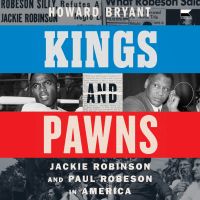
Kings and PawnsHoward Bryant10h 9m4.6 (678)$29 · $0.00

No EscapeNury Turkel9h 30m4.6 (809)$28 · $0.00

Jubal Stone: U.S. Marshal: Blood Trail To Hell: A Western Adventure NovelCasey Nash3h 42m4.6 (3.2K)$18 · $0.00
Fall and RiseMitchell Zuckoff17h 23m4.6 (9.8K)$40 · $0.00

The SurvivorJosef Lewkowicz, Michael Calvin9h 22m4.6 (2.5K)$29 · $0.00

Always FaithfulThomas Schueman, Zainullah Zaki12h 12m4.6 (977)$29 · $0.00

The State of Society in France Before the Revolution of 1789 (Annotated)Alexis de Tocqueville17h 25m4.6 (1.2K)$2 · $0.00

All the Gallant MenDonald Stratton, Ken Gire5h 55m4.6 (11.8K)$24 · $0.00
You may also like
If the Oceans Were InkCarla Power12h 35m4.2 (2.9K)$20 · $0.00
India: A Million Mutinies NowV. S. Naipaul24h 46m4.0 (2.6K)$30

Little SoldiersLenora Chu11h 30m4.3 (3.1K)$29 · $0.00
What the CEO Really Wants From YouR. Gopalakrishnan6h 9m4.2 (291)$24 · $0.00
The Voice of ReasonAyn Rand15h 57m4.2 (1.4K)$25
The Philosophy of MindGeorg Wilhelm Friedrich Hegel13h 18m4.1 (683)$1.99 · $0.00
Desperately Seeking Shah RukhShrayana Bhattacharya19h 14m4.3 (3.6K)$18 · $0.00
Modern Foundations of Ethics and Reason – 6 Classic Moral Philosophy EssaysBenedictus de Spinoza, Adam Smith, David Hume, Immanuel Kant, Arthur Schopenhauer, Friedrich Wilhelm Nietzsche66h 55m$1
Wassily Kandinsky and artworksMikhaïl Guerman1h 37m3.7 (48)$15 · $0.00

The New SpiritHavelock Ellis6h 55m$2 · $0.00
The Essence of Hegel's Philosophy (Annotated)Georg Wilhelm Friedrich Hegel243h 2m$2 · $0.00

My American DiaryClare Sheridan7h 19m$2 · $0.00
Egoists, A Book of Supermen (Annotated)James Huneker10h 55m4.2 (26)$0.99 · $0.00
KlimtJane Rogoyska, Patrick Bade1h 23m4.1 (67)$13.50 · $0.00
The Collected Works of John Stuart Mill (Annotated)John Stuart Mill139h 17m4.4 (12)$2 · $0.00

Women as World Builders: Studies in Modern FeminismFloyd Dell29m$2 · $0.00
The Research MagnificentH. G. Wells13h 51m3.5 (63)$2 · $0.00

Japanese Plays and PlayfellowsOsman Edwards8h 54m$2 · $0.00
Quest for Freedom - A Conversation with Quentin SkinnerHoward Burton1h 57m$3 · $0.00
The Ordinary VirtuesMichael Ignatieff7h 39m3.9 (257)$20 · $0.00