
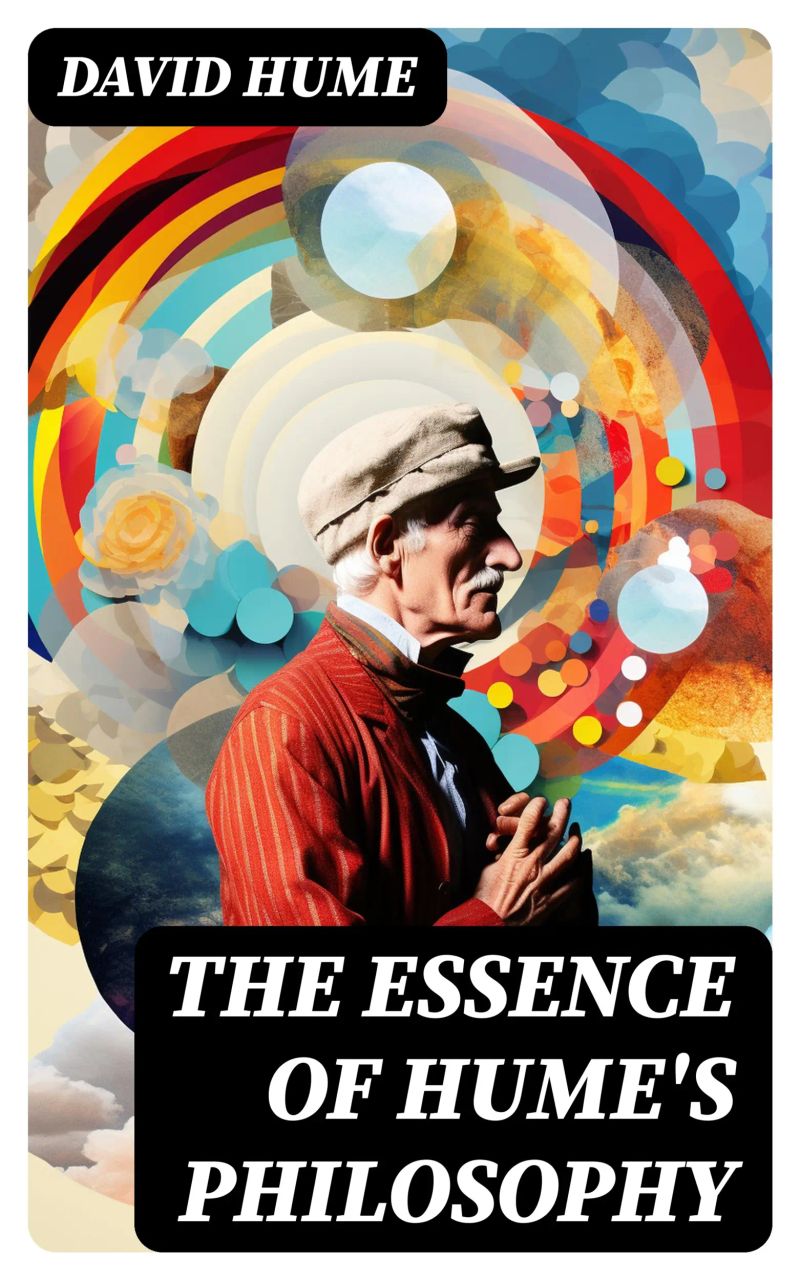
The Essence of Hume's Philosophy
A Treatise of Human Nature, An Enquiry Concerning Human Understanding & An Enquiry Concerning the Principles of MoralsBy David Hume


Length36h 16m
About this audiobook
In "The Essence of Hume's Philosophy," David Hume presents a compelling exploration of human understanding and moral philosophy, elucidating the intricacies of empiricism and skepticism that define his thought. The book meticulously navigates through Hume's distinctive style—marked by clarity, wit, and a conversational tone—while situating his ideas within the broader context of Enlightenment philosophy. Hume's reflections on causality, perception, and the self challenge readers to reconsider established notions, weaving together a rich tapestry of metaphysical inquiry and ethical deliberation that continues to resonate in contemporary discussions. David Hume (1711-1776) was a towering figure of the Scottish Enlightenment, known for his profound influence on philosophy, history, and the natural sciences. His formative experiences in Edinburgh and his immersion in debates surrounding empiricism and rationalism significantly shaped his philosophical inquiries. Hume's freethinking spirit and dedication to challenging dogma have fueled his enduring legacy, as he sought to reconcile human experience with intellectual rigor. "The Essence of Hume's Philosophy" is essential reading for anyone interested in the intersections of reason and human emotion. Hume's work not only enriches our understanding of philosophical thought but also offers valuable insights into our own moral and cognitive frameworks. This book invites readers to reflect deeply on humanity's place within the unfolding tapestry of knowledge and belief.
Audiobook details
Rating★★★★ 4.2 (19)
Includes Amazon, Goodreads
GenrePhilosophy
Length36 hrs 16 mins
Narrated byListen with 1,000+ voices
FormateBook with Audio
Publish dateDec 28, 2023
LanguageEnglish
Table of contents
1The Essence of Hume's Philosophy
2Introduction
3BOOK I. OF THE UNDERSTANDING
4Section I. Of The Origin Of Our Ideas
5Section II. Division Of The Subject
Show all chaptersShow less
6Section III. Of The Ideas Of The Memory And Imagination
7Section IV. Of The Connexion Or Association Of Ideas
8Section V. Of Relations
9Section VI. Of Modes And Substances
10Section VII. Of Abstract Ideas
11Section I. Of The Infinite Divisibility Of Our Ideas Of Space And Time
12Section II. Of The Infinite Divisibility Of Space And Time
13Section III. Of The Other Qualities Of Our Idea Of Space And Time
14Section IV. Objections Answered
15Section V. The Same Subject Continued
16Section VI. Of The Idea Of Existence, And Of External Existence
17Section I. Of Knowledge
18Section II. Of Probability, And Of The Idea Of Cause And Effect
19Section III. Why A Cause Is Always Necessary
20Section IV. Of The Component Parts Of Our Reasonings Concerning Cause And Effect
21Section V. Of The Impressions Of The Senses And Memory
22Section VI. Of The Inference From The Impression To The Idea
23Section VII. Of The Nature Of The Idea Or Belief
24Section VIII. Of The Causes Of Belief
25Section IX. Of The Effects Of Other Relations And Other Habits
26Section X. Of The Influence Of Belief
27Section XI. Of The Probability Of Chances
28Section XII. Of The Probability Of Causes
29Section XIII. Of Unphilosophical Probability
30Section XIV. Of The Idea Of Necessary Connexion
31Section XV. Rules By Which To Judge Of Causes And Effects
32Section XVI. Of The Reason Of Animals
33Section I. Of Scepticism With Regard To Reason
34Section II. Of Scepticism With Regard To The Senses
35Section III. Of The Antient Philosophy
36Section IV. Of The Modern Philosophy
37Section V. Of The Immateriality Of The Soul
38Section VI. Of Personal Identity
39Section VII. Conclusion Of This Book
40BOOK II. OF THE PASSIONS
41Section I. Division Of The Subject
42Section II. Of Pride And Humility, Their Objects And Causes
43Section III. Whence These Objects And Causes Are Derived
44Section IV. Of The Relations Of Impressions And Ideas
45Section V. Of The Influence Of These Relations On Pride And Humility
46Section VI. Limitations Of This System
47Section VII. Of Vice And Virtue
48Section VIII. Of Beauty And Deformity
49Section IX. Of External Advantages And Disadvantages
50Section X. Of Property And Riches
David Hume: Eine Untersuchung über den menschlichen VerstandDavid Hume, Julius Heinrich von Kirchmann6h 32m4.1 (407)$1 · $0.00

El Tratado de la Naturaleza HumanaDavid Hume23h 49m4.1 (15.1K)$16 · $0.00

The History of England: All Six Volumes (Annotated)David Hume132h 34m4.3 (2.1K)$2 · $0.00

David Hume: Eine Untersuchung über den menschlichen Verstand (Kommentiert)David Hume, Julius Heinrich von Kirchmann7h 23m4.2 (46)$1.50 · $0.00

The History of England (Complete 6 Volumes) (Annotated)David Hume132h 22m4.3 (261)$2 · $0.00

Eine Untersuchung über den menschlichen Verstand (Kommentiert)David Hume8h 7m4.5 (12)$1 · $0.00

Cardby rettet Scotland Yard (Kommentiert)David Hume9h 51m$1 · $0.00

David Hume: The Collected Works (Annotated)David Hume37h 28m$2 · $0.00
The Essence of Hume's PhilosophyDavid Hume37h 30m$2 · $0.00

Dialogues Concerning Natural ReligionDavid Hume5h 4m4.1 (9.9K)$1 · $0.00

The Natural History of ReligionDavid Hume4h4.1 (6.7K)$2 · $0.00

The History of England (Complete 6 Volumes)David Hume131h 50m4.3 (753)$1 · $0.00

An Enquiry Concerning Human UnderstandingDavid Hume6h 43m4.1 (28K)$2 · $0.00

David Hume: The Collected WorksDavid Hume37h 13m4.5 (261)$1 · $0.00

Of the Standard of Taste (Annotated)David Hume2h 30m$2 · $0.00

The History of England (Summarized Edition)David Hume25h 41m$2

An Enquiry Concerning Human UnderstandingDavid Hume7h 23m4.1 (24.2K)$1 · $0.00
The Complete Works of David HumeDavid Hume216h 9m4.5 (238)$1 · $0.00

The History of England: From Elizabeth to James IDavid Hume28h 13m4.4 (45)$2 · $0.00
Metaphysics (Annotated)Aristotle13h 30m4.6 (1.2K)$2 · $0.00

Sceptical Essays (Annotated)Bertrand Russell9h 16m4.6 (1K)$2 · $0.00

WitnessAriel Burger8h 1m4.6 (1.3K)$20 · $0.00
The Magic PresenceGodfré Ray King10h 21m4.6 (307)$1.20 · $0.00

The Art of LivingThich Nhat Hanh5h 1m4.5 (14.2K)$24 · $0.00

Moral Letters to LuciliusLucius Annaeus Seneca24h 26m4.5 (71.7K)$0.99 · $0.00

Lessons in TruthH. Emilie Cady3h 50m4.5 (2.4K)$20 · $0.00
The Discourses of EpictetusP. E. MATHESOM12h 47m4.4 (17.7K)$1.20 · $0.00

IlluminationsWalter Benjamin10h 12m4.4 (16.2K)$20 · $0.00

That Bird Has My WingsJarvis Jay Masters9h 49m4.4 (13.7K)$29 · $0.00

Tâo Teh KingLaozi2h 34m4.4 (230.9K)$2 · $0.00

SymposiumPlato3h 26m4.4 (97.9K)$1.20 · $0.00

Buddhist Boot CampTimber Hawkeye2h 39m4.4 (8.4K)$18 · $0.00
Enchiridion & The Discourses of Epictetus (Annotated)Arrian Epictetus18h 9m4.4 (3.5K)$2 · $0.00

The Meditations of the Emperor Marcus Aurelius AntoninusEmperor of Rome Marcus Aurelius5h 41m4.4 (1.8M)$1 · $0.00

Crime and PunishmentFyodor Dostoevsky23h 11m4.4 (1.3M)$12 · $0.00

MeditationsMarcus Aurelius5h 52m4.4 (433.7K)$1 · $0.00

Everyday DharmaSuneel Gupta5h 2m4.5 (761)$20 · $0.00

The Joyful Wisdom ("La Gaya Scienza")Friedrich Wilhelm Nietzsche11h 37m4.4 (26.6K)$1 · $0.00
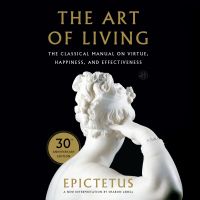
The Art of LivingEpictetus, Sharon Lebell3h 16m4.4 (50.1K)$18 · $0.00
You may also like

On the SoulAristotle3h 25m4.1 (8K)$1.20 · $0.00
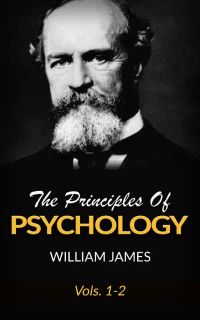
The Principles Of Psychology, Vols 1-2William James62h 3m4.2 (6.8K)$1.20 · $0.00

The Practice and Science of DrawingHarold Speed7h 48m4.2 (6.5K)Free

The Wealth of Nations & The Theory of Moral SentimentsAdam Smith59h 19m4.2 (4K)$1.99 · $0.00

The NegroWilliam Edward Burghardt Du Bois6h 26m4.3 (378)$1.20 · $0.00

The Enigma of ArrivalV. S. Naipaul13h 7m3.8 (3.4K)$23
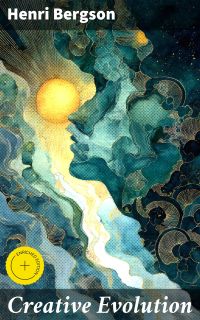
Creative EvolutionHenri Bergson14h 50m4.3 (1.6K)$2 · $0.00

A arte da brevidadeVirginia Woolf3h 15m4.4 (409)$11 · $0.00

Recollections of a Tour Made in Scotland A.D. 1803 (Annotated)Dorothy Wordsworth9h 51m4.1 (1.2K)$2 · $0.00

The Expression of the Emotions in Man and Animals (Annotated)Charles Darwin9h 27m4.1 (13.5K)$1.99 · $0.00

Why Do Men Fall Asleep After SexMark Leyner, Billy Goldberg6h 32m3.7 (2.2K)$24 · $0.00

Collected Short StoriesVirginia Woolf5h 47m4.1 (7.3K)$2.30

Philosophy of MindGeorg Wilhelm Friedrich Hegel13h 19m4.1 (469)$0.99 · $0.00

Popular scientific lectures (Annotated)Ernst Mach10h 36m4.1 (55)$0.99 · $0.00

The Essential Rousseau: Confessions, Emile & The Social Contract (Annotated)Jean-Jacques Rousseau62h 54m4.3 (27)$1.49 · $0.00

Beneath the BoughsMia R. Wellington6h 15m$4.10 · $0.00

Rough Ways Made SmoothRichard A. Proctor12h 48m$2 · $0.00
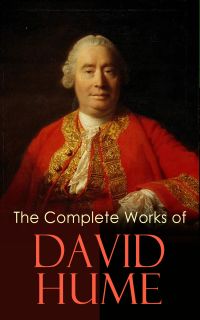
The Complete Works of David HumeDavid Hume214h 17m4.5 (59)$2 · $0.00

The Collected Works of Knut Hamsun (Annotated)Knut Hamsun75h 17m4.6 (19)$0.99 · $0.00

The Water-Colours of J. M. W. TurnerA. J. Finberg, W. G. Rawlinson, J. M. W. Turner1h 36m3.8 (79)$1 · $0.00