
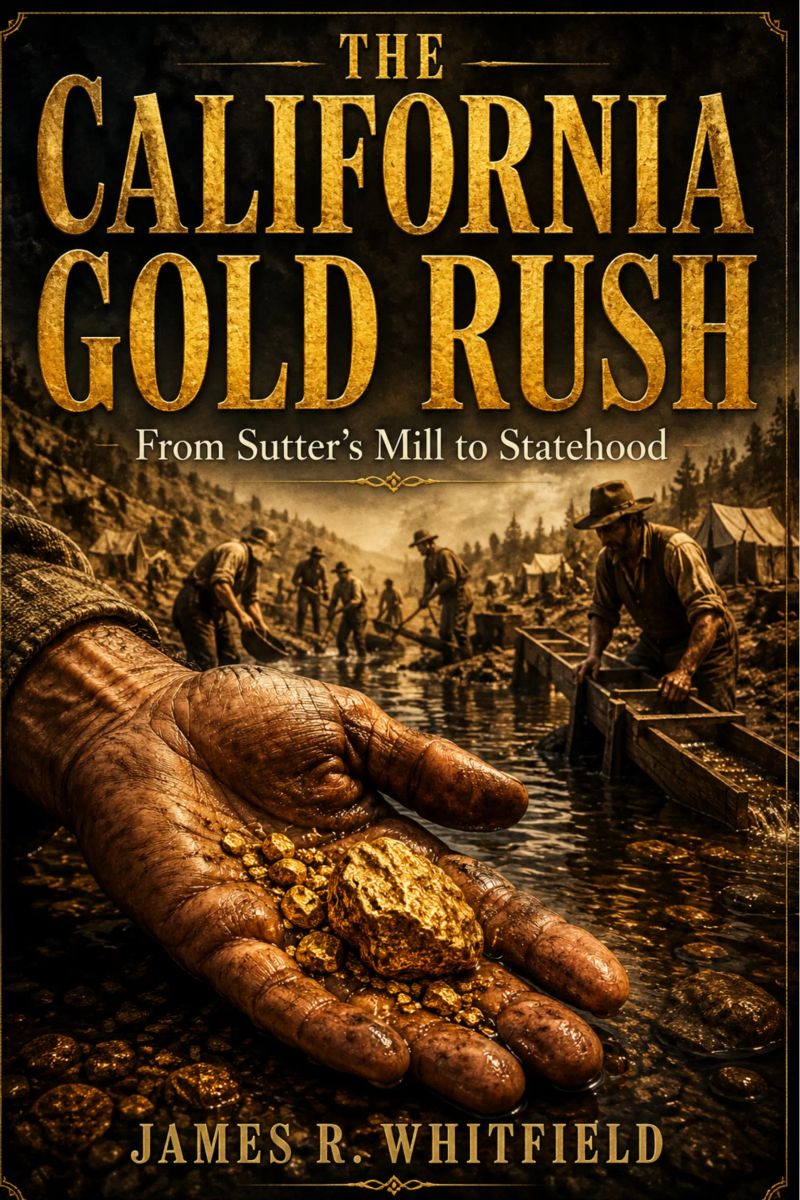
THE CALIFORNIA GOLD
RUSH From Sutter's Mill to StatehoodBy James R. Whitfield


Length5h 43m
About this audiobook
On January 24, 1848, a carpenter named James Marshall spotted a metal flake in a millrace on the American River. Within months, the word had spread from California to Chile, China, Cornwall, and New South Wales. Within a year, ninety thousand forty-niners were headed west. The Gold Rush that followed was the largest voluntary mass migration in human history — and one of the most destructive episodes in American history, depending on whose history you are reading.
James R. Whitfield's narrative holds both of those truths simultaneously. On one side: the transformation of California from a remote Mexican territory of fourteen thousand non-Native settlers to an American state of nearly four hundred thousand in little over a decade. San Francisco's explosive rise from a small port to a global commercial city. The $2 billion in nineteenth-century gold that financed the Transcontinental Railroad and reshaped American capitalism. The boomtowns — Coloma, Hangtown, Mokelumne Hill — with their French and German newspapers, their canvas saloons, and the two hundred named camps whose traces have nearly vanished from the landscape.
On the other side: the deliberate destruction of California's Indigenous population, which fell from 150,000 to under 30,000 in twelve years, through state-legislature-approved killing campaigns whose budgets Whitfield documents in full. The Chinese miners who answered the call of "Gold Mountain," built communities in the diggings, and were rewarded with the Foreign Miners' Tax, expulsion, and erasure from the official story. And John Sutter himself — the man on whose land the discovery was made — who died broke in Washington in 1880, still petitioning Congress for restitution, his workers gone, his wheat rotted, his land titles in permanent litigation.
The environmental reckoning came later but was equally severe. Hydraulic mining — water cannons dismantling entire Sierra Nevada hillsides — sent 1.5 billion cubic yards of debris down the Sacramento River system, destroying farmland, choking waterways, and producing America's first major environmental court ruling in 1884, when a federal judge ordered the monitors shut down.
The half-pea-sized flake Marshall picked from the tailrace is in the Smithsonian today. Whitfield's history is an account of everything it set in motion — the economy it built, the civilization it destroyed, and the environmental damage it left behind that California's rivers still carry.
Audiobook details
GenreHistorical Fiction, General Fiction, Romance
Length5 hrs 43 mins
Narrated byListen with 1,000+ voices
FormateBook with Audio
LanguageEnglish
Table of contents
1Introduction
2Author’s Note
3Prologue: The Glint in the Tailrace
4PART ONE: BEFORE THE STRIKE
5Chapter 1: Mexican California — The World That Was
Show all chaptersShow less
6Chapter 2: John Sutter and the Empire on the American River
7Chapter 3: James Marshall and the Carpentry of Fate
8PART TWO: THE NEWS GOES OUT
9Chapter 4: January 24, 1848 — The Discovery
10Chapter 5: Sam Brannan's Bottle and the San Francisco Run
11Chapter 6: Polk's Message and the World Hears
12PART THREE: THE FORTY-NINERS
13Chapter 7: By Sea Around the Horn
14Chapter 8: By Land Across the Plains
15Chapter 9: Through the Isthmus of Panama
16PART FOUR: THE DIGGINGS
17Chapter 10: Placer Mining and the Pan
18Chapter 11: Boomtowns — Coloma, Hangtown, Mokelumne Hill
19Chapter 12: The Mother Lode and Hard Rock Mining
20PART FIVE: THE PEOPLE OF THE RUSH
21Chapter 13: Chinese Miners and the Gold Mountain
22Chapter 14: Chileans, Mexicans, and the Foreign Miners' Tax
23Chapter 15: African American Argonauts
24Chapter 16: The Women of the Diggings
25PART SIX: VIOLENCE AND DISPOSSESSION
26Chapter 17: California Indians and Genocide
27Chapter 18: Lynching, Vigilance Committees, and Frontier Justice
28Chapter 19: The Land Grant Wars
29PART SEVEN: STATEHOOD AND CONSEQUENCE
30Chapter 20: The 1849 Constitutional Convention
31Chapter 21: The Compromise of 1850 and Free-State California
32Chapter 22: San Francisco — From Village to Metropolis
33PART EIGHT: THE LONG TAIL
34Chapter 23: Hydraulic Mining and Environmental Catastrophe
35Chapter 24: The Comstock Lode and the Silver Successor
36Chapter 25: What the Rush Built — Banking, Agriculture, Industry
37Chapter 26: The Rush in American Memory
38Epilogue: What the Rush Left Behind
39Acknowledgments
40Selected Bibliography
41About the Author
THE CALIFORNIA GOLD RUSHJames R. Whitfield5h 35m$7

NATIVE AMERICAN HISTORYJames R. Whitfield5h 23m$10 · $0.00

THE SALEM WITCH TRIALSJames R. Whitfield5h 51m$6 · $0.00

The american revolutionJames R. Whitfield2h 20m$9 · $0.00
THE SPANISH CONQUEST OF THE AMERICASJames R. Whitfield5h 43m$7 · $0.00

NATIVE AMERICAN HISTORYJames R. Whitfield6h 25m$7 · $0.00

NATIVE AMERICAN HISTORYJames R. Whitfield6h 25m$7 · $0.00
THE CALIFORNIA GOLD RUSHJames R. Whitfield5h 30m$10 · $0.00

GEORGE WASHINGTONJames R. Whitfield6h 22m$8 · $0.00

THE DECLARATION OF INDEPENDENCEJames R. Whitfield5h 4m$10 · $0.00

THE MEXICAN-AMERICAN WARJames R. Whitfield5h 21m$10 · $0.00

The american revolutionJames R. Whitfield6h 12m$9 · $0.00
CHRISTOPHER COLUMBUSJames R. Whitfield4h 51m$9 · $0.00

THE AMERICAN REVOLUTIONJames R. Whitfield6h 12m4.6 (25)$8 · $0.00

CHRISTOPHER COLUMBUSJames R. Whitfield5h 40m$7 · $0.00

THE DECLARATION OF INDEPENDENCEJames R. Whitfield6h 8m$8 · $0.00

THE DECLARATION OF INDEPENDENCEJames R. Whitfield6h 8m$7 · $0.00
GEORGE WASHINGTONJames R. Whitfield5h 26m$10 · $0.00
THE SPANISH CONQUEST OF THE AMERICASJames R. Whitfield4h 33m$9 · $0.00

Scaramouche (Annotated)Rafael Sabatini15h 24m4.6 (1.8K)$2 · $0.00

The Ghost by the Billabong (The Matilda Saga, #5)Jackie French14h 58m4.6 (773)$33 · $0.00

The Labyrinth of the SpiritsCarlos Ruiz Zafon27h 55m4.5 (77.2K)$53 · $0.00

ShivajiRanjit Desai25h 13m4.6 (3.1K)$24 · $0.00

The Things We Cannot SayKelly Rimmer13h 48m4.5 (359.1K)$33 · $0.00

Lieutenant Hornblower (Annotated)C. S. Forester11h 41m4.5 (2.9K)$2 · $0.00

A Christmas Carol (Illustrated Edition)Charles Dickens3h 23m4.5 (21.2K)$1.99 · $0.00

Rilla of InglesideLucy Maud Montgomery11h 44m4.5 (48.2K)$2 · $0.00

The Viennese DressmakerKathryn Gauci11h 46m4.5 (2.1K)$23 · $0.00

The Man in the Brown Suit & They Came to BaghdadAgatha Christie15h 43m4.6 (495)$33 · $0.00

Under the Light of the Italian MoonJennifer Anton12h 28m4.5 (5.3K)$23 · $0.00

Jubilee, 50th Anniversary EditionMargaret Walker15h 43m4.5 (9.5K)$25 · $0.00

Pride and PrejudiceJane Austen14h 44m4.4 (4.7M)$2 · $0.00

Flying Colours (Annotated)Cecil Louis Troughton Smith9h 26m4.4 (10.1K)$2 · $0.00
With Love from HarlemReShonda Tate13h 48m4.5 (2K)$6 · $0.00

Sweet Home Highland ChristmasMay McGoldrick, Jan Coffey2h 54m4.5 (1.4K)$7 · $0.00

Rilla of InglesideL. M. Montgomery12h 25m4.4 (67.5K)$2 · $0.00

Death Comes for the Archbishop (Annotated)Willa Cather9h 13m4.4 (4.7K)$2 · $0.00

The Alice NetworkKate Quinn15h 7m4.4 (887.1K)$33 · $0.00

The Goddess of WarsawLisa Barr13h 4m4.4 (36.4K)$33 · $0.00

WhistlerAnn Patchett10h 45m4.6 (4.6K)$29 · $0.00
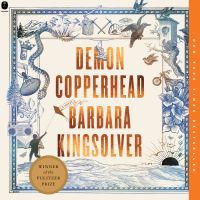
Demon CopperheadBarbara Kingsolver21h 3m4.5 (949.4K)$46 · $0.00

To Kill a MockingbirdHarper Lee12h 18m4.5 (7.4M)$29 · $0.00

Remarkably Bright CreaturesShelby Van Pelt11h 17m4.4 (1.7M)$29 · $0.00

This Side of Paradise - The Original 1920 Edition (Annotated)F. Scott Fitzgerald11h 30m4.6 (1.6K)$2 · $0.00

War LordBernard Cornwell13h 21m4.6 (33.1K)$33 · $0.00
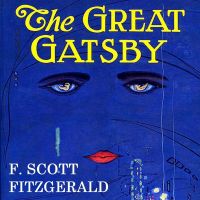
The Great Gatsby: Original 1925 Edition (An F. Scott Fitzgerald Classic NovelFrancis Scott Fitzgerald4h 45m4.6 (9.3K)$18 · $0.00
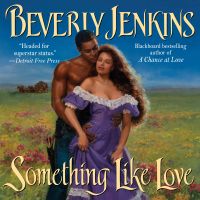
Something Like LoveBeverly Jenkins10h 21m4.6 (2.7K)$29 · $0.00
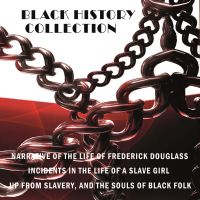
Black History CollectionFrederick Douglass, Harriet Ann Jacobs, Booker T. Washington, W.E.B. Du Bois27h 9m4.6 (2.6K)$18 · $0.00

The Old Man and the Sea (Annotated)Ernest Hemingway4h 27m4.6 (1.4K)$2 · $0.00

White HotIlona Andrews13h 18m4.5 (136.9K)$5 · $0.00
The Ghost by the Billabong (The Matilda Saga, #5)Jackie French14h 58m4.6 (773)$33 · $0.00

Cast in BloodMichelle Sagara16h 35m4.6 (607)$33 · $0.00
The Captain Blood Trilogy (Annotated)Rafael Sabatini29h 20m4.6 (1K)$3 · $0.00
Ship of the Line (Annotated)Cecil Louis Troughton Smith11h 13m4.6 (1K)$2 · $0.00

The George Orwell CollectionGeorge Orwell24h 46m4.5 (14.4K)$12 · $0.00
ShivajiRanjit Desai25h 13m4.6 (3.1K)$24 · $0.00
Time RegainedMarcel Proust15h 38m4.5 (9.2K)$2 · $0.00

Driving ForceElle James4h 58m4.6 (407)$20 · $0.00

When God Calls the HeartBrian Bird, Michelle Cox3h 24m4.6 (439)$10 · $0.00

Pride & Prejudice (Annotated)Jane Austen15h 10m4.7 (13.3K)$2 · $0.00

The Search (Annotated)Grace Livingston Hill7h 29m4.7 (1.1K)$1.99 · $0.00

The ReunionJana Deleon6h 31m4.6 (1.6K)$26 · $0.00
Something Like LoveBeverly Jenkins10h 21m4.6 (2.7K)$29 · $0.00

Wishes from the HeartSophie Mays4h 9m4.7 (344)$15 · $0.00

Blizzard ShowdownShirlee McCoy5h 16m4.6 (1.1K)$12 · $0.00

To Hold and ProtectSandra Owens7h 59m4.6 (1.1K)$8 · $0.00

Arctic WitnessHeather Woodhaven5h 46m4.6 (985)$12 · $0.00

Following the TrailLynette Eason6h 35m4.6 (2.3K)$12 · $0.00

Defending from DangerJodie Bailey5h 46m4.6 (588)$24 · $0.00
White HotIlona Andrews13h 18m4.5 (136.9K)$5 · $0.00

Explosive RevengeMaggie K. Black6h 18m4.6 (545)$12 · $0.00

Her Brand of JusticeB.J. Daniels6h 48m4.6 (1.3K)$12 · $0.00

Search And DetectTerri Reed5h 51m4.6 (706)$24 · $0.00
Driving ForceElle James4h 58m4.6 (407)$20 · $0.00

Danger in the WildernessDarlene L. Turner6h 54m4.7 (299)$12 · $0.00

Yukon JusticeDana Mentink6h 15m4.6 (751)$12 · $0.00

The Rogue WarriorCindy Roland Anderson5h 44m4.6 (410)$17 · $0.00

Her Duty Bound DefenderSharee Stover6h 30m4.6 (1.1K)$24 · $0.00

Trail Of ThreatsJessica R. Patch5h 47m4.6 (425)$24 · $0.00
You may also like

To Jerusalem and BackSaul Bellow7h 21m3.7 (1.5K)$17
The Life of Olaudah Equiano, Gustavus Vassa the AfricanOlaudah Equiano8h 13m4.1 (17.7K)$2 · $0.00

The Amur RiverColin Thubron10h 13m4.1 (1.8K)$29 · $0.00

The History of Medieval EuropeLynn Thorndike24h 28m4.1 (476)$2 · $0.00

Blood, Sweat, and PixelsJason Schreier7h 58m4.3 (32.8K)$26 · $0.00

The Autobiographical WorksGeorge Orwell35h 35m4.5 (2.3K)$2 · $0.00

Westward ExpansionSantiago Machain4h 34m$19 · $0.00

The Beginning Of The Sea Story Of AustraliaLouis Becke1h 17m$2 · $0.00
CHRISTOPHER COLUMBUSJames R. Whitfield4h 51m$9 · $0.00
THE CALIFORNIA GOLD RUSHJames R. Whitfield5h 35m$7

THE HUDDLED MASSESMichael Patrick Shanahan5h 4m$10 · $0.00
Crossing Borders: 7 Classic Books on Migration and Culture ShiftsSamuel Joseph, Grafton Elliot Smith, Friedrich Gerstäcker, Broughton Brandenburg, John R. Commons, Edward Alfred Steiner, Emmett J. Scott55h$1.99 · $0.00

Early TasmaniaJames Backhouse Walker12h 52m4.0 (13)$1 · $0.00

Vikings, Magyars, and the Age of InvasionsSantiago Machain5h 40m$21 · $0.00
Immigration, A World Movement And Its American SignificanceHenry Pratt Fairchild13h 26m$2.30

The South-West, by a Yankee (Annotated)J. H. Ingraham17h 15m$2 · $0.00
The land of gold; reality versus fictionHinton Rowan Helper7h 4m$1 · $0.00

The Eames-Erskine caseA. Fielding45m3.9 (125)$2 · $0.00

American History to 1877Robert D. Geise MEd5h 37m3.7 (39)$14
The Quiet StormAmani Roberts7h 46m4.2 (16)$23