About this audiobook
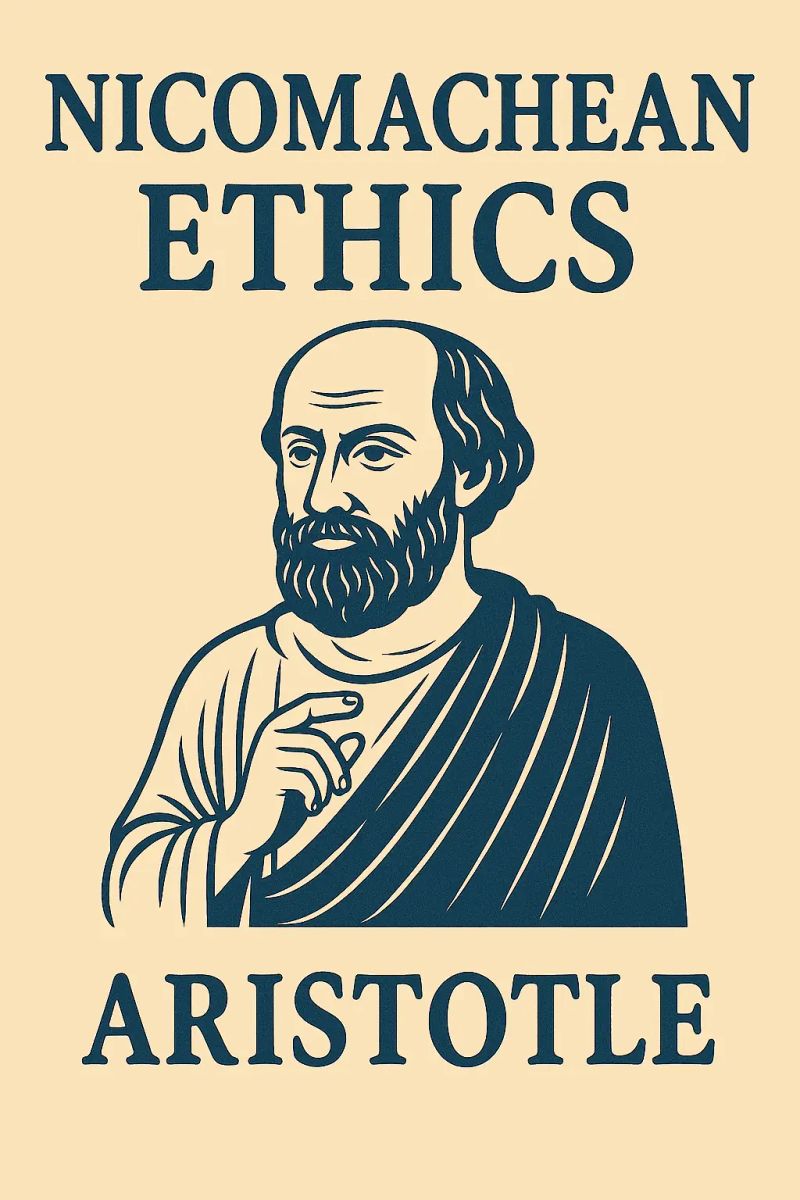
Aristotle’s Nicomachean Ethics, written in the 4th century BCE, is one of the foundational texts of Western moral philosophy. Likely named after either his father or his son, both called Nicomachus, the work compiles Aristotle’s reflections on the nature of the good life and the cultivation of virtue. A student of Plato and later the tutor of Alexander the Great, Aristotle developed his own empirical and systematic approach to knowledge, often diverging from his teacher’s idealism. The Nicomachean Ethics emerged in the classical Greek intellectual climate, where questions of politics, ethics, and human purpose were central to public and scholarly discourse. Set against the backdrop of the city-state (polis) as the arena for human flourishing, the text reflects Aristotle’s belief in the close interconnection between ethical theory and political life.
Thematically, the work explores the concept of eudaimonia—commonly translated as happiness or flourishing—as the ultimate human good, attainable through the practice of moral and intellectual virtues guided by reason. Aristotle distinguishes between different kinds of virtues, emphasizes the “golden mean” between extremes, and links moral excellence to habituation and practical wisdom. His ethical framework, grounded in observation and rational analysis, influenced subsequent philosophical traditions, from Hellenistic schools like the Stoics to medieval Christian thinkers such as Thomas Aquinas, and continues to shape modern discussions in virtue ethics. The Nicomachean Ethics has served as both a philosophical treatise and a practical guide, bridging reflective moral theory with lived human experience, and cementing Aristotle’s enduring role as a central architect of ethical thought.