
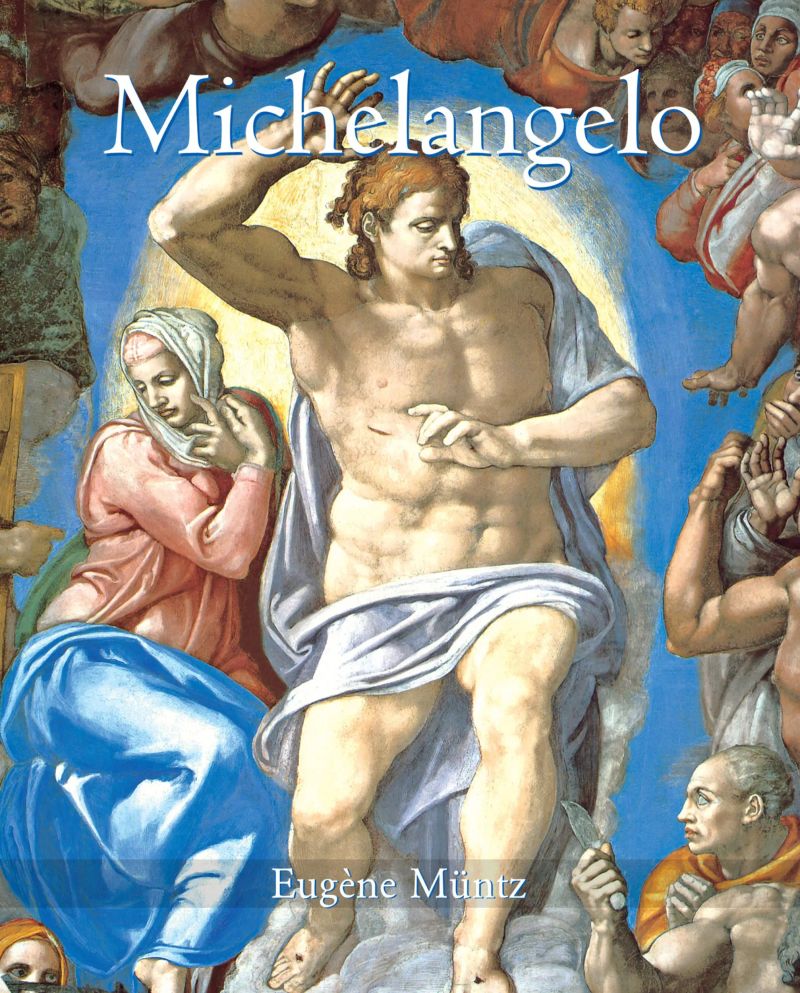


Length4h 57m
About this audiobook
Michelangelo, like Leonardo, was a man of many talents; sculptor, architect, painter and poet, he made the apotheosis of muscular movement, which to him was the physical manifestation of passion. He moulded his draughtsmanship, bent it, twisted it, and stretched it to the extreme limits of possibility. There are not any landscapes in Michelangelo's painting. All the emotions, all the passions, all the thoughts of humanity were personified in his eyes in the naked bodies of men and women. He rarely conceived his human forms in attitudes of immobility or repose. Michelangelo became a painter so that he could express in a more malleable material what his titanesque soul felt, what his sculptor's imagination saw, but what sculpture refused him. Thus this admirable sculptor became the creator, at the Vatican, of the most lyrical and epic decoration ever seen: the Sistine Chapel. The profusion of his invention is spread over this vast area of over 900 square metres. There are 343 principal figures of prodigious variety of expression, many of colossal size, and in addition a great number of subsidiary ones introduced for decorative effect. The creator of this vast scheme was only thirty-four when he began his work. Michelangelo compels us to enlarge our conception of what is beautiful. To the Greeks it was physical perfection; but Michelangelo cared little for physical beauty, except in a few instances, such as his painting of Adam on the Sistine ceiling, and his sculptures of the Pietà. Though a master of anatomy and of the laws of composition, he dared to disregard both if it were necessary to express his concept: to exaggerate the muscles of his figures, and even put them in positions the human body could not naturally assume. In his later painting, The Last Judgment on the end wall of the Sistine, he poured out his soul like a torrent. Michelangelo was the first to make the human form express a variety of emotions. In his hands emotion became an instrument upon which he played, extracting themes and harmonies of infinite variety. His figures carry our imagination far beyond the personal meaning of the names attached to them.
Audiobook details
Rating★★★★ 4.1 (63)
Includes Goodreads, Amazon
GenreOther
Length4 hrs 57 mins
Narrated byListen with 1,000+ voices
FormateBook with Audio
Publish dateMay 8, 2012
LanguageEnglish
Table of contents
1Michelangelo Michelangelo
2List of illustrations
3Madonna, both at the Uffizi, plus Masaccio’s Adam and Eve
4Maria Novella and the Expulsion from Paradise in the Brancacci
5debt to Masaccio.
Show all chaptersShow less
6refinement specific to Florentine Renaissance art.
7out as the patron of numerous artists but other prominent families
8One upshot was that Botticelli, Filippino Lippi, Benozzo Gozzoli
9Flemish masters include Jan van Eyck, Hugo van der Goes, Hans
10Donatello, Giotto, Masaccio and Signorelli, Michelangelo scrutinised
11Doni (a.k.a. The Holy Family) at the Uffizi in Florence. Da Vinci
12Florence too, with the likes of native-born Andrea del Sarto
13Pauline Chapel and other later figurative works of Michelangelo
14(a.k.a. Giovanni Bologna and Jean de Bologne) and his Rape of a
15LATE RENAISSANCE SCULPTURE
16Chapel and statues of Cosimo I.
17Renaissance sculpture with his style, and even more so with his
18In this way Michelangelo, the paradigm of iron will and personal
19Temptation of St. Anthony, a print by the Alsatian painter and
20Michelangelo
21Royal Academy of Arts, London.
22Slave and Da Maiano’s St. Sebastian at the Misericordia Museum in
23THE SCULPTOR
24Domenico in the church of the same name. This famous
25for its representation of sharply focused vitality, the Angel
26Madonna at the Bargello National Museum in Florence and
27Michelangelo very sensitive to anything new and delightful.
28human suffering.
29The Kneeling Cupid with a drawn bow at the Victoria and Albert
30‘La Giuliana’ (derived from ‘Giuliano’, Italian for ‘Julius’). But the
31Victories and Vanquished Provinces and the other, the Liberal
32Slave in 1512 and sketches at the University of Oxford show
33Richelieu in the following century.
34unfettered sleep of youth with a faint smile across his lips that
35whole heart and soul into that look, along with his ferocious love
36During the pontificate of the violent and equally energetic Julius
37Marble. Vatican Museum, Rome.
38aspirations and although Leo X could bond with Raphael and
39from 1523 to 1534 before his next commission for a painting!
40Church of his brother Giuliano and nephew Lorenzo. The
41THE SCULPTOR
42Giulio de’ Medici, now Pope Clement VII, fully understood and
43Marble. San Lorenzo, Florence.
44The prodigal figures of the Pensieroso, Day, Night, Dawn and
45Antiquity.
46More flagrantly than any other work, these two statues
47Jeremiah at the Sistine Chapel.
48Medici Chapel, San Lorenzo, Florence.
49The advent of Pope Paul III would benefit Michelangelo. At this
50THE PAINTER
Leonardo Da Vinci - Thinker and Man of ScienceEugène Müntz8h 43m3.9 (59)$18 · $0.00
Das ultimative Buch über RaphaelEugène Müntz8h 42m4.6 (13)$19 · $0.00
Leonardo Da VinciEugène Müntz5h 41m4.2 (244)$13 · $0.00

Raphael und KunstwerkeEugène Müntz2h$15 · $0.00
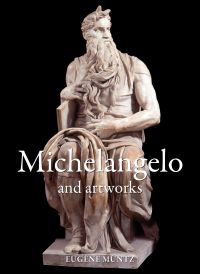
Michelangelo and artworksEugène Müntz57m4.0 (79)$15 · $0.00
Leonardo da Vinci y obras de arteEugène Müntz1h 41m4.2 (145)$15 · $0.00
Rafael y obras de arteEugène Müntz1h 59m4.0 (34)$15 · $0.00
Miguel Ángel y obras de arteEugène Müntz1h 27m$15 · $0.00

MichelangeloEugène Müntz5h 42m$16 · $0.00
Michel-Ange et œuvres d'artEugène Müntz1h 35m4.1 (54)$15 · $0.00
Raphaël et œuvres d'artEugène Müntz1h 43m$15 · $0.00
Michelangelo și opere de artăEugène Müntz1h 27m$15 · $0.00
Miguel ÁngelEugène Müntz1h 13m3.8 (42)$8 · $0.00
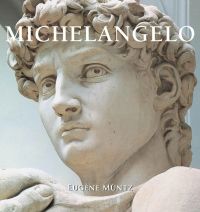
MichelangeloEugène Müntz1h 3m4.1 (75)$8 · $0.00
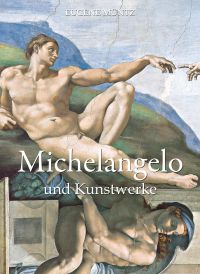
Michelangelo und KunstwerkeEugène Müntz1h 38m4.1 (59)$15 · $0.00
Leonardo Da Vinci - El genio divinoEugène Müntz6h 11m4.3 (143)$16 · $0.00
MichelangeloEugène Müntz1h 21m4.0 (78)$8 · $0.00
Leonardo da VinciEugène Müntz5h 40m4.0 (163)$10 · $0.00
Miguel ÁngelEugène Müntz4h 17m4.1 (65)$13 · $0.00
RafaelEugène Müntz2h 5m4.1 (32)$13.50 · $0.00
Mere ChristianityC. S. Lewis7h 7m4.4 (519.7K)$24 · $0.00

Her Daily BreadKate Wood12h 57m4.6 (153)$33 · $0.00
The Holy Bible - 1 SamuelKing James2h 13m4.8 (1.6K)$3 · $0.00
The American Standard Bible — The Gospel of MatthewMatthew3h 56m4.7 (3K)$2 · $0.00

Bad Fat Black GirlSesali Bowen6h 32m4.7 (2.8K)$24 · $0.00
The King James Audio Bible New Testament CompleteChristopher Glyn20h 2m4.7 (2.6K)$12 · $0.00
Faiths CheckbookCharles Spurgeon12h 44m4.7 (3.2K)$11 · $0.00

Ten Things I Wish You Knew About Your Child's Mental HealthDr. Billy Garvey4h 53m4.7 (2.4K)$20 · $0.00
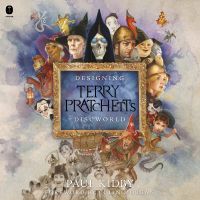
Designing Terry Pratchett’s DiscworldPaul Kidby3h 52m4.7 (343)$20 · $0.00
The Chosen Book OneAmanda Jenkins, Kristen Hendricks, Dallas Jenkins3h 8m4.6 (4.9K)$10 · $0.00
The Lives of BrianBrian Johnson9h 45m4.6 (3.5K)$29 · $0.00
Expository Thoughts on the Gospel of LukeJ.C. Ryle27h 13m4.7 (536)$18 · $0.00

CrossroadsKaleb Dahlgren7h 56m4.6 (4.9K)$26 · $0.00

Across the RiverKent Babb11h 40m4.6 (927)$29 · $0.00

Brain Training for RidersAndrea Monsarrat Waldo5h 56m4.7 (550)$19 · $0.00
My Effin' LifeGeddy Lee17h 11m4.6 (13.1K)$40 · $0.00

Kings and PawnsHoward Bryant10h 9m4.6 (678)$29 · $0.00

The Elementia Chronicles #2: The New OrderSean Fay Wolfe11h 17m4.6 (841)$29 · $0.00
The ActsLuke2h 55m4.6 (19.7K)$12 · $0.00
New Testament - Easy NavigationWorld English Bible19h 35m4.6 (1.3K)$1.30 · $0.00
You may also like
First PrinciplesThomas E. Ricks11h 56m4.3 (5.5K)$29 · $0.00

The American FutureSimon Schama15h 59m3.9 (1.4K)$33 · $0.00
The Creeds of Christendom (All 3 Volumes)Philip Schaff155h 10m4.6 (251)$2 · $0.00

The Right Side of HistoryBen Shapiro6h 6m4.1 (23.5K)$24 · $0.00
America's ProphetBruce Feiler9h 37m4.1 (790)$29 · $0.00
The RepublicPlato13h 29m4.1 (263.7K)$21 · $0.00

The Woman's Bible (Complete Edition)Elizabeth Cady Stanton16h 42m4.0 (2.8K)$1.99 · $0.00
The OdysseyHomer12h 46m4.1 (1.4M)$2.30 · $0.00
Eternal Life: A New VisionJohn Shelby Spong7h 47m4.1 (1.4K)$26 · $0.00
Sandro BotticelliVictoria Charles1h 24m4.2 (36)$8 · $0.00
VeroneseFrançois Crastre1h 6m$2 · $0.00
MichelangeloEugène Müntz1h 4m4.1 (78)$7 · $0.00
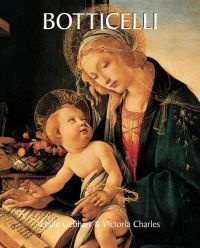
BotticelliEmile Gebhart, Victoria Charles4h 33m4.3 (24)$18 · $0.00
The Church and the PeopleJoseph McCabe2h 51m$15
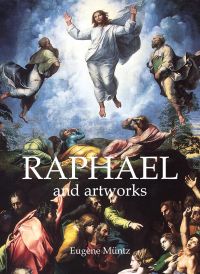
RaphaelEugène Müntz1h 37m3.7 (15)$15 · $0.00
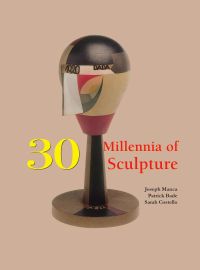
30 Millennia of SculptureJoseph Manca, Patrick Bade, Sarah Costello, Victoria Charles14h 51m4.6 (10)$18 · $0.00
Generation FreedomBruce Feiler3h 41m3.3 (110)$18 · $0.00
MichelangeloEugène Müntz4h 37m3.8 (42)$16 · $0.00
Fra AngelicoStephan Beissel5h 47m4.2 (20)$18 · $0.00
NeoclassicismVictoria Charles1h 25m$13 · $0.00