


Length1h 4m
About this audiobook
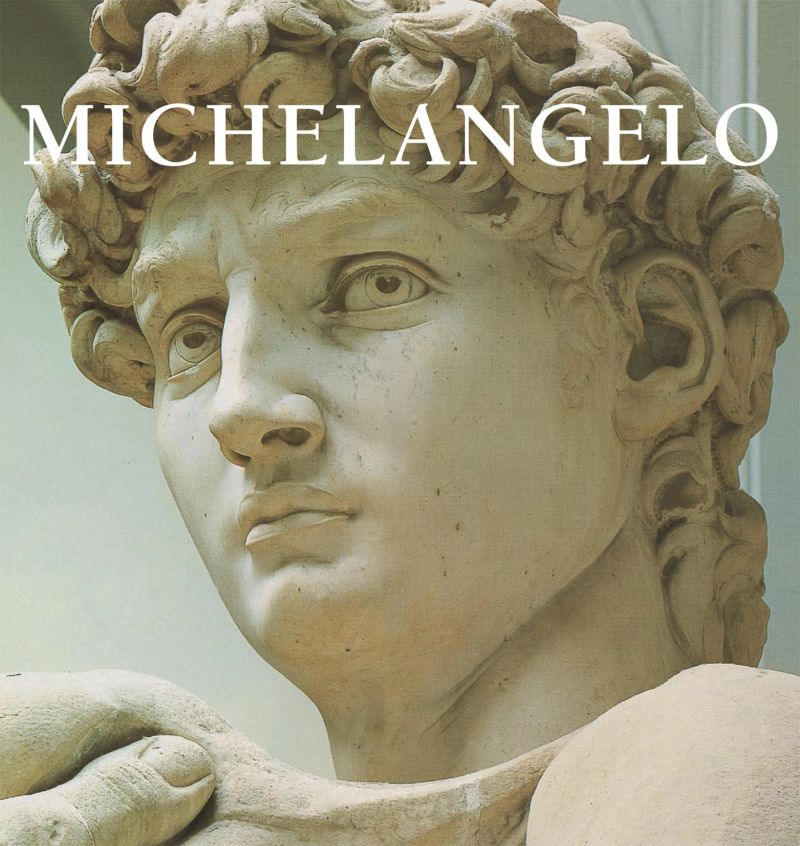
Michelangelo, like Leonardo, was a man of many talents; sculptor, architect, painter and poet, he made the apotheosis of muscular movement, which to him was the physical manifestation of passion. He moulded his draughtsmanship, bent it, twisted it, and stretched it to the extreme limits of possibility. There are not any landscapes in Michelangelo's painting. All the emotions, all the passions, all the thoughts of humanity were personified in his eyes in the naked bodies of men and women. He rarely conceived his human forms in attitudes of immobility or repose. Michelangelo became a painter so that he could express in a more malleable material what his titanesque soul felt, what his sculptor's imagination saw, but what sculpture refused him. Thus this admirable sculptor became the creator, at the Vatican, of the most lyrical and epic decoration ever seen: the Sistine Chapel. The profusion of his invention is spread over this vast area of over 900 square metres. There are 343 principal figures of prodigious variety of expression, many of colossal size, and in addition a great number of subsidiary ones introduced for decorative effect. The creator of this vast scheme was only thirty-four when he began his work. Michelangelo compels us to enlarge our conception of what is beautiful. To the Greeks it was physical perfection; but Michelangelo cared little for physical beauty, except in a few instances, such as his painting of Adam on the Sistine ceiling, and his sculptures of the Pietà. Though a master of anatomy and of the laws of composition, he dared to disregard both if it were necessary to express his concept: to exaggerate the muscles of his figures, and even put them in positions the human body could not naturally assume. In his later painting, The Last Judgment on the end wall of the Sistine, he poured out his soul like a torrent. Michelangelo was the first to make the human form express a variety of emotions. In his hands emotion became an instrument upon which he played, extracting themes and harmonies of infinite variety. His figures carry our imagination far beyond the personal meaning of the names attached to them.
Audiobook details
Rating★★★★ 4.1 (78)
Includes Goodreads, Amazon, LibraryThing
GenreOther
Length1 hr 4 mins
Narrated byListen with 1,000+ voices
FormateBook with Audio
Publish dateDec 22, 2011
LanguageEnglish
Table of contents
1MICHELANGELO
2MICHELANGELO
3Childhood
4The Medici Factor
5Homecoming and Travel
Show all chaptersShow less
6Inner Tension
7The Da Vinci Factor
8The Unprecedented Sculptor
9Domenico, Bologna.
10from the arca of San
11Domenico, Bologna.
12The Louvre, Paris.
13Florence.
14II, San Pietro in
15Lorenzo, Florence.
16Florence.
17The Architect
18Florence.
19View of the façade, design
20Nationale, Paris.
21Domenico Fontana in
22with tempera (watered
23Beyond Peerless Painting
24Chapel after
25Chapel, Vatican.
26Sistine Chapel, Vatican.
27Fresco. Sistine
28Chapel, Vatican.
29Pauline Chapel, Rome.
30Bargello, Florence.
31226 cm. Museo
32Milan.
33A Most Exceptional Individual
3441 x 57 cm. Casa
35Library, Windsor.
36Florence.
37pigment and grey
38Start of a three-year apprenticeship under Domenico Ghirlandaio.
391490 Death of Cardinal Bilhères shortly after completion of the Rome Pietà.
40Return to Florence and commission for David in marble.
41Return to Florence
421512 Unveiling of the new Sistine ceiling.
431523 Election of Clement VII (Giulio de’Medici)
441531 Noli me Tangere portfolio.
45Museum, London.
461542 Worksite start-up for the Pauline Chapel.
471547 Death of Vittoria Colonna, longtime friend and accomplished poetess, whom he
481550 Completion of the Pauline Chapel frescoes; start of the Florentine Pietà.
491552 Completion of the Capitoline stair.
50LIST OF ILLUSTRATIONS
Leonardo Da Vinci - Thinker and Man of ScienceEugène Müntz8h 43m3.9 (59)$18 · $0.00

Das ultimative Buch über RaphaelEugène Müntz8h 42m4.6 (13)$19 · $0.00

Leonardo Da VinciEugène Müntz5h 41m4.2 (244)$13 · $0.00

Raphael und KunstwerkeEugène Müntz2h$15 · $0.00
Michelangelo and artworksEugène Müntz57m4.0 (79)$15 · $0.00
Leonardo da Vinci y obras de arteEugène Müntz1h 41m4.2 (145)$15 · $0.00
Rafael y obras de arteEugène Müntz1h 59m4.0 (34)$15 · $0.00
Miguel Ángel y obras de arteEugène Müntz1h 27m$15 · $0.00

MichelangeloEugène Müntz5h 42m$16 · $0.00
Michel-Ange et œuvres d'artEugène Müntz1h 35m4.1 (54)$15 · $0.00
Raphaël et œuvres d'artEugène Müntz1h 43m$15 · $0.00
Michelangelo și opere de artăEugène Müntz1h 27m$15 · $0.00
Miguel ÁngelEugène Müntz1h 13m3.8 (42)$8 · $0.00
MichelangeloEugène Müntz1h 3m4.1 (75)$8 · $0.00

Michelangelo und KunstwerkeEugène Müntz1h 38m4.1 (59)$15 · $0.00

Leonardo Da Vinci - El genio divinoEugène Müntz6h 11m4.3 (143)$16 · $0.00

MichelangeloEugène Müntz1h 21m4.0 (78)$8 · $0.00

Leonardo da VinciEugène Müntz5h 40m4.0 (163)$10 · $0.00

Miguel ÁngelEugène Müntz4h 17m4.1 (65)$13 · $0.00
RafaelEugène Müntz2h 5m4.1 (32)$13.50 · $0.00

Mere ChristianityC. S. Lewis7h 7m4.4 (519.7K)$24 · $0.00

Her Daily BreadKate Wood12h 57m4.6 (153)$33 · $0.00
The Holy Bible - 1 SamuelKing James2h 13m4.8 (1.6K)$3 · $0.00

The American Standard Bible — The Gospel of MatthewMatthew3h 56m4.7 (3K)$2 · $0.00

Bad Fat Black GirlSesali Bowen6h 32m4.7 (2.8K)$24 · $0.00
The King James Audio Bible New Testament CompleteChristopher Glyn20h 2m4.7 (2.6K)$12 · $0.00
Faiths CheckbookCharles Spurgeon12h 44m4.7 (3.2K)$11 · $0.00

Ten Things I Wish You Knew About Your Child's Mental HealthDr. Billy Garvey4h 53m4.7 (2.4K)$20 · $0.00

Designing Terry Pratchett’s DiscworldPaul Kidby3h 52m4.7 (343)$20 · $0.00
The Chosen Book OneAmanda Jenkins, Kristen Hendricks, Dallas Jenkins3h 8m4.6 (4.9K)$10 · $0.00
The Lives of BrianBrian Johnson9h 45m4.6 (3.5K)$29 · $0.00
Expository Thoughts on the Gospel of LukeJ.C. Ryle27h 13m4.7 (536)$18 · $0.00

CrossroadsKaleb Dahlgren7h 56m4.6 (4.9K)$26 · $0.00

Across the RiverKent Babb11h 40m4.6 (927)$29 · $0.00

Brain Training for RidersAndrea Monsarrat Waldo5h 56m4.7 (550)$19 · $0.00
My Effin' LifeGeddy Lee17h 11m4.6 (13.1K)$40 · $0.00

Kings and PawnsHoward Bryant10h 9m4.6 (678)$29 · $0.00

The Elementia Chronicles #2: The New OrderSean Fay Wolfe11h 17m4.6 (841)$29 · $0.00
The ActsLuke2h 55m4.6 (19.7K)$12 · $0.00

New Testament - Easy NavigationWorld English Bible19h 35m4.6 (1.3K)$1.30 · $0.00
You may also like
THE COMPLETE WORKS OF PLATOPlato141h 25m4.5 (15.3K)$1 · $0.00
Nietzsche in 90 MinutesPaul Strathern1h 13m3.6 (3.1K)$7
The RepublicPlato11h 31m4.1 (268K)$6 · $0.00
Euthyphro (Annotated)Plato2h 43m4.1 (62.2K)$0.99 · $0.00
Saint Thomas AquinasG. K. Chesterton5h 27m4.3 (15.4K)$14

Human, All Too Human: A Book For Free Spirits, Part IFriedrich Nietzsche10h4.3 (11.2K)$12

The Ten Books on ArchitectureVitruvius Pollio9h 49m4.2 (3.8K)Free

The History of European MoralsWilliam Edward Hartpole Lecky31h 56m4.2 (733)$1.99 · $0.00

First PrinciplesThomas E. Ricks11h 56m4.3 (5.5K)$29 · $0.00
Beyond Good and EvilFriedrich Wilhelm Nietzsche6h 34m4.2 (139.3K)Free
SymposiumPlato1h 34m4.2 (115.7K)$2.99 · $0.00

Hegel in 90 MinutesPaul Strathern1h 16m3.5 (1.3K)$7

DelacroixPaul G. Konody1h 19m$1 · $0.00

VelasquezKlaus Carl1h 29m4.1 (18)$8 · $0.00
Peter Paul RubensMaria Varshavskaya, Xenia Yegorova3h 19m4.0 (28)$16 · $0.00

Diego Velázquez (1599-1660)Carl Justi1h 37m4.4 (26)$15 · $0.00

VeroneseFrançois Crastre1h 6m$2 · $0.00

Raphael - Volume 2Eugène Müntz3h 22m$18 · $0.00
Hegel's Phenomenology of Mind (Annotated)Georg Wilhelm Friedrich Hegel27h 34m4.4 (11)$1.99 · $0.00

RubensS. L. Bensusan54m$1 · $0.00