


Length1h 3m
About this audiobook
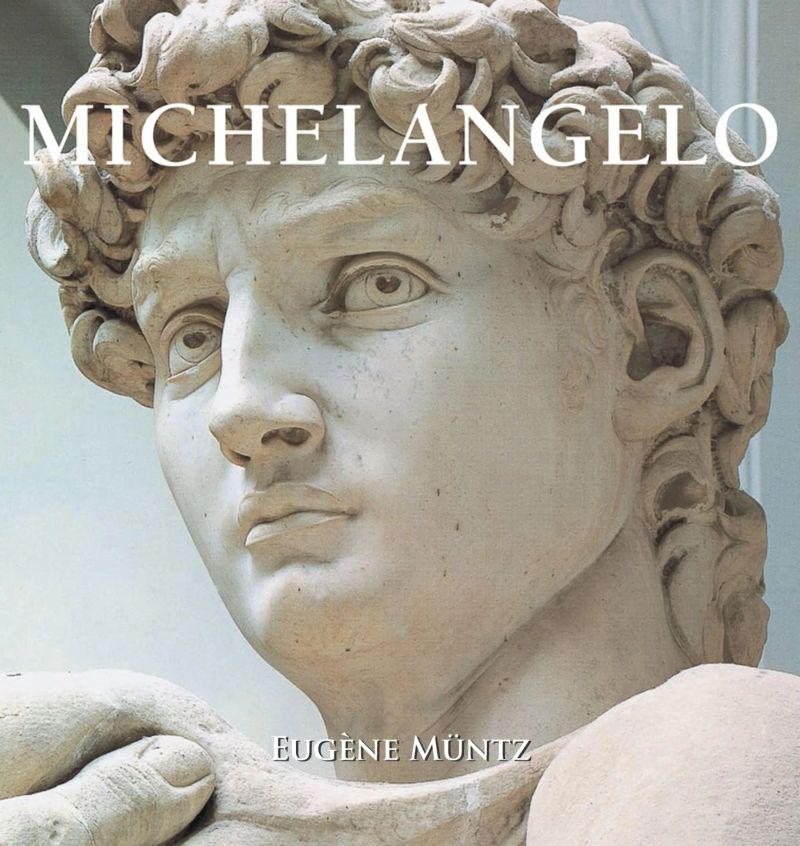
Michelangelo, like Leonardo, was a man of many talents; sculptor, architect, painter and poet, he made the apotheosis of muscular movement, which to him was the physical manifestation of passion. He moulded his draughtsmanship, bent it, twisted it, and stretched it to the extreme limits of possibility. There are not any landscapes in Michelangelo's painting. All the emotions, all the passions, all the thoughts of humanity were personified in his eyes in the naked bodies of men and women. He rarely conceived his human forms in attitudes of immobility or repose. Michelangelo became a painter so that he could express in a more malleable material what his titanesque soul felt, what his sculptor's imagination saw, but what sculpture refused him. Thus this admirable sculptor became the creator, at the Vatican, of the most lyrical and epic decoration ever seen: the Sistine Chapel. The profusion of his invention is spread over this vast area of over 900 square metres. There are 343 principal figures of prodigious variety of expression, many of colossal size, and in addition a great number of subsidiary ones introduced for decorative effect. The creator of this vast scheme was only thirty-four when he began his work. Michelangelo compels us to enlarge our conception of what is beautiful. To the Greeks it was physical perfection; but Michelangelo cared little for physical beauty, except in a few instances, such as his painting of Adam on the Sistine ceiling, and his sculptures of the Pietà. Though a master of anatomy and of the laws of composition, he dared to disregard both if it were necessary to express his concept: to exaggerate the muscles of his figures, and even put them in positions the human body could not naturally assume. In his later painting, The Last Judgment on the end wall of the Sistine, he poured out his soul like a torrent. Michelangelo was the first to make the human form express a variety of emotions. In his hands emotion became an instrument upon which he played, extracting themes and harmonies of infinite variety. His figures carry our imagination far beyond the personal meaning of the names attached to them.
Audiobook details
Rating★★★★ 4.1 (75)
Includes Goodreads, Amazon, LibraryThing
GenreOther
Length1 hr 3 mins
Narrated byListen with 1,000+ voices
FormateBook with Audio
Publish dateDec 22, 2011
LanguageEnglish
Table of contents
11. Self Portrait with Turban Quill,
2MICHELANGELO
3Childhood
4The Medici Factor
5Homecoming and Travel
Show all chaptersShow less
62. Madonna of the Stairs, circa 1490.
73. Battle of the Centaurs, 1492.
8Inner Tension
9The Da Vinci Factor
104. Antonio da Sangallo, The Battle of Cascina adapted from Michelangelo, circa 1542.
11The Unprecedented Sculptor
125. Angel holding a candelabra, 1495.
136. Saint Proculus, from the arca of San Domenico, 1495.
147. Bacchus, 1496-1497.
158. Pietà, 1498-1499.
169. Sketch for a David with Catapult, 1501.
1710. David, 1501-1504.
1811. The Dying Slave, 1513-1516.
1912. The Rebellious Slave, 1513-1516.
2013. Saint Matthew, 1505-1506.
2114. Slave, Named Atlas, 1519.
2215. Giacomo Rochetti, Painting after the project of Michelangelo for the tomb of Pope Julius II, 1513.
2316. Moses, 1513-1515.
2417. The Tomb of Pope Julius II, 1505-1545.
2518. Virigin and Child, 1524-1534.
2619. Interior of the Medici Chapel, 1520-1534.
2720. Tomb of Lorenzo de Medici, 1525-1527.
2821. Tomb of Julius de Medici, 1525-1527.
2922. Dawn, 1525-1527.
3023. Night, 1525-1527.
3124. Interior view of the dome of the Medici Chapel, San Lorenzo.
32The Architect
3326. Staircase of the Vestibule. Laurentine Library, San Lorenzo, Florence.
3427. Reading room of the Laurentine Library, San Lorenzo, Florence.
3528. Palazzo Farnese, Rome. View of the façade, design begun by Antonio da Sangallo the Younger and continued by Michelangelo, Giacoma Vignola and Giacomo della Porta. 1517-1589.
3629. Palazzo Farnese, Rome. The facade of the inner courtyard, detail of the second storey designed by Antonio da Sangallo the Younger in 1517 and the third by Michelangelo between 1549-1569.
3730. Etienne Dupérac, Michelangelo’s project for the Capitole, 1558.
3831. View of today’s Capitole, Rome.
3932. St. Peter’s,viewed from the West, 1546-1564.
4033. View of the interior of the Dome, begun by Michelangelo in 1546 and completed by Domenico Fontana in 1593.
4134. Aerial view of the Basilic of Saint Peter. Picture by Giacomo Della Porta.
4235. Porta Pia, 1561.
43Beyond Peerless Painting
4437. Sistine Chapel, vault, panel of the Last Judgement, north and south sides, after restoration of frescoes, 1508-1541.
4538. Vault of the Sistine Chapel after restoration.
4639. The Deluge (second panel of the archway). Fresco. Sistine Chapel, Vatican.
4740. The Creation of Adam (sixth panel of the vault), 1508-1512.
4841. Original Sin (fourth panel of the vault)
4942. The Delphic Sibyl (Lateral paintings of the Prophets).
5043. The Prophet Isaiah (Lateral paintings of the Prophets).
Leonardo Da Vinci - Thinker and Man of ScienceEugène Müntz8h 43m3.9 (59)$18 · $0.00

Das ultimative Buch über RaphaelEugène Müntz8h 42m4.6 (13)$19 · $0.00

Leonardo Da VinciEugène Müntz5h 41m4.2 (244)$13 · $0.00

Raphael und KunstwerkeEugène Müntz2h$15 · $0.00
Michelangelo and artworksEugène Müntz57m4.0 (79)$15 · $0.00
Leonardo da Vinci y obras de arteEugène Müntz1h 41m4.2 (145)$15 · $0.00
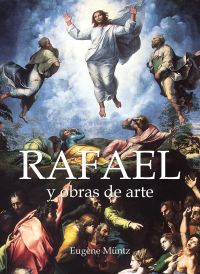
Rafael y obras de arteEugène Müntz1h 59m4.0 (34)$15 · $0.00
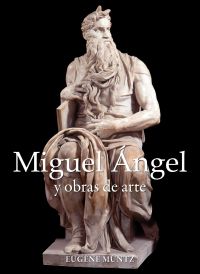
Miguel Ángel y obras de arteEugène Müntz1h 27m$15 · $0.00

MichelangeloEugène Müntz5h 42m$16 · $0.00
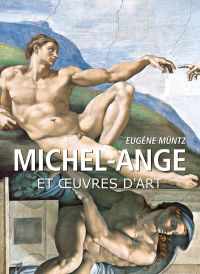
Michel-Ange et œuvres d'artEugène Müntz1h 35m4.1 (54)$15 · $0.00
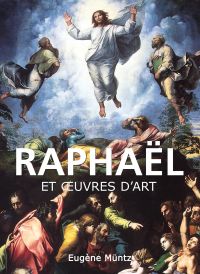
Raphaël et œuvres d'artEugène Müntz1h 43m$15 · $0.00
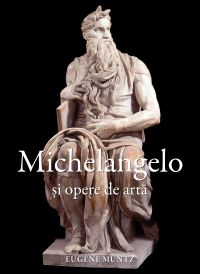
Michelangelo și opere de artăEugène Müntz1h 27m$15 · $0.00
Miguel ÁngelEugène Müntz1h 13m3.8 (42)$8 · $0.00
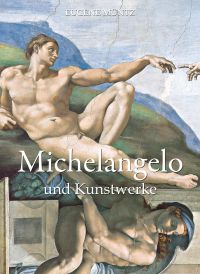
Michelangelo und KunstwerkeEugène Müntz1h 38m4.1 (59)$15 · $0.00

Leonardo Da Vinci - El genio divinoEugène Müntz6h 11m4.3 (143)$16 · $0.00
MichelangeloEugène Müntz1h 21m4.0 (78)$8 · $0.00

Leonardo da VinciEugène Müntz5h 40m4.0 (163)$10 · $0.00

Miguel ÁngelEugène Müntz4h 17m4.1 (65)$13 · $0.00
RafaelEugène Müntz2h 5m4.1 (32)$13.50 · $0.00
Mere ChristianityC. S. Lewis7h 7m4.4 (519.7K)$24 · $0.00

Her Daily BreadKate Wood12h 57m4.6 (153)$33 · $0.00
The Holy Bible - 1 SamuelKing James2h 13m4.8 (1.6K)$3 · $0.00
The American Standard Bible — The Gospel of MatthewMatthew3h 56m4.7 (3K)$2 · $0.00

Bad Fat Black GirlSesali Bowen6h 32m4.7 (2.8K)$24 · $0.00
The King James Audio Bible New Testament CompleteChristopher Glyn20h 2m4.7 (2.6K)$12 · $0.00
Faiths CheckbookCharles Spurgeon12h 44m4.7 (3.2K)$11 · $0.00

Ten Things I Wish You Knew About Your Child's Mental HealthDr. Billy Garvey4h 53m4.7 (2.4K)$20 · $0.00

Designing Terry Pratchett’s DiscworldPaul Kidby3h 52m4.7 (343)$20 · $0.00
The Chosen Book OneAmanda Jenkins, Kristen Hendricks, Dallas Jenkins3h 8m4.6 (4.9K)$10 · $0.00
The Lives of BrianBrian Johnson9h 45m4.6 (3.5K)$29 · $0.00
Expository Thoughts on the Gospel of LukeJ.C. Ryle27h 13m4.7 (536)$18 · $0.00

CrossroadsKaleb Dahlgren7h 56m4.6 (4.9K)$26 · $0.00

Across the RiverKent Babb11h 40m4.6 (927)$29 · $0.00

Brain Training for RidersAndrea Monsarrat Waldo5h 56m4.7 (550)$19 · $0.00
My Effin' LifeGeddy Lee17h 11m4.6 (13.1K)$40 · $0.00

Kings and PawnsHoward Bryant10h 9m4.6 (678)$29 · $0.00

The Elementia Chronicles #2: The New OrderSean Fay Wolfe11h 17m4.6 (841)$29 · $0.00
The ActsLuke2h 55m4.6 (19.7K)$12 · $0.00

New Testament - Easy NavigationWorld English Bible19h 35m4.6 (1.3K)$1.30 · $0.00
You may also like

George Washington's Rules of CivilityMoncure Daniel Conway, George Washington3h 37m4.2 (1.5K)$2 · $0.00
Free PlayStephen Nachmanovitch5h 58m4.3 (4.5K)$17 · $0.00

The RepublicPlato11h 31m4.1 (268K)$6 · $0.00

George Washington's Rules of CivilityMoncure Daniel Conway, George Washington3h 38m4.1 (1.5K)$1 · $0.00

So FetchJennifer Keishin Armstrong8h 6m3.6 (1.5K)$26 · $0.00

History of European Morals From Augustus to CharlemagneWilliam Edward Hartpole Lecky31h 49m4.2 (817)$1 · $0.00
SymposiumPlato4h 52m4.2 (110.7K)$1 · $0.00

How to Educate a CitizenE. D. Hirsch5h 31m4.1 (510)$24 · $0.00
The RepublicPlato13h 29m4.1 (263.7K)$21 · $0.00
How We ThinkJohn Dewey8h 52m4.0 (1.6K)$22 · $0.00

The Hearts of MenH. Fielding7h 13m4.0 (18)$2 · $0.00
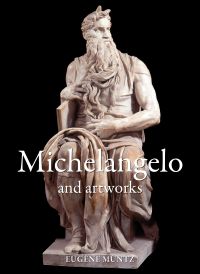
MichelangeloEugène Müntz52m3.8 (42)$15 · $0.00

John Updike Reading “Lifeguard” from Pigeon Feathers and Other StoriesJohn Updike17m3.8 (10)$2

MichelangeloEugène Müntz1h 23m4.0 (79)$13.50 · $0.00
On reading in relation to literatureLafcadio Hearn51m$2 · $0.00
MichelangeloEugène Müntz1h 4m4.1 (78)$7 · $0.00
Greek artElie Faure, Klaus H. Carl1h 50m4.2 (27)$13 · $0.00
Van DyckNatalia Gritsai2h 4m$13.50 · $0.00
Alcibiades IPlato2h 19m4.0 (242)$2.30

The Dramatization of Bible Stories (Annotated)Elizabeth Miller Lobingier3h 49m$2 · $0.00