
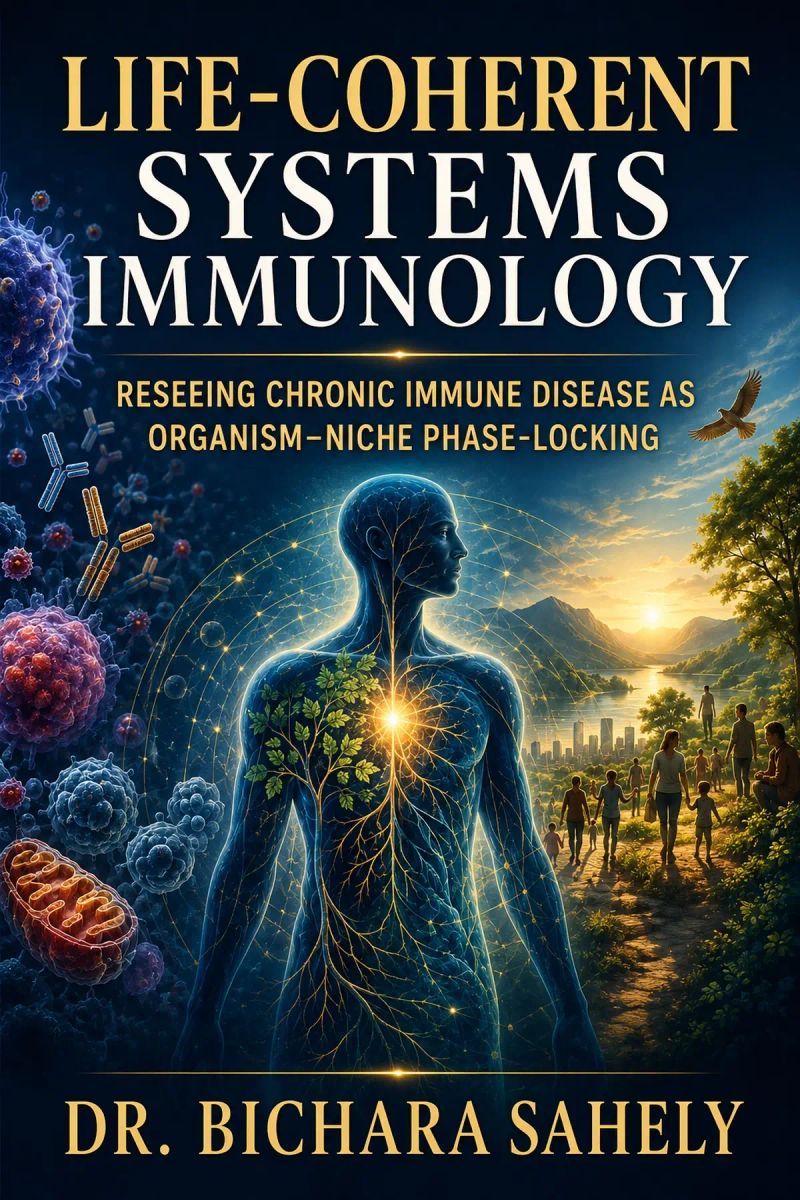
Life-Coherent Systems Immunology
Reseeing Chronic Immune Disease as Organism–Niche Phase-LockingBy Dr Bichara Sahely


Length11h 59m
About this audiobook
Life-Coherent Systems Immunology offers an organism-centered way to understand chronic immune-mediated disease. Rather than seeing immunity mainly as a war against non-self, it reframes immunity as the living process by which the organism conserves boundary-coherence while remaining open to the world. Autoimmunity, allergy, autoinflammation, fibrosis, chronic inflammation, and post-infectious illness are understood not only as diagnostic categories, but as possible signs of maladaptive organism–niche phase-locking. Defence, inflammation, repair, memory, or conservation may become stuck, preventing return to ordinary living. Drawing on autopoiesis, 5E cognition, salutogenesis, allostasis, immunometabolism, mitochondria, tissue niches, exposure ecology, public health, and civilization, this book offers a deeper clinical grammar: name the disease, but also understand the locked living process — and the conditions that allow life to move again.
Audiobook details
GenreHealth and Wellness
Length11 hrs 59 mins
Narrated byListen with 1,000+ voices
FormateBook with Audio
Publish dateMay 15, 2026
LanguageEnglish
Table of contents
1Chapter 1
2Audiobook Note
3Prefatory Note
4Executive Summary
5Part I. Re-Seeing Immunity
Show all chaptersShow less
61. Introduction: Why Immune Disease Requires a Deeper Clinical Grammar
72. Observer Humility: Distinctions as Instruments, Not Possessions
83. From Observer-Centered Immunology to Organism-Centered Immune Coherence
9Part II. The Immune System as 5E Organismic Cognition
104. Immune Cognition as Embodied, Embedded, Enactive, Extended, and Evaluative
114.1 Embodied Immunity
124.2 Embedded Immunity
134.3 Enactive Immunity
144.4 Extended Immunity
154.5 Emotive and Evaluative Immunity
165. Preservation, Development, and Coherence: The Attractor Logic of Immune Life
175.1 Preservation: Boundary, Defence, Containment, and Memory
185.2 Development: Openness, Tolerance, Symbiosis, Growth, and Repair
195.3 Coherence: Flexible Movement Between Protection and Participation
205.4 Pathological Lock-In of the Attractors
215.5 Clinical Meaning of the Attractor Logic
22Part III. Health, Healing, and Phase-Locking
236. Salutogenesis: Coherence, Meaning, and Resistance Resources
247. Naviaux’s Health Cycle and Healing Cycle
257.1 The Health Cycle
267.2 The Healing Cycle
277.3 Re-entry into the Health Cycle
287.4 Disease as Failure of Re-entry
298. Allostasis, Allostatic Load, and Immune Resilience
308.1 Homeostasis and Allostasis
318.2 Allostatic Load
328.3 Immune Resilience
338.4 Phase Coherence
348.5 Clinical Implications of Allostatic Reasoning
359. The Master Distinction: Adaptive Phase-Shifting versus Maladaptive Phase-Locking
369.1 The Immune-Metabolic Phase Cycle
379.2 Adaptive Phase-Shifting
389.3 Maladaptive Phase-Locking
399.4 Phase-Locking and the Organism–Niche Relation
409.5 Phase-State Clinical Reasoning
419.6 The Ethical Meaning of Phase-Locking
429.7 Transition to Mechanisms
43Part IV. Molecular, Cellular, and Evolutionary Foundations
4410. Molecular Architecture: Sensors, Signals, and Regulons
4510.1 Pattern-Recognition Receptors and Boundary Evaluation
4610.2 Antigenicity, Adjuvanticity, and Context
4710.3 Inflammasomes and the Danger-Defence Transition
4810.4 cGAS–STING and Nucleic-Acid Boundary Integrity
4910.5 Fc Receptors, Complement, and Immune-Complex Meaning
5010.6 Mechanosensors and the Immunology of Force
Preserving Life, Transforming Power in GazaDr Bichara Sahely1h 42mFree
Preserving Life, Transforming PowerDr. Bichara Sahely1h 4mFree
Putting the Missing Bridge to WorkDr. Bichara Sahely2h 12mFree
The Missing BridgeDr. Bichara Sahely1h 5mFree
Transformational Laboratories ProtocolDr. Bichara Sahely2h 33mFree
Artificial Intelligence and the Epistemic CommonsDr Bichara Sahely3h 12mFree
Conflict, Repair, and Non-DominationDr Bichara Sahely2h 21mFree
Institutions of Reflexive TransformationDr Bichara Sahely1h 51mFree
The Politics of Civilizational HealingDr. Bichara Sahely2h 13mFree
The Missing Grammar of Modern CivilizationDr. Bichara Sahely2h 8mFree
Civilizational Healing Research ArchitectureDr. Bichara Sahely1h 24mFree
How Does a Civilization Learn to Heal?Dr. Bichara Sahely1h 16mFree
From Competent Physicians to Healing SocietiesDr. Bichara Sahely2h 20mFree
Competence Is Necessary, but Not SufficientDr. Bichara Sahely1h 15mFree
Life-Grounding CanMEDSDr. Bichara Sahely1h 13mFree
The Dynamic Architecture of ViabilityDr Bichara Sahely2h 1mFree
Completing the Life-Value Onto-Axiology ProgramDr. Bichara Sahely1h 9m5.0 (1)Free
BEYOND GLOBAL JUSTICEDr. Bichara Sahely1h 25mFree

The Sweetness That Consumed the WorldBichara Sahely16h 14mFree
THE SOVEREIGNTY OF CREDITDr. Bichara Sahely3h 56mFree

The Yoga Sutras of PatanjaliPatanjali4h 8m4.5 (18.5K)$6 · $0.00
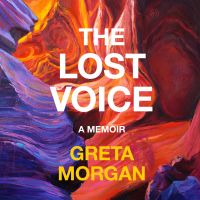
The Lost VoiceGreta Morgan8h 30m4.7 (285)$26 · $0.00

Healthy Kids, Happy KidsElisa Song14h 18m4.6 (760)$33 · $0.00

Eat It!Jordan Syatt, Michael Vacanti4h 40m4.6 (1.5K)$20 · $0.00

Consent Laid BareChanel Contos7h 11m4.5 (1.7K)$24 · $0.00
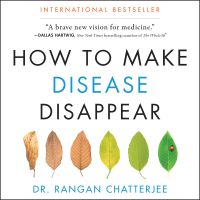
How to Make Disease DisappearRangan Chatterjee5h 26m4.5 (3.5K)$24 · $0.00

The Complete Herbal (Annotated)Nicholas Culpeper29h 8m4.5 (1.4K)$2 · $0.00

A Plague Upon Our HouseScott W. Atlas MD10h 37m4.5 (3.4K)$20 · $0.00

The Cancer CodeDr. Jason Fung10h 48m4.5 (5.3K)$29 · $0.00

The Gift of TherapyIrvin Yalom7h 39m4.5 (38.8K)$26 · $0.00
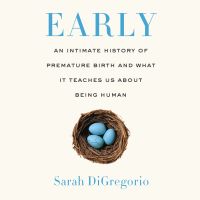
EarlySarah DiGregorio9h 47m4.5 (1.3K)$29 · $0.00

Bottle of LiesKatherine Eban14h 25m4.4 (12K)$33 · $0.00
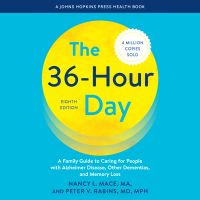
The 36-Hour DayNancy L. Mace, Peter V. Rabins17h 13m4.4 (9.2K)$28 · $0.00

FlooredSara Reardon10h 36m4.5 (1K)$29 · $0.00
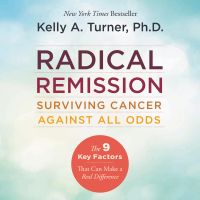
Radical RemissionKelly A. Turner9h 26m4.4 (8.1K)$29 · $0.00
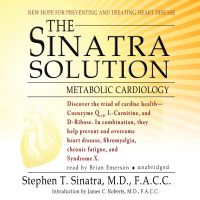
The Sinatra SolutionStephen T. Sinatra MD9h4.5 (899)$20 · $0.00

The Songaminute ManSimon McDermott6h 12m4.5 (280)$24 · $0.00
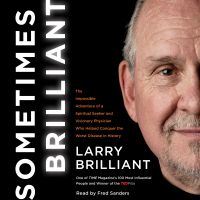
Sometimes BrilliantLarry Brilliant12h 27m4.5 (954)$29 · $0.00

Live Your LifeAmanda Kloots, Anna Kloots10h 54m4.4 (13.7K)$29 · $0.00

All in Her HeadElizabeth Comen13h 25m4.4 (18.2K)$33 · $0.00
You may also like

The Light EatersZoë Schlanger10h 57m4.4 (22.8K)$29 · $0.00
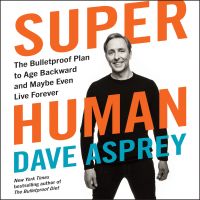
Super HumanDave Asprey8h 42m4.1 (5.3K)$26 · $0.00

TerraformPropaganda5h 39m4.7 (594)$24 · $0.00
The Disease DelusionJeffrey S. Bland11h 56m4.2 (1.6K)$29 · $0.00

The Best American Science and Nature Writing 2022Ayana Elizabeth Johnson, Jaime Green12h 27m4.0 (623)$29 · $0.00
WildingIsabella Tree12h 22m4.5 (13.4K)$23
Heart to HeartDalai Lama, Patrick McDonnell18m4.4 (1.6K)$7 · $0.00
The Shark’s PaintbrushJay Harman11h 50m4.1 (459)$20

The Day the World Stops ShoppingJ.B. MacKinnon11h 54m4.3 (10.9K)$29 · $0.00

Old-Fashioned on PurposeJill Winger8h 57m4.5 (1.5K)$29 · $0.00

The BondWayne Pacelle12h 39m4.1 (963)$33 · $0.00
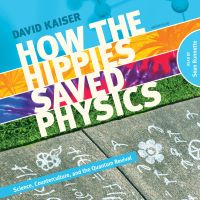
How the Hippies Saved PhysicsDavid Kaiser12h 2m3.8 (1.5K)$23
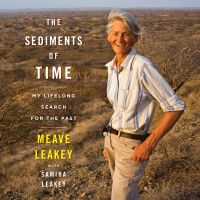
The Sediments Of TimeMeave Leakey, Samira Leakey14h 35m4.2 (838)$33 · $0.00
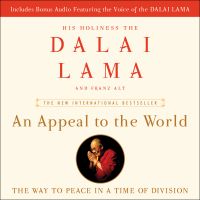
An Appeal to the WorldDalai Lama, Franz Alt1h 24m4.3 (1.4K)$9 · $0.00
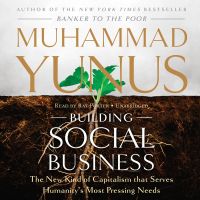
Building Social BusinessMuhammad Yunus8h 29m4.0 (2.2K)$17

Fields, Factories, and WorkshopsPetr Alekseevich kniaz Kropotkin13h 11m4.2 (296)$1 · $0.00
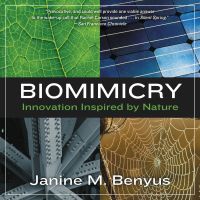
BiomimicryJanine M. Benyus14h 54m4.1 (3.6K)$33 · $0.00
The Longevity ParadoxSteven R. Gundry, MD9h 9m4.0 (8.8K)$29 · $0.00
Notes on a Nervous PlanetMatt Haig5h 11m4.1 (64.5K)$24 · $0.00
Novum Organum; Or, True Suggestions for the Interpretation of NatureFrancis Bacon7h 2m3.9 (2.6K)$2 · $0.00