
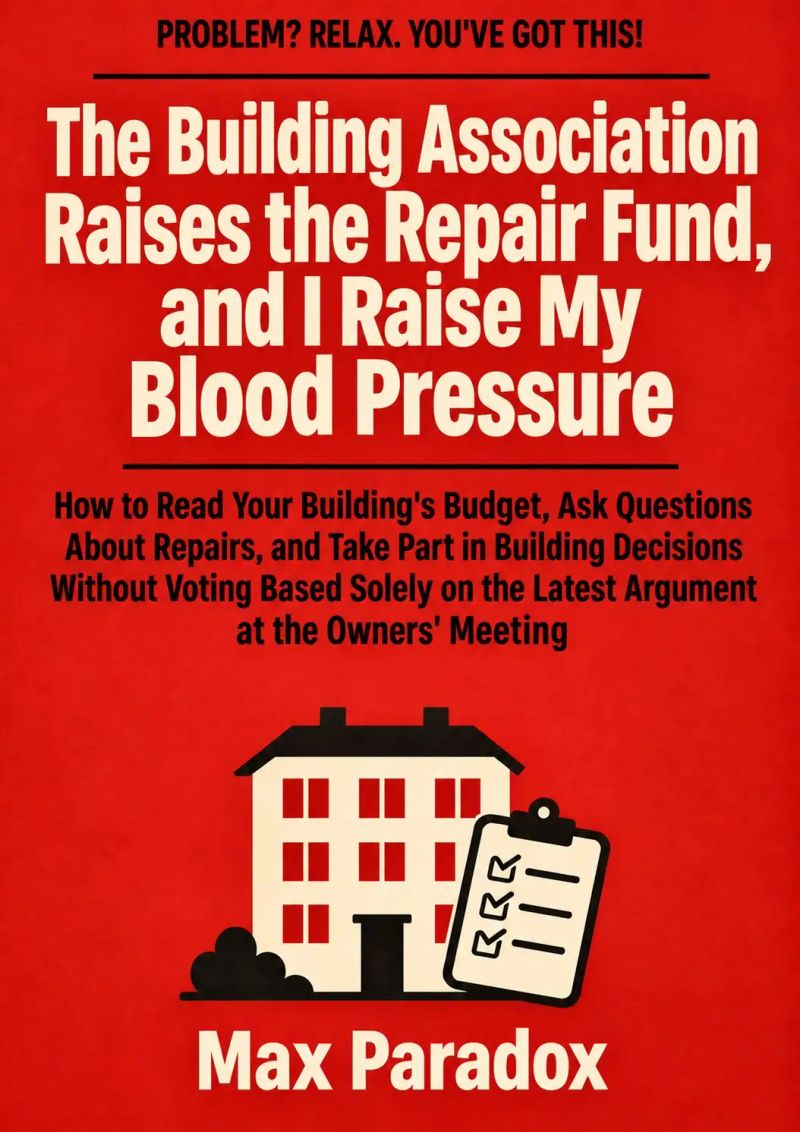
The Building Association Raises the Repair Fund, and I Raise My Blood Pressure - How to Read Your Building's Budget, Ask Questions About Repairs, and Take Part in Building Decisions Without Voting Based Solely on the Latest Argument at the Owners' Me
By Max Paradox


Length6h 47m
About this audiobook
You bought an apartment. Congratulations! You now own a comfortable place to live, a share of the building's responsibilities, and an impressive collection of financial decisions you never expected to care about.
The roof needs repairs. The monthly charges are increasing. The building manager has sent another email beginning with "Following a comprehensive assessment." And somewhere downstairs, a neighbor is preparing a forty-minute speech about why the previous committee ruined everything.
Welcome to shared property ownership, where even a perfectly ordinary maintenance proposal can develop into an international diplomatic incident.
The Building Association Raises the Repair Fund, and I Raise My Blood Pressure is a practical, sharply observant, and genuinely funny guide to understanding the finances and decisions behind apartment buildings, condominium associations, and other shared-property arrangements.
Max Paradox takes readers behind the intimidating spreadsheets, mysterious management fees, and emotionally exhausting owners' meetings to explain what really deserves their attention.
You'll learn how to distinguish routine operating expenses from repair reserves, understand why monthly charges increase, and calculate what a proposed contribution means for your own finances. You'll discover how to compare a budget with actual expenditure, recognize financial warning signs, and ask meaningful questions when explanations are incomplete.
The book also explores what happens when the building needs substantial work. How do you compare contractor quotations that appear to describe completely different projects? Why can the cheapest bid become the most expensive? What should owners know about renovation schedules, unexpected additional costs, and checking that the agreed work was actually completed?
And then there are the people.
The neighbor who knows everything but has read nothing. The residents' messaging group that transforms an innocent notice into a financial conspiracy. The committee that communicates exclusively through phrases such as "the matter remains under consideration." And the owners' meeting where a simple vote somehow becomes a historical investigation into seventeen years of communal grievances.
Behind the humor are practical ways to examine documents, communicate with building managers, turn complaints into workable proposals, participate in decisions, and respond when the majority chooses something you opposed.
The guide also tackles more difficult situations, including unpaid owner contributions, emergency repairs when reserves are insufficient, and long-running disputes that have destroyed confidence in management.
Most importantly, it shows how to remain informed without becoming the building's unpaid administrator. You don't need to inspect every invoice, win every argument, or spend your weekends investigating the communal plumbing. You need to recognize what matters, understand your options, and act proportionately.
Written for apartment owners who want greater clarity, better decisions, and considerably less unnecessary drama, this book combines useful financial reasoning with the unmistakable comedy of living alongside people who all have different ideas about how a building should operate.
Because responsible ownership shouldn't require a law degree, an accounting qualification, and the emotional endurance of a professional hostage negotiator.
Your building may still raise its repair fund. At least you'll understand why before raising your blood pressure.
This publication was prepared using tools that support the creative process, including artificial intelligence solutions. The final concept, structure and editing are the responsibility of the author.
Audiobook details
GenrePolitics and Government, Self-Help
Length6 hrs 47 mins
Narrated byListen with 1,000+ voices
FormateBook with Audio
Publish dateNov 1, 2026
LanguageEnglish
Table of contents
1INTRO
2Chapter 1 - Congratulations on Your Apartment. You Also Own the Problems Downstairs.
3Chapter 2 - Why Are the Building Charges So High When Nothing Looks Any Better?
4Chapter 3 - The Repair Fund Is Not a Treasure Chest, and the Building Is Not Getting Younger
5Chapter 4 - The Loudest Person in the Room Is Not Necessarily the Best Informed
Mostrar todos os capítulosVer menos
6Chapter 5 - The Documents Exist. Finding Them Is Apparently a Separate Service.
7Chapter 6 - How to Ask the Building Manager a Question and Receive Something Resembling an Answer
8Chapter 7 - The Cheapest Contractor and the Surprisingly Expensive Extras
9Chapter 8 - The Residents' Group Knows Everything, Especially Things That Never Happened
10Chapter 9 - Follow the Money Without Becoming the Building's Financial Detective
11Chapter 10 - A Good Resolution Begins Before Anyone Raises a Hand
12Chapter 11 - The Repair Fund Is Going Up. How Much Money Is Actually Leaving Your Pocket?
13Chapter 12 - The Renovation Is Underway, and Everyone's Patience Has Left the Building
14Chapter 13 - From "Someone Should Do Something" to a Proposal That Might Actually Work
15Chapter 14 - The Vote Passed, You Opposed It, and the Building Has Not Collapsed
16Chapter 15 - Your Neighbor Hasn't Paid, but the Building Still Has Bills
17Chapter 16 - Friday Night, a Failed Pump, and a Repair Fund That Isn't Made of Magic
18Chapter 17 - When Nobody Trusts Anybody and Every Meeting Feels Like a Courtroom
19Chapter 18 - Keep an Eye on the Building Without Making It Your Second Job
20Chapter 19 - The Fees Go Up Again, and Your Old Habits Come Back for a Visit
21Chapter 20 - Your Apartment, Your Money, Your Peace of Mind

Dziecko Mówi Dwoma Językami, a Dziadkowie Mają Sto Teorii - Jak budować rodzinny plan używania języków, współpracować ze szkołą i wybierać rzetelne wsparcie bez robienia z każdej rozmowy egzaminu z dwujęzycznościMax Paradox6h 17m$7.60
My Bike Should Take Me to Work, Not Stand in the Hallway - How to Plan Your Route, Gear, Parking, and Bad-Weather Options, and Gradually Make Cycling Part of Your Everyday Commute Without Buying a Pro Cyclist Identity Along with Your HelmetMax Paradox6h 21m$7.60

Dzielimy Mieszkanie po Rodzicach i Każdy Ma Inny Kalkulator - Jak uzgadniać korzystanie z odziedziczonej nieruchomości, koszty i kierunek dalszych decyzji oraz przygotować się do mediacji bez rodzinnej licytacji na zasługiMax Paradox6h 18m$7.60

The Hearing Aid Didn't Fix Every Conversation - How to Agree on Communication Conditions with Loved Ones and Coworkers, Use Available Accommodations, and Stay Connected Without Pretending You Heard EverythingMax Paradox6h 25m$7.60

My Child Has an Allergy, and Everyone Has Good Advice and a Cookie - How to Agree on a Daily Safety Plan with Specialists, School, and Loved Ones, Share Instructions, and Organize Outings Without Explaining Everything from Scratch Every Time SomeoneMax Paradox6h 37m$7.60

I Can't Drive Anymore, but Life Is Still Twenty Kilometers Away - How to Organize Shopping, Appointments, and Social Connections After Giving Up Driving and Build a Transportation Support Network Without Letting Others Control Your Entire CalendarMax Paradox6h 30m$7.60

Nie Mogę Już Prowadzić, a Życie Nadal Jest Dwadzieścia Kilometrów Dalej - Jak zorganizować zakupy, wizyty i kontakty po rezygnacji z prowadzenia auta oraz stworzyć sieć transportowego wsparcia bez oddawania całego kalendarza innym ludziomMax Paradox6h 19m$7.60

W Domu Jest Trzydzieści Stopni, a Klimatyzacja Jest w Planach - Jak organizować mieszkanie, obowiązki i pomoc dla bardziej narażonych domowników podczas upałów oraz planować potrzebne dostosowania bez czekania na kolejne rekordowe latoMax Paradox5h 55m$7.60

My Child Has a Special Education Ruling, but the School Has Its Own Interpretation - How to Organize Recommendations, Prepare for Meetings, and Monitor Agreed Educational Accommodations Without Fighting a Daily Battle Over Every Need Your Child HasMax Paradox6h 37m$7.60

Nasze Dziecko Jest Pierwsze w Rodzinie, Które Idzie na Studia - Jak wspierać wybór uczelni, przeprowadzkę i samodzielność, poznawać akademickie zasady oraz rozmawiać o kosztach bez udawania rodzinnego doświadczenia, którego jeszcze nie maMax Paradox6h 7m$7.60

Woda Wyszła z Domu, a My Nadal Nie Wiemy, od Czego Zacząć - Jak uporządkować dokumentację szkód, zadania i dostępne wsparcie po zalaniu lub powodzi oraz planować powrót do codzienności bez podejmowania wszystkich decyzji pierwszego dniaMax Paradox6h 20m$7.60

Rodzice Się Rozwodzą, a Ja Mam Czterdzieści Lat - Jak nie zostać mediatorem, powiernikiem i kurierem pretensji, ustalić własne relacje z obojgiem rodziców oraz odnaleźć się w zmianie rodzinnego układuMax Paradox6h 12m4.6 (25)$7.60

The Heat Pump Is New, and I Still Don't Know What to Set - How to Gather Installation Documentation, Understand Basic Settings and Energy Consumption, and Work with Your Installer to Optimize Performance Without Experimenting with the Entire HeatingMax Paradox6h 31m$7.60
The Adult Child Moves Back Home and Brings Their Own Rulebook - How to Agree on Costs, Responsibilities, Privacy, and the Ground Rules for Living Together Again Without Recreating the Parent-and-Teenager DynamicMax Paradox6h 36m$7.60

Kupujemy Mieszkanie Razem, Ale Nie Jesteśmy Małżeństwem - Jak przygotować rozmowy o wkładach, odpowiedzialności i możliwym rozstaniu oraz zebrać pytania do specjalistów bez zakładania, że miłość zastępuje wszystkie ustaleniaMax Paradox6h 12m$7.60

Studiuję, Pracuję i Podobno To Ma Być Najlepszy Czas Życia - Jak łączyć wymagania uczelni z zarabianiem, planować sesję i szukać dostępnego wsparcia bez finansowania studiów wyłącznie własnym snemMax Paradox6h 28m$7.60

My Partner Is from Another Country, and Our Families Have Two Recipes for Everything - How to Navigate Traditions, Language, and Family Expectations as an Intercultural Couple Without Deciding Whose Family Is Right at Every HolidayMax Paradox6h 51m$7.60

My Father Has Fallen in Love Again, and I Have No Ready-Made Role for This - How to Talk to Your Parent About a New Relationship, Sort Through Your Emotions, and Build a Connection with His Partner Without Taking Responsibility for Other Adults' LiveMax Paradox6h 33m$7.60

We're Buying an Apartment Together, but We're Not Married - How to Discuss Contributions, Responsibilities, and a Possible Breakup, and Prepare Questions for Professionals Without Assuming Love Can Replace Clear AgreementsMax Paradox6h 35m$7.60

Matters of the HeartJacinta Nampijinpa Price9h 35m4.8 (359)$29 · $0.00

How to Test Negative for StupidJohn Kennedy8h 13m4.7 (9.7K)$28 · $0.00

Black AF HistoryMichael Harriot15h 43m4.7 (14.6K)$33 · $0.00

The Gulag Archipelago Volume 3Aleksandr I. Solzhenitsyn21h 56m4.7 (8.9K)$46 · $0.00

MotherlandJulia Ioffe17h 52m4.7 (2.5K)$40 · $0.00

HostageEli Sharabi5h 25m4.6 (10.8K)$24 · $0.00

Days of Love and Rage: A Story of RevolutionAnand Gopal22h 36m4.7 (584)$34 · $0.00

KrantikariSanjeev Sanyal11h 44m4.6 (1.3K)$16 · $0.00

Unbroken Bonds of BattleJohnny Joey Jones8h 31m4.6 (2.6K)$8 · $0.00

On Democracies and Death CultsDouglas Murray10h 38m4.6 (6.5K)$29 · $0.00

Balcony Over Jerusalem: A Middle East Memoir - Israel, Palestine and BeyondJohn Lyons12h 37m4.6 (1.4K)$33 · $0.00

RiggedMollie Hemingway12h 48m4.6 (4.2K)$23 · $0.00

SledgehammerDavid Friedman8h 21m4.7 (589)$26 · $0.00

Citizenship in a Republic (Annotated)Theodore Roosevelt2h 44m4.6 (1.4K)$2 · $0.00

No EscapeNury Turkel9h 30m4.6 (809)$28 · $0.00

Always FaithfulThomas Schueman, Zainullah Zaki12h 12m4.6 (977)$29 · $0.00

UnthinkableJamie Raskin15h 8m4.5 (9.3K)$8 · $0.00

My Fourth Time, We DrownedSally Hayden13h 59m4.6 (2.9K)$23 · $0.00

A Revolution of Common SenseScott Jennings9h 29m4.6 (528)$29 · $0.00

Statement From the Dock at the Rivonia TrialNelson Mandela2h 18m4.6 (1.3K)$1 · $0.00
Learning to PrayJames Martin13h 24m4.5 (3.4K)$33 · $0.00

Truth Without ApologyAcharya Prashant6h 41m4.8 (2.2K)$18 · $0.00

Autism Out Loud: the instant New York Times Bestseller. Moving Stories and Parenting Lessons Learned from Three Mothers of Children with AutismKate Swenson, Carrie Cariello, Adrian Wood8h 41m4.8 (2.1K)$26 · $0.00

The StepsSylvester Stallone9h 4m4.8 (635)$29 · $0.00

Swayam Ki AwaazPrem Rawat8h 34m4.7 (1.1K)$26 · $0.00

Forever BoyKate Swenson9h 27m4.7 (5K)$29 · $0.00

You Are Worth ItKyle Carpenter, Don Yaeger8h 53m4.7 (4.8K)$29 · $0.00

The Happiest Man on EarthEddie Jaku3h 48m4.6 (178K)$7 · $0.00

Finding MeViola Davis9h 15m4.6 (256.4K)$29 · $0.00

Spiritual AnatomyDaaji Kamlesh D. Patel9h 47m4.7 (319)$29 · $0.00

The Dangerous Truth about Today’s MarijuanaLaura Stack CSP, MBA9h 57m4.7 (385)$20 · $0.00

The Gospel according to Spiritualism (Translated)Allan Kardec14h 39m4.6 (3.9K)$5.70 · $0.00

Birdie & HarlowTaylor Wolfe7h 50m4.6 (6.5K)$26 · $0.00

CrossroadsKaleb Dahlgren7h 56m4.6 (4.9K)$26 · $0.00

Life on the BridgeKaelynn Partlow5h 40m4.6 (1.1K)$24 · $0.00

Keep Your Love OnDanny Silk9h 4m4.6 (8.1K)$10 · $0.00

The Tao of Joy Every DayDerek Lin10h 24m4.6 (762)$20 · $0.00

UndividedVicky Beeching9h 2m4.6 (1.3K)$29 · $0.00

HE CAN WHO THINKS HE CAN & OTHER BOOKS ON SUCCESSOrison Swett Marden5h 54m4.6 (1.2K)$1.99 · $0.00
Level UpRob Dial7h 42m4.6 (3.3K)$26 · $0.00
You may also like

The Humane EconomyWayne Pacelle12h 17m4.3 (579)$29 · $0.00

Proposed Roads to FreedomBertrand Russell5h 53m4.1 (1.1K)$1.99 · $0.00

Rhode Island Life & Health Insurance Exam Study Guide 2026/2027Corinne Ashbeck18h 9m$27

The Senior-Friendly Guide to ExcelWalter Hemsley3h 37m$6

Animal NeuteringHilário Dos Santos49m$10 · $0.00

How to Plan a Baby Shower in a Hurry- Quick Tips and IdeasAurora Brooks1h 2m$3.50 · $0.00
Everything at Home Runs on Electricity. Until the First Outage - How to Identify Your Household's Dependence on Power, Prepare Alternative Ways to Communicate and Handle Everyday Tasks, and Plan Support for People Who Rely on Powered Devices WithoutMax Paradox6h 37m$7.60

Maine Cosmetology Written and Practical Exam Prep 2026/2027Solenne Marbury19h 15m$28

Nebraska Real Estate Licensing Exam Workbook 2026/2027Marguerite Ostrander15h 57m$30

Mississippi Community Health Worker Certification Study Guide 2026/2027Imara Kestwick13h 21m$25

Oregon Journeyman & Master Plumber Exam Workbook 2026/2027Garrick Pellowe14h 54m$30

Constitution of the PhilippinesConstitutional Commission19m4.3 (126)$1.99 · $0.00

Kansas Cosmetology Written and Practical Exam Prep 2026/2027Solenne Marbury17h 58m$28

Virginia Cosmetology Written and Practical Exam Prep 2026/2027Solenne Marbury17h 46m$28

Nebraska RBT Certification Exam Prep 2026/2027Mireille Oyelaran16h 42m$22

Texas Real Estate Licensing Exam Workbook 2026/2027Marguerite Ostrander15h 36m4.8 (15)$30

Cash Building StrategiesAnthony Ekanem1h 12m$5 · $0.00

Organic Burr GherkinMárcio Pereira54m$12 · $0.00

Georgia Cosmetology Written and Practical Exam Prep 2026/2027Solenne Marbury18h 3m$28

Alabama Cosmetology Written and Practical Exam Prep 2026/2027Solenne Marbury18h 6m$28