
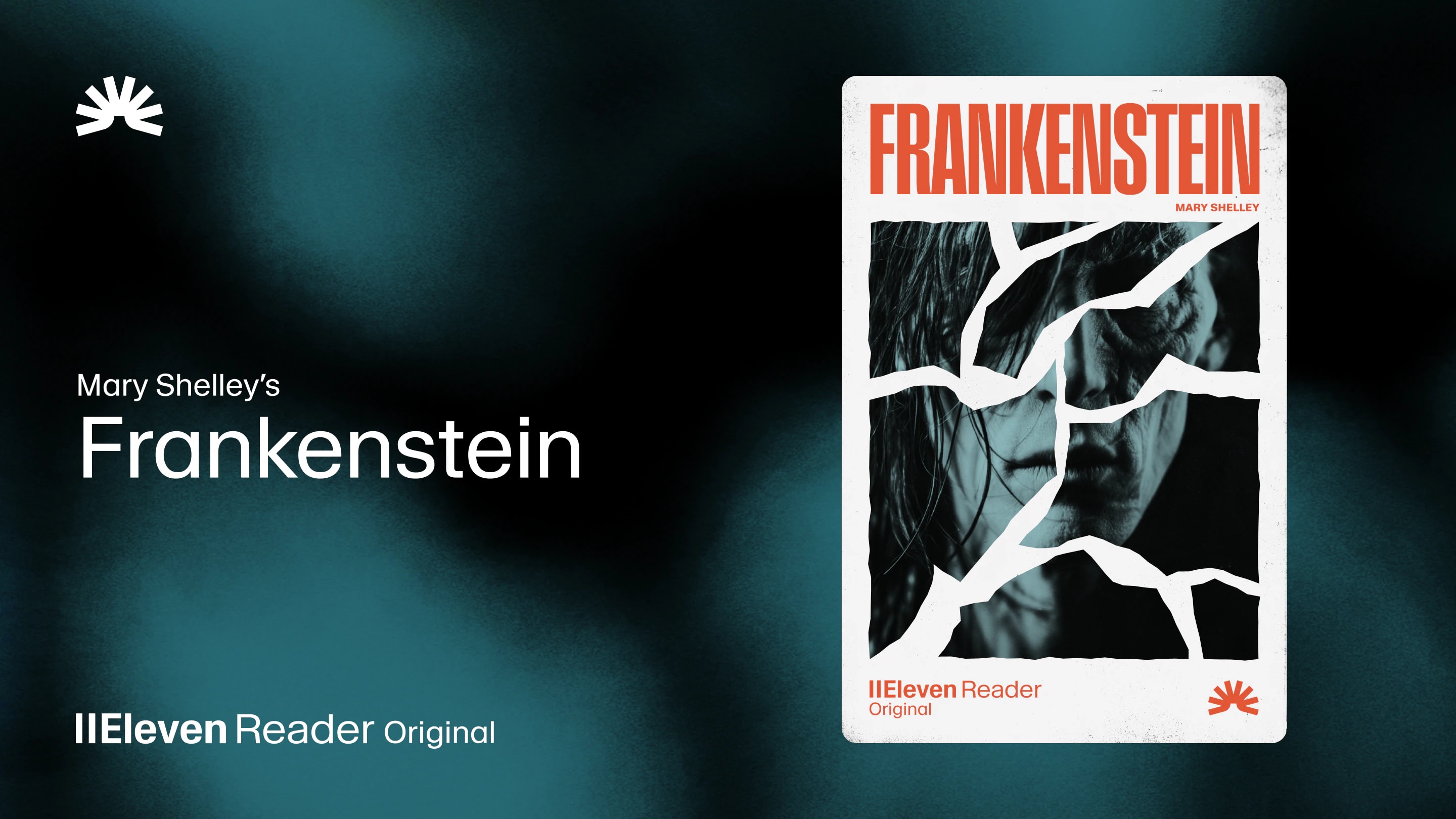
ElevenReader Brings Frankenstein to Life with a Full Cast and Original Score
Frankenstein, the first cinematic audiobook created with Eleven v4, is coming just in time for Halloween
Your first month. Just $1. Start listening for less this month.
We scoured the internet for the best free audiobook apps. Here are the 6 best options for 2026 that offer a premium experience without the premium price tag.
By ElevenReader Team
Updated

If you’ve ever tried to break free from your Audible subscription, you’ve probably dabbled in the world of free audiobook apps… only to be put off by limited libraries, inconsistent narration quality, and apps overloaded with ads and upsells.
For years, that reputation was justified. “Free” usually meant a very basic (and even poor) user experience. And if you even dared to want polished production and new releases, you had to pay for it.
Until now.
Today, free audiobook apps are more sophisticated than ever, and we couldn’t keep the good ones to ourselves!
So in this guide, we’re breaking down some of the best audiobook apps out there that genuinely deliver on catalogue quality, voice performance, and overall listening experience (and you won’t even have to add another subscription to your life).
There are a lot of free audiobooks out there, and they all come with their own tradeoffs. Some offer huge catalogues but long wait times, while others give you instant access but limit how much you can listen each month.
Everyone’s priorities are different. But from our perspective as massive audiobook fans, here’s what we prioritized when we set out to create this list.
First and foremost: are the books actually worth listening to? A free app isn’t very helpful if the selection is limited to titles you’re not interested in. We looked for apps that offer either modern bestsellers, strong genre variety, or a deep and valuable niche catalogue (like classics or indie titles).
Narration can make or break the experience. Even the best book falls flat if the voice is robotic, poorly recorded, or difficult to follow. We prioritized apps with clear, natural narration from either professional voice actors or high-quality AI voices.
A good audiobook app should be easy to use. Features like offline downloads, adjustable playback speed, bookmarking, and a sleep timer are (in our opinion) absolute essentials.
Finally, we looked at what “free” really means. Are there strict caps, constant ads, or heavy pressure to upgrade? The best apps offer a free experience that feels usable and complete, not like a teaser designed to bully you into paying.
Now for the good stuff, the apps! Read on for a breakdown of the best free audiobook platforms available right now and what you can realistically expect from each one.
ElevenReader isn’t a traditional audiobook app, and that’s exactly why it ranks first.
Instead of offering a library of pre-recorded audiobooks, ElevenReader uses advanced AI to turn any text you give it into a human-sounding audiobook. This means you are no longer limited to books that have been professionally narrated. You can listen to web articles, research papers, long emails, or even your own writing. The free plan is exceptionally generous, offering 10 hours of listening per month with access to the full library of over 800 premium AI voices.
If you read a lot of articles, documents, or non-fiction that don’t have an official audiobook version, ElevenReader opens up an entirely new way to listen.
Libby is the undisputed champion of free, traditional audiobooks.
If you have a library card, you can use Libby to borrow a huge range of audiobooks, including new releases, indie favorites, and niche non-fiction, completely free. The app itself is well-designed and easy to use, with all the features you’d expect from a premium service.
The only significant downside to Libby is the wait. Just like with physical library books, popular titles have a limited number of digital copies, and you’ll often have to place a hold and wait weeks or even months for your turn.
Hoopla is the other major player in the library app space, and it has one killer feature that sets it apart from Libby: no wait times.
Every title on Hoopla is available for instant borrowing, which means you never have to place a hold. This is a huge advantage for readers who want to listen to popular books without the frustratingly long waits. The only trade-off is that most libraries impose a strict monthly borrowing limit on Hoopla, often as low as 5-10 titles per month.
If you love classics, LibriVox is a real treasure trove. It offers more than 50,000 public domain audiobooks, all completely free and community-powered.
If a book was published before 1929, chances are it’s here. The only catch is the narration quality. Because volunteers record the books, performance and audio clarity can vary dramatically. Some narrators are excellent. Others… less so. As one Reddit user on r/audiobooks bluntly put it, “Some great content in among a lot of trash.”
If you’re willing to sift through options, though, you’ll never run out of classic literature to explore.
Spotify has recently entered the audiobook game, offering 15 hours of free listening per month to all of its Premium subscribers.
For the millions of people who already pay for Spotify, this is a fantastic perk. The catalogue includes a solid selection of modern bestsellers from major publishers, and the convenience of having your music, podcasts, and audiobooks all in one app is a major plus.
However, for serious audiobook listeners, the 15-hour limit can be a dealbreaker, as many modern audiobooks are longer than that.
Digitalbook.io is a web-based aggregator of free, public domain audiobooks. It works by pulling content from LibriVox, Gutenberg, and other sources, providing a single interface for finding and listening to classic literature. And because it’s web-based, there’s no need to download an app, so you can start listening instantly.
Like LibriVox, narration quality varies. But if you want easy, browser-based access to classic literature, it’s a solid option.
Still not totally sold on free audiobooks? Or wondering why audiobook apps seem to be everywhere right now? Here’s why listening has become one of the fastest-growing ways to consume content.
This is actually backed up by research. Research has found that, for many readers, listening comprehension can be comparable to reading comprehension, especially when the material and pacing are similar.
For students and anyone who enjoys learning, this is huge. You don’t have to wait for the perfect quiet hour to open a book. You can make progress while driving, folding laundry, or going for a walk.
Historically, accessibility came at a cost. Professionally narrated audiobooks were expensive, and free options were limited mostly to public domain titles. The new generation of free audiobook apps (particularly AI-powered tools like ElevenReader) has dramatically lowered that barrier. Now, virtually any document, article, or book can become a high-quality audio experience in seconds.
Let’s be honest, most people are drowning in content at work. Industry reports, articles, newsletters, research papers; it all gets bookmarked and then forgotten.
Audio offers an alternative. Instead of watching valuable information collect dust in your inbox, you can press play during your commute, a workout, or even while making dinner. What used to be “dead time” can now be productive learning time.
Listening doesn’t replace deep, focused reading. But it does make it possible to keep learning on days when sitting down with a 30-page report just isn’t realistic.
Most people don’t have the luxury of unplugging for hours with a book anymore. That’s why even casual readers are gravitating toward audio. It’s low effort, easy to start, and fits naturally into routines that already exist. Platforms like Spotify have made audiobooks feel less like a separate commitment and more like something you can casually explore inside an app you already use every day.
There’s something exciting about realizing you don’t have to compromise anymore. Today’s audiobook apps are smarter and more accessible than ever. You just need to know how to use them to your advantage:
But for a truly modern, flexible, and high-quality listening experience, ElevenReader stands in a class of its own. The ability to turn any text into a beautiful, natural-sounding audiobook opens up a world of content that traditional apps can’t touch.
The generous free plan and the sheer quality of the AI voices make it an essential tool for any serious listener. In a world of limited library catalogues and restrictive paywalls, ElevenReader offers a genuinely new and powerful way to consume the written word. So if you’re tired of waiting for your library holds and want to listen to more than just the classics, it’s the one free audiobook app you need to try.
ElevenReader is the best free audiobook app that doesn’t require a library card, offering 10 hours of high-quality listening per month for free. For more traditional audiobooks, LibriVox is another option for public domain classics.
Yes, apps like Libby and Hoopla offer new releases and bestsellers for free through your local library. However, you will likely have to wait a long time for popular titles on Libby.
Yes, all the apps on this list are completely legal. They either partner with public libraries (Libby, Hoopla), use public domain content (LibriVox), or have agreements with publishers (Spotify, Audible). ElevenReader is also legal, as it only reads content that you provide.
Frankenstein, the first cinematic audiobook created with Eleven v4, is coming just in time for Halloween

How to read Google Docs aloud when the Audio option is missing, with built-in Google tools and ElevenReader.