
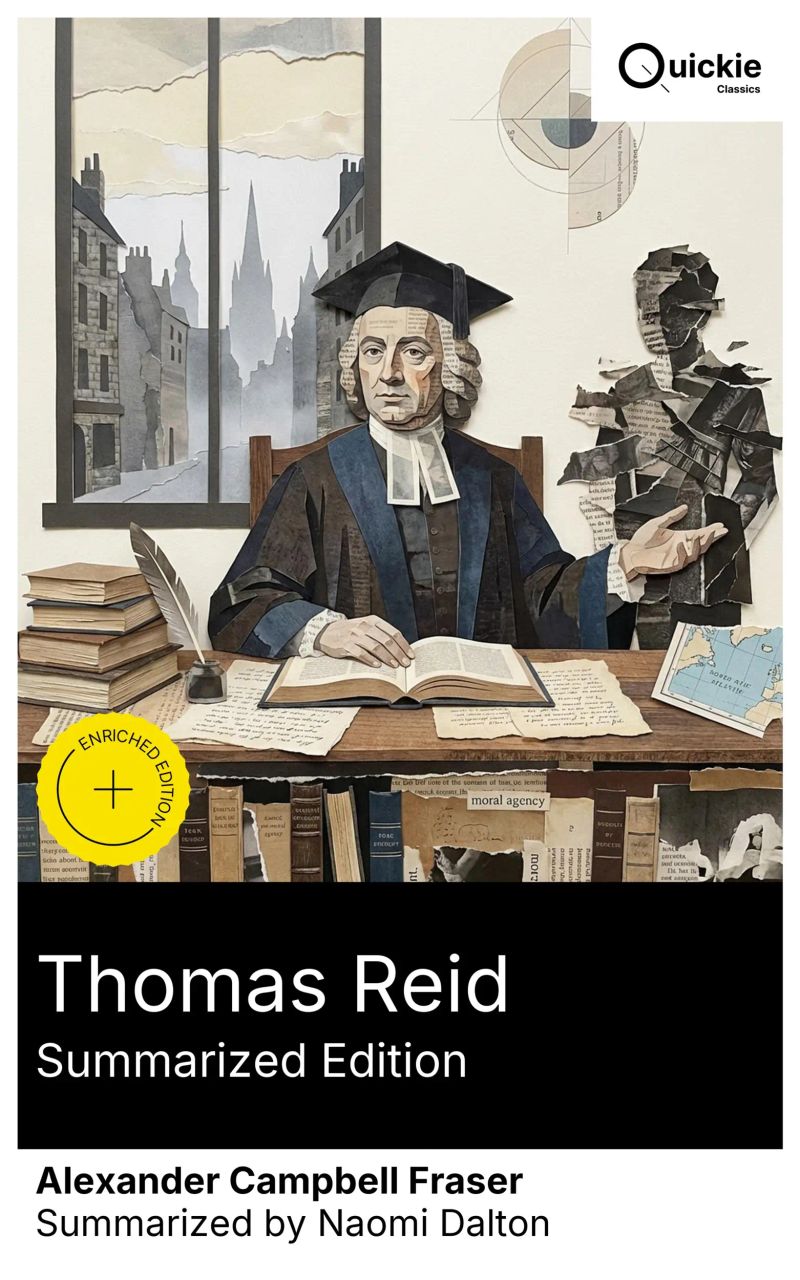
Thomas Reid (Summarized Edition)
Enriched edition. Scottish philosophy and common sense realism in 18th-century thought: historical analysis and a rigorous critique of skepticismBy Alexander Campbell Fraser


Length2h 23m
About this audiobook
In Thomas Reid, Alexander Campbell Fraser offers a concise, finely argued exposition of the Aberdonian philosopher's project. Reading the Inquiry and the Essays together, he reconstructs direct realism, the catalogue of first principles, and the defense of moral agency as a measured reply to Humean skepticism. The book situates Reid within the Scottish Enlightenment (Aberdeen's club, the Glasgow chair, and Dugald Stewart's transmission) and notes the transatlantic fortunes of Common Sense. Fraser's prose weds textual care to judicious critique. Fraser, Regius Professor of Logic and Metaphysics at Edinburgh and the distinguished editor-biographer of George Berkeley, brings a historian's patience and a philosopher's acuity. Immersed in British empiricism yet formed by Scottish concerns for common life and theism, he tests Reid's realism without caricature. The volume distills decades of teaching and editorial practice into a narrative attentive to sources, arguments, and the lived academic world of eighteenth-century Scotland. Recommended to historians of philosophy, students of epistemology, and readers of the Scottish Enlightenment, this study is an authoritative, accessible companion to Reid's texts and to debates over perception, first principles, freedom, and responsibility.
Quickie Classics summarizes timeless works with precision, preserving the author's voice and keeping the prose clear, fast, and readable—distilled, never diluted. Enriched Edition extras: Introduction · Synopsis · Historical Context · Brief Analysis · 4 Reflection Q&As · Editorial Footnotes.
Audiobook details
GenrePhilosophy
Length2 hrs 23 mins
Narrated byListen with 1,000+ voices
FormateBook with Audio
Publish dateJan 10, 2026
LanguageEnglish
Table of contents
1Introduction
5Thomas Reid
2Introduction
6Analysis
3Synopsis
7Reflection
4Historical Context
More from Alexander Campbell Fraser


WitnessAriel Burger8h 1m4.6 (1.3K)$20 · $0.00
The Magic PresenceGodfré Ray King10h 21m4.6 (307)$1.20 · $0.00
The Art of LivingThich Nhat Hanh5h 1m4.5 (14.2K)$24 · $0.00
Moral Letters to LuciliusLucius Annaeus Seneca24h 26m4.5 (71.7K)$0.99 · $0.00
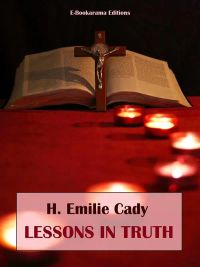
Lessons in TruthH. Emilie Cady3h 50m4.5 (2.4K)$20 · $0.00
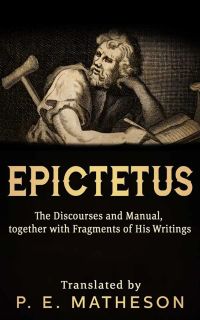
The Discourses of EpictetusP. E. MATHESOM12h 47m4.4 (17.7K)$1.20 · $0.00
IlluminationsWalter Benjamin10h 12m4.4 (16.2K)$20 · $0.00
That Bird Has My WingsJarvis Jay Masters9h 49m4.4 (13.7K)$29 · $0.00

Tâo Teh KingLaozi2h 34m4.4 (230.9K)$2 · $0.00
SymposiumPlato3h 26m4.4 (97.9K)$1.20 · $0.00

Buddhist Boot CampTimber Hawkeye2h 39m4.4 (8.4K)$18 · $0.00
Enchiridion & The Discourses of Epictetus (Annotated)Arrian Epictetus18h 9m4.4 (3.5K)$2 · $0.00
The Meditations of the Emperor Marcus Aurelius AntoninusEmperor of Rome Marcus Aurelius5h 41m4.4 (1.8M)$1 · $0.00
Crime and PunishmentFyodor Dostoevsky23h 11m4.4 (1.3M)$12 · $0.00
MeditationsMarcus Aurelius5h 52m4.4 (433.7K)$1 · $0.00
Everyday DharmaSuneel Gupta5h 2m4.5 (761)$20 · $0.00

The Joyful Wisdom ("La Gaya Scienza")Friedrich Wilhelm Nietzsche11h 37m4.4 (26.6K)$1 · $0.00
The Art of LivingEpictetus, Sharon Lebell3h 16m4.4 (50.1K)$18 · $0.00
MeditationsEmperor Of Rome Marcus Aurelius7h 23m4.3 (477.5K)$1.20 · $0.00

The Imitation of ChristThomas à Kempis6h 27m4.3 (84.6K)$21 · $0.00
You may also like

Against Interpretation, and Other EssaysSusan Sontag12h 6m4.2 (14.3K)$20
The Art of FictionAyn Rand6h 51m4.0 (917)$17 · $0.00
Mind is a MythU. G. Krishnamurti5h 53m4.4 (422)$2 · $0.00
Obedience to AuthorityStanley Milgram8h 50m4.3 (13.3K)$22 · $0.00

The Wealth of NationsAdam Smith45h 12m4.1 (138K)$40 · $0.00
An Essay Concerning Humane UnderstandingJohn Locke15h 22m4.0 (19.5K)Free
On the Genealogy of MoralityFriedrich Nietzsche4h 31m4.3 (72.5K)Free

The Natural State (Annotated)U. G. Krishnamurti8h 55m4.3 (364)$2 · $0.00
Time and Free WillHenri Bergson8h 31m4.1 (1.8K)$1.99 · $0.00
Three Essays on the Theory of SexualitySigmund Freud3h 37m4.0 (13.9K)$1.20 · $0.00

The Twilight of the IdolsFriedrich Nietzsche4h 38m4.3 (42K)$12 · $0.00
BounceMatthew Syed7h 51m4.2 (21.8K)$26 · $0.00
The Mystique of EnlightenmentU. G. Krishnamurti7h 57m4.3 (497)$1 · $0.00
EXPERIENCE AND EDUCATION – Premium Edition (Including Democracy & Education) (Annotated)John Dewey19h 17m4.6 (1K)$2 · $0.00
The Collected WorksU. G. Krishnamurti37h 7m4.5 (49)$2 · $0.00
The Most Influential Works of Jean-Jacques RousseauJean-Jacques Rousseau70h 10m4.4 (23)$1.99 · $0.00

My LifeHavelock Ellis25h 38m$2 · $0.00
Pot-BoilersClive Bell6h 18m$2.30
The Essential Works of U. G. Krishnamurti (Annotated)U. G. Krishnamurti37h 11m$2 · $0.00

Hand-Loom Weaving: A Manual for School and HomeMattie Phipps Todd2h 56m3.8 (76)$2 · $0.00