

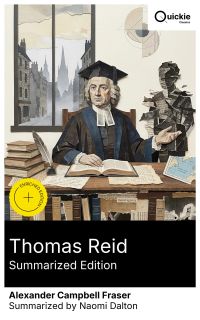
Thomas Reid (Annotated)
Enriched Edition. Scottish Common Sense Philosophy, Humean Skepticism, and the Enlightenment Defense of Ordinary ConsciousnessBy Alexander Campbell Fraser

Length4h 10m
About this audiobook
Thomas Reid is a compact yet ambitious study of the founder of Scottish Common Sense philosophy, tracing Reid's reply to Humean skepticism and his reconstruction of perception, memory, agency, and moral judgment. Fraser writes with Victorian lucidity, joining biography, exposition, and sympathetic critique rather than antiquarian summary. The book places Reid among Locke, Berkeley, and Hume, presenting him as central to eighteenth-century debates over experience, belief, and ordinary consciousness. Alexander Campbell Fraser, himself a distinguished Scottish philosopher and historian of philosophy, was especially equipped for this task. As professor at Edinburgh and editor of Berkeley, he understood both the empiricism Reid challenged and the theological and educational culture that nourished Scottish realism. Fraser's lifelong concern with faith, reason, and common experience shapes the portrait, giving Reid's doctrines philosophical urgency rather than museum-like detachment. Recommended for readers of intellectual history, the Scottish Enlightenment, epistemology, and philosophical biography, Thomas Reid offers a measured introduction to a thinker whose influence reached from Aberdeen classrooms to transatlantic moral philosophy. It will reward students seeking orientation and scholars seeking historical perspective on Reid's enduring claim: that philosophy must not abolish common life, but understand its rational authority.
This enriched edition has been carefully crafted to add value to your reading experience.
- A succinct Introduction situates the work's timeless appeal and themes.
- The Synopsis outlines the central plot, highlighting key developments without spoiling critical twists.
- A detailed Historical Context immerses you in the era's events and influences that shaped the writing.
- A thorough Analysis dissects symbols, motifs, and character arcs to unearth underlying meanings.
- Reflection questions prompt you to engage personally with the work's messages, connecting them to modern life.
- Hand‐picked Memorable Quotes shine a spotlight on moments of literary brilliance.
- Interactive footnotes clarify unusual references, historical allusions, and archaic phrases for an effortless, more informed read.
Audiobook details
GenrePhilosophy
Length4 hrs 10 mins
Narrated byListen with 1,000+ voices
FormateBook with Audio
Publish dateDec 9, 2023
LanguageEnglish
Table of contents
1Thomas Reid (Annotated)
2Introduction
3Synopsis
4Historical Context
5PREFACE
Show all chaptersShow less
6CHAPTER I BOYHOOD AND ANCESTRY: STRACHAN AND THE VALLEY OF THE DEE 1710-1722
7CHAPTER II AT MARISCHAL COLLEGE 1722-1737
8CHAPTER III NEW MACHAR AND DAVID HUME 1737-1751
9CHAPTER IV OLD ABERDEEN: A REGENT IN KING’S COLLEGE 1751-1764
10CHAPTER V UNIVERSAL SCEPTICISM VERSUS INSPIRED COMMON SENSE: AN ‘INQUIRY INTO THE HUMAN MIND ON THE PRINCIPLES OF COMMON SENSE’ 1764
11CHAPTER VI GLASGOW COLLEGE: THE PROFESSOR OF MORAL PHILOSOPHY 1764-1780
12CHAPTER VII PHILOSOPHICAL RETIREMENT: AUTHORSHIP IN OLD AGE 1780-1795
13CHAPTER VIII INSPIRED COMMON SENSE AND CAUSATION: ACTIVE OR MORAL POWER IN MAN
14CHAPTER IX THE END—1796
15CHAPTER X RETROSPECTIVE AND CRITICAL
16CHAPTER XI REID IN THE NINETEENTH CENTURY: DEVELOPMENT OF THE COMMON SENSE PHILOSOPHY: REID IN FRANCE: REID AND HAMILTON: REID AND SCOTO-HEGELIAN IDEALISM: ETHICAL OR THEISTIC FINAL FAITH
17Footnote
18Analysis
19Reflection
20Memorable Quotes
More from Alexander Campbell Fraser
IlluminationsWalter Benjamin10h 12m4.4 (16.2K)$20 · $0.00
That Bird Has My WingsJarvis Jay Masters9h 49m4.4 (13.7K)$29 · $0.00

Tâo Teh KingLaozi2h 34m4.4 (230.9K)$2 · $0.00
SymposiumPlato3h 26m4.4 (97.9K)$1.20 · $0.00

Buddhist Boot CampTimber Hawkeye2h 39m4.4 (8.4K)$18 · $0.00
Enchiridion & The Discourses of Epictetus (Annotated)Arrian Epictetus18h 9m4.4 (3.5K)$2 · $0.00
The Meditations of the Emperor Marcus Aurelius AntoninusEmperor of Rome Marcus Aurelius5h 41m4.4 (1.8M)$1 · $0.00
Crime and PunishmentFyodor Dostoevsky23h 11m4.4 (1.3M)$12 · $0.00
MeditationsMarcus Aurelius5h 52m4.4 (433.7K)$1 · $0.00

Everyday DharmaSuneel Gupta5h 2m4.5 (761)$20 · $0.00
The Joyful Wisdom ("La Gaya Scienza")Friedrich Wilhelm Nietzsche11h 37m4.4 (26.6K)$1 · $0.00
The Art of LivingEpictetus, Sharon Lebell3h 16m4.4 (50.1K)$18 · $0.00
MeditationsEmperor Of Rome Marcus Aurelius7h 23m4.3 (477.5K)$1.20 · $0.00
The Imitation of ChristThomas à Kempis6h 27m4.3 (84.6K)$21 · $0.00

Sadhana: the realisation of lifeRabindranath Tagore3h 49m4.4 (8.6K)$6 · $0.00
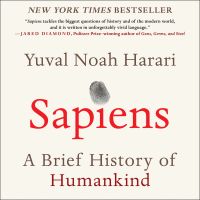
SapiensYuval Noah Harari15h 18m4.3 (1.4M) · 1295$33 · $0.00

You BelongSebene Selassie8h 35m4.4 (2.7K)$26 · $0.00

The Song Celestial; Or, Bhagavad-Gîtâ (from the Mahâbhârata)Anonymous2h 18m4.4 (3.2K)$2 · $0.00
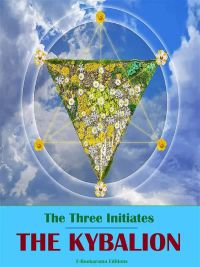
The KybalionThe Three Initiates3h 47m4.3 (58.7K)$20 · $0.00

Chuang Tzu: Mystic, Moralist, and Social ReformerZhuangzi14h 42m4.4 (1.2K)$1 · $0.00
You may also like
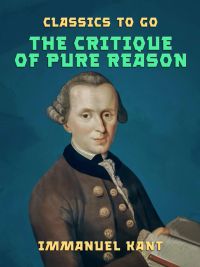
The Critique of Pure ReasonImmanuel Kant23h 49m4.2 (50.9K)$2.30
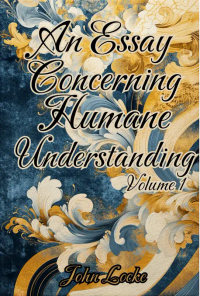
An Essay Concerning Humane UnderstandingJohn Locke15h 22m4.0 (19.5K)Free
Medium RawAnthony Bourdain9h4.1 (65.6K)$29 · $0.00

Growing OldElizabeth Marshall Thomas5h 52m4.1 (751)$24 · $0.00

The Natural State (Annotated)U. G. Krishnamurti8h 55m4.3 (364)$2 · $0.00
The Ending Of TimeJiddu Krishnamurti19h 4m4.3 (938)$24 · $0.00
BounceMatthew Syed7h 51m4.2 (21.8K)$26 · $0.00
The Heart of ChristianityMarcus J. Borg7h 59m4.2 (7.6K)$26 · $0.00

The Bulletproof DietDave Asprey9h 19m4.0 (10.5K)$20

The Art of MemoirMary Karr7h 21m4.1 (11.4K)$24 · $0.00
Living with a sustained seriousnessJiddu Krishnamurti1h 29m$4 · $0.00
Madras (Chennai) 1977 78 - Public Talk 2 - Observing the content of consciousnessJiddu Krishnamurti1h 9m$6 · $0.00

Walk Without Feet, Fly Without Wings and Think Without MindOsho13h 52m4.6 (74)$20 · $0.00
Brockwood Park 1969 - Public Talk 3 - Knowing what love isJ. Krishnamurti1h 11m$6 · $0.00
What is Right Action ?J Krishnamurti16h 29m4.5 (33)$7 · $0.00
Senility and the brain cellsJiddu Krishnamurti1h 31m$4 · $0.00
The Essential Works of U. G. Krishnamurti (Annotated)U. G. Krishnamurti37h 11m$2 · $0.00
Of the Conduct of the UnderstandingJohn Locke4h 38m4.0 (341)$1 · $0.00
Of the Conduct of the Understanding (Annotated)John Locke4h 52m4.4 (104)$0.99 · $0.00
Mind is a Myth (Annotated)U.G. Krishnamurti5h 59m4.3 (218)$2 · $0.00