
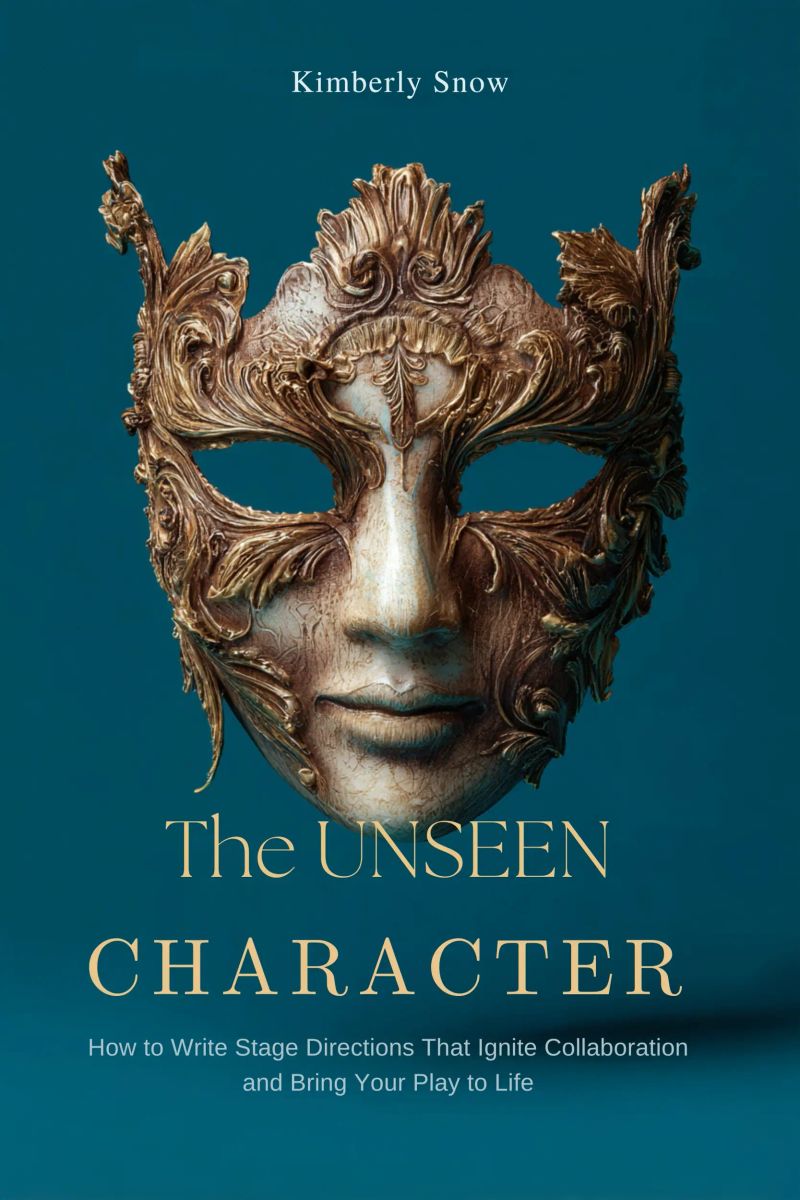
The Unseen Character
How to Write Stage Directions That Ignite Collaboration and Bring Your Play to LifeBy Kimberly Snow


Length1h 18m
About this audiobook
There's a character in your script you didn't know you were writing. It’s the most important one you have.
It’s the stage direction—the unseen character that can either suffocate your play with rigid commands or become its most valuable collaborator, breathing life into every scene. Too many playwrights write directions that treat their actors like puppets and their directors like assemblers of a pre-fabricated kit. The result is theatre that feels stale, predictable, and devoid of the collaborative magic that makes a performance unforgettable.
In The Unseen Character, playwright Kimberly Snow reframes the entire purpose of stage directions. This book teaches you to stop issuing orders and start issuing invitations—invitations for your creative team to explore, discover, and build a world far richer than you could ever dictate alone. You’ll learn to craft cues that function as a vital, inspiring partner in the storytelling process.
In this guide, you will discover how to:
Write for Your Collaborators: Learn the language that truly inspires actors, directors, and designers, transforming the script into a shared blueprint for creativity.
Build Living Worlds: Use atmospheric and sensory details to create a tangible environment that an audience doesn't just see, but feels.
Guide Performance without Dictating: Master the art of the suggestive prompt, inspiring authentic character choices and natural, organic movement.
Embed Your Vision: Learn how to weave your core themes and intentions into your directions, ensuring your play’s soul is present in every production.
Turn Your Script into a Joyful Read: Craft prose so evocative and engaging that your script becomes a compelling literary experience on its own.
Featuring hands-on exercises, genre-specific advice, and a deep dive into the philosophy of creative partnership, The Unseen Character is the essential resource for writers who want to create plays that are truly alive.
Ready to meet the most important character in your play? Click ‘Buy Now’ and start your most fruitful collaboration yet.
The Art of Theatrical Partnership:
The Unseen Character is built on the core belief that theatre is the most collaborative art form. A great script doesn't just tolerate interpretation; it demands it. This book provides the tools to create that kind of script. Explore powerful concepts like:
The Set as a Living Symbol
The set is not just a backdrop; it is a physical manifestation of the play’s world and the characters’ psychology. Your stage directions should describe the set not as a shopping list of items, but as a space with a personality and a story to tell.
Instead of, “The living room is messy,” consider what the specific mess tells us. A more living direction might be: “The living room is a museum of yesterday’s battles. Half-eaten plates of food congeal on the coffee table, and a wine bottle lies on its side, a single, dark red drop clinging to the rim. It’s not just messy; it’s a space that has given up.”
Here, the set is doing active work. It’s symbolizing the state of the characters’ relationship. It becomes a silent character, constantly informing the audience about the world of the play.
Audiobook details
GenreOther, General Fiction
Length1 hr 18 mins
Narrated byListen with 1,000+ voices
FormateBook with Audio
Publish dateDec 22, 2025
LanguageEnglish
Table of contents
11. Introduction: The Unseen Character
22. Chapter 1: The Tyranny of the Obvious (And How to Dethrone It)
33. Chapter Takeaways
44. Chapter 2: The Art of Collaboration: From Dictator to Partner
55. Chapter Takeaways
Show all chaptersShow less
66. Chapter 3: Emotional Atmosphere: Painting with Feeling
77. Chapter Takeaways
88. Chapter 4: Physical Possibility: Inspiring Movement
99. Chapter Takeaways
1010. Chapter 5: Technical Cues as Storytellers: Light, Sound, and Set
1111. Chapter Takeaways
1212. Chapter 6: Poetic Direction: Imagery, Metaphor, and Rhythm
1313. Chapter Takeaways
1414. Chapter 7: Genre and Style: Tailoring Your Approach
1515. Chapter Takeaways
1616. Chapter 8: The Revision Room: Stage Directions in Development
1717. Chapter Takeaways
1818. Chapter 9: Case Study: A Scene Transformation
1919. Chapter Takeaways
2020. Chapter 10: Beyond the Proscenium: Directions for New Theatrical Forms
2121. Chapter Takeaways
2222. Chapter 11: Conclusion: Finding Your Voice and Leaving Your Mark
2323. Disclaimer
The Prompt-to-Production PlaybookKimberly Snow4h 18m$7
The Playwright’s PlaybookKimberly Snow2h 14m$5
The Physics of CharacterKimberly Snow1h 36m$5
The Memory EngineKimberly Snow1h 37m$5
The Minimalist StageKimberly Snow2h 9m$5
The Rhythm of LaughterKimberly Snow1h 31m$5
The Art of TroubleKimberly Snow3h 23m$6

Beautifully BrokenKimberly Snow1h 25m$5
The Story's HeartbeatKimberly Snow2h 4m$5
The Art of the AnthologyKimberly Snow2h 58m$6

The Playwright as ArchitectKimberly Snow2h 44m$6

The Alchemist's ArtKimberly Snow1h 43m$5
The Character's ShadowKimberly Snow1h 59m$5

Fire and Flood, Ink and CelluloidKimberly Snow2h 25m$5
UnmaskedKimberly Snow1h 38m$5
The Playwright's BlueprintKimberly Snow1h 54m$5

The Character DetectiveKimberly Snow1h 26m$5
The Playwright's BusinessKimberly Snow1h 41m$5
The Character WebKimberly Snow2h 40m$5
Mere ChristianityC. S. Lewis7h 7m4.4 (519.7K)$24 · $0.00

Her Daily BreadKate Wood12h 57m4.6 (153)$33 · $0.00
The Holy Bible - 1 SamuelKing James2h 13m4.8 (1.6K)$3 · $0.00
The American Standard Bible — The Gospel of MatthewMatthew3h 56m4.7 (3K)$2 · $0.00

Bad Fat Black GirlSesali Bowen6h 32m4.7 (2.8K)$24 · $0.00
The King James Audio Bible New Testament CompleteChristopher Glyn20h 2m4.7 (2.6K)$12 · $0.00
Faiths CheckbookCharles Spurgeon12h 44m4.7 (3.2K)$11 · $0.00
Ten Things I Wish You Knew About Your Child's Mental HealthDr. Billy Garvey4h 53m4.7 (2.4K)$20 · $0.00
Designing Terry Pratchett’s DiscworldPaul Kidby3h 52m4.7 (343)$20 · $0.00
The Chosen Book OneAmanda Jenkins, Kristen Hendricks, Dallas Jenkins3h 8m4.6 (4.9K)$10 · $0.00
The Lives of BrianBrian Johnson9h 45m4.6 (3.5K)$29 · $0.00
Expository Thoughts on the Gospel of LukeJ.C. Ryle27h 13m4.7 (536)$18 · $0.00
CrossroadsKaleb Dahlgren7h 56m4.6 (4.9K)$26 · $0.00

Across the RiverKent Babb11h 40m4.6 (927)$29 · $0.00
Brain Training for RidersAndrea Monsarrat Waldo5h 56m4.7 (550)$19 · $0.00
My Effin' LifeGeddy Lee17h 11m4.6 (13.1K)$40 · $0.00
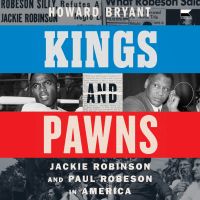
Kings and PawnsHoward Bryant10h 9m4.6 (678)$29 · $0.00

The Elementia Chronicles #2: The New OrderSean Fay Wolfe11h 17m4.6 (841)$29 · $0.00
The ActsLuke2h 55m4.6 (19.7K)$12 · $0.00
New Testament - Easy NavigationWorld English Bible19h 35m4.6 (1.3K)$1.30 · $0.00

WhistlerAnn Patchett10h 45m4.6 (4.6K)$29 · $0.00
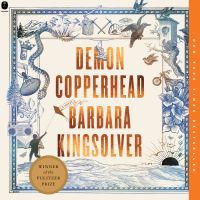
Demon CopperheadBarbara Kingsolver21h 3m4.5 (949.4K)$46 · $0.00

To Kill a MockingbirdHarper Lee12h 18m4.5 (7.4M)$29 · $0.00
Remarkably Bright CreaturesShelby Van Pelt11h 17m4.4 (1.7M)$29 · $0.00

War LordBernard Cornwell13h 21m4.6 (33.1K)$33 · $0.00
The Great Gatsby: Original 1925 Edition (An F. Scott Fitzgerald Classic NovelFrancis Scott Fitzgerald4h 45m4.6 (9.3K)$18 · $0.00
Something Like LoveBeverly Jenkins10h 21m4.6 (2.7K)$29 · $0.00
Black History CollectionFrederick Douglass, Harriet Ann Jacobs, Booker T. Washington, W.E.B. Du Bois27h 9m4.6 (2.6K)$18 · $0.00

The Old Man and the Sea (Annotated)Ernest Hemingway4h 27m4.6 (1.4K)$2 · $0.00

White HotIlona Andrews13h 18m4.5 (136.9K)$5 · $0.00

The Ghost by the Billabong (The Matilda Saga, #5)Jackie French14h 58m4.6 (773)$33 · $0.00
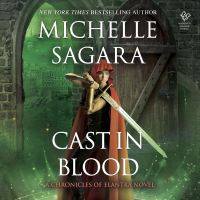
Cast in BloodMichelle Sagara16h 35m4.6 (607)$33 · $0.00
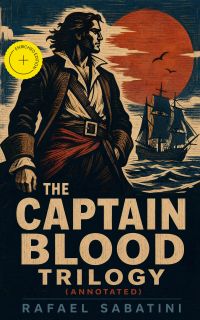
The Captain Blood Trilogy (Annotated)Rafael Sabatini29h 20m4.6 (1K)$3 · $0.00
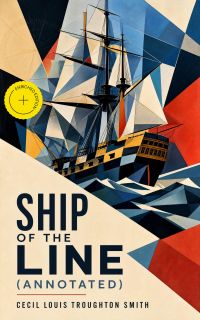
Ship of the Line (Annotated)Cecil Louis Troughton Smith11h 13m4.6 (1K)$2 · $0.00

The George Orwell CollectionGeorge Orwell24h 46m4.5 (14.4K)$12 · $0.00

ShivajiRanjit Desai25h 13m4.6 (3.1K)$24 · $0.00
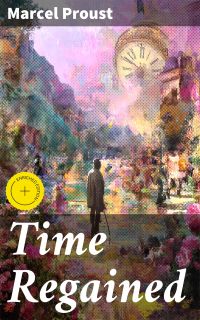
Time RegainedMarcel Proust15h 38m4.5 (9.2K)$2 · $0.00

Driving ForceElle James4h 58m4.6 (407)$20 · $0.00

When God Calls the HeartBrian Bird, Michelle Cox3h 24m4.6 (439)$10 · $0.00

Five Little IndiansMichelle Good10h 34m4.5 (64.5K)$29 · $0.00
You may also like
The Renaissance: Studies in Art and PoetryWalter Pater7h 1m4.2 (4.7K)$1 · $0.00
Scattered PoemsJack Kerouac51m3.9 (3.2K)$8
Leaves of Grass (Annotated)Walt Whitman20h 1m4.3 (1.5K)$0.99 · $0.00
Concerning the Spiritual in Art (Annotated)Wassily Kandinsky4h 25m4.0 (99.7K)$2 · $0.00
PICASSO (Annotated)Gertrude Stein3h 25m3.9 (1.9K)$2 · $0.00

Rubáiyát of Omar Khayyam, Rendered into English VerseOmar Khayyam2h 53m4.3 (125.2K)$1 · $0.00
Barking Up the Wrong TreeEric Barker9h 1m4.3 (24.2K)$29 · $0.00

Darkwater (Annotated)W. E. B. Du Bois9h 13m4.4 (1.7K)$0.99 · $0.00

On Being IllVirginia Woolf1h 46m4.1 (3.6K)$1 · $0.00
Coloring Outside the LinesJeff Tobe2h 48m4.0 (34)$20

Shakespeare: A LectureRobert Green Ingersoll2h 15m4.4 (26)$1 · $0.00
The Gay Science (Summarized Edition)Friedrich Nietzsche3h 31m1.0 (1)$2

Woman and LabourOlive Schreiner6h 53m3.4 (57)$1 · $0.00

Sound PoetryBrenda Mar(que)s Pena2h 58m$10 · $0.00
Walt Whitman: An AddressRobert Green Ingersoll1h 26m4.0 (25)$2 · $0.00

The Complete Love Sonnets of Michael DraytonMichael Drayton2h 20m$15
Teaching for ThinkingGrace Kelemanik, Amy Lucenta7h 2m4.5 (12)$23

Jean-Antoine WatteauYouri Zolotov3h 10m$16 · $0.00
Music: An Art and a LanguageWalter Raymond Spalding10h 52m4.3 (29)$2 · $0.00
The Collected Works of John Dewey (Annotated)John Dewey168h 46m4.5 (36)$2 · $0.00