
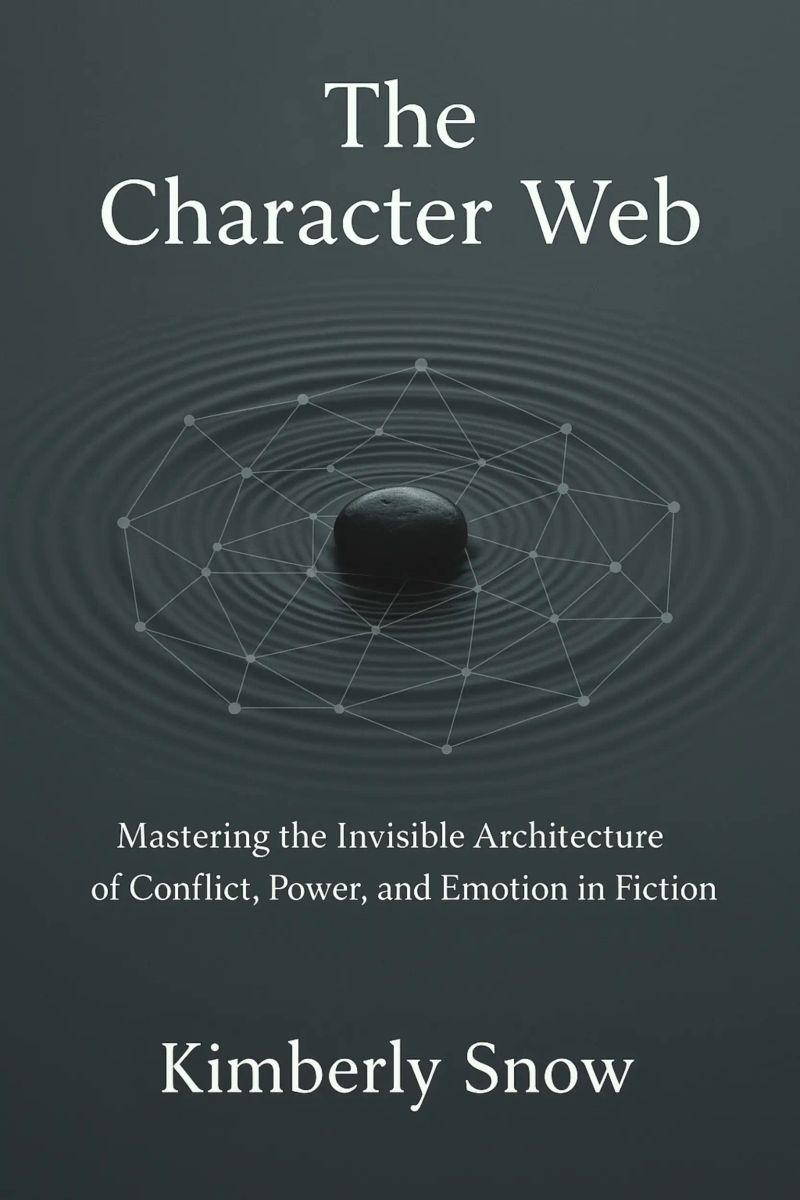
The Character Web
Mastering the Invisible Architecture of Conflict, Power, and Emotion in FictionBy Kimberly Snow


Length2h 39m
About this audiobook
Have you ever wondered why a particular character's decision felt so inevitable, or why a rivalry was so compelling?
The answer lies beneath the surface of the plot, in the intricate web of relationships, power dynamics, and internal conflicts that quietly govern the story.
The Character Web is a guide for writers who want to move beyond the "what" of storytelling and master the "why."
This book offers a deep dive into the psychology of narrative, providing sophisticated tools to help you design and manage the complex network of connections that gives a story its depth, meaning, and emotional resonance. You will learn to see your story as a living system, where every relationship impacts every other, creating a cascade of believable consequences that drives your plot forward organically.
This in-depth guide provides a framework for:
Mapping the "Character Web": Learn to visualize your story's entire network of influence, history, and conflict, revealing the hidden forces at play.
Understanding the "Internal Compass": Analyze and map a character's inner world—their core wounds, their central lie, and their conflicting desires—to create powerful, authentic motivations.
Harnessing the "Ripple Effect": Discover how a single conflict between two characters can be used to create waves of tension and consequences across your entire cast.
Crafting Psychologically Rich Scenes: Go beyond surface-level interactions to write scenes layered with subtext, symbolism, and non-verbal cues that reveal your characters' true intentions.
Analyzing Narrative Structures: Deconstruct modern and classic stories to understand how master storytellers build and manipulate their own character webs.
Become an Architect of Emotion
The most powerful storytellers are emotional engineers. They understand that a character's choice is never made in a vacuum; it is the result of a complex system of pressures from their past, their own internal conflicts, and the web of relationships they are caught in.
The Character Web gives you the schematic to this system, allowing you to design with intention and create a story that is as structurally sound as it is emotionally powerful.
If you are ready to elevate your writing and craft fiction with true psychological depth, this is your essential blueprint.
Understand the invisible forces that make a story unforgettable. Get your copy and start building your web today.
Audiobook details
GenreOther, General Fiction
Length2 hrs 39 mins
Narrated byListen with 1,000+ voices
FormateBook with Audio
Publish dateDec 12, 2025
LanguageEnglish
Table of contents
1Chapter 1: The Writer's Compass: Navigating the Emotional Landscape
2Chapter 2: The Unseen Architecture: How Relationships Drive Plot and Theme
3Chapter 3: The First Connection: Forging Initial Bonds and Setting the Stage
4Chapter 4: The Currency of Connection: Mapping Power, Status, and Influence
5Chapter 5: The Weight of Yesterday: Unearthing and Weaponizing Backstory
Show all chaptersShow less
6Chapter 6: The Arc of Connection: Charting the Evolution of a Relationship
7Chapter 7: The Engine of Story: Manufacturing Conflict Through Connection
8Chapter 8: Blood and Bond: The Complexities of Family
9Chapter 9: The Mirror and the Anchor: The Power of Friendship
10Chapter 10: The Dangerous Dance: Crafting Romantic Entanglements
11Chapter 11: The Shadow Self: The Nature of Rivalry and Enmity
12Chapter 12: The Guide and the Seeker: Mentor and Mentee Dynamics
13Chapter 13: The Grand Design: Weaving the Ensemble Cast
14Chapter 14: The Undercurrent: Mastering Subtext and Physicality
15Chapter 15: The Echo Chamber: Using Subplots to Deepen and Contrast
16Chapter 16: The Internal Compass: Mapping the Character's Relationship with Themselves
17Chapter 17: From Map to Manuscript: Turning Your Insights into Powerful Scenes
18Chapter 18: Case Study 1: The Tragic Web of a Classic Drama
19Chapter 19: Case Study 2: The Modern Ensemble
20Chapter 20: The Relationship Troubleshooter
21Chapter 21: Avoiding the Pitfalls: Common Traps in Writing Relationships
22Chapter 22: Conclusion: The Endless Frontier
23LEGAL NOTICE & DISCLAIMER
The Prompt-to-Production PlaybookKimberly Snow4h 18m$7
The Playwright’s PlaybookKimberly Snow2h 14m$5

The Physics of CharacterKimberly Snow1h 36m$5

The Memory EngineKimberly Snow1h 37m$5

The Minimalist StageKimberly Snow2h 9m$5
The Rhythm of LaughterKimberly Snow1h 31m$5
The Art of TroubleKimberly Snow3h 23m$6

The Unseen CharacterKimberly Snow1h 19m$5

Beautifully BrokenKimberly Snow1h 25m$5

The Story's HeartbeatKimberly Snow2h 4m$5
The Art of the AnthologyKimberly Snow2h 58m$6

The Playwright as ArchitectKimberly Snow2h 44m$6

The Alchemist's ArtKimberly Snow1h 43m$5

The Character's ShadowKimberly Snow1h 59m$5

Fire and Flood, Ink and CelluloidKimberly Snow2h 25m$5

UnmaskedKimberly Snow1h 38m$5

The Playwright's BlueprintKimberly Snow1h 54m$5

The Character DetectiveKimberly Snow1h 26m$5

The Playwright's BusinessKimberly Snow1h 41m$5
Mere ChristianityC. S. Lewis7h 7m4.4 (519.7K)$24 · $0.00

Her Daily BreadKate Wood12h 57m4.6 (153)$33 · $0.00
The Holy Bible - 1 SamuelKing James2h 13m4.8 (1.6K)$3 · $0.00

The American Standard Bible — The Gospel of MatthewMatthew3h 56m4.7 (3K)$2 · $0.00

Bad Fat Black GirlSesali Bowen6h 32m4.7 (2.8K)$24 · $0.00
The King James Audio Bible New Testament CompleteChristopher Glyn20h 2m4.7 (2.6K)$12 · $0.00
Faiths CheckbookCharles Spurgeon12h 44m4.7 (3.2K)$11 · $0.00
Ten Things I Wish You Knew About Your Child's Mental HealthDr. Billy Garvey4h 53m4.7 (2.4K)$20 · $0.00

Designing Terry Pratchett’s DiscworldPaul Kidby3h 52m4.7 (343)$20 · $0.00
The Chosen Book OneAmanda Jenkins, Kristen Hendricks, Dallas Jenkins3h 8m4.6 (4.9K)$10 · $0.00
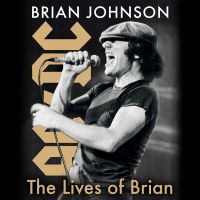
The Lives of BrianBrian Johnson9h 45m4.6 (3.5K)$29 · $0.00
Expository Thoughts on the Gospel of LukeJ.C. Ryle27h 13m4.7 (536)$18 · $0.00
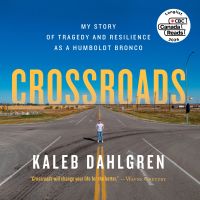
CrossroadsKaleb Dahlgren7h 56m4.6 (4.9K)$26 · $0.00

Across the RiverKent Babb11h 40m4.6 (927)$29 · $0.00

Brain Training for RidersAndrea Monsarrat Waldo5h 56m4.7 (550)$19 · $0.00

My Effin' LifeGeddy Lee17h 11m4.6 (13.1K)$40 · $0.00

Kings and PawnsHoward Bryant10h 9m4.6 (678)$29 · $0.00

The Elementia Chronicles #2: The New OrderSean Fay Wolfe11h 17m4.6 (841)$29 · $0.00
The ActsLuke2h 55m4.6 (19.7K)$12 · $0.00

New Testament - Easy NavigationWorld English Bible19h 35m4.6 (1.3K)$1.30 · $0.00

WhistlerAnn Patchett10h 45m4.6 (4.6K)$29 · $0.00

Demon CopperheadBarbara Kingsolver21h 3m4.5 (949.4K)$46 · $0.00

To Kill a MockingbirdHarper Lee12h 18m4.5 (7.4M)$29 · $0.00

Remarkably Bright CreaturesShelby Van Pelt11h 17m4.4 (1.7M)$29 · $0.00

War LordBernard Cornwell13h 21m4.6 (33.1K)$33 · $0.00
The Great Gatsby: Original 1925 Edition (An F. Scott Fitzgerald Classic NovelFrancis Scott Fitzgerald4h 45m4.6 (9.3K)$18 · $0.00
Something Like LoveBeverly Jenkins10h 21m4.6 (2.7K)$29 · $0.00

Black History CollectionFrederick Douglass, Harriet Ann Jacobs, Booker T. Washington, W.E.B. Du Bois27h 9m4.6 (2.6K)$18 · $0.00

The Old Man and the Sea (Annotated)Ernest Hemingway4h 27m4.6 (1.4K)$2 · $0.00

White HotIlona Andrews13h 18m4.5 (136.9K)$5 · $0.00

The Ghost by the Billabong (The Matilda Saga, #5)Jackie French14h 58m4.6 (773)$33 · $0.00
Cast in BloodMichelle Sagara16h 35m4.6 (607)$33 · $0.00
The Captain Blood Trilogy (Annotated)Rafael Sabatini29h 20m4.6 (1K)$3 · $0.00

Ship of the Line (Annotated)Cecil Louis Troughton Smith11h 13m4.6 (1K)$2 · $0.00

The George Orwell CollectionGeorge Orwell24h 46m4.5 (14.4K)$12 · $0.00

ShivajiRanjit Desai25h 13m4.6 (3.1K)$24 · $0.00
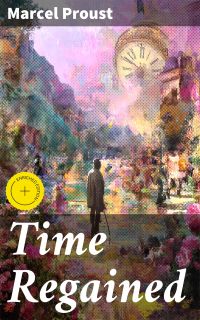
Time RegainedMarcel Proust15h 38m4.5 (9.2K)$2 · $0.00

Driving ForceElle James4h 58m4.6 (407)$20 · $0.00

When God Calls the HeartBrian Bird, Michelle Cox3h 24m4.6 (439)$10 · $0.00

Five Little IndiansMichelle Good10h 34m4.5 (64.5K)$29 · $0.00
You may also like

Dimanche and Other StoriesIrène Némirovsky8h 21m4.0 (1.3K)$17 · $0.00

Love UnleashedVictoria The4h 17m4.1 (617)$6.40 · $0.00

Only for HimNatasha Madison10h 33m4.3 (4.5K)$25

The Dance of ConnectionHarriet Lerner7h 5m4.2 (5.9K)$24 · $0.00

Uncle Vanya: Scenes from Country Life in Four ActsAnton Pavlovich Chekhov1h 53m4.1 (37.2K)$2.30

MandingoKyle Onstott17h 50m3.9 (4.5K)$2 · $0.00

Lovely, Dark, DeepJoyce Carol Oates16h 12m3.7 (2.5K)$33 · $0.00

HerzogSaul Bellow15h 36m3.8 (29.7K)$25 · $0.00
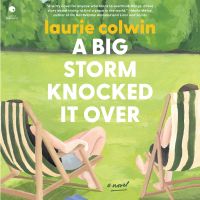
A Big Storm Knocked It OverLaurie Colwin7h 45m3.8 (2.7K)$26 · $0.00

The Old Maid (The Fifties)Edith Wharton2h 48m4.0 (3.9K)$2.30
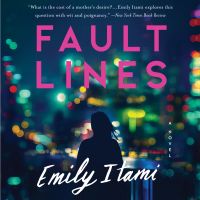
Fault LinesEmily Itami5h 23m3.7 (21.3K)$24 · $0.00

This Is Why We Can’t Have Nice ThingsNaomi Wood6h 21m2.8 (1K)$24 · $0.00

When Love is Not EnoughScarlett R. Ashford3h 47m$4.10 · $0.00
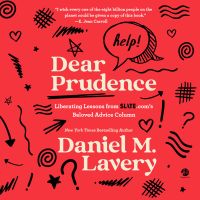
Dear PrudenceDaniel M. Lavery8h 52m3.9 (596)$29 · $0.00

The Truth about CheatingM. Gary Neuman6h 49m3.6 (281)$22

Narcissism: How to Deal With Narcissists & Toxic People to Live Your Best Life (Understanding Practical Strategies and Legal Issues for Parallel Parenting With a Narcissist)Jeremy Sjogren2h 34m$3.50 · $0.00

Toxic Family: How to Set Firm Boundaries, Say No Without Guilt and Reclaim Your Peace (A Comprehensive Guide to Understanding, Confronting, and Overcoming Toxic Family Dynamics)Renato Mains59m$3.50 · $0.00

The PositionMeg Wolitzer10h 1m3.4 (6.2K)$20 · $0.00
The Courage to TrustCynthia L. Wall LCSW5h 32m4.1 (240)$20 · $0.00

She Poured Out Her HeartJean Thompson14h 12m3.2 (652)$23 · $0.00