
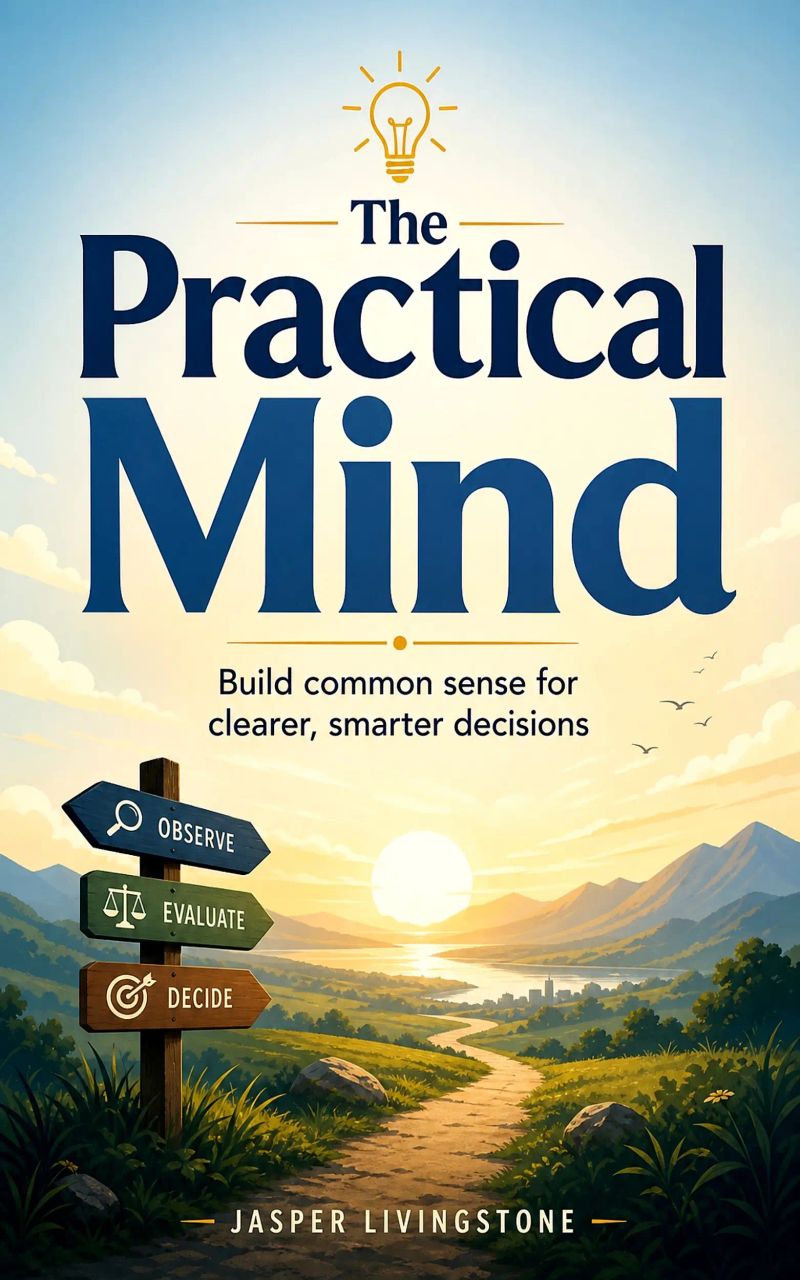
The Practical Mind
Build common sense for clearer, smarter decisionsBy Jasper Livingstone


Length3h 33m
About this audiobook
The Practical Mind: Build Common Sense for Clearer, Smarter Decisions Good decisions rarely come from luck. They come from clear thinking, sound judgment, and practical habits that improve with practice.
The Practical Mind is a practical guide for anyone who wants to make better choices at work, at home, and in everyday life. Whether you face career decisions, financial choices, relationship challenges, or daily problems, this book gives you a straightforward framework to think clearly, avoid common mistakes, and act with confidence. Instead of relying on complicated theories, you'll learn how to apply common sense to real situations.
Through practical examples, simple exercises, and proven decision-making techniques, you'll strengthen your ability to evaluate options, solve problems, and respond wisely under pressure.
Inside this book, you'll learn how to:
• Think logically without overcomplicating problems.
• Recognize common thinking errors and avoid costly mistakes. •
Make confident decisions even with limited information.
• Improve problem-solving skills in everyday situations.
• Balance emotion with reason when making important choices.
• Develop practical wisdom through daily habits.
• Build confidence by learning from successes and failures.
• Communicate your ideas with clarity and sound judgment.
• Handle uncertainty without becoming overwhelmed.
• Create a lifelong mindset of continuous improvement.
Whether you're a student, professional, entrepreneur, leader, or lifelong learner, The Practical Mind offers practical tools to improve critical thinking, decision making, common sense, and everyday problem solving. If you want to think more clearly, make smarter decisions, and approach life's challenges with confidence, this book provides a practical roadmap you can use every day.
Audiobook details
GenreSelf-Help
Length3 hrs 33 mins
Narrated byListen with 1,000+ voices
FormateBook with Audio
Publish dateJul 16, 2026
LanguageEnglish
Table of contents
1The Practical Mind
2Introduction
3Common Sense Is a Skill, Not Luck
4Replace Knowledge Hoarding With Judgment
5Audit Your Default Beliefs
Show all chaptersShow less
6Build a Decision Identity
7Use the 3-Option Reality Check
8Practice the One-Thing Constraint
9Spot Cognitive Biases in Minutes
10Ask Better Questions Before Acting
11Turn Vague Problems Into Clear Targets
12Apply the 10-Minute Test for Decisions
13Communicate With Practical Candor
14Set Boundaries That Protect Your Focus
15Build Habits That Make Good Choices Easy
16Use Pre-Mortems to Prevent Regret
17Recover Fast After a Wrong Call
18Make Stress a Signal, Not a Stop Sign
19Align Decisions With Your Values
20Create Your Practical Wisdom Review
21Final Thoughts
22About the Author
Series


The Everyday AlgorithmJasper Livingstone7h 41m$9

The Independent Senior's AI GuideJasper Livingstone5h 59m$9

AI Without The AnxietyJasper Livingstone4h 54m$10

Understanding AI For Everyday ImpactJasper Livingstone4h 7m$9
Transforming Your PotentialJasper Livingstone3h 45m$9

Mega LivingJasper Livingstone3h 18m$9

The Evolution Of AIJasper Livingstone10h 56m$9

Calm StrengthJasper Livingstone6h 27m$9

Clear Thinking With AIJasper Livingstone4h 59m$10
Unlock Your Intelligent EdgeJasper Livingstone4h 20m$10

Adapting To AIJasper Livingstone6h 29m$10
Unlocking AI For Everyday UseJasper Livingstone6h 4m$9

AI For Managers Who Don’t CodeJasper Livingstone7h 18m$10
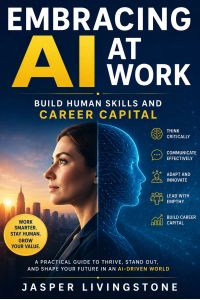
Embracing AI At WorkJasper Livingstone6h 37m$9
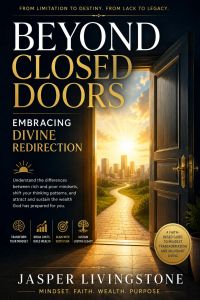
Beyond Closed DoorsJasper Livingstone7h 10m$7

AI-Proof Your Career: Navigating the Future with ConfidenceJasper Livingstone7h 11m$6.90
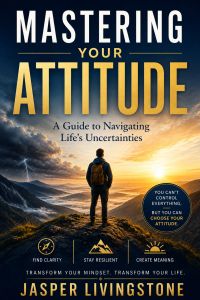
Mastering Your Attitude: A Guide to Navigating Life's UncertaintiesJasper Livingstone6h 57m4.0 (366)$9

Transforming Yourself: The Catalyst for ChangeJasper Livingstone10h 30m$13

The Attitude AdvantageJasper Livingstone9h 38m4.0 (1.5K)$7

Freedom from ControlJasper Livingstone7h 38m$9
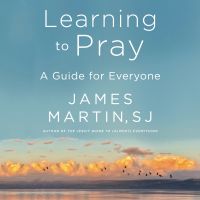
Learning to PrayJames Martin13h 24m4.5 (3.4K)$33 · $0.00

Autism Out Loud: the instant New York Times Bestseller. Moving Stories and Parenting Lessons Learned from Three Mothers of Children with AutismKate Swenson, Carrie Cariello, Adrian Wood8h 41m4.8 (2.1K)$26 · $0.00

The StepsSylvester Stallone9h 4m4.8 (635)$29 · $0.00

Swayam Ki AwaazPrem Rawat8h 34m4.7 (1.1K)$26 · $0.00

Forever BoyKate Swenson9h 27m4.7 (5K)$29 · $0.00

You Are Worth ItKyle Carpenter, Don Yaeger8h 53m4.7 (4.8K)$29 · $0.00

The Happiest Man on EarthEddie Jaku3h 48m4.6 (178K)$7 · $0.00

Finding MeViola Davis9h 15m4.6 (256.4K)$29 · $0.00

Spiritual AnatomyDaaji Kamlesh D. Patel9h 47m4.7 (319)$29 · $0.00

The Dangerous Truth about Today’s MarijuanaLaura Stack CSP, MBA9h 57m4.7 (385)$20 · $0.00
The Gospel according to Spiritualism (Translated)Allan Kardec14h 39m4.6 (3.9K)$5.70 · $0.00

Birdie & HarlowTaylor Wolfe7h 50m4.6 (6.5K)$26 · $0.00

CrossroadsKaleb Dahlgren7h 56m4.6 (4.9K)$26 · $0.00

Life on the BridgeKaelynn Partlow5h 40m4.6 (1.1K)$24 · $0.00

Keep Your Love OnDanny Silk9h 4m4.6 (8.1K)$10 · $0.00

The Tao of Joy Every DayDerek Lin10h 24m4.6 (762)$20 · $0.00

UndividedVicky Beeching9h 2m4.6 (1.3K)$29 · $0.00

HE CAN WHO THINKS HE CAN & OTHER BOOKS ON SUCCESSOrison Swett Marden5h 54m4.6 (1.2K)$1.99 · $0.00
Level UpRob Dial7h 42m4.6 (3.3K)$26 · $0.00

Burn the HaystackJennie Young, PhD9h 30m4.6 (543)$29 · $0.00
You may also like

Creative EvolutionHenri Bergson13h4.2 (2.4K)$20 · $0.00

SucceedHeidi Grant Halvorson PhD8h 25m4.4 (4.4K)$17 · $0.00

BIOGRAPHIA LITERARIASamuel Taylor Coleridge15h 47m3.8 (1.8K)$1.99 · $0.00
The Critique of Practical ReasonImmanuel Kant6h 30m4.1 (24.6K)$1.20 · $0.00

THE PRINCIPLES OF PSYCHOLOGY (Complete Edition In 2 Volumes)William James62h 58m4.3 (895)$1 · $0.00
60 Seconds and You’re Hired!Robin Ryan5h 34m4.2 (2.4K)$14
How to Analyze People on Sight - Through the Science of Human Analysis: The Five Human Types (Annotated)Ralph Paine Benedict, Elsie Lincoln Benedict7h 28m3.6 (4.1K)$0.99 · $0.00

The Critique of Practical ReasonImmanuel Kant6h 52m4.2 (14.9K)$3.50 · $0.00

A common-sense view of the mind-cureLAURA M.1h 58m$3.50 · $0.00
Marketing for Dummies 2nd Ed.Alexander Hiam3h 6m3.8 (321)$18 · $0.00

Selecting Projects WiselySteve Pavlina15m$4 · $0.00
EVERY MAN HIS OWN UNIVERSITY – Success & Empowerment Collection (Annotated)Russell Conwell5h 54m4.2 (19)$2 · $0.00

Business BrandingAnthony Ekanem59m$4 · $0.00

Handbook of Summer Athletic SportsVarious3h 21m$1 · $0.00

Effortless SavingOwen J. Kim4h 8m4.2 (39)$4 · $0.00

Get Your Dream Job!Made for Success7h 56m$20
Why Are We So Different? Your Guide to the 16 Personality TypesJarosław Jankowski11h$14

Life EverlastingJohn Fiske8m$1 · $0.00
THE LAW OF SUCCESS Lesson Ten - PLEASING PERSONALITYNapoleon Hill1h 4m4.3 (24)$4.70 · $0.00

The 6 Secrets To Sowing MoneyLucisco Lexicógrafo22m$8 · $0.00