


Length6h 4m
About this audiobook
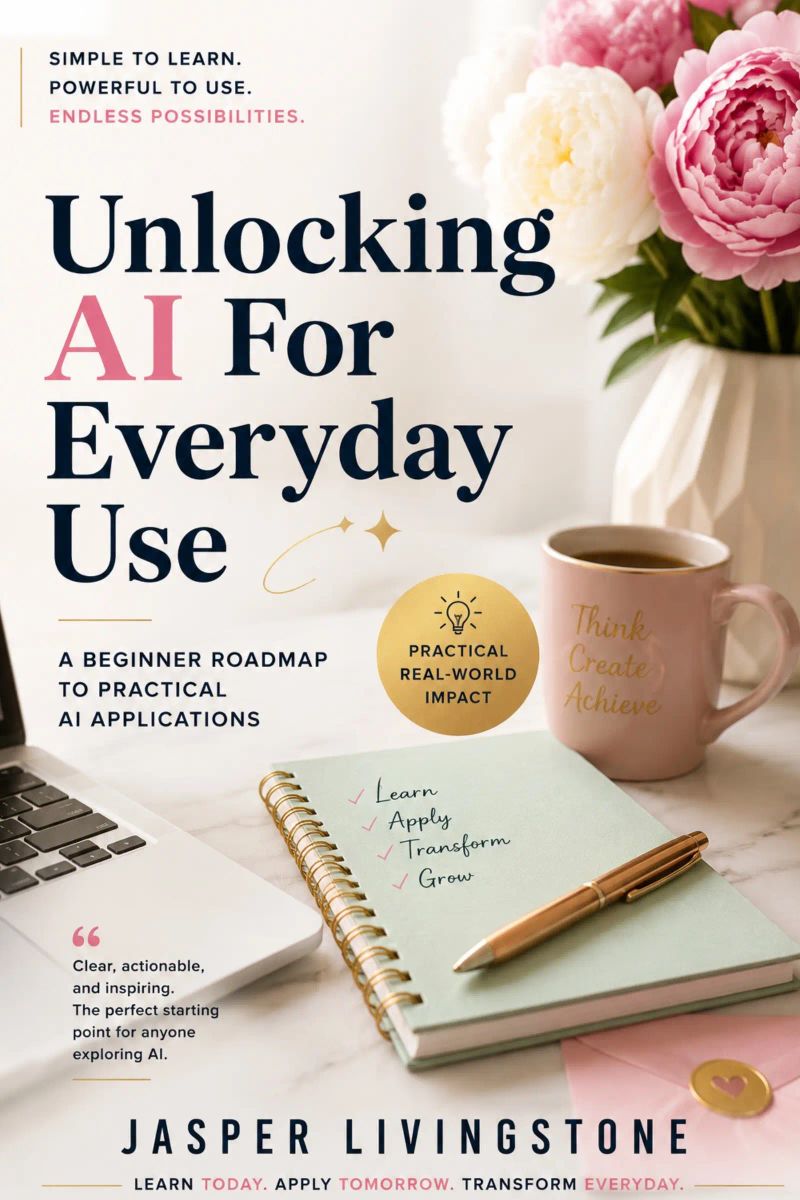
Artificial intelligence is becoming part of everyday work and life, but getting started often feels more complicated than it needs to be. A Beginner Roadmap to Practical AI Applications provides a clear, step-by-step introduction focused on what matters most: putting AI to useful work.
Written for readers with no technical background, this book explains essential AI concepts in straightforward language before moving into practical applications. You will learn how to use AI for research, writing, learning, planning, brainstorming, organizing information, analyzing problems, improving productivity, supporting decisions, and handling everyday tasks.
The book guides you through choosing the right AI tools, writing effective prompts, improving weak responses, checking accuracy, protecting sensitive information, and knowing when human judgment should take priority. Practical examples help you move from experimenting with AI to developing repeatable ways of using it.
You will also learn how to identify worthwhile AI applications instead of adopting technology simply because it is new. By focusing on the problem first, you will develop a better understanding of where AI adds value, where its limitations matter, and how to use it responsibly.
As your confidence grows, the roadmap introduces more advanced possibilities, including AI-assisted workflows, automation, data analysis, personalized learning, and intelligent assistants. Each stage builds on practical skills rather than technical complexity.
A Beginner Roadmap to Practical AI Applications is designed for professionals, business owners, students, lifelong learners, and everyday users who want a practical starting point for AI. It gives you a structured path from understanding the basics to applying AI with purpose, judgment, and confidence.
Audiobook details
GenreTechnology, Business and Economics
Length6 hrs 4 mins
Narrated byListen with 1,000+ voices
FormateBook with Audio
Publish dateAug 27, 2026
LanguageEnglish
Table of contents
1Chapter 1: What AI Means in Everyday Life
2AI Is Already Part of Everyday Life
3What Artificial Intelligence Actually Does
4How AI Learns From Patterns
5Generative AI and Its New Capabilities
Show all chaptersShow less
6The Strengths and Limits of AI
7Chapter 2: Finding Valuable Uses for AI
8Start With the Problem, Not the Technology
9Recognize Tasks AI Handles Well
10Measure the Value of an AI Use
11Identify Risks and Boundaries
12Choose a Practical First Experiment
13Chapter 3: Choosing the Right AI Tools
14Start With the Task, Not the Tool
15Understand the Main AI Tool Categories
16Compare Features That Affect Daily Use
17Compare Costs and Reliability
18Run a Small Trial Before Committing
19Chapter 4: Writing Prompts That Produce Better Results
20Start With the Task
21Add Context, Audience, and Tone
22Specify Format and Limits
23Improve, Check, and Reuse Prompts
24Chapter 5: Improving Weak or Incomplete AI Responses
25Treat the First Response as a Draft
26Ask Focused Follow-Up Questions
27Improve Results with Context and Examples
28Change the Format or Level of Detail
29Know When to Restart and Review the Result
30Chapter 6: Using AI for Research and Reliable Information
31Start With a Clear Research Question
32Use AI to Explore and Organize Information
33Ask for Evidence and Citations
34Verify Claims Before Relying on Them
35Recognize Common Research Errors
36Build a Repeatable Research Process
37Chapter 7: AI for Writing, Communication, and Creativity
38Use AI as a Writing Partner
39Create Clear Emails, Reports, and Presentations
40Brainstorm Ideas and Support Creativity
41Write Better Prompts and Revise Weak Responses
42Review, Verify, and Use AI Responsibly
43Chapter 8: AI for Learning and Personal Development
44Use AI as a Study Partner
45Build Practice and Feedback Loops
46Create a Personal Learning Plan
47Learn Safely and Independently
48Chapter 9: AI for Planning, Organization, and Productivity
49Start With the Outcome
50Break Large Projects Into Actions
The Everyday AlgorithmJasper Livingstone7h 41m$9

The Independent Senior's AI GuideJasper Livingstone5h 59m$9
AI Without The AnxietyJasper Livingstone4h 54m$10
Understanding AI For Everyday ImpactJasper Livingstone4h 7m$9
Transforming Your PotentialJasper Livingstone3h 45m$9

Mega LivingJasper Livingstone3h 18m$9
The Evolution Of AIJasper Livingstone10h 56m$9

Calm StrengthJasper Livingstone6h 27m$9
Clear Thinking With AIJasper Livingstone4h 59m$10
Unlock Your Intelligent EdgeJasper Livingstone4h 20m$10
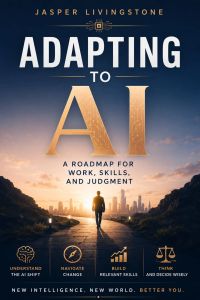
Adapting To AIJasper Livingstone6h 29m$10
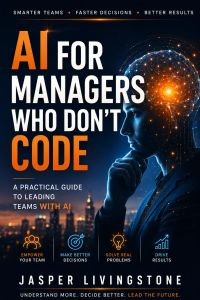
AI For Managers Who Don’t CodeJasper Livingstone7h 18m$10
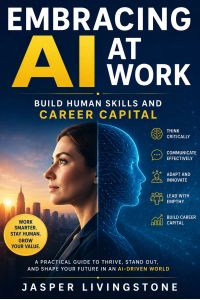
Embracing AI At WorkJasper Livingstone6h 37m$9
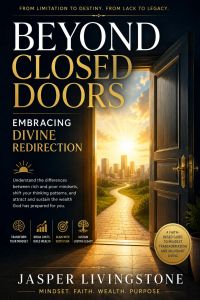
Beyond Closed DoorsJasper Livingstone7h 10m$7
AI-Proof Your Career: Navigating the Future with ConfidenceJasper Livingstone7h 11m$6.90
Mastering Your Attitude: A Guide to Navigating Life's UncertaintiesJasper Livingstone6h 57m4.0 (366)$9
Transforming Yourself: The Catalyst for ChangeJasper Livingstone10h 30m$13
The Attitude AdvantageJasper Livingstone9h 38m4.0 (1.5K)$7
Freedom from ControlJasper Livingstone7h 38m$9

The Honey BusMeredith May9h 31m4.4 (16.6K)$25 · $0.00
Collected Writings of Nikola TeslaThomas Commerford Martin, Nikola Tesla19h 42m4.4 (2.8K)$1.99 · $0.00

Operation PedestalMax Hastings12h 29m4.4 (5.2K)$29 · $0.00

When the Heavens Went on SaleAshlee Vance18h 20m4.4 (3K)$40 · $0.00
Everybody Has a Podcast (Except You)Justin McElroy, Travis McElroy, Griffin McElroy5h 9m4.3 (2.3K)$24 · $0.00

Hands of TimeRebecca Struthers8h 8m4.4 (1.3K)$26 · $0.00
Never Lost AgainBill Kilday10h 1m4.4 (805)$29 · $0.00
How the Internet HappenedBrian McCullough13h 28m4.3 (2.7K)$23 · $0.00

Collected Writings of Nikola TeslaNikola Tesla, Thomas Commerford Martin21h 50m4.3 (1.7K)$1 · $0.00
Just AspireAjai Chowdhry9h 13m4.4 (260)$29 · $0.00

The Little Book of AliensAdam Frank8h 20m4.3 (1.3K)$26 · $0.00
The inventions, researches and writings of Nikola Tesla (Annotated)Thomas Commerford Martin16h 59m4.3 (1.3K)$2 · $0.00

KargilV.P. Malik15h 18m4.3 (2K)$24 · $0.00
Experiments with Alternating CurrentsNikola Tesla9h 16m4.3 (874)$1.99 · $0.00

Fire on the HorizonTom Shroder, John Konrad8h 23m4.3 (858)$26 · $0.00

The Smell of Kerosene (Annotated)National Aeronautics and Space Administration, Donald L. Mallick, Peter W. Merlin11h 32m4.3 (523)$2 · $0.00

The Boy Who Harnessed the WindWilliam Kamkwamba, Bryan Mealer10h 5m4.2 (78.9K)$29 · $0.00

Across the Airless WildsEarl Swift10h 8m4.3 (1.3K)$29 · $0.00

Console WarsBlake J. Harris20h 41m4.2 (13.7K)$46 · $0.00
Improvised Munitions HandbookU.S. Department of Defense4h 49m4.3 (1.6K)$0.99 · $0.00
Never Split the DifferenceChris Voss, Tahl Raz8h 7m4.4 (277.7K)$26 · $0.00
The Intelligent Investor Rev Ed.Benjamin Graham17h 48m4.3 (191.5K)$40 · $0.00
The Hard Thing About Hard ThingsBen Horowitz7h 57m4.2 (134.3K)$26 · $0.00
Boundaries for LeadersHenry Cloud7h 36m4.3 (3.6K)$26 · $0.00
Eat It!Jordan Syatt, Michael Vacanti4h 40m4.6 (1.5K)$20 · $0.00

Progress and Poverty, Volumes I and II (Annotated)Henry George19h 21m4.6 (574)$0.99 · $0.00
Not Everything Counts but Everything Matters: The powerful and inspirational new book about leadership and achieving success from the visionary multi-premiership winning Panthers coachIvan Cleary6h 1m4.6 (680)$24 · $0.00
BuildTony Fadell11h 5m4.5 (14.3K)$8 · $0.00
The Joys Of CompoundingGautam Baid17h 34m4.5 (2.5K)$18 · $0.00
Basic EconomicsThomas Sowell18h 32m4.5 (29.3K)$28 · $0.00

Poor Charlie’s AlmanackGrover Gardener, Charles T. Munger13h 9m4.5 (24.7K)$18 · $0.00
The Ambuja StoryNarotam Sekhsaria13h 59m4.5 (830)$33 · $0.00

The Secret Door to SuccessFlorence Scovel Shinn2h 25m4.5 (2.1K)$1.20 · $0.00

This Is Going to HurtAdam Kay5h 47m4.4 (444.7K)$24 · $0.00

Big TrustShadé Zahrai, Fayçal Sekkouah8h 36m4.6 (406)$26 · $0.00
The Intelligent Investor Third EditionBenjamin Graham, Jason Zweig20h4.4 (156.6K)$46 · $0.00
Bottle of LiesKatherine Eban14h 25m4.4 (12K)$33 · $0.00
The Antiracist Business BookTrudi Lebrón6h 10m4.6 (275)$17 · $0.00
The FormulaJoshua Robinson, Jonathan Clegg10h 41m4.4 (6.9K)$29 · $0.00
Let Them LeadJohn U. Bacon7h 10m4.5 (1.4K)$24 · $0.00
You may also like
ITIL Foundation Essentials ITIL 4 Edition - The ultimate revision guide, second editionClaire Agutter1h 12m4.2 (462)$27 · $0.00
Google ItAnna Crowley Redding4h 18m4.0 (711)$15
Everyone’s Talking About AI, and I Don’t Know Where to Start - How to Use AI for Everyday Tasks, Check Its Answers, and Keep Thinking for YourselfMax Paradox4h 12m4.9 (18)$7.70 · $0.00
12 Smart-Device AI ProjectsDesmond Whitlock7h 52m$5
Introduction to AI and Machine LearningDisrupt.co.nz1h 23m$1.20 · $0.00

On-Device AI: The Complete TinyML Guide for DevelopersCaroline Lennox3h 22m$4 · $0.00
AI for Financial AnalysisRenata Holloway8h 5m$5 · $0.00

Chatgpt Complete GuideJoaquin Gener1h 23m$6 · $0.00
Master Prompt EngineeringRui Jorge Claro2h 53m$10 · $0.00
Polyglotpython:Jimmy L. De Mello1h 41m$30 · $0.00

Social Media Marketing BoostFernando Moreira0m1.0 (1)$7 · $0.00

Artificial Intelligence for Business StrategyTheo Riven3h 11m$5
Email Marketing: The Ultimate Guide to Building an Email List Asset (How to Compel Your Subscribers to Open Your Emails and Take Action Now)Howard Steward1h$3.50 · $0.00
ChatGPT for ArchitectsAdrian Lucas2h 43m$4 · $0.00
LEICA Q3 43 MASTERY GUIDEMichael J. Frame20h 28m$11.50 · $0.00
The Systems EngineBradley J Sugars1h 54m3.9 (115)Free
AI Money MachineSara Melo1h 31m$1.80 · $0.00
Build AI Voice AssistantsVera Grimaldi7h 53m$5
Millionaire ChatGPTSara Melo1h 53m$1.80 · $0.00
Build AI Agents with FlowiseCyrus Fontaine8h 1m$5