
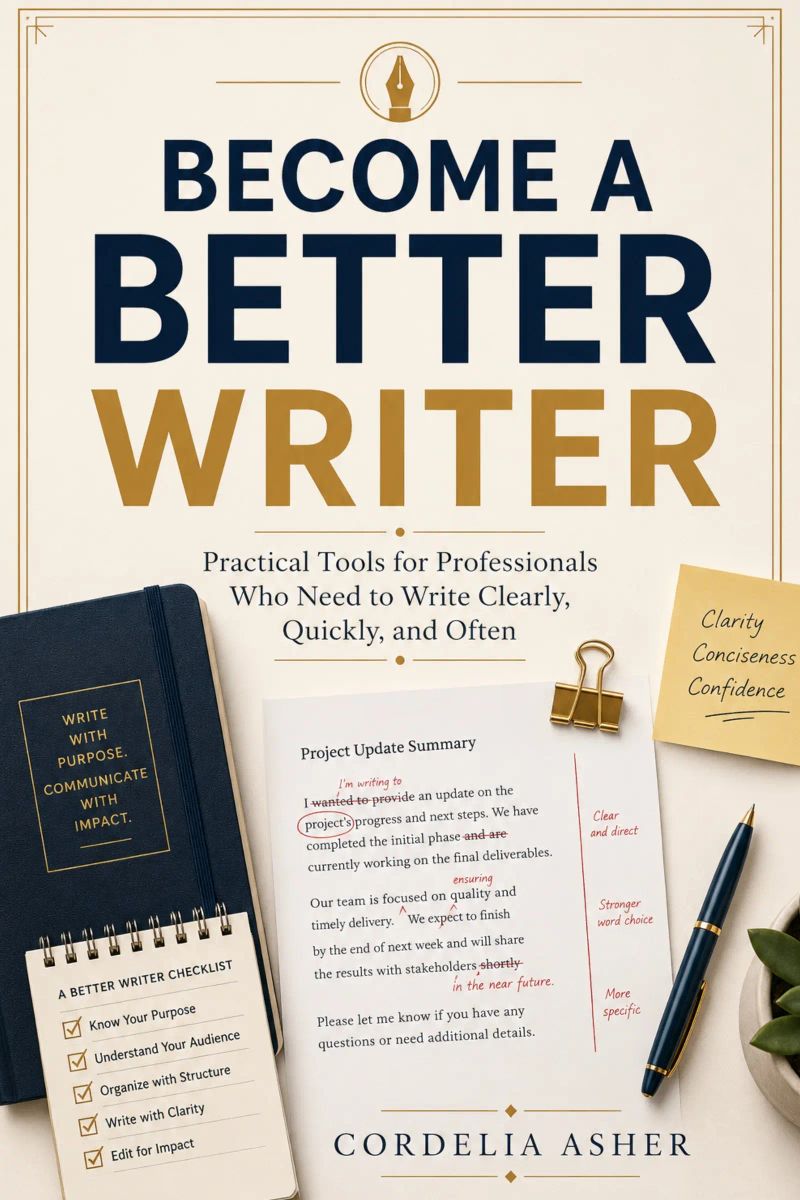
Become a Better Writer
Practical Tools for Professionals Who Need to Write Clearly, Quickly, and OftenBy Cordelia asher


Length11h 4m
About this audiobook
Become a Better Writer: practical tools for professional writing, business writing skills, clear writing, and finding your voice
— for professionals who write every day.
You already know the reports nobody finishes reading. The emails that require a second email to clarify the first. The strategy
documents so padded with abstraction that you could remove three pages without anyone noticing. Cordelia Asher has spent
nineteen years coaching surgeons, founders, managing directors, and senior lawyers on their writing — and in those years she has
noticed one thing above all: the problem is never vocabulary, and it is almost never grammar. It is that most professional writers have
never been given the right tools.
Become a Better Writer is a practical guide to professional writing that moves from the inside out — from sentences and paragraphs
to cutting, voice, and the specific documents professionals write most often: emails, memos, proposals, reports, bad-news letters, and
updates that travel up the org chart. Asher draws on real client engagements (names changed, patterns preserved) to show exactly
how business prose fails and how to fix it. Her method is direct: tools, not slogans. Every chapter ends with a drill you can apply to
your own writing this week.
Inside this professional writing guide:
The sentence as the smallest unit that matters — how to write strong sentences that do one job clearly, with a verb at their
centre and no furniture around it
Cutting: the skill that separates pros from amateurs — a systematic method for removing what does not earn its space, from
word-level to whole-section cuts
Verbs as the engine of every sentence — why nominalisations kill momentum, and how to restore the actor and the action to
your prose
Voice without performing — how to stop imitating the corporate register and write in a way that sounds recognisably like you,
across every tone and format
Writing email that actually gets read — the three-paragraph maximum, the subject-line formula, and why the meaningful
sentence must come first
The memo that stops a meeting from happening — recommendation-first structure, tight situation sections, and the appendix
as pressure valve
Proposals, reports, updates, bad-news letters, and apologies — chapter-length treatment of every major professional
document, with before-and-after rewrites throughout
The book also includes 50 paired rewrites of real business prose (Appendix A), a glossary of sentence-level faults (Appendix B), a
twelve-month practice plan, twenty quick diagnostics, and industry-specific notes for lawyers, clinicians, consultants, founders, and
academics. Whether you write three emails a day or three board memos a quarter, Become a Better Writer gives you the tools to make
each one work.
For readers of William Zinsser's On Writing Well and Steven Pressfield's Nobody Wants to Read Your Sh*t.
Audiobook details
GenreOther, Business and Economics
Length11 hrs 4 mins
Narrated byListen with 1,000+ voices
FormateBook with Audio
LanguageEnglish
Table of contents
1Introduction
2Chapter 1 — The Writer You Already Are
3Chapter 2 — Knowing What You Mean Before You Try to Say It
4Chapter 3 — The Sentence: The Smallest Unit That Matters
5Chapter 4 — Paragraphs That Carry Their Weight
Show all chaptersShow less
6Chapter 5 — Cutting: The Skill That Separates Pros From Amateurs
7Chapter 6 — Verbs as the Engine of Every Sentence
8Chapter 7 — The Adverb Problem and How to Fix It
9Chapter 8 — Rhythm: How Sentences Sound in the Reader’s Head
10Chapter 9 — Voice: What It Is and How to Find Yours Without Performing
11Chapter 10 — Writing Email That Actually Gets Read
12Chapter 11 — Writing the Memo That Stops a Meeting From Happening
13Chapter 12 — Writing the Proposal That Wins the Engagement
14Chapter 13 — Writing the Report That People Don’t Skim
15Chapter 14 — Writing the Update That Travels Up the Org Chart
16Chapter 15 — The Bad-News Letter
17Chapter 16 — The Apology That Repairs Something
18Chapter 17 — The Recommendation Letter (Yours and Theirs)
19Chapter 18 — Writing About Your Own Work: Bios, About Pages, LinkedIn
20Chapter 19 — Writing for Speech (Talks, Toasts, Eulogies)
21Chapter 20 — Writing in a Second Language: Notes for Non-Native Writers
22Chapter 21 — Editing Your Own Work
23Chapter 22 — Writing as a Practice Over a Career
24Conclusion
25Appendix A — Twenty-Five Examples of Business Prose, Rewritten
26Appendix B — A Glossary of Sentence-Level Faults
27Appendix C — Books to Read If You Want to Keep Going
28Appendix D — A Working Vocabulary: Words and Phrases to Use, Words and Phrases to Avoid
29Appendix E — Drills for Sharpening Specific Skills
30Appendix F — Frequently Asked Questions, From Real Clients
31Appendix G — Case Studies: Twelve Documents I Worked On, From Start to Finish
32Appendix H — A Letter to My Coaching Clients, Past and Future
33Appendix I — Templates and Worked Examples for Specific Documents
34Appendix J — Sixty Notes from the Margins of My Working Life
35Appendix K — Notes for Writers in Specific Industries
36Appendix L — A Twelve-Month Practice Plan
37Appendix M — Twenty Quick Diagnostics for a Document on Your Desk
38Appendix N — A Short Lexicon of Words That Carry Their Weight
39Appendix O — A Final Letter to the Reader
40About the Author
More from Cordelia asher
Mere ChristianityC. S. Lewis7h 7m4.4 (519.7K)$24 · $0.00

Her Daily BreadKate Wood12h 57m4.6 (153)$33 · $0.00
The Holy Bible - 1 SamuelKing James2h 13m4.8 (1.6K)$3 · $0.00

The American Standard Bible — The Gospel of MatthewMatthew3h 56m4.7 (3K)$2 · $0.00
Bad Fat Black GirlSesali Bowen6h 32m4.7 (2.8K)$24 · $0.00
The King James Audio Bible New Testament CompleteChristopher Glyn20h 2m4.7 (2.6K)$12 · $0.00
Faiths CheckbookCharles Spurgeon12h 44m4.7 (3.2K)$11 · $0.00
Ten Things I Wish You Knew About Your Child's Mental HealthDr. Billy Garvey4h 53m4.7 (2.4K)$20 · $0.00

Designing Terry Pratchett’s DiscworldPaul Kidby3h 52m4.7 (343)$20 · $0.00
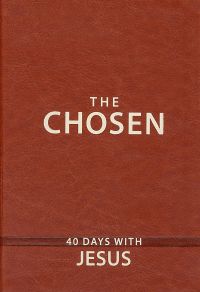
The Chosen Book OneAmanda Jenkins, Kristen Hendricks, Dallas Jenkins3h 8m4.6 (4.9K)$10 · $0.00
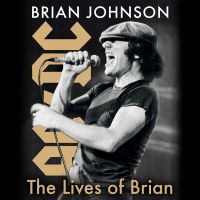
The Lives of BrianBrian Johnson9h 45m4.6 (3.5K)$29 · $0.00
Expository Thoughts on the Gospel of LukeJ.C. Ryle27h 13m4.7 (536)$18 · $0.00
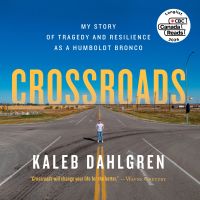
CrossroadsKaleb Dahlgren7h 56m4.6 (4.9K)$26 · $0.00

Across the RiverKent Babb11h 40m4.6 (927)$29 · $0.00
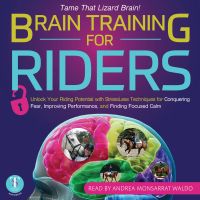
Brain Training for RidersAndrea Monsarrat Waldo5h 56m4.7 (550)$19 · $0.00

My Effin' LifeGeddy Lee17h 11m4.6 (13.1K)$40 · $0.00
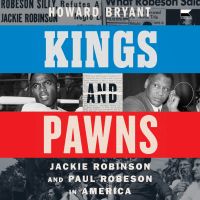
Kings and PawnsHoward Bryant10h 9m4.6 (678)$29 · $0.00

The Elementia Chronicles #2: The New OrderSean Fay Wolfe11h 17m4.6 (841)$29 · $0.00
The ActsLuke2h 55m4.6 (19.7K)$12 · $0.00

New Testament - Easy NavigationWorld English Bible19h 35m4.6 (1.3K)$1.30 · $0.00
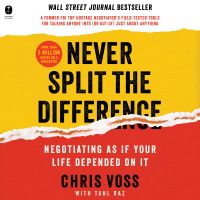
Never Split the DifferenceChris Voss, Tahl Raz8h 7m4.4 (277.7K)$26 · $0.00
The Intelligent Investor Rev Ed.Benjamin Graham17h 48m4.3 (191.5K)$40 · $0.00
The Hard Thing About Hard ThingsBen Horowitz7h 57m4.2 (134.3K)$26 · $0.00
Boundaries for LeadersHenry Cloud7h 36m4.3 (3.6K)$26 · $0.00
BuildTony Fadell11h 5m4.5 (14.3K)$8 · $0.00
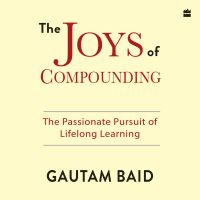
The Joys Of CompoundingGautam Baid17h 34m4.5 (2.5K)$18 · $0.00
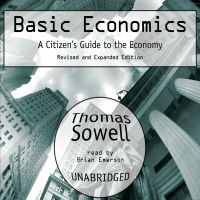
Basic EconomicsThomas Sowell18h 32m4.5 (29.3K)$28 · $0.00

Poor Charlie’s AlmanackGrover Gardener, Charles T. Munger13h 9m4.5 (24.7K)$18 · $0.00
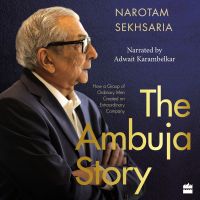
The Ambuja StoryNarotam Sekhsaria13h 59m4.5 (830)$33 · $0.00

The Secret Door to SuccessFlorence Scovel Shinn2h 25m4.5 (2.1K)$1.20 · $0.00

This Is Going to HurtAdam Kay5h 47m4.4 (444.7K)$24 · $0.00

Big TrustShadé Zahrai, Fayçal Sekkouah8h 36m4.6 (406)$26 · $0.00
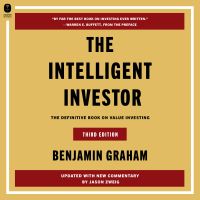
The Intelligent Investor Third EditionBenjamin Graham, Jason Zweig20h4.4 (156.6K)$46 · $0.00
Bottle of LiesKatherine Eban14h 25m4.4 (12K)$33 · $0.00
The Antiracist Business BookTrudi Lebrón6h 10m4.6 (275)$17 · $0.00
The FormulaJoshua Robinson, Jonathan Clegg10h 41m4.4 (6.9K)$29 · $0.00
Let Them LeadJohn U. Bacon7h 10m4.5 (1.4K)$24 · $0.00

Secrets of the Millionaire MindT. Harv Eker5h 11m4.4 (301.4K)$24 · $0.00
The Person You Mean to BeDolly Chugh9h 6m4.4 (7.2K)$29 · $0.00
BoundlessNick Kostov, Sean McLain9h 17m4.5 (1.1K)$29 · $0.00
You may also like
The Critique of Practical ReasonImmanuel Kant6h 30m4.1 (24.6K)$1.20 · $0.00
The Joys Of CompoundingGautam Baid17h 34m4.5 (2.5K)$18 · $0.00
Fundamental Principles of the Metaphysic of MoralsImmanuel Kant3h 21m4.0 (24.5K)$0.60 · $0.00
Nicomachean EthicsAristotle8h 51m4.3 (63.3K)$1.80 · $0.00
How to Analyze People on Sight - Through the Science of Human Analysis: The Five Human Types (Annotated)Ralph Paine Benedict, Elsie Lincoln Benedict7h 28m3.6 (4.1K)$0.99 · $0.00
Society and Solitude Twelve ChaptersRalph Waldo Emerson7h4.1 (1.4K)$2.30
A Series of Lessons in Raja YogaWilliam Walker Atkinson8h 9m4.1 (281)$2.30
The Critique of Practical ReasonImmanuel Kant6h 52m4.2 (14.9K)$3.50 · $0.00

THE LIFE OF SAMUEL JOHNSON - All 6 Volumes in One Edition (Annotated)James Boswell, Grosvenor Osgood117h 17m4.6 (1.2K)$2 · $0.00
Business BrandingAnthony Ekanem59m$4 · $0.00
I Do Good Work, But Nobody Sees It - How to Make Your Work Visible, Communicate Results, and Look After Your Career Without Turning Into a Walking Presentation of Your AchievementsMax Paradox4h 52m$7.80 · $0.00

Turn the TablesJ.M. Snyder18m3.9 (17)$1 · $0.00

I Bought the Cheapest. Now I’m Paying Twice - How to Make Smarter Buying Decisions, Assess Quality and the Total Cost of Things Without Overpaying or Buying Everything TwiceMax Paradox4h 26m$7.70 · $0.00

Selecting Projects WiselySteve Pavlina15m$4 · $0.00
Why Are We So Different? Your Guide to the 16 Personality TypesJarosław Jankowski11h$14
Fifteen Thousand Useful PhrasesGrenville Kleiser15h 35m3.5 (226)$2.30
Enjoying Rich and Abundant RelationshipsSteve Pavlina50m$6 · $0.00
High Protein Meal Prep Cookbook for BeginnersVirginia Hartwell4h 18m$10
The Wealth Around YouAdam Godwod4h 15m$6 · $0.00
The Quantum MomentRobert P. Crease, Alfred Scharff Goldhaber9h 32m3.9 (596)$23