
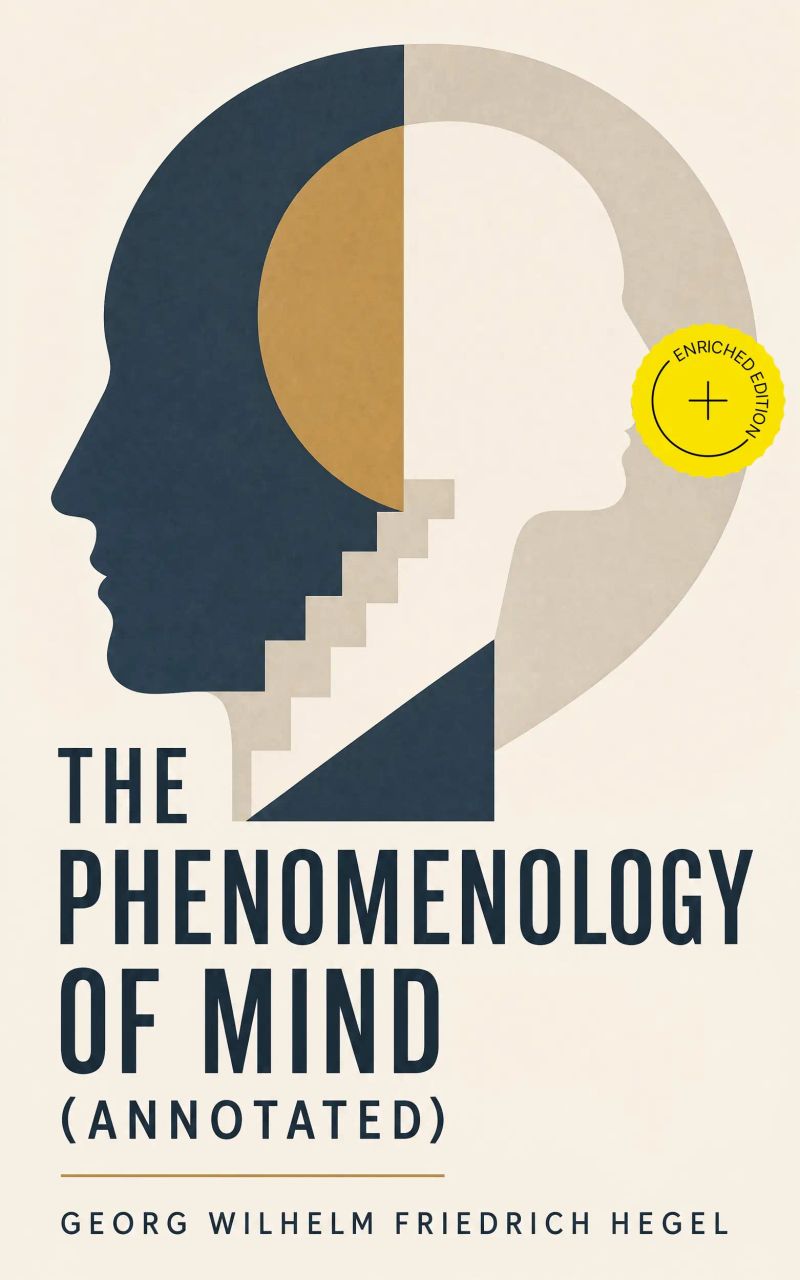
The Phenomenology of Mind (Annotated)
Enriched Edition. System of ScienceBy Georg Wilhelm Friedrich Hegel


Length28h 2m
About this audiobook
The Phenomenology of Mind is Hegel's monumental account of consciousness as it passes through successive shapes of experience toward self-knowledge, reason, spirit, religion, and absolute knowing. Written in a dense, dialectical prose that fuses philosophical argument with dramatic movement, the work stands at the summit of German Idealism and responds to Kant, Fichte, Schelling, Enlightenment rationalism, and post-Revolutionary history. Its famous analyses—master and bondsman, unhappy consciousness, ethical life, and revealed religion—make philosophy a narrative of Bildung, the education of consciousness itself. Georg Wilhelm Friedrich Hegel (1770–1831), formed by classical learning, Protestant theology, and the upheavals of the French Revolution and Napoleonic Europe, sought to understand freedom as a historical and rational achievement. His early theological and political concerns matured into a systematic philosophy in which thought, society, and history are intelligible as unfolding processes. The Phenomenology, published in 1807, introduced this ambition with unparalleled force. This book is essential for readers seeking the roots of modern continental philosophy, social theory, theology, and theories of recognition. Demanding but profoundly rewarding, it should be read slowly, with attention to its architecture and historical resonances.
This enriched edition has been carefully crafted to add value to your reading experience.
- A succinct Introduction situates the work's timeless appeal and themes.
- The Synopsis outlines the central plot, highlighting key developments without spoiling critical twists.
- A detailed Historical Context immerses you in the era's events and influences that shaped the writing.
- An Author Biography reveals milestones in the author's life, illuminating the personal insights behind the text.
- A thorough Analysis dissects symbols, motifs, and character arcs to unearth underlying meanings.
- Reflection questions prompt you to engage personally with the work's messages, connecting them to modern life.
- Hand‐picked Memorable Quotes shine a spotlight on moments of literary brilliance.
- Interactive footnotes clarify unusual references, historical allusions, and archaic phrases for an effortless, more informed read.
Audiobook details
GenrePhilosophy
Length28 hrs 2 mins
Narrated byListen with 1,000+ voices
FormateBook with Audio
Publish dateApr 22, 2020
LanguageEnglish
Table of contents
1Your Word is Your Wand (Annotated)
2Introduction
3Synopsis
4Historical Context
5Author Biography
Show all chaptersShow less
6Preface: On Scientific Knowledge
7Introduction
8A. Consciousness
9I. Certainty at the Level of Sense-Experience — The “This”, And “Meaning”
10II. Perception: Or Things and Their Deceptiveness
11III. Force and the Understanding-The World of Appearance and the Supersensible World
12B. Self-Consciousness
13IV. The Truth which Conscious Certainty of Self Realizes
14A. Independence and Dependence of Self-Consciousness Lordship and Bondage
15B. Freedom of Self-Consciousness Stoicism: Scepticism: The Unhappy Consciousness
16C. Free Concrete Mind
17V. Reason’s Certainty and Reason’s Truth
18A. Observation as a Process of Reason
19A (1). Observation of Nature
20B. Observation of Self-Consciousness in its Pure Form and in its Relation to External Reality — Logical and Psychological Laws
21C. Observation of the Relation of Self-Consciousness To its Immediate Actuality — Physiognomy and Phrenology.
22B. The Realization of Rational Self-Consciousness Through its Own Activity
23A. Pleasure and Necessity
24B. The Law of the Heart, and the Frenzy Of Self-Conceit
25C. Virtue and the Course of the World
26C. Individuality, which Takes Itself to Be Real In and for Itself
27A. Society as a Herd of Individuals: Deceit: "Actual Fact"
28B. Reason as Lawgiver
29C. Reason as Testing Laws
30VI. Spirit
31A. Objective Spirit — The Ethical Order
32A. The Ethical World: Law Human and Divine: Man and Woman
33B. Ethical Action. Knowledge, Human and Divine. Guilt and Destiny
34C. The Condition of Right or Legal Status
35B. Spirit in Self-Estrangement — The Discipline Of Culture
36I. The World of Spirit in Self-Estrangement
37II. Enlightenment
38III. Absolute Freedom and Terror
39C. Spirit in the Condition of Being Certain of Itself: Morality
40A. The Moral View of the World
41B. Dissemblance
42C. Conscience: The “Beautiful Soul”: Evil and the Forgiveness of it
43VII. Religion
44A. Natural Religion
45A. God as Light
46B. Plants and Animals as Objects of Religion
47C. The Artificer
48B. Religion in the Form of Art
49A. The Abstract Work of Art
50B. The Living Work of Art
Hegel's Phenomenology of MindGeorg Wilhelm Friedrich Hegel27h 45m4.1 (29.6K)$1.99 · $0.00
The Philosophy of MindGeorg Wilhelm Friedrich Hegel13h 18m4.1 (683)$1.99 · $0.00
Hegel's Phenomenology of Mind (Annotated)Georg Wilhelm Friedrich Hegel27h 34m4.4 (11)$1.99 · $0.00

Hegel - Premium Collection (Annotated)Georg Wilhelm Friedrich Hegel242h 8m$2 · $0.00
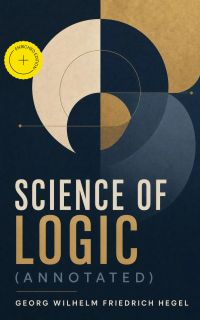
Science of Logic (Annotated)Georg Wilhelm Friedrich Hegel17h 57m4.3 (131)$2 · $0.00

The Greatest Works of G.W.F. Hegel (Annotated)Georg Wilhelm Friedrich Hegel244h 13m$2 · $0.00
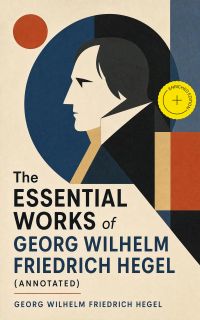
The Essential Works of Georg Wilhelm Friedrich Hegel (Annotated)Georg Wilhelm Friedrich Hegel242h 56m$2 · $0.00
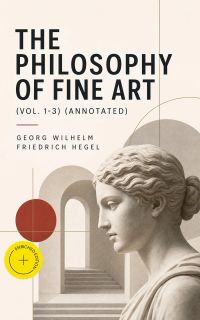
The Philosophy of Fine Art (Vol. 1-3) (Annotated)Georg Wilhelm Friedrich Hegel71h 16m$2 · $0.00

Hegel: The Science of LogicGeorg Wilhelm Friedrich Hegel17h 39m4.3 (1.8K)$1 · $0.00

The Greatest Works of G.W.F. HegelGeorg Wilhelm Friedrich Hegel242h 7m3.6 (33)$1 · $0.00

Hegel's Philosophy of MindGeorg Wilhelm Friedrich Hegel14h 28m4.0 (717)$1 · $0.00

Science of LogicGeorg Wilhelm Friedrich Hegel17h 39m4.3 (2.4K)$1 · $0.00
The Introduction to Hegel's Philosophy of Fine ArtsGeorg Wilhelm Friedrich Hegel8h 26m4.2 (189)$1 · $0.00

Science of Logic (Summarized Edition)Georg Wilhelm Friedrich Hegel3h 43m$2

Hegel: The Science of LogicGeorg Wilhelm Friedrich Hegel17h 53m4.3 (4.5K)$1.99 · $0.00
Hegel: Lectures on PhilosophyGeorg Wilhelm Friedrich Hegel86h 27m4.1 (12.7K)$2 · $0.00

The Essence of Hegel's PhilosophyGeorg Wilhelm Friedrich Hegel243h 17m$2 · $0.00
Wissenschaft der Logik (Kommentiert)Georg Wilhelm Friedrich Hegel39h 16m$1 · $0.00
The Logic of HegelGeorg Wilhelm Friedrich Hegel13h 29m4.2 (1.8K)$1 · $0.00
Metaphysics (Annotated)Aristotle13h 30m4.6 (1.2K)$2 · $0.00

Sceptical Essays (Annotated)Bertrand Russell9h 16m4.6 (1K)$2 · $0.00

WitnessAriel Burger8h 1m4.6 (1.3K)$20 · $0.00
The Magic PresenceGodfré Ray King10h 21m4.6 (307)$1.20 · $0.00

The Art of LivingThich Nhat Hanh5h 1m4.5 (14.2K)$24 · $0.00

Moral Letters to LuciliusLucius Annaeus Seneca24h 26m4.5 (71.7K)$1.99 · $0.00

Lessons in TruthH. Emilie Cady3h 50m4.5 (2.4K)$20 · $0.00
The Discourses of EpictetusP. E. MATHESOM12h 47m4.4 (17.7K)$1.20 · $0.00

IlluminationsWalter Benjamin10h 12m4.4 (16.2K)$20 · $0.00

That Bird Has My WingsJarvis Jay Masters9h 49m4.4 (13.7K)$29 · $0.00

Tâo Teh KingLaozi2h 34m4.4 (230.9K)$2 · $0.00
SymposiumPlato3h 26m4.4 (97.9K)$1.20 · $0.00

Buddhist Boot CampTimber Hawkeye2h 39m4.4 (8.4K)$18 · $0.00
Enchiridion & The Discourses of Epictetus (Annotated)Arrian Epictetus18h 9m4.4 (3.5K)$2 · $0.00

The Meditations of the Emperor Marcus Aurelius AntoninusEmperor of Rome Marcus Aurelius5h 41m4.4 (1.8M)$1 · $0.00

Crime and PunishmentFyodor Dostoevsky23h 11m4.4 (1.3M)$12 · $0.00

MeditationsMarcus Aurelius5h 52m4.4 (433.7K)$1 · $0.00

Everyday DharmaSuneel Gupta5h 2m4.5 (761)$20 · $0.00

The Joyful Wisdom ("La Gaya Scienza")Friedrich Wilhelm Nietzsche11h 37m4.4 (26.6K)$1 · $0.00
The Art of LivingEpictetus, Sharon Lebell3h 16m4.4 (50.1K)$18 · $0.00
You may also like
The Critique of Practical ReasonImmanuel Kant6h 52m4.2 (14.9K)$3.50 · $0.00
Maxims and ReflectionsJohann Wolfgang von Goethe3h 23m4.2 (1.4K)$2.30
The Logic of HegelGeorg Wilhelm Friedrich Hegel13h 29m4.2 (1.8K)$1 · $0.00

The Critique of Practical ReasonImmanuel Kant6h 30m4.1 (24.6K)$1.20 · $0.00
The Myth of the Rational Market Revised EditionJustin Fox13h 26m4.0 (5.4K)$29 · $0.00

Aristotle for EverybodyMortimer J. Adler5h 30m4.0 (3.5K)$16

THE PRINCIPLES OF PSYCHOLOGY (Complete Edition In 2 Volumes)William James62h 58m4.3 (895)$1 · $0.00
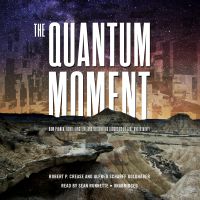
The Quantum MomentRobert P. Crease, Alfred Scharff Goldhaber9h 32m3.9 (596)$23

Piano Virtuosos: 4 Classic Books on Piano MasteryJosef Hofmann, Georges Bizet, Harriette Brower, James Francis Cooke20h 9m$1.99 · $0.00

How to Rock It like a TED TalkCathey Armillas3h 46m3.6 (128)$80

ABCD of Wealth CreationChika Achumie39m$14 · $0.00

Turn the TablesJ.M. Snyder18m3.9 (17)$1 · $0.00

A Record of Study in Aboriginal American LanguagesDaniel G. Brinton42m$2 · $0.00
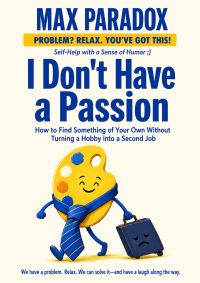
I Don't Have a Passion - How to Find Something of Your Own Without Turning a Hobby into a Second JobMax Paradox7h 40m$7.70 · $0.00

Paris Nights, and Other Impressions of Places and PeopleArnold Bennett9h 20m$1 · $0.00

EVERY MAN HIS OWN UNIVERSITY – Success & Empowerment Collection (Annotated)Russell Conwell5h 54m4.2 (19)$2 · $0.00

Ohio RBT Certification Exam Prep 2026/2027Mireille Oyelaran16h 5m$22

Woman as DecorationEmily Burbank4h 16m3.8 (69)$2 · $0.00
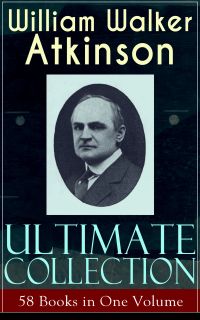
WILLIAM WALKER ATKINSON Ultimate Collection – 58 Books in One VolumeWilliam Walker Atkinson319h 5m4.6 (15)$3 · $0.00

Business BrandingAnthony Ekanem59m$4 · $0.00