


Length4h 14m
About this audiobook
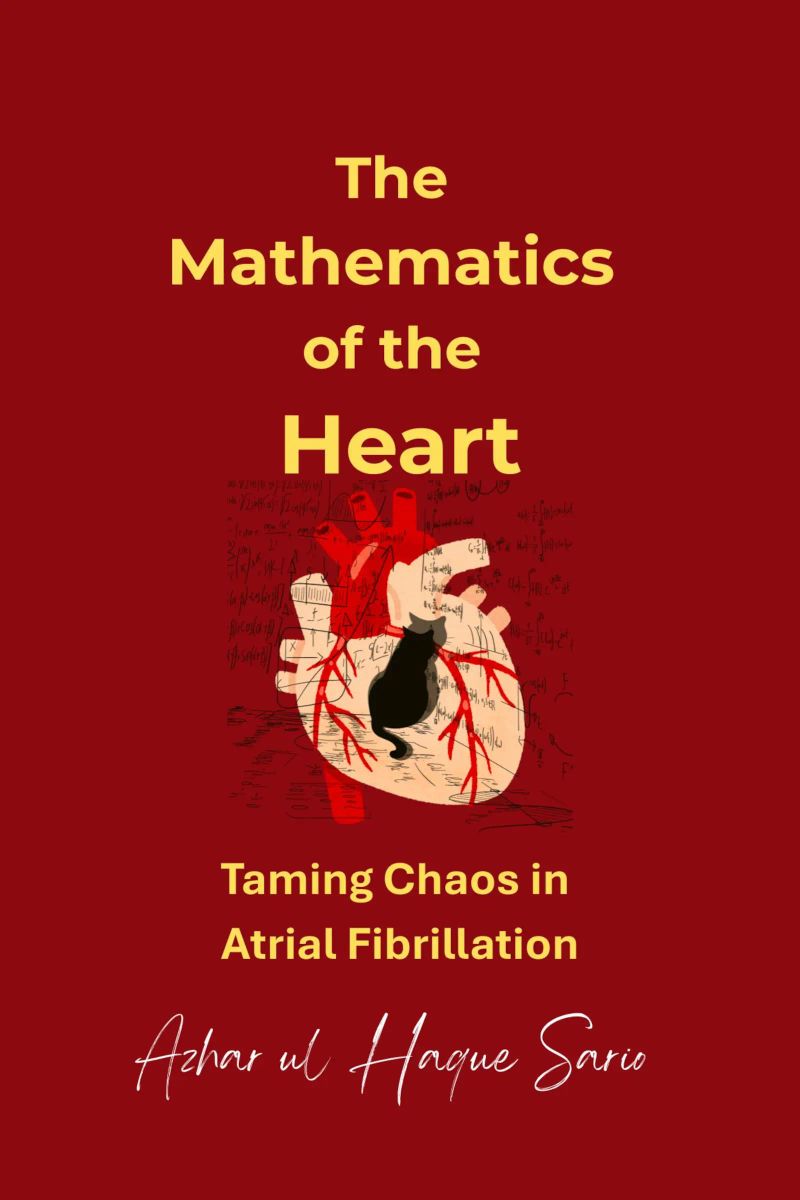
Discover the Hidden Math Behind a Beating Heart
Hey there, if you've ever wondered why hearts go haywire in atrial fibrillation (AF), this book breaks it down like a friendly chat over coffee. It starts with the basics: the heart as a biological oscillator gone chaotic. We dive into the monodomain equation that models electrical waves in cardiac tissue. Anisotropy in fiber directions stabilizes those tricky scroll waves. Ionic currents like sodium and potassium drive the nonlinear reactions. Patient-specific meshes from MRI scans bring virtual atria to life. Fractional diffusion handles fibrotic delays better than standard models. Inverse problems map conductivity to spot slow zones. Ablation tweaks boundaries to shrink reentry areas. Restitution curves explain why fast rates lead to wavebreaks. Slopes over 1 trigger alternans and rotors. Dynamic pacing builds slope maps in the lab. Drugs flatten curves to prevent chaos. Phase singularities define rotor cores with topological charge. Hilbert transforms extract phases from signals. Filaments in 3D twist through walls. Eikonal equations approximate wavefront speeds with curvature effects. Fast marching methods simulate activations quickly. Entropy quantifies signal disorder in complex electrograms. High entropy flags rotor pivots. Frequency hierarchies reveal dominant drivers via Fourier analysis. Gradients show mother rotors overdriving tissue. Drift equations predict rotor movement toward scars. Percolation theory explains fibrosis thresholds for zig-zag conduction. Fractal dimensions measure scar roughness for anchoring risks. Graph theory finds minimum cuts to break circuits. Hopf bifurcations model triggers like early afterdepolarizations. Bioheat equations govern ablation heating. Bayesian inference guides decisions under uncertainty. Optimization minimizes ablation costs. Digital twins integrate multi-physics for personalized sims.
What sets this book apart is its laser focus on math as the cure, not just a tool—other books skim the surface with biology or procedures, but here we connect equations directly to clinical wins, like using topology to pinpoint rotors or percolation to homogenize scars. No fluff; it's a roadmap from chaos theory to bedside, filling gaps in fragmented texts by weaving non-linear dynamics, simulations, and real-world apps into one cohesive story. You'll get why empirical ablations fail and how computational engineering triumphs, with fresh insights from recent models that outdated books miss.
This book is independently produced under nominative fair use. The author has no affiliation with any board or entity mentioned.
Audiobook details
GenreHealth and Wellness, Self-Help
Length4 hrs 14 mins
Narrated byListen with 1,000+ voices
FormateBook with Audio
Publish dateNov 24, 2025
LanguageEnglish
Table of contents
1The Substrate of Propagation — The Monodomain Formulation
2The Genesis of Instability — The Restitution Curve
3The Topology of Rotation — Phase Singularities and Topological Charge
4The Geometry of Speed — The Eikonal-Curvature Equation
5Quantifying Disorder — Shannon Entropy and Information Theory
Show all chaptersShow less
6The Frequency Hierarchy — Fourier Analysis and the Dominant Frequency
7The Dynamics of Motion — The Rotor Drift Equation
8The Percolating Mesh — Fibrosis and Thresholds
9The Fractal Geometry — The Hausdorff Dimension
10The Network of Waves — Graph Theory and the Minimum Cut
11The Trigger — Early Afterdepolarizations and Hopf Bifurcations
12The Physics of Burning — The Bioheat Equation
13The Probability of Success — Bayesian Inference
14Optimization — The Cost Function
15Integration — The Digital Twin and Multi-Scale Modeling
16Conclusion: The Mathematical Cure
17About Author
Series

Architecting ProficiencyAzhar ul Haque Sario3h 26m$7

Architecting the Digital FortressAzhar ul Haque Sario3h 27m$7
Forging Silicon LogicAzhar ul Haque Sario3h 22m$7

Artificial Intelligence Implications for Business Strategy for 2026Azhar ul Haque Sario4h 57m5.0 (1)$7

Introduction to Engineering Mechanics for 2026Azhar ul Haque Sario5h 41m$7

Teenage Psychology for 2026Azhar ul Haque Sario3h 17m$7
Introduction to Computer Science 2026Azhar ul Haque Sario3h 27m$7
Machine Learning Specialization 2026Azhar ul Haque Sario2h 56m$7
Thermodynamics and Propulsion 2026Azhar ul Haque Sario3h 32m$7

How Thinking Machines Build FutureAzhar ul Haque Sario5h 20m$8

Constitutional AI and Principle Aligned ArchitecturesAzhar ul Haque Sario5h 30m$8
Advanced Compute Architectures and Deep Learning AccelerationAzhar ul Haque Sario5h 31m$8
Grow Your Wealth MindsetAzhar ul Haque Sario5h 33m$7

Your Freedom the Invisible WealthAzhar ul Haque Sario5h 28m$7

Dental Anesthesia and Behavioral Pain Management in 2026Azhar ul Haque Sario5h 3m$7

Making Agreements Fair and AgileAzhar ul Haque Sario5h 29m$7
Think Beyond FearAzhar ul Haque Sario5h 45m$7

The Complete LawyerAzhar ul Haque Sario5h 41m$7
Evolution Directs TomorrowAzhar ul Haque Sario5h 41m$7
Master Your Mind in 2026Azhar ul Haque Sario5h 58m$7

The Dangerous Truth about Today’s MarijuanaLaura Stack CSP, MBA9h 57m4.7 (385)$20 · $0.00
Hour of the HeartIrvin D. Yalom, Benjamin Yalom8h 19m4.6 (2.3K)$26 · $0.00

The Yoga Sutras of PatanjaliPatanjali4h 8m4.5 (18.5K)$6 · $0.00

The Lost VoiceGreta Morgan8h 30m4.7 (285)$26 · $0.00

Healthy Kids, Happy KidsElisa Song14h 18m4.6 (760)$33 · $0.00

Eat It!Jordan Syatt, Michael Vacanti4h 40m4.6 (1.5K)$20 · $0.00

Consent Laid BareChanel Contos7h 11m4.5 (1.7K)$24 · $0.00

How to Make Disease DisappearRangan Chatterjee5h 26m4.5 (3.5K)$24 · $0.00

The Complete Herbal (Annotated)Nicholas Culpeper29h 8m4.5 (1.4K)$2 · $0.00

A Plague Upon Our HouseScott W. Atlas MD10h 37m4.5 (3.4K)$20 · $0.00

The Cancer CodeDr. Jason Fung10h 48m4.5 (5.3K)$29 · $0.00

The Gift of TherapyIrvin Yalom7h 39m4.5 (38.8K)$26 · $0.00

EarlySarah DiGregorio9h 47m4.5 (1.3K)$29 · $0.00

Bottle of LiesKatherine Eban14h 25m4.4 (12K)$33 · $0.00
The 36-Hour DayNancy L. Mace, Peter V. Rabins17h 13m4.4 (9.2K)$28 · $0.00

FlooredSara Reardon10h 36m4.5 (1K)$29 · $0.00

Radical RemissionKelly A. Turner9h 26m4.4 (8.1K)$29 · $0.00

The Sinatra SolutionStephen T. Sinatra MD9h4.5 (899)$20 · $0.00

The Songaminute ManSimon McDermott6h 12m4.5 (280)$24 · $0.00
Sometimes BrilliantLarry Brilliant12h 27m4.5 (954)$29 · $0.00
Learning to PrayJames Martin13h 24m4.5 (3.4K)$33 · $0.00

Autism Out Loud: the instant New York Times Bestseller. Moving Stories and Parenting Lessons Learned from Three Mothers of Children with AutismKate Swenson, Carrie Cariello, Adrian Wood8h 41m4.8 (2.1K)$26 · $0.00

The StepsSylvester Stallone9h 4m4.8 (635)$29 · $0.00
Swayam Ki AwaazPrem Rawat8h 34m4.7 (1.1K)$26 · $0.00

Forever BoyKate Swenson9h 27m4.7 (5K)$29 · $0.00

You Are Worth ItKyle Carpenter, Don Yaeger8h 53m4.7 (4.8K)$29 · $0.00

The Happiest Man on EarthEddie Jaku3h 48m4.6 (178K)$7 · $0.00

Finding MeViola Davis9h 15m4.6 (256.4K)$29 · $0.00

Spiritual AnatomyDaaji Kamlesh D. Patel9h 47m4.7 (319)$29 · $0.00
The Dangerous Truth about Today’s MarijuanaLaura Stack CSP, MBA9h 57m4.7 (385)$20 · $0.00
The Gospel according to Spiritualism (Translated)Allan Kardec14h 39m4.6 (3.9K)$5.70 · $0.00

Birdie & HarlowTaylor Wolfe7h 50m4.6 (6.5K)$26 · $0.00

CrossroadsKaleb Dahlgren7h 56m4.6 (4.9K)$26 · $0.00

Life on the BridgeKaelynn Partlow5h 40m4.6 (1.1K)$24 · $0.00

Keep Your Love OnDanny Silk9h 4m4.6 (8.1K)$10 · $0.00

The Tao of Joy Every DayDerek Lin10h 24m4.6 (762)$20 · $0.00

UndividedVicky Beeching9h 2m4.6 (1.3K)$29 · $0.00

HE CAN WHO THINKS HE CAN & OTHER BOOKS ON SUCCESSOrison Swett Marden5h 54m4.6 (1.2K)$1.99 · $0.00
Level UpRob Dial7h 42m4.6 (3.3K)$26 · $0.00
Burn the HaystackJennie Young, PhD9h 30m4.6 (543)$29 · $0.00
You may also like
Collected Writings of Nikola TeslaThomas Commerford Martin, Nikola Tesla19h 42m4.4 (2.8K)$1.99 · $0.00
Day Trading AttentionGary Vaynerchuk8h 25m4.3 (1.8K)$28 · $0.00

CryonicsEthan D. Anderson6h 12m$6.40 · $0.00
C++ for Ethical HackingJulian Asante7h 38m$5
THE SUNO AI PROMPT BOOKHarold M.Stevens1h 52m$9

Blockchain : The technology that will transform commerceUnknown Author1h 9m$17 · $0.00

Artificial Intelligence for Game DevelopmentTheo Riven4h 41m$5

Business-Englisch lernen Audio - Eine kraftvolle PräsentationMelita Cameron-Wood58m$17

Tomorrow’s MedicineScientific American6h 6m3.9 (113)$17
Data-ismSteve Lohr6h 34m3.6 (686)$24 · $0.00
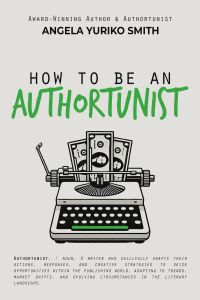
How To Be an AuthortunistAngela Yuriko Smith4h 12m4.5 (17) Only with Ultra

Meet Me in the MiddleGary Vaynerchuk9m3.6 (26)$4 · $0.00
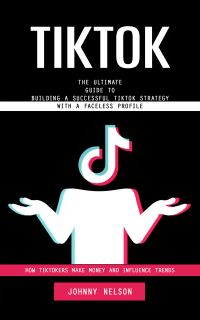
Tiktok: How Tiktokers Make Money and Influence Trends (The Ultimate Guide to Building a Successful Tiktok Strategy With a Faceless Profile)Johnny Nelson38m$3.50 · $0.00
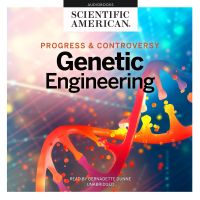
Genetic EngineeringScientific American9h 24m4.3 (162)$20

Quantum Mechanics for Applied NanotechnologyMarcus Lawn18h 20m$10

Javascript. A Comprehensive Manual For Creating Dynamic, Responsive Websites And ApplicationsIbrahim Nugwa Abdulrazak8h$16 · $0.00
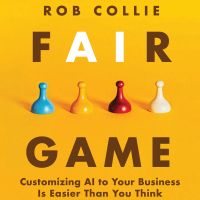
Fair GameRob Collie9h 39m3.9 (32)$20 · $0.00
Law of Startups in Brazil and the WorldVitor Mendonça Prado3h 51m$12 · $0.00
Deep Learning on the JVMSofia Halloran7h 31m$5 · $0.00
Claude Code for Modern DevelopersLeon Grant8h 21m$6.50 · $0.00