
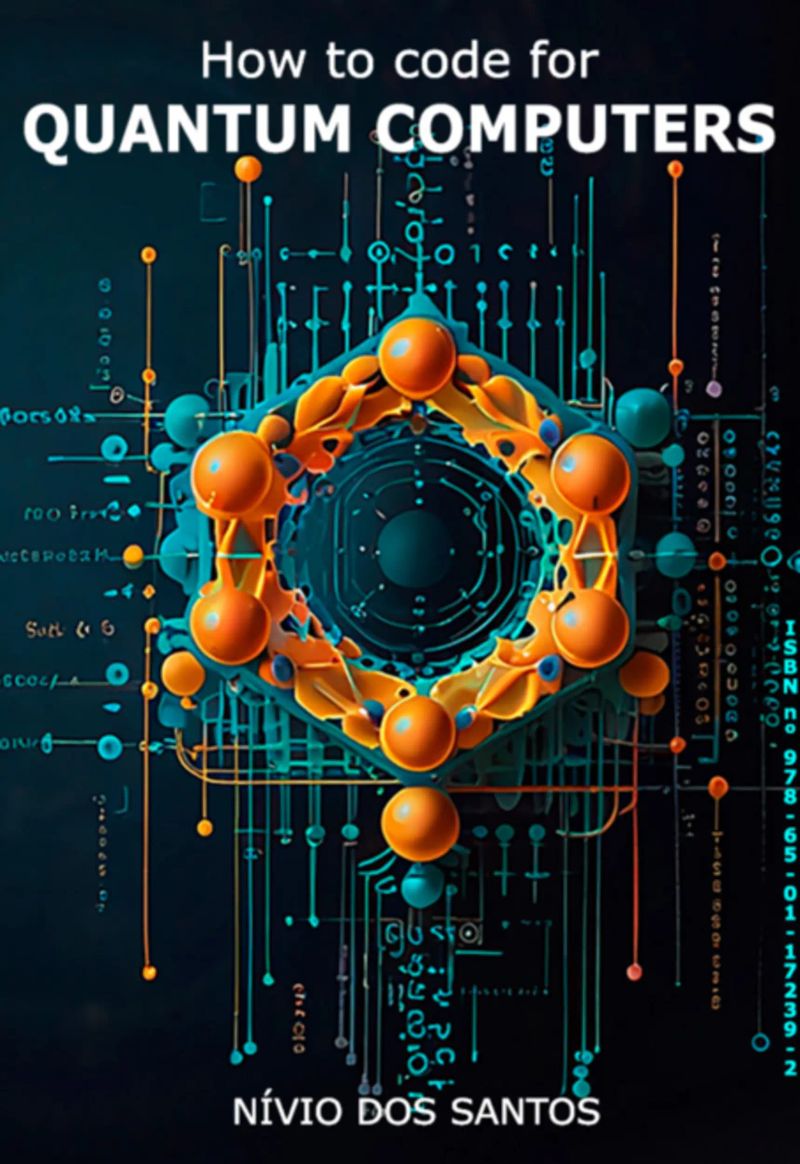
How To Code For Quantum Computers
By Nivio Dos Santos


Length2h 18m
About this audiobook
As quantum computing rapidly evolves, professionals and tech enthusiasts are seeking ways to stay ahead of the curve. Traditional programming knowledge isn't enough, and understanding quantum computing concepts is becoming essential for future tech leaders. However, many find learning quantum computing intimidating due to its complexity, lack of clear resources, and steep learning curve. Existing materials are either too theoretical or overly technical, making it difficult to get started. Without the right guide, aspiring developers risk falling behind in a field that will soon revolutionize industries. Missing out on understanding quantum programming could mean losing competitive advantage in tech-driven careers. How to code for Quantum Computers offers a clear, step-by-step approach, breaking down complex concepts into manageable, practical examples. With Cirq code examples and hands-on projects, this book empowers readers to master quantum programming, opening doors to cutting-edge opportunities and career advancements, it do this using three classic algorithms, Deutsch–Jozsa, Grover, and Shor as a foundation for study, along with the famous quantum teleportation protocol, taking care of starting from basic concepts such as qubits and gates and circuit. The complete source codes for sample programs using Cirq from Google Research and Python on Jupyter Notebook are available in a public Bitbucket repository.
Audiobook details
GenreTechnology
Length2 hrs 18 mins
Narrated byListen with 1,000+ voices
FormateBook with Audio
Publish dateOct 20, 2024
LanguageEnglish
Table of contents
1First Edition
2Introduction to Quantum Computing
3Required background
4Code examples: Cirq
5The illustration
Show all chaptersShow less
6Conventional Bit vs Qubit
7Double-slit experiment
8Bra Ket Notation
9Probabilities: What Are Complex Numbers?
10Why are amplitudes complex Numbers?: Quick view in a Qubit
11What more?
12Real-Valued vs. Complex-Valued Quantum Theories
13Quantum Entanglement
14Entanglement Exchange Experiment
15Navascués' Proposal
16Conclusion about Complex Numbers
17Unitary matrix
18Visual representation
19Bloch Sphere: Where does this equation come from?
20Circle Notation: Circle Notation for multi-Qubit scenarios
21Choosing the Right Tool
22Qubits and Quantum Gates
23Basic Gates with a single Qubit
24The Identity Gate
25Pauli Gates - Pauli X
26Pauli Gates - Pauli Y
27Pauli Gates - Pauli Z
28Hadamard Gate
29Phase Gate
30RXGate
31RYGate
32Read/Measurement
33Get down to business:
34Notation used with Google Cirq
35Code example to achieve a specific state |Ψ>
36Gates for Multiple Qubits
37CNOT Gate
38Bell State
39Investigating |Θ+> Bell state
40Toffoli - CCNOT
41CPhase and CZ: Phase KickBack
42SWAP
43Combining Gates
44Quantum Teleportation
45Short fictional story: The Teleportation Process
46The Math Behind this Quantum Teleportation
47Sending/modulating
48Receiving/demodulating
49Conclusion
50Deutsch–Jozsa algorithm

Operation PedestalMax Hastings12h 29m4.4 (5.2K)$29 · $0.00
When the Heavens Went on SaleAshlee Vance18h 20m4.4 (3K)$40 · $0.00
Everybody Has a Podcast (Except You)Justin McElroy, Travis McElroy, Griffin McElroy5h 9m4.3 (2.3K)$24 · $0.00

Hands of TimeRebecca Struthers8h 8m4.4 (1.3K)$26 · $0.00
Never Lost AgainBill Kilday10h 1m4.4 (805)$29 · $0.00
How the Internet HappenedBrian McCullough13h 28m4.3 (2.7K)$23 · $0.00
Collected Writings of Nikola TeslaNikola Tesla, Thomas Commerford Martin21h 50m4.3 (1.7K)$1 · $0.00

Just AspireAjai Chowdhry9h 13m4.4 (260)$29 · $0.00

The Little Book of AliensAdam Frank8h 20m4.3 (1.3K)$26 · $0.00
The inventions, researches and writings of Nikola Tesla (Annotated)Thomas Commerford Martin16h 59m4.3 (1.3K)$2 · $0.00

KargilV.P. Malik15h 18m4.3 (2K)$24 · $0.00
Experiments with Alternating CurrentsNikola Tesla9h 16m4.3 (874)$1.99 · $0.00

Fire on the HorizonTom Shroder, John Konrad8h 23m4.3 (858)$26 · $0.00

The Smell of Kerosene (Annotated)National Aeronautics and Space Administration, Donald L. Mallick, Peter W. Merlin11h 32m4.3 (523)$2 · $0.00

The Boy Who Harnessed the WindWilliam Kamkwamba, Bryan Mealer10h 5m4.2 (78.9K)$29 · $0.00

Across the Airless WildsEarl Swift10h 8m4.3 (1.3K)$29 · $0.00

Console WarsBlake J. Harris20h 41m4.2 (13.7K)$46 · $0.00

Improvised Munitions HandbookU.S. Department of Defense4h 49m4.3 (1.6K)$1.99 · $0.00
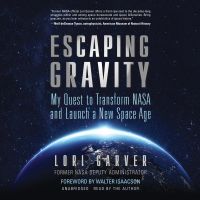
Escaping GravityLori Garver10h 54m4.2 (2.2K)$20 · $0.00

Wireless WarsJonathan Pelson8h 2m4.3 (418)$20 · $0.00
You may also like
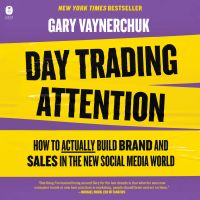
Day Trading AttentionGary Vaynerchuk8h 25m4.3 (1.8K)$28 · $0.00
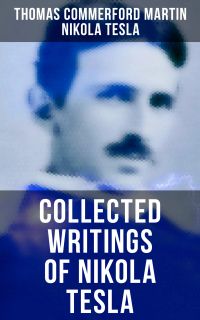
Collected Writings of Nikola TeslaThomas Commerford Martin, Nikola Tesla19h 42m4.4 (2.8K)$1.99 · $0.00
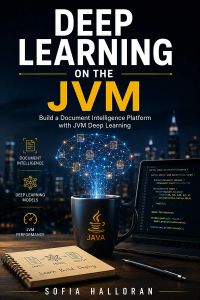
Deep Learning on the JVMSofia Halloran7h 31m$5 · $0.00
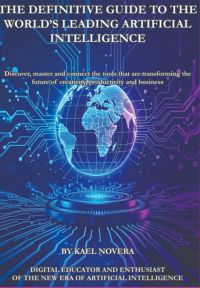
The Definitive Guide To The World's Leading Artificial IntelligenceKael Novera6h 51m$8 · $0.00

Story Behind HyperfaceRekha Balakrishnan9m$4

Generation and Transfer of Knowledge for Digital TransformationUnknown Author6h 15m$8 · $0.00
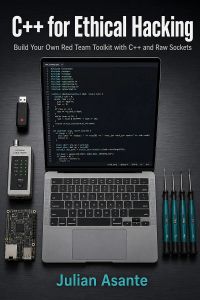
C++ for Ethical HackingJulian Asante7h 38m$5

The Future Of Enterprise AIJasper Livingstone6h 5m$10

Computers on the FarmDeborah Takiff Smith1h 21m$2 · $0.00

Artificial IntelligenceJ.C.Lesko2h 43m$15 · $0.00

The Hidden Power of AI for Financial GrowthNora V. Halden3h 33m5.0 (1)$2.30 · $0.00
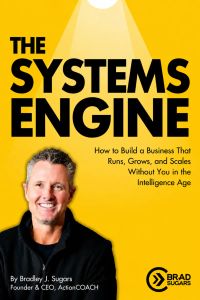
The Systems EngineBradley J Sugars1h 54m3.9 (115)Free
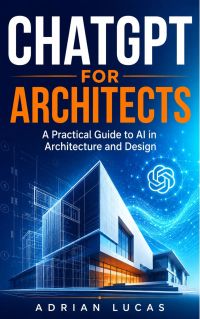
ChatGPT for ArchitectsAdrian Lucas2h 43m$4 · $0.00

Email Marketing: The Ultimate Guide to Building an Email List Asset (How to Compel Your Subscribers to Open Your Emails and Take Action Now)Howard Steward1h$3.50 · $0.00

YOUR FIRST SEVEN DAYSKIM URCHALA33m$3
Neural Networks Without PythonPaloma Iqbal7h 29m$5 · $0.00
Signal Processing for Electrical EngineersHelen Marchetti12h 6m$80

Leading in the Age of Artificial IntelligenceJasper Livingstone9h 37m$14.50 · $0.00
CLAUDE CODE MASTERY 2026Smart Alden6h 5m$8.50 · $0.00
Master AiHenrique Xavier Oliveira2h 5m$6 · $0.00