
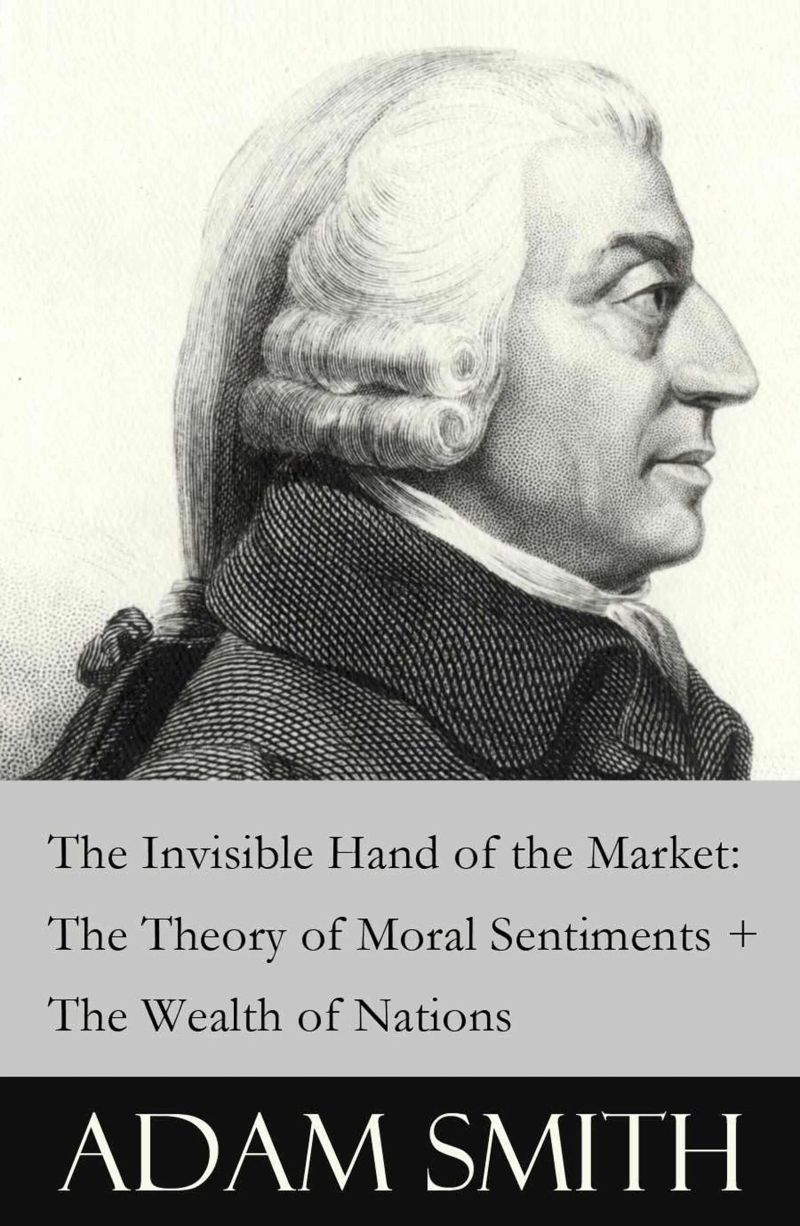
The Invisible Hand of the Market: The Theory of Moral Sentiments + The Wealth of Nations (2 Pioneering Studies of Capitalism)
By Adam Smith


Length48h 31m
About this audiobook
This carefully crafted ebook: "The Invisible Hand of the Market: The Theory of Moral Sentiments + The Wealth of Nations (2 Pioneering Studies of Capitalism)" is formatted for your eReader with a functional and detailed table of contents. The invisible hand of the market is a metaphor conceived by Adam Smith to describe the self-regulating behavior of the marketplace. The exact phrase is used just three times in Smith's writings, but has come to capture his important claim that individuals' efforts to maximize their own gains in a free market benefits society, even if the ambitious have no benevolent intentions. Smith came up with the two meanings of the phrase from Richard Cantillon who developed both economic applications in his model of the isolated estate. He first introduced the concept in The Theory of Moral Sentiments, written in 1759. In this work, however, the idea of the market is not discussed, and the word "capitalism" is never used. By the time he wrote The Wealth of Nations in 1776, Smith had studied the economic models of the French Physiocrats for many years, and in this work the invisible hand is more directly linked to the concept of the market: specifically that it is competition between buyers and sellers that channels the profit motive of individuals on both sides of the transaction such that improved products are produced and at lower costs.
Audiobook details
GenreBusiness and Economics
Length48 hrs 31 mins
Narrated byListen with 1,000+ voices
FormateBook with Audio
Publish dateJul 10, 2013
LanguageEnglish
Table of contents
1The Invisible Hand of the Market: The Theory of Moral Sentiments + The Wealth of Nations (2 Pioneering Studies of Capitalism): Table of Contents
46Chapter 11 Of the Rent of Land
2The Invisible Hand of the Market: The Theory of Moral Sentiments
471. First Period
3PART I
482. Second Period
4Chap. I: Of Sympathy
493. Third Period
5Chap. II: Of the Pleasure of mutual Sympathy
504. First Sort
Show all chaptersShow less
6Chap. III: Of the manner in which we judge of the propriety or impropriety of the affections of other men, by their concord or dissonance with our own.
515. Second Sort
7Chap. IV: The same subject continued
526. Third Sort
8Chap. V: Of the amiable and respectable virtues
537. Conclusion of the chapter
9Section II: Of the Degrees of the different Passions which are consistent with Propriety
54Part 2 Of the Nature, Accumulation, and Employment of Stock
10Introduction
55Chapter 1 Of the Division of Stock
11Chap. I: Of the Passions which take their origin from the body
56Chapter 2 Of Money considered as a particular Branch of the general Stock of the Society, or of the Experience of maintaining the National Capital
12Chap. II: Of those Passions which take their origin from a particular turn or habit of the Imagination
57Chapter 3 Of the Accumulation of Capital, or of productive and unproductive Labour
13Chap. III: Of the unsocial Passions
58Chapter 4 Of Stock lent at Interest
14Chap. IV: Of the social Passions
59Chapter 5 Of the different Employment of Capitals
15Chap. V: Of the selfish Passions
60Part 3 Of the different Progress of Opulence in different Nations
16Section III: Of the Effects of Prosperity and Adversity upon the Judgment of Mankind with regard to the Propriety of Action; and why it is more easy to obtain their Aprobation in the one state than in the other
61Chapter 1 Of the Natural Progress of Opulence
17Chap. I: That though our sympathy with sorrow is generally a more lively sensation than our sympathy with joy, it commonly falls much more short of the violence of what is naturally felt by the person principally concerned
62Chapter 2 Of the Discouragement of Agriculture in the ancient State of Europe after the Fall of the Roman Empire
18Chap. II: Of the origin of Ambition, and of the distinction of Ranks
63Chapter 3 Of the Rise and Progress of Cities and Towns, after the Fall of the Roman Empire
19Chap. III: Of the corruption of our moral sentiments, which is occasioned by this disposition to admire the rich and the great, and to despise or neglect persons of poor and mean condition
64Chapter 4 How the Commerce of the Towns contributed to the Improvement of the Country
20PART IV
65Chapter 1 Of the Principle of the commercial, or mercantile System
21Chap. I: Of the beauty which the appearance of Utility bestows upon all the productions of art, and of the extensive influence of this species of Beauty
66Chapter 2 Of Restraints upon the Importation from foreign Countries of such Goods as can be produced at Home
22Chap. II: Of the beauty which the appearance of Utility bestows upon the characters and actions of men; and how far the perception of this beauty may be regarded as one of the original principles of approbation
67Chapter 3 Of the extraordinary Restraints upon the Importation of Goods of almost all Kinds, from those Countries with which the Balance is supposed to be disadvantageous
23PART V
681. Of the Unreasonableness of those Restraints even upon the Principles of the Commercial System
24Chap. I : Of the Influence of Custom and Fashion upon our Notions of Beauty and Deformity
692. Of the Unreasonableness of those extraordinary Restraints upon other Principles
25Chap. II : Of the Influence of Custom and Fashion upon Moral Sentiments
70Chapter 4 Of Drawbacks
26Introduction
71Chapter 5 Of Bounties
27Section I : Of the Character of the Individual, so far as it affects his own Happiness; or of Prudence
72Chapter 6 Of Treaties of Commerce
28Section II : Of the Character of the Individual, so far as it can affect the Happiness of other People
73Chapter 7 Of Colonies
29Chap. I : Of the Order in which Individuals are recommended by Nature to our care and attention
741. Of the Motives for establishing new Colonies
30Chap. II : Of the order in which Societies are by nature recommended to our Beneficence
752. Causes of Prosperity of New Colonies
31Chap. III : Of universal Benevolence
763. Of the Advantages which Europe has derived from the Discovery of America, and from that of a Passage to the East Indies by the Cape of Good Hope
32Section III : Of Self-command
77Chapter 8 Conclusion of the Mercantile System
33Conclusion of the Sixth Part
78Chapter 9 Of the Agricultural Systems, or of those Systems of Political Economy, which represent the Produce of Land, as either the sole or the principal Source of the Revenue and Wealth of every Country
34The Wealth of Nations
79Chapter 1 Of the Expences of the Sovereign or Commonwealth
35Introduction and plan of the work
801. Of the Expense of Defence
36Chapter 1 Of the Division of Labour
812. Of the Expense of Justice
37Chapter 2 Of the Principle which gives Occasion to the Division of Labour
823. Of the Expense of Public Works and Public Institutions (pt. 1)
38Chapter 3 That the Division of Labour is limited by the Extent of the Market
833. Of the Expense of Public Works and Public Institutions (pt. 2)
39Chapter 4 Of the Origin and Use of Money
844. Of the Expense of Supporting the Dignity of the Sovereign
40Chapter 5 Of the real and nominal Price of Commodities, or of their Price in Labour, and their Price in Money
855. Conclusion
41Chapter 6 Of the component Parts of the Price of Commodities
86Chapter 2 Of the Sources of the general or public Revenue of the Society
42Chapter 7 Of the natural and market Price of Commodities
871. Of the Funds or Sources of Revenue which may peculiarly belong to the Sovereign or Commonwealth
43Chapter 8 Of the Wages of Labour
882. Of Taxes (pt. 1)
44Chapter 9 Of the Profits of Stock
892. Of Taxes (pt. 2)
45Chapter 10 Of Wages and Profit in the different Employments of Labour and Stock
90Chapter 3 Of public Debts

Analytic Summary of The Wealth of NationsAdam Smith31m$7 · $0.00

Analytic Summary of The Wealth of NationsAdam Smith22m$7 · $0.00

The Essays of Adam SmithAdam Smith20h 38m$1 · $0.00

An Inquiry Into the Nature and Causes of the Wealth of NationsAdam Smith, M. Garnier35h 14m$2 · $0.00

An Inquiry into the Nature and Causes of the Wealth of NationsAdam Smith43h 7m$2 · $0.00

The Invisible Hand of the Market: The Theory of Moral Sentiments + The Wealth of NationsAdam Smith59h 8m$2 · $0.00

Der Wohlstand der Nationen (Zusammengefasste Ausgabe)Adam Smith9h 3m$2

Masterworks That Defined the Utilitarian Tradition – 4 Classic Moral Philosophy TextsAdam Smith, David Hume, Jeremy Bentham, Henry Sidgwick54h 31m$2

Der Wohlstand der NationenAdam Smith43h 37m$2 · $0.00

500 citações de grandes filósofos do século 18Adam Smith, Denis Diderot, Georg Christoph Lichtenberg, Nicolas de Chamfort, Pierre Augustin Caron de Beaumarchais2h 2m$8 · $0.00

600 citaten van de grote schrijvers uit de 18e eeuwAdam Smith, Charles de Montesquieu, Denis Diderot, Georg Christoph Lichtenberg, Jean-Jacques Rousseau, Pierre-Augustin Caron de Beaumarchais, Charles Montesquieu2h 55m$8 · $0.00

600 citat från 1700-talets stora författareAdam Smith, Charles de Montesquieu, Denis Diderot, Georg Christoph Lichtenberg, Jean-Jacques Rousseau, Pierre-Augustin Caron de Beaumarchais2h 35m$8 · $0.00

500 citazioni dei grandi filosofi del XVIII secoloAdam Smith, Denis Diderot, Georg Christoph Lichtenberg, Nicolas de Chamfort, Pierre Augustin Caron de Beaumarchais2h 17m$8 · $0.00

500 citat från 1700-talets stora filosoferAdam Smith, Denis Diderot, Georg Christoph Lichtenberg, Nicolas de Chamfort, Pierre Augustin Caron de Beaumarchais2h 12m$8 · $0.00

The Money GameAdam Smith7h 42m$15 · $0.00

600 Zitate von den großen Schriftstellern des 18. JahrhundertsAdam Smith, Charles de Montesquieu, Denis Diderot, Georg Christoph Lichtenberg, Jean-Jacques Rousseau, Pierre-Augustin Caron de Beaumarchais3h 25m$8 · $0.00

The Wealth of NationsAdam Smith45h 12m$40 · $0.00

100 sitater fra Adam SmithAdam Smith27m$5 · $0.00

600 citazioni dei grandi scrittori del XVIII secoloAdam Smith, Charles de Montesquieu, Denis Diderot, Georg Christoph Lichtenberg, Jean-Jacques Rousseau, Pierre-Augustin Caron de Beaumarchais2h 43m$8 · $0.00

The Business of StoriesSusan Payton3h 58m$20 · $0.00

A Bridge Not Too FarDeepak Ohri4h 55m$15

AretéBrian Johnson19h 57m$35

Level UpRob Dial7h 42m$26 · $0.00

Hal Moore on LeadershipHarold G. Moore, Mike Guardia5h 6m$17
Basic Economics, Fifth EditionThomas Sowell28h 6m$40

The Goals ProgramZig Ziglar4h 34m$20

The Stocks & ETF Compass: A Guide to Wealth, High Standard of Living, and Secure Retirement through Intelligent Investment in the Stock Market and Passive Income – Including Starter GuideJens Hattermann4h 9m$20 · $0.00

Eat It!Jordan Syatt, Michael Vacanti4h 40m$20 · $0.00

Not Everything Counts but Everything Matters: The powerful and inspirational new book about leadership and achieving success from the visionary multi-premiership winning Panthers coachIvan Cleary6h 1m$24 · $0.00

Leads MachineFrancis Rodino6h 30m$27 · $0.00

CAPITAL (Complete 3 Volume Edition)Karl Marx111h 13m$2 · $0.00

BuildTony Fadell11h 5m$8 · $0.00

The Entrepreneur Roller CoasterDarren Hardy7h 8m$17

The Law of Success in Sixteen LessonsNapoleon Hill1h 31m$2 · $0.00

The Ambuja StoryNarotam Sekhsaria13h 59m$33 · $0.00

Military Culture ShiftCorie Weathers13h 13m$25 · $0.00

Saving Social CareNeil Eastwood4h 54m$18 · $0.00

Big TrustShadé Zahrai, Fayçal Sekkouah8h 36m$26 · $0.00

SocialismLudwig von Mises24h 8m$30
You may also like

The Bdsm Game BookJideon Francisco Marques2h 12m$9 · $0.00

On ColorDavid Scott Kastan5h 54m$20

Wilkie CollinsPeter Ackroyd6h 59m$17

Craftsmanship in TeachingWilliam C. Bagley7h 30m$2 · $0.00

The Complete Works of Thorstein VeblenThorstein Veblen117h 4m$1 · $0.00

How to Read Human Nature, Its Inner States and Outer FormsWilliam Walker Atkinson3h 27m$2.30

Business-Englisch lernen Audio Sonderedition - Small TalkCarol Scheunemann1h 7m$20

How to Study and Teaching How to StudyFrank M. McMurry9h 2m$2 · $0.00

The Collected Works of Immanuel KantImmanuel Kant83h 35m$2 · $0.00

A Handbook of Ethical TheoryGeorge Stuart Fullerton8h 52m$2 · $0.00

Mind Your F**king BusinessDominic Monkhouse4h 41m$23 · $0.00

The Critique of Practical Reason (Theory of Moral Reasoning)Immanuel Kant6h 51m$2 · $0.00

The Critique of JudgmentImmanuel Kant16h 22m$2 · $0.00

Critique of Practical Reason (Kritik der praktischen Vernunft)Immanuel Kant6h 50m$2 · $0.00

The Imp Of The PerverseEdgar Allan Poe16m$2.30

Anti-Semitism in the United StatesLee J. Levinger4h 31m$1 · $0.00

You Have More Influence Than You ThinkVanessa Bohns6h 24m$17 · $0.00

Return to ReasonScientific American3h 24m$15 · $0.00

Notes on NosesEden Warwick6h 3m$2 · $0.00

The Physical Basis of MindGeorge Henry Lewes20h 14m$2 · $0.00