
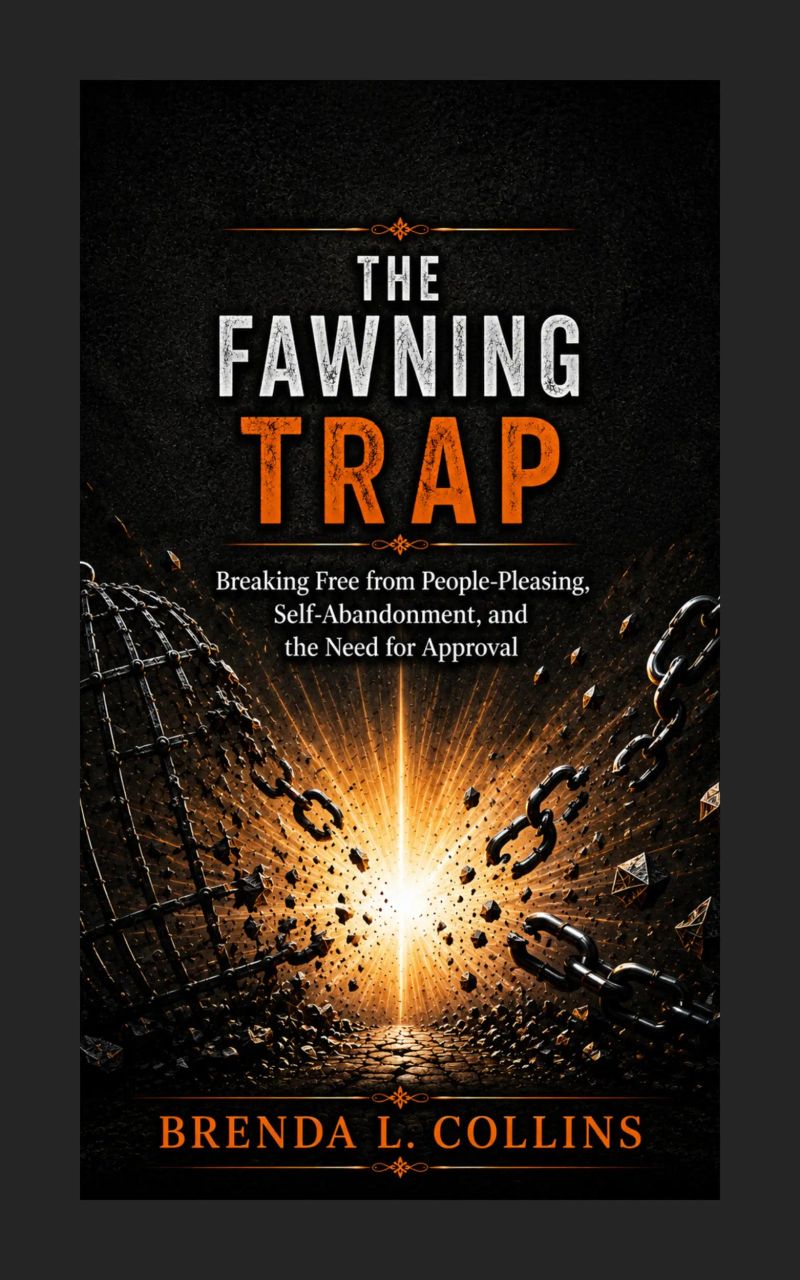
The Fawning Trap
Breaking Free from People-Pleasing, Self-Abandonment, and the Need for ApprovalBy Brenda L. Collins

Length5h 36m
About this audiobook
Why do you say "yes" when every part of you wants to say "no"?
Do you constantly put other people's needs before your own, avoid conflict at all costs, or feel responsible for everyone else's emotions? If so, you may be caught in the fawning response—a survival pattern that disguises itself as kindness while quietly eroding your identity.
The Fawning Trap explores the psychology behind chronic people-pleasing, emotional self-abandonment, and the deep need for approval. Drawing on trauma-informed psychological principles and practical self-reflection, this book helps you understand where these patterns come from, why they persist, and how to begin changing them.
Inside, you'll learn how to:
●Recognize the hidden signs of the fawn response.
●Understand how childhood experiences shape adult relationships.
●Break free from guilt, approval-seeking, and chronic self-sacrifice.
●Build healthy boundaries without losing your compassion.
●Reconnect with your authentic identity and emotional needs.
●Develop relationships based on honesty instead of fear.
Whether you've struggled with people-pleasing for years or are only beginning to recognize the pattern, this book offers compassionate insight and practical guidance for lasting change.
You don't have to earn love by abandoning yourself. The path back to your authentic self begins here.
Audiobook details
GenreSelf-Help
Length5 hrs 36 mins
Narrated byListen with 1,000+ voices
FormateBook with Audio
Publish dateJul 12, 2026
LanguageEnglish
Table of contents
1The Fawning Trap
2CHAPTER ONE
3When Kindness Becomes a Survival Strategy
4Understanding Where People-Pleasing Really Comes From
5What the Developing Brain Is Actually Doing
Show all chaptersShow less
6The Many Quiet Doorways Into the Pattern
7Why This Reframe Changes Everything
8A Moment to Sit With
9One More Thing Worth Naming
10CHAPTER TWO
11The Face You Learned to Wear
12How the Fawn Response Develops in Childhood and Early Relationships
13Why Fawning Hides So Well
14The Mechanics of Becoming Someone Else
15How the Pattern Deepens Beyond the Family
16Locating the Earliest Thread
17The Question of What Comes Next
18The Story You Tell, Revisited
19CHAPTER THREE
20Agreeable on the Outside, Disappearing on the Inside
21Recognizing the Hidden Cost of Constant Compliance
22The Invisible Ledger
23Why the Labor Stays Invisible
24The Quiet Mathematics of Self-Erasure
25Why Disappearing Is Not the End of the Story
26A Note on the Difference Between Disappearing and Adapting
27CHAPTER FOUR
28The Exhaustion Nobody Talks About
29Why Fawning Drains Your Energy, Identity, and Self-Worth
30The Physiology of an Invisible Job
31The Performance Tax
32The Erosion of Self-Worth
33The Arc of Identity Erosion
34Why Naming the Exhaustion Changes Its Texture
35What Genuine Rest Requires
36CHAPTER FIVE
37Your Nervous System Is Not Broken, It Is Protecting You
38The Trauma Science Behind the Fawn Response
39Redefining a Misunderstood Word
40The Logic of a Fourth Strategy
41Why the Lesson Outlasts the Threat
42What "Giving It Better Information" Actually Requires
43Why This Understanding Deserves to Be Returned To
44CHAPTER SIX
45The Four Faces of Fawning
46How People-Pleasing Shows Up in Love, Work, Friendship, and Family
47Fawning in Romantic Relationships
48Fawning at Work
49Fawning in Friendships
50Fawning in Family
Learning to PrayJames Martin13h 24m4.5 (3.4K)$33 · $0.00

Truth Without ApologyAcharya Prashant6h 41m4.8 (2.2K)$18 · $0.00

Autism Out Loud: the instant New York Times Bestseller. Moving Stories and Parenting Lessons Learned from Three Mothers of Children with AutismKate Swenson, Carrie Cariello, Adrian Wood8h 41m4.8 (2.1K)$26 · $0.00

Swayam Ki AwaazPrem Rawat8h 34m4.7 (1.1K)$26 · $0.00

Forever BoyKate Swenson9h 27m4.7 (5K)$29 · $0.00

You Are Worth ItKyle Carpenter, Don Yaeger8h 53m4.7 (4.8K)$29 · $0.00

The Happiest Man on EarthEddie Jaku3h 48m4.6 (178K)$7 · $0.00

Finding MeViola Davis9h 15m4.6 (256.4K)$29 · $0.00

Spiritual AnatomyDaaji Kamlesh D. Patel9h 47m4.7 (319)$29 · $0.00

The Dangerous Truth about Today’s MarijuanaLaura Stack CSP, MBA9h 57m4.7 (385)$20 · $0.00

The Gospel according to Spiritualism (Translated)Allan Kardec14h 39m4.6 (3.9K)$5.70 · $0.00

Birdie & HarlowTaylor Wolfe7h 50m4.6 (6.5K)$26 · $0.00

CrossroadsKaleb Dahlgren7h 56m4.6 (4.9K)$26 · $0.00

Life on the BridgeKaelynn Partlow5h 40m4.6 (1.1K)$24 · $0.00

Keep Your Love OnDanny Silk9h 4m4.6 (8.1K)$10 · $0.00

The Tao of Joy Every DayDerek Lin10h 24m4.6 (762)$20 · $0.00

UndividedVicky Beeching9h 2m4.6 (1.3K)$29 · $0.00

HE CAN WHO THINKS HE CAN & OTHER BOOKS ON SUCCESSOrison Swett Marden5h 54m4.6 (1.2K)$1.99 · $0.00
Level UpRob Dial7h 42m4.6 (3.3K)$26 · $0.00

Burn the HaystackJennie Young, PhD9h 30m4.6 (543)$29 · $0.00
You may also like

Seize the DaySaul Bellow3h 47m3.8 (20.3K)$12

BlockedWillow R.3h 48m4.2 (4.5K)$6.40 · $0.00

Will I Ever Be Free of You?Dr. Karyl McBride PhD6h 45m4.2 (970)$20

The Dance of ConnectionHarriet Lerner4h 39m4.3 (5.5K)$20 · $0.00

Sister SisterBabygirl Daniels3h 26m4.5 (463)$15

EarlySarah DiGregorio9h 47m4.5 (1.3K)$29 · $0.00
Narcissism: Revolutionary Ways for Extraordinary Emotional Abuse Recovery (Understanding Narcissistic Behaviour, Coping Strategies, Set Boundaries, Boost Self-Esteem)John Ziegler2h 55m$3.50 · $0.00

Empath No MoreDelia Fontaine3h 33m$15 · $0.00
Fake LoveNova Gibson8h 59m4.4 (231)$29 · $0.00

New Dad, Not OkayImad Muratspahic3h 55m$11 · $0.00

Living With a Hoarder You LoveImad Muratspahic3h 1m$12 · $0.00

The Courage to DisappointTarun Mankar2h 52m4.5 (21)Free

In Sickness and in HealthLaura Mauldin6h 49m4.3 (125)$24 · $0.00

Depressed Partner Survival GuideImad Muratspahic3h 50m$12 · $0.00

Good in a CrisisMargaret Overton7h 57m3.6 (733)$22 · $0.00

Unwanted DivorceImad Muratspahic3h 47m$12 · $0.00

Love Across the MilesImad Muratspahic1h 56m$7.30 · $0.00
How To Do The Hard ThingsJason Clarke, Elena Brooks4h 35m$17 · $0.00
The Invisible ThreadValerio Massimo1h 27m$8.20 · $0.00

Unfaithful HeartsIsabella K. Huntington3h 53m$4.10 · $0.00