
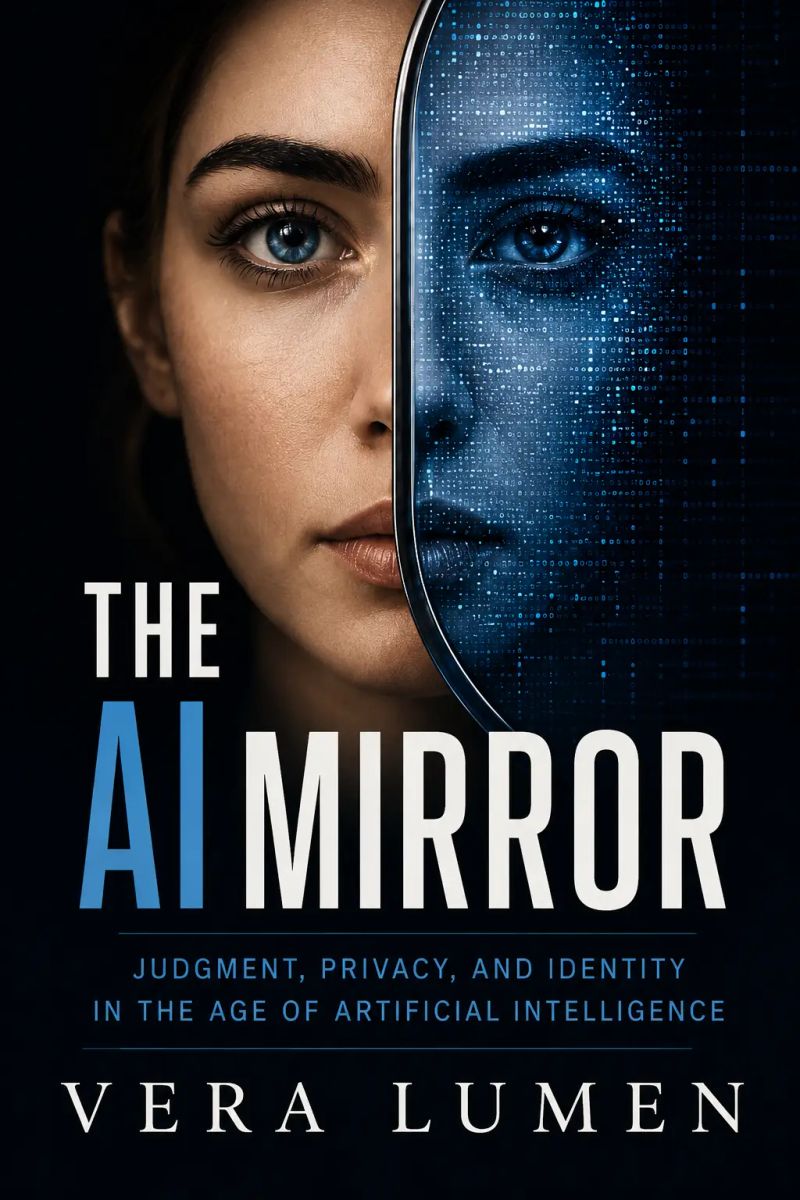
The AI Mirror
Judgment, Privacy, and Identity in the Age of Artificial IntelligenceBy Vera Lumen


Length5h 8m
About this audiobook
Artificial intelligence is already helping people write, decide, learn, work, search, create, and think.
But every useful tool creates a new question: what should remain yours?
The AI Mirror is a calm, practical guide to judgment, privacy, and identity in the age of artificial intelligence. Vera Lumen explores how AI can support human life without quietly replacing human responsibility, personal voice, memory, effort, or discernment.
This is not a prompt manual. It is not anti-AI. It is a guide to using AI deliberately, with clear boundaries and a stronger sense of what should never be surrendered for speed or convenience.
For workers, parents, students, creators, and everyday users, The AI Mirror offers a human-centered way to stay clear, private, capable, and responsible in a world where machines are beginning to think with us.
Audiobook details
GenreTechnology, Philosophy
Length5 hrs 8 mins
Narrated byListen with 1,000+ voices
FormateBook with Audio
Publish dateJun 12, 2026
LanguageEnglish
Table of contents
1The AI Mirror
2A Note on the Purpose of This Book
3Introduction: The Tool That Looks Back
4How to Use This Book
5Part I: The Mirror Arrives
Show all chaptersShow less
6Chapter 1: The First Time the Machine Sounds Reasonable
7Chapter 2: Not Just a Tool, Not Quite a Mind
8Chapter 3: The Difference Between Help and Replacement
9Chapter 4: Unexamined Use
10Part II: Judgment Under Pressure
11Chapter 5: The Confidence Problem
12Chapter 6: When Convenience Becomes Dependence
13Chapter 7: The Outsourced Decision
14Chapter 8: The Last Word Rule
15Part III: Privacy and the Self You Upload
16Chapter 9: The Things You Should Not Tell a Machine
17Chapter 10: Your Data Is Not Just Data
18Chapter 11: The Diary, the Therapist, the Lawyer, and the Friend
19Chapter 12: The Memory Problem
20Part IV: Voice, Creativity, and Original Thought
21Chapter 13: The Sentence That Does Not Sound Like You
22Chapter 14: Writing With AI Without Losing Your Voice
23Chapter 15: Creativity Is Not Just Output
24Chapter 16: The Drafting Partner, Not the Replacement Self
25Part V: Children, Learning, and Effort
26Chapter 17: The Homework Shortcut That Becomes a Habit
27Chapter 18: What Children Still Need to Struggle With
28Chapter 19: AI Tutors, False Confidence, and Real Understanding
29Chapter 20: A Family Rulebook for AI Use
30Part VI: Work, Status, and Responsibility
31Chapter 21: The New Office Ghostwriter
32Chapter 22: When Everyone Sounds Competent
33Chapter 23: The Risk of Not Knowing What You Submitted
34Chapter 24: Confidential Work, Private Clients, and the Prompt Box
35Chapter 25: How to Stay Useful When Tools Get Better
36Part VII: The Human Line
37Chapter 26: What AI Should Never Decide Alone
38Chapter 27: The Questions to Ask Before You Outsource
39Chapter 28: Your Personal AI Rules
40Chapter 29: The Family and Team Conversation
41Chapter 30: Keeping the Mirror in Its Place
42Conclusion: Stay Human on Purpose
43Audiobook Note on Appendices
44Appendix A: The Human Line Worksheet
45The one question
46The seven questions
47How to read your answers
48What to do when a question flags
49A one-day practice
50Appendix B: The Red-Zone Input List

Die Kraft der tiefen GefühleMira Ellison3h 21m$4.99

Du wirst es zu spät merkenNadia Brandt5h 49m$4.99

Die Zuverlässigen sagen nichtsSela Marchetti6h 27m$4.99

Lange Tage, Kurze JahreAdam Vesey 5h 11m$4.99

Es lag nie am GehaltAlec Fenwick4h 6m$4.99

Alles gut. Der Ring widersprichtMalin Reuter3h 26m$4.99

Montag fang ich anHugh Garrow7h 56m$9.99

I’ll Start MondayHugh Garrow6h 42m$9.99

Von dir freigegebenMalcolm Ridge8h 6m$4.99
You Approved ThisMalcolm Ridge7h 2m$4.99

Du hast recht. Sagt die KI.Peter Vennor6h 17m$9.99

It Always Takes Your SidePeter Vennor5h 27m$4.99

Hören ist umsonst. Zuhören nicht.Cora Bendt7h 14m$4.99
Hearing Is Free. Listening Costs.Cora Bendt6h 17m$4.99

Nobody Told You the Pension Was GoneNadia Brandt5h 58m$2.99

You Look Fine From HereSela Marchetti6h 7m$2.99
It Was Never the SalaryAlec Fenwick3h 36m$2.99

Long Days, Short YearsAdam Vesey4h 32m$2.99

You Were ThereEdith Rannoch3h 58m$2.99
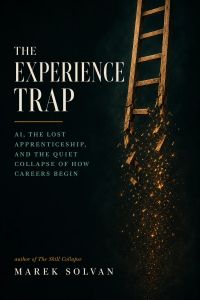
The Experience TrapMarek Solvan5h 51m$2.99
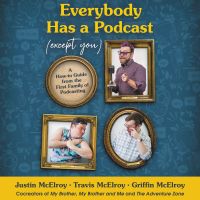
Everybody Has a Podcast (Except You)Justin McElroy, Travis McElroy, Griffin McElroy5h 9m4.3 (2.3K)$24 · $0.00

Hands of TimeRebecca Struthers8h 8m4.4 (1.3K)$26 · $0.00
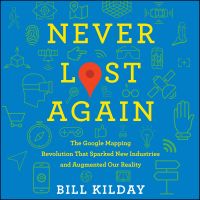
Never Lost AgainBill Kilday10h 1m4.4 (805)$29 · $0.00
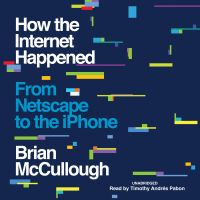
How the Internet HappenedBrian McCullough13h 28m4.3 (2.7K)$23 · $0.00

Collected Writings of Nikola TeslaNikola Tesla, Thomas Commerford Martin21h 50m4.3 (1.7K)$1 · $0.00

Just AspireAjai Chowdhry9h 13m4.4 (260)$29 · $0.00

The Little Book of AliensAdam Frank8h 20m4.3 (1.3K)$26 · $0.00

The inventions, researches and writings of Nikola Tesla (Annotated)Thomas Commerford Martin16h 59m4.3 (1.3K)$2 · $0.00

KargilV.P. Malik15h 18m4.3 (2K)$24 · $0.00
Experiments with Alternating CurrentsNikola Tesla9h 16m4.3 (874)$1.99 · $0.00

Fire on the HorizonTom Shroder, John Konrad8h 23m4.3 (858)$26 · $0.00

The Smell of Kerosene (Annotated)National Aeronautics and Space Administration, Donald L. Mallick, Peter W. Merlin11h 32m4.3 (523)$2 · $0.00

The Boy Who Harnessed the WindWilliam Kamkwamba, Bryan Mealer10h 5m4.2 (78.9K)$29 · $0.00

Across the Airless WildsEarl Swift10h 8m4.3 (1.3K)$29 · $0.00

Console WarsBlake J. Harris20h 41m4.2 (13.7K)$46 · $0.00

Improvised Munitions HandbookU.S. Department of Defense4h 49m4.3 (1.6K)$0.99 · $0.00
Escaping GravityLori Garver10h 54m4.2 (2.2K)$20 · $0.00

Wireless WarsJonathan Pelson8h 2m4.3 (418)$20 · $0.00

Let There Be WaterSeth M. Siegel8h 36m4.2 (2.3K)$20 · $0.00
The PerfectionistsSimon Winchester11h 46m4.2 (9.9K)$29 · $0.00

The Art of LivingThich Nhat Hanh5h 1m4.5 (14.2K)$24 · $0.00

Moral Letters to LuciliusLucius Annaeus Seneca24h 26m4.5 (71.7K)$0.99 · $0.00

Lessons in TruthH. Emilie Cady3h 50m4.5 (2.4K)$20 · $0.00
Letters from a StoicSeneca6h 5m4.4 (80.4K)$6 · $0.00
The Discourses of EpictetusP. E. MATHESOM12h 47m4.4 (17.7K)$1.20 · $0.00
IlluminationsWalter Benjamin10h 12m4.4 (16.2K)$20 · $0.00
That Bird Has My WingsJarvis Jay Masters9h 49m4.4 (13.7K)$29 · $0.00

Tâo Teh KingLaozi2h 34m4.4 (230.9K)$2 · $0.00

SymposiumPlato3h 26m4.4 (97.9K)$1.20 · $0.00

Buddhist Boot CampTimber Hawkeye2h 39m4.4 (8.4K)$18 · $0.00
Enchiridion & The Discourses of Epictetus (Annotated)Arrian Epictetus18h 9m4.4 (3.5K)$2 · $0.00

The Meditations of the Emperor Marcus Aurelius AntoninusEmperor of Rome Marcus Aurelius5h 41m4.4 (1.8M)$1 · $0.00
Crime and PunishmentFyodor Dostoevsky23h 11m4.4 (1.3M)$12 · $0.00

MeditationsMarcus Aurelius5h 52m4.4 (433.7K)$1 · $0.00
Everyday DharmaSuneel Gupta5h 2m4.5 (761)$20 · $0.00

The Joyful Wisdom ("La Gaya Scienza")Friedrich Wilhelm Nietzsche11h 37m4.4 (26.6K)$1 · $0.00
The Art of LivingEpictetus, Sharon Lebell3h 16m4.4 (50.1K)$18 · $0.00
MeditationsEmperor Of Rome Marcus Aurelius7h 23m4.3 (477.5K)$1.20 · $0.00

The Imitation of ChristThomas à Kempis6h 27m4.3 (84.6K)$21 · $0.00

Sadhana: the realisation of lifeRabindranath Tagore3h 49m4.4 (8.6K)$6 · $0.00
You may also like
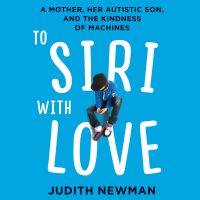
To Siri with LoveJudith Newman5h 49m3.7 (3K)$24 · $0.00
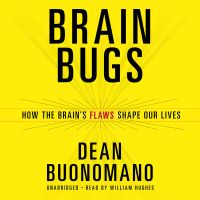
Brain BugsDean Buonomano8h 38m3.9 (3.5K)$20

The House of Hidden MeaningsRuPaul7h 7m4.1 (34.3K)$24 · $0.00

Incidental InventionsElena Ferrante3h 6m3.9 (5.7K)$15 · $0.00

Look at MeJennifer Egan19h 59m3.7 (19.1K)$30

ShockedPatricia Volk5h 31m3.6 (1.2K)$20
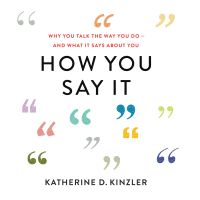
How You Say ItKatherine D. Kinzler7h 17m3.9 (1.6K)$24 · $0.00

ChildhoodLeo Tolstoy4h 8m3.9 (14K)$0.60 · $0.00
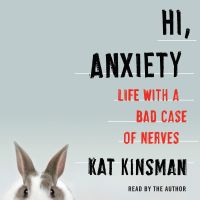
Hi, AnxietyKat Kinsman6h 51m3.8 (1.6K)$24 · $0.00

The Four FeathersA. E. W. Mason11h 42m4.0 (7.7K)$3

Dancing on My OwnSimon Wu6h 47m4.1 (286)$24 · $0.00

Rare ObjectsKathleen Tessaro13h 29m3.9 (8.6K)$33 · $0.00

The Last SeptemberElizabeth Bowen9h 4m3.6 (5.6K)$20 · $0.00

The Marriage Trap: The new 2026 story of rebellion and freedom from the bestselling author of The Radio Hour. For readers of Lessons in ChemistryVictoria Purman8h 55m4.0 (266)$29 · $0.00
Practical Education (Vol.1&2)Maria Edgeworth, Richard Lovell Edgeworth23h 31m3.8 (26)$1.99 · $0.00

How to Protect Your Child's Image and Privacy in the Age of AIMax Paradox9h 24m$7.80 · $0.00

I May Be Too Close to My Chatbot - How to Use AI Without Replacing Everyone You KnowMax Paradox6h 29m$7.80 · $0.00

His Brain, Her BrainScientific American5h 35m4.1 (103)$17 · $0.00

Broken BrainsIan Mitchell BSc, DPhil7h 17m4.0 (33)$17 · $0.00

The Power of Baby Milestones- How They Shape Your Child's FutureAurora Brooks1h 33m$3.50 · $0.00