
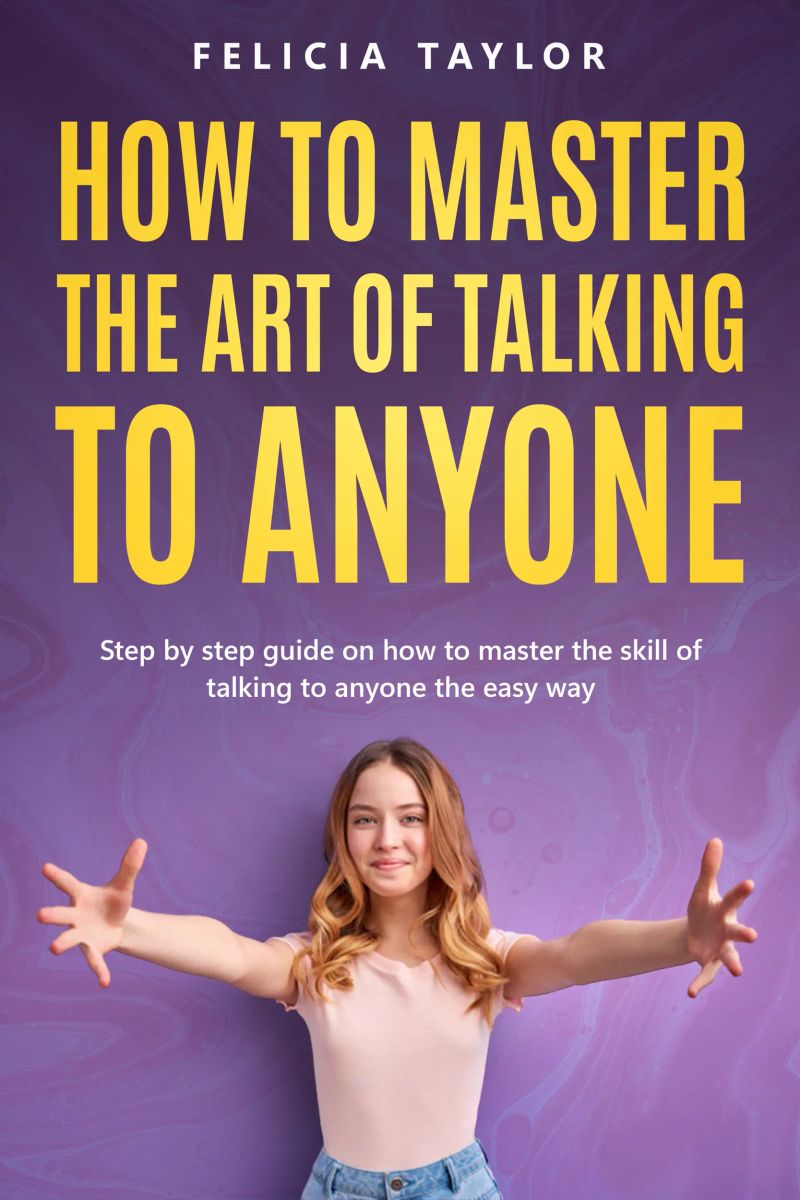
How To Master the Art of Talking to Anyone
Step by Step Guide on How to Master the Skill of Talking to Anyone the Easy WayBy Felicia Taylor


Length1h 20m
About this audiobook
Do you constantly find yourself in a position where you don't know what to say or how to say it, or you tend to keep quiet when around people because you feel that your conversations aren't great or you have nothing to say, cannot start conversations or even sustain small talk and you desperately wish to improve and perfect your ability to talk to other people without feeling tongue tied or awkward around friends, family and even strangers?
And, are you looking for a blueprint that will give you the much-needed direction on how to master or improve the skill of talking to other people irrespective of who they are?
If you've answered YES,
This book will provide the much-needed direction, step-by-step, on how to master the art of talking to anyone and never look back!
Talking is one of the greatest forms of expression which is used in every day to day life. And even though it's advised to talk less and listen more, it is important to make sure that your conversations don't feel awkward or forced during those times you need or have to speak. Like any other art, e.g., music, movies, poetry, or visual art, people love, understand best, and appreciate conversations.
The fact that you are here is evidence that you understand and appreciate that talking is a key factor in both your personal and professional relationships and are looking to transform from being the misfit to being a social butterfly that can talk to anyone without forcing it.
Perhaps you are looking for answers to all the questions going through your mind…
Can I really have an easier time talking to anyone?
Where do I begin?
How do I tell when to start conversations and when not to?
How do I hold conversations after the initial pleasantries without coming off awkward or repeating the same old things?
How do I get the people I talk to actually stay engaged in the conversations – to ensure I am not just the only one talking?
If these are some of your questions, keep reading this book to learn more about how to perfect this delicate art!
From it, you will learn:
What are social skills
How social skills can better your life
The dos and don'ts of a conversation
The golden attributes of a good conversation
What social shyness is, its causes, disadvantages, and how to overcome them
Social anxiety and its causes
Social phobia complications
How to overcome social anxiety/phobia
Causes of low self-confidence
Why you need confidence in communication
How to build your confidence in communication
The relationship between talking and listening
The main causes of listening problems
The benefits of being a good listener
How to better your listening skills
How to handle disagreements in conversations
How to identify and deal with criticism in conversation
And much more!
Even if you've always lacked the courage and confidence to express yourself, especially in a crowd, this book will transform your story, and within no time, you will look back and be happy that you decided to get this piece!
Scroll up and click Buy Now With 1-Click or Buy Now to get started!
Audiobook details
GenreSelf-Help, Psychology
Length1 hr 20 mins
Narrated byListen with 1,000+ voices
FormateBook with Audio
Publish dateMay 9, 2025
LanguageEnglish
Table of contents
1Chapter 1: Social Skills – An Overview
2What Are Social Skills?
3Proof That Social Skills Will Better Your Life
4Poor social skills come with hidden costs
5Social skills will help you cement and better your relationship
Show all chaptersShow less
6Great social skills will better your communication skills
7Great social skills will make you more efficient
8Great social skills will help advance your career prospects
9Great social skills will make you more trustful
10Great social skills will help you solve problems with minor damage
11Chapter 2: Dos and Don’ts of Conversations
12Conversations Don’ts
13If you are in a group, do not talk to only one person
14Refrain from engaging in “one-upping” strategies
15Do not overdo the sharing/talking
16Refrain from using some words
17Conversations Dos
18Always have topics ready
19Custom-make the conversation to fit the listener’s preferences
20Wait your turn
21Chapter 3: The 7 Golden Attributes Of Any Conversation
22Rule 1: Great Conversations Must Have Great Descriptions
23Rule 2: Great Conversations Must Have Great Comparisons and Contrasts
24Rule 3: Great Conversations Must Have Great Non-Verbal Communication
25Rule 4: Great Conversations Must Have A Great Outlook
26Rule 5: Great Conversations Must Have Great Human Attributes
27Rule 6: Great Conversations Have Healthy Levels Of Playfulness
28Rule 7: Great Conversations Have Open-Ended Questions
29Chapter 4: Shyness – Eliminating It So You Can Talk To Anyone Confidently
30What Causes Social Shyness?
31Genetics
32Life experiences
33Disadvantages of Being Shy
34How to Overcome Shyness
35Stop self-identifying as “shy”
36Start with baby steps
37Focus on your strengths
38Practice positive self-talk
39Chapter 5: Social Anxiety –How to Eliminate it to Become a Great Conversationalist
40What Causes Social Phobia Or Worsens It?
41Having gone through negative experiences
42Family history/Genetics
43New work and social demands
44Having a condition or appearance that draws attention
45Stress buildup
46Personality
47Drugs or alcohol
48Social Phobia/Anxiety Complications
49How to Overcome Social Phobia/Anxiety
50Start Small
More from Felicia Taylor

Learning to PrayJames Martin13h 24m4.5 (3.4K)$33 · $0.00

Birdie & HarlowTaylor Wolfe7h 50m4.6 (6.5K)$26 · $0.00

CrossroadsKaleb Dahlgren7h 56m4.6 (4.9K)$26 · $0.00

Life on the BridgeKaelynn Partlow5h 40m4.6 (1.1K)$24 · $0.00

Keep Your Love OnDanny Silk9h 4m4.6 (8.1K)$10 · $0.00
The Tao of Joy Every DayDerek Lin10h 24m4.6 (762)$20 · $0.00
UndividedVicky Beeching9h 2m4.6 (1.3K)$29 · $0.00
Level UpRob Dial7h 42m4.6 (3.3K)$26 · $0.00

Burn the HaystackJennie Young, PhD9h 30m4.6 (543)$29 · $0.00
ACRES OF DIAMONDS: Our Every-day Opportunities (Wisdom & Empowerment Series) (Annotated)Russell Conwell2h 26m4.6 (1K)$2 · $0.00

Good InsideBecky Kennedy9h 55m4.5 (59.3K)$29 · $0.00

The Lost VoiceGreta Morgan8h 30m4.7 (285)$26 · $0.00

Stripped DownBunnie Xo8h 25m4.5 (32.9K)$26 · $0.00

UnthinkableJamie Raskin15h 8m4.5 (9.3K)$8 · $0.00

Wallace D. Wattles Ultimate Collection Wallace D. Wattles16h 53m4.6 (1.3K)$1 · $0.00
Inquire WithinIn-Q2h 18m4.6 (993)$16 · $0.00

Under His WingsEmily Compagno7h 16m4.6 (848)$22 · $0.00

Eat It!Jordan Syatt, Michael Vacanti4h 40m4.6 (1.5K)$20 · $0.00

Not Everything Counts but Everything Matters: The powerful and inspirational new book about leadership and achieving success from the visionary multi-premiership winning Panthers coachIvan Cleary6h 1m4.6 (680)$24 · $0.00
The Double Dangerous Book for BoysConn Iggulden9h 10m4.5 (2.4K)$29 · $0.00
What to Make of a LifeJim Collins13h 31m4.4 (793)$33 · $0.00
Braving the TruthRachel Held Evans11h 31m4.7 (359)$29 · $0.00
Level UpRob Dial7h 42m4.6 (3.3K)$26 · $0.00

As a JewSarah Hurwitz8h 36m4.6 (1.2K)$26 · $0.00
Burn the HaystackJennie Young, PhD9h 30m4.6 (543)$29 · $0.00

Woman and the New Race (Annotated)Margaret Sanger6h 30m4.6 (1K)$1.99 · $0.00
Good InsideBecky Kennedy9h 55m4.5 (59.3K)$29 · $0.00

Du Bois: EssaysW.E.B. Du Bois6h 22m4.6 (1.5K)$1 · $0.00

The North American Indian (Illustrated Edition)Edward S. Curtis, Frederick Webb Hodge5h 59m4.6 (1.4K)$2 · $0.00

Valley of the BirdtailAndrew Stobo Sniderman, Douglas Sanderson10h 1m4.6 (2.4K)$29 · $0.00

Lies My Therapist Told MeGreg E. Gifford9h 3m4.6 (503)$29 · $0.00

Disturbed in Their NestsAlephonsion Deng, Judy A. Bernstein11h 22m4.6 (595)$23 · $0.00

No Name in the StreetJames Baldwin5h4.5 (8.5K)$20 · $0.00

Magic SeasonWade Rouse6h 41m4.6 (855)$24 · $0.00

Consent Laid BareChanel Contos7h 11m4.5 (1.7K)$24 · $0.00

The Big RevealSasha Velour6h 15m4.5 (2.1K)$24 · $0.00

Pastoral SongJames Rebanks8h 35m4.5 (12K)$26 · $0.00
Sitting PrettyRebekah Taussig7h 33m4.5 (18.9K)$26 · $0.00

Wholehearted FaithRachel Held Evans, Jeff Chu5h 45m4.5 (10.2K)$24 · $0.00

Children Under FireJohn Woodrow Cox10h 17m4.5 (1.6K)$29 · $0.00
You may also like
How To Win Friends And Influence People (Unabridged) (Annotated)Dale Carnegie11h 33m4.4 (3.2K)$1.99 · $0.00
The Imp of the MindLee Baer4h 43m4.2 (1.9K)$15

THE POWER OF CONCENTRATIONWilliam Walker Atkinson4h 10m4.0 (4.8K)$2 · $0.00
Extreme ProductivityRobert C. Pozen7h 39m3.7 (1.9K)$26 · $0.00

Sexual IntelligenceMarty Klein7h 36m3.9 (2.2K)$26 · $0.00
How to Be HeardJulian Treasure12h 28m3.9 (1.1K)$20
How to Own Your Own MindNapoleon Hill7h 45m4.2 (3.5K)$20

How To Make Friends And Influence PeopleDale Carnegie22h 1m4.3 (1.3M)$1 · $0.00
Why Mars and Venus CollideJohn Gray3h 48m3.9 (2.2K)$20 · $0.00
How To Win Friends and Influence PeopleDale Carnegie9h 16m4.2 (1.3M)$8 · $0.00

This Is Your Brain on DepressionFaith G. Harper PhD1h 49m3.9 (1.4K)$15
Communicate with ConfidenceMade for Success4h 51m4.1 (256)$20

Stop the Clock!Tom Corson-Knowles, Chris Widener, Dawn Jones, Laura Stack CSP, MBA, Jeff Davidson10h 37m$30

Critical DecisionsPeter A. Ubel11h 29m3.9 (203)$29 · $0.00
High Stakes CommunicationsMade for Success58m$10

The Power of ProspectingMade for Success, Tom Hopkins9h 17m4.1 (89)$20
Talk to AnyoneChris Widener, Brad Worthley, Dr. Larry Iverson, James Malinchak, Lorraine Howell, Colette Carlson, Gene Hildabrand, Dr. Tony Alessandra, various presenters6h 27m3.3 (48)$25

THE PROSPERITY BIBLE - Ultimate CollectionNiccolò Machiavelli, Elizabeth Towne, Elbert Hubbard, James Allen, William Walker Atkinson, Orison Swett Marden, Ralph Waldo Trine, Benjamin Franklin, William Crosbie Hunter, Harry A. Lewis, Thorstein Veblen, Kahlil Gibran, P. T. Barnum, Marcus Aurelius, Wallace D. Wattles, Lao Tzu, Russell Conwell, Henry Harrison Brown, Florence Scovel Shinn, Napoleon Hill, Émile Coué, Charles F. Haanel, B. F. Austin, Robert Collier, George Matthew Adams, Genevieve Behrend168h 27m$2 · $0.00
A Deeper ConnectionJohn Sherrodd5h 30m4.1 (14)$20

SELF-MASTERY: 30 Best Books to Guide You To Your GoalsNiccolò Machiavelli, James Allen, William Walker Atkinson, Orison Swett Marden, Benjamin Franklin, Thorstein Veblen, Kahlil Gibran, P. T. Barnum, Marcus Aurelius, Wallace D. Wattles, Lao Tzu, Russell Conwell, Henry Harrison Brown, Émile Coué104h 27m$1 · $0.00